Budgetstriden fällde Bayrou – nu håller investerare andan
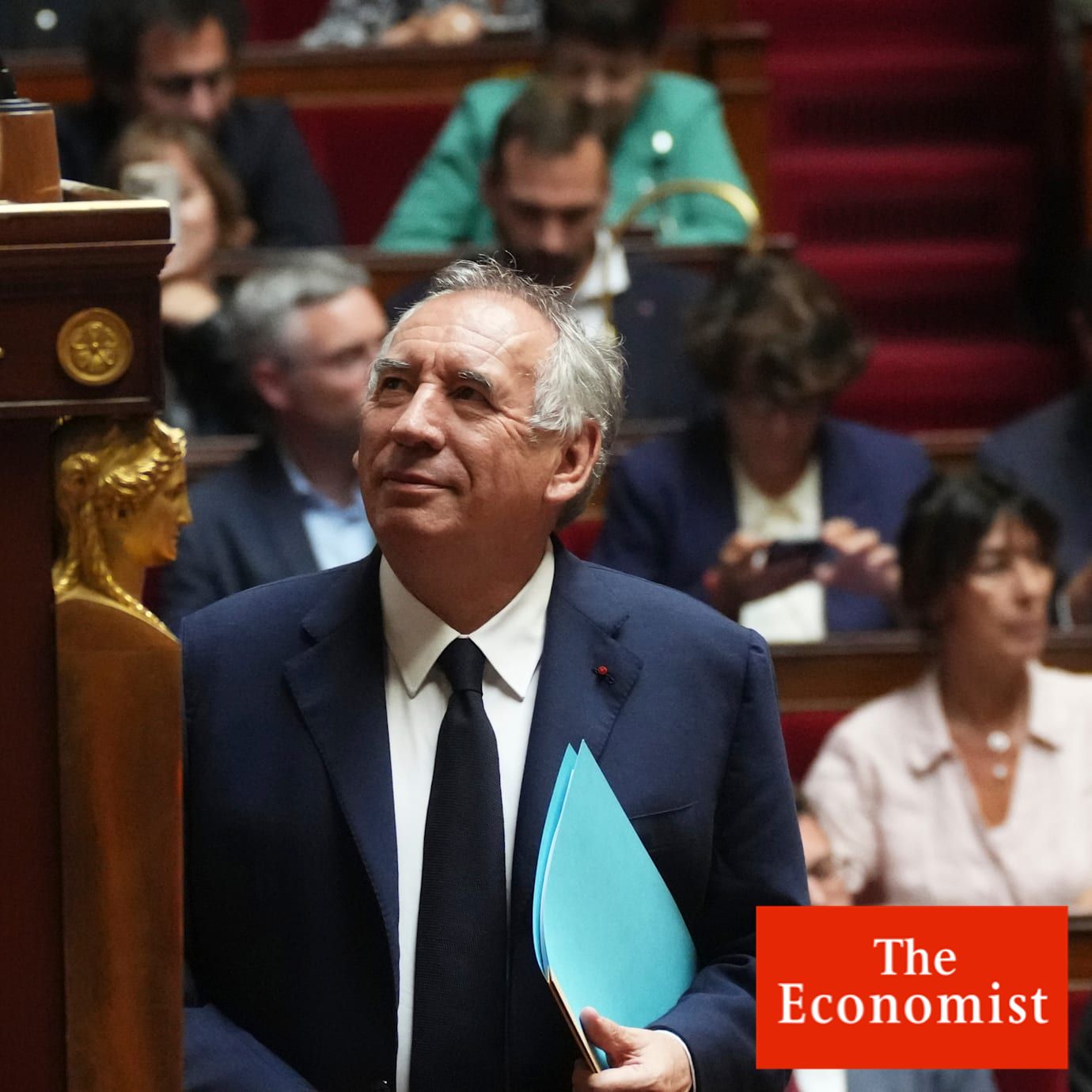
Frankrikes premiärminister François Bayrou avgår efter ett svidande nederlag i parlamentet, där hans förslag om budgetbesparingar på 44 miljarder euro röstades ner. Misstroendeomröstningen förstärker bilden av ett land utan styrförmåga – fyra premiärministrar har fallit på under två år.
– Den höga offentliga skulden sätter hela Frankrike i fara, varnade Bayrou inför omröstningen.
Obligationsräntorna tickar nu upp och Fitch väntas uppdatera landets kreditbetyg i veckan, skriver The Economist.
 The Economist
Triple trouble for France as the government collapses
Political chaos, jumpy bond markets and street protests.
France has lost yet another government, after parliament on September 8th voted overwhelmingly against the prime minister, François Bayrou. Despite an impassioned last-minute plea to the National Assembly, Mr Bayrou secured just 194 of the 558 votes cast in a confidence vote. His defeat was a humiliation for both Mr Bayrou and his centrist ally and boss, President Emmanuel Macron. After just nine months in the job, Mr Bayrou will formally resign tomorrow. Mr Macron said he would name a successor in the next few days.
Jean-Luc Mélenchon’s hard-left Unsubmissive France and Marine Le Pen’s hard-right National Rally (RN) both voted against the government. So, more surprisingly, did the Socialists and even some from the centre-right Republicans, who have supplied a number of ministers to Mr Bayrou’s government. It was a dismal result for a prime minister who had hoped to help Mr Macron bring some stability to the country. Instead France has now lost four prime ministers in under two years.
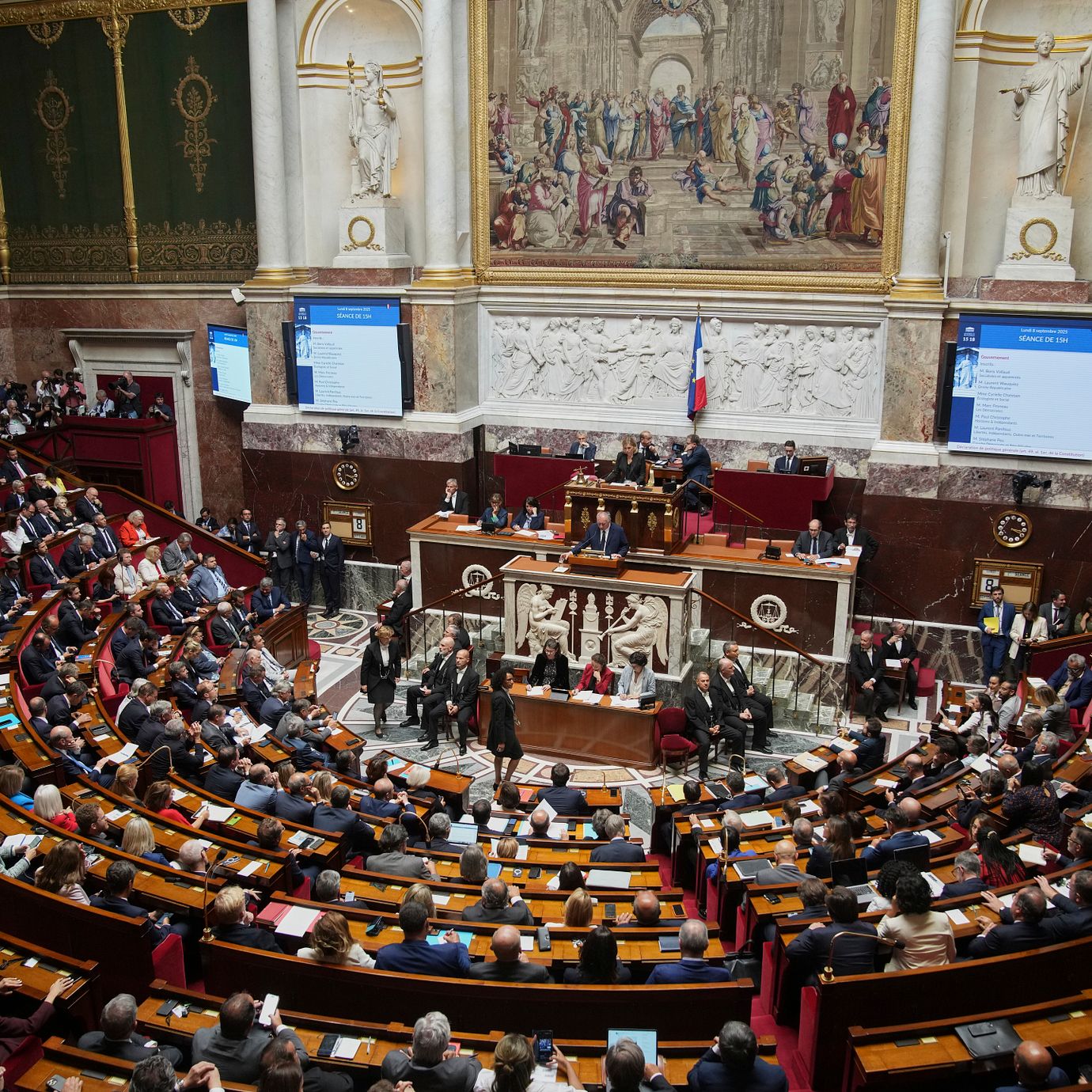
Mr Bayrou had himself called the confidence vote over his plans to make budget savings worth €44bn ($51bn) in 2026 in order to curb the French budget deficit, which is running at 5.4% of GDP this year. But the opposition on both the left and the hard right, which form two big blocs in parliament, refused to co-operate in his proposed squeeze. The opposition was unmoved when Mr Bayrou pleaded in parliament ahead of the vote that the high level of public debt was putting France’s “life in danger”. Boris Vallaud, the Socialists’ parliamentary leader, blamed Mr Macron for the mess, calling Mr Bayrou a mere “blind imitator” of the president. The vote was a “moment of truth” after the “disastrous results of five decades of wasteful management”, declared Ms Le Pen.
Mr Bayrou’s defeat plunges the country into a new period of triple trouble: political uncertainty, market edginess and popular restlessness. Only nine months ago parliament brought down the previous government, under the centre-right Michel Barnier, and the debate in parliament ahead of the vote on September 8th suggests that it remains in no mood for compromise. France’s borrowing costs are already higher than those of Greece. A new round of protests and strikes are planned for September 10th and 18th.
Mr Bayrou’s defeat plunges the country into a new period of triple trouble: political uncertainty, market edginess and popular restlessness
Mr Macron now faces a narrow set of unhappy choices, none of which is likely to break the cycle of political stalemate. He is not constitutionally obliged to call fresh elections, and will have little appetite for doing so. Ms Le Pen certainly wants a new vote. Her party is already the single biggest in parliament, and she thinks she could secure a majority in a fresh election. A poll earlier this month suggested that the RN and its allies would top first-round voting with 33%; the left-wing grouping would secure a combined 25%; Mr Macron’s centrists would be pushed into a dismal third place, on just 15%. Fully 63% of the French say they are in favour of returning to the polls.
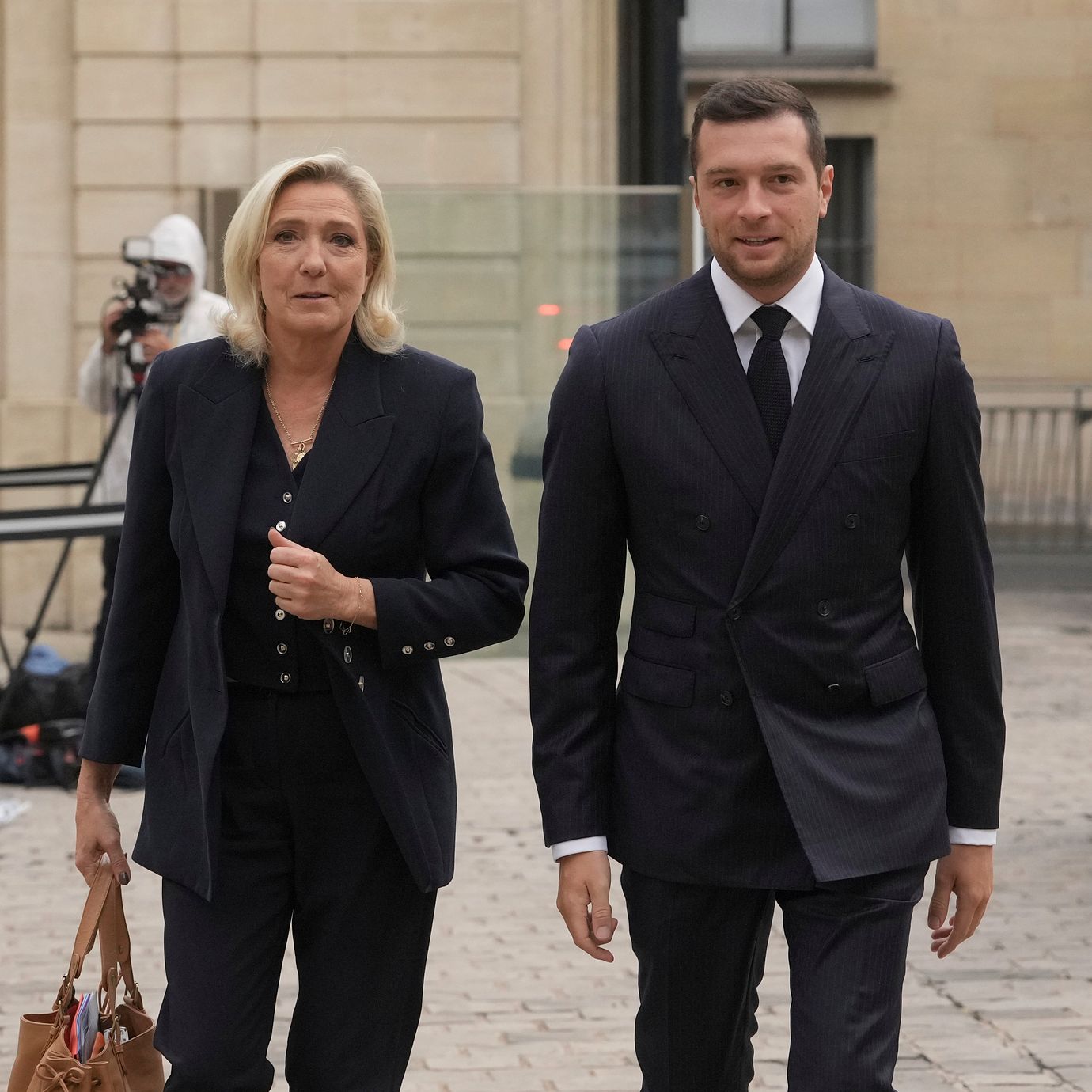
As it happens Ms Le Pen herself would not be able to stand for election. She was banned from running for office by a Paris court earlier this year in a party-financing case; the ban applies even while she awaits her appeal, which is scheduled to start in January 2026. Speaking in the late-summer sunshine in northern France on September 7th, a buoyant Ms Le Pen declared that she was “ready to sacrifice all the electoral mandates on the earth” in order to put an end to Mr Macron’s “unfair and toxic” policies. Were new elections to be called, and the RN to win a majority, Jordan Bardella, her 29-year-old protégé, would be her party’s candidate for prime minister.
The last time Mr Macron dissolved parliament, however, back in June 2024, he ended up with fewer seats than he had before. Already grappling with commanding only a minority in parliament, he is unlikely to want to repeat the exercise. This leaves the president with a second option, trying, yet again, to find a figure who might be able at least to steer through a budget for 2026. Some in the centrist camp argue that the way to do it is through a pact with the Socialists, who hold 66 seats in the 577-seat lower house. But the price might be to agree to their totemic plan for a new wealth tax on the ultra-rich, to be levied at a minimum of 2% a year on those with fortunes worth over €100m. Mr Macron, says an official, is firmly against this, as it would undermine his record of making France a more business-friendly place.
One trigger could be if the bond markets turn against France. They are clearly already edgy
What might turn a troubling stalemate into a full-fledged crisis? One trigger could be if the bond markets turn against France. They are clearly already edgy. The second-biggest economy in the euro zone, France has no trouble finding lenders. But the yield on its ten-year government bonds has already climbed close to that of Italy. Fitch, a credit-rating agency, is due to update its assessment of France on September 12th. Indeed some France-watchers think it will take a market crisis for politicians, and public opinion, to understand quite what is at stake.
The other possible trigger, as ever, is the street. Unions have called a day of organised strikes on September 18th. Before that, on September 10th France faces a day of potentially more worrying protests under the slogan “Bloquons tout” (Let’s block everything). Launched on social media, like the gilets jaunes (yellow vests) in their time, this effort to bring the country to a standstill has been backed by the more militant unions too. Without a government to protest against, such an effort could have absurdist value, but flop. Yet in France the potential for an amorphous movement to harden into something more dangerous can never be ruled out; Mr Macron ended up having to back down on a fuel levy to placate the gilets jaunes. Whoever Mr Macron picks to be the next prime minister is set to inherit an even more unstable country than the one Mr Bayrou has left behind.
© 2025 The Economist Newspaper Limited. All rights reserved.