Jensen Huang – AI‑världens mest inflytelserika lobbyist
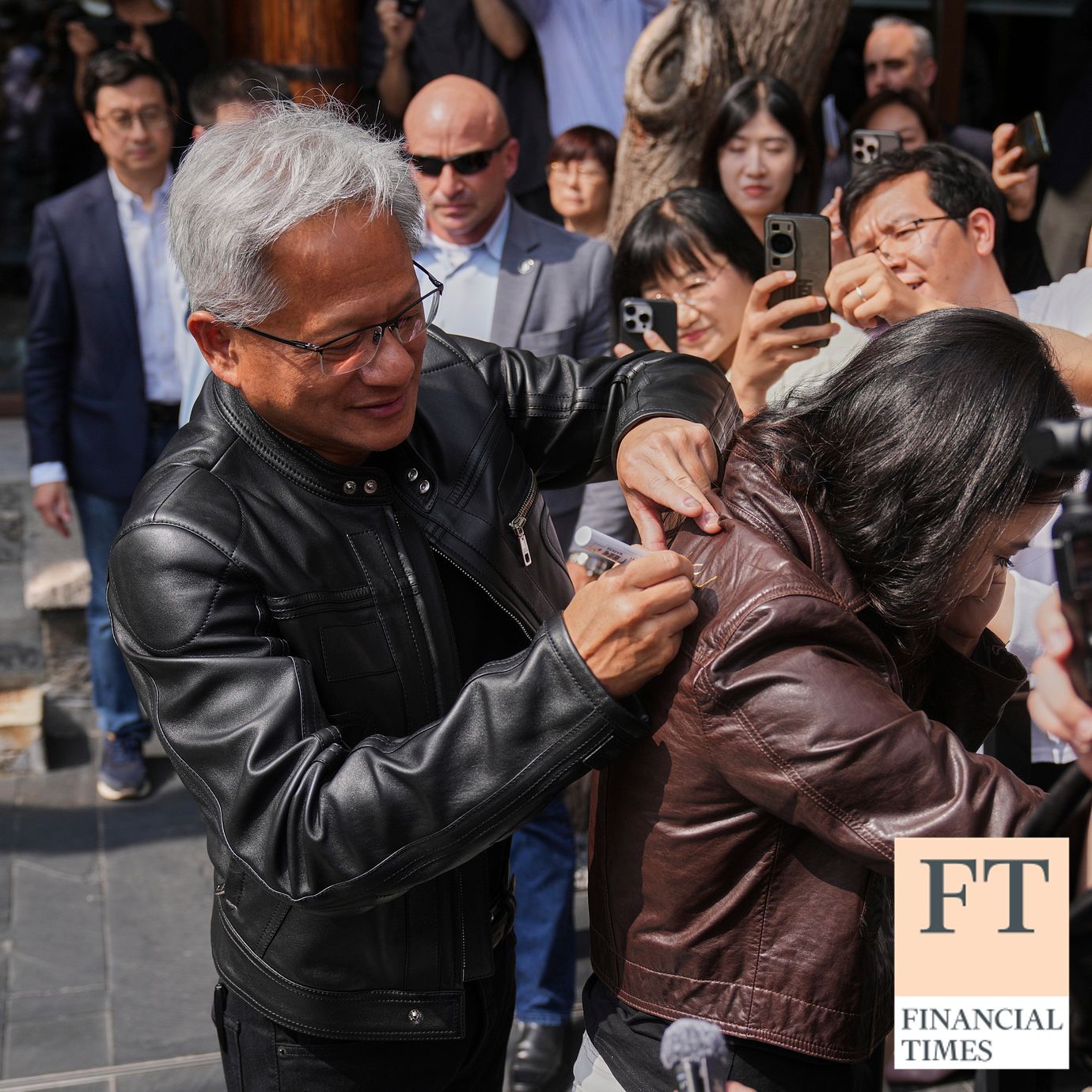
När Nvidia‑chefen Jensen Huang nyligen intog scenen i London och delade ut miljarder till brittiska AI‑startuper, var det mer än bara show. Det var ett strategiskt drag i ett globalt spel där Huang positionerar sig som AI‑världens främsta lobbyist.
Genom att investera i nationella projekt och uppmana länder att bygga ”suverän AI”, gör han samtidigt stater beroende av chipjättens teknik.
– Folk börjar känna att de inte bara är beroende av Nvidia, utan nästan av Jensen själv, säger en högt uppsatt källa till Financial Times.
 Financial Times
How Nvidia’s Jensen Huang became AI’s global salesman
The chipmaker’s chief executive is urging countries to establish their own ‘sovereign’ AI ecosystems — but relying on its technology.
After joining the state banquet at Windsor Castle with US President Donald Trump and King Charles on September 17, Jensen Huang threw an after-party the following day in central London.
Before an audience of hundreds of tech entrepreneurs and venture capitalists, the Nvidia chief executive was joined on stage by US commerce secretary Howard Lutnick and Sir Keir Starmer. “Thank you so much Jensen for your confidence in what we are doing,” the UK prime minister gushed.
Then, channelling Oprah Winfrey’s famous TV show giveaways, Huang started distributing prizes into the audience. Pledging £2bn for UK-based AI start-ups, he anointed eight companies one by one, telling each in turn: “I’m going to invest in your next round.”
Many of the British people in the audience were left bemused. “The whole event was totally unhinged,” says one attendee. Nonetheless, Huang’s showmanship was the vital ingredient in a new tech agreement with the US, which Starmer claimed would turn Britain into an “AI superpower”.
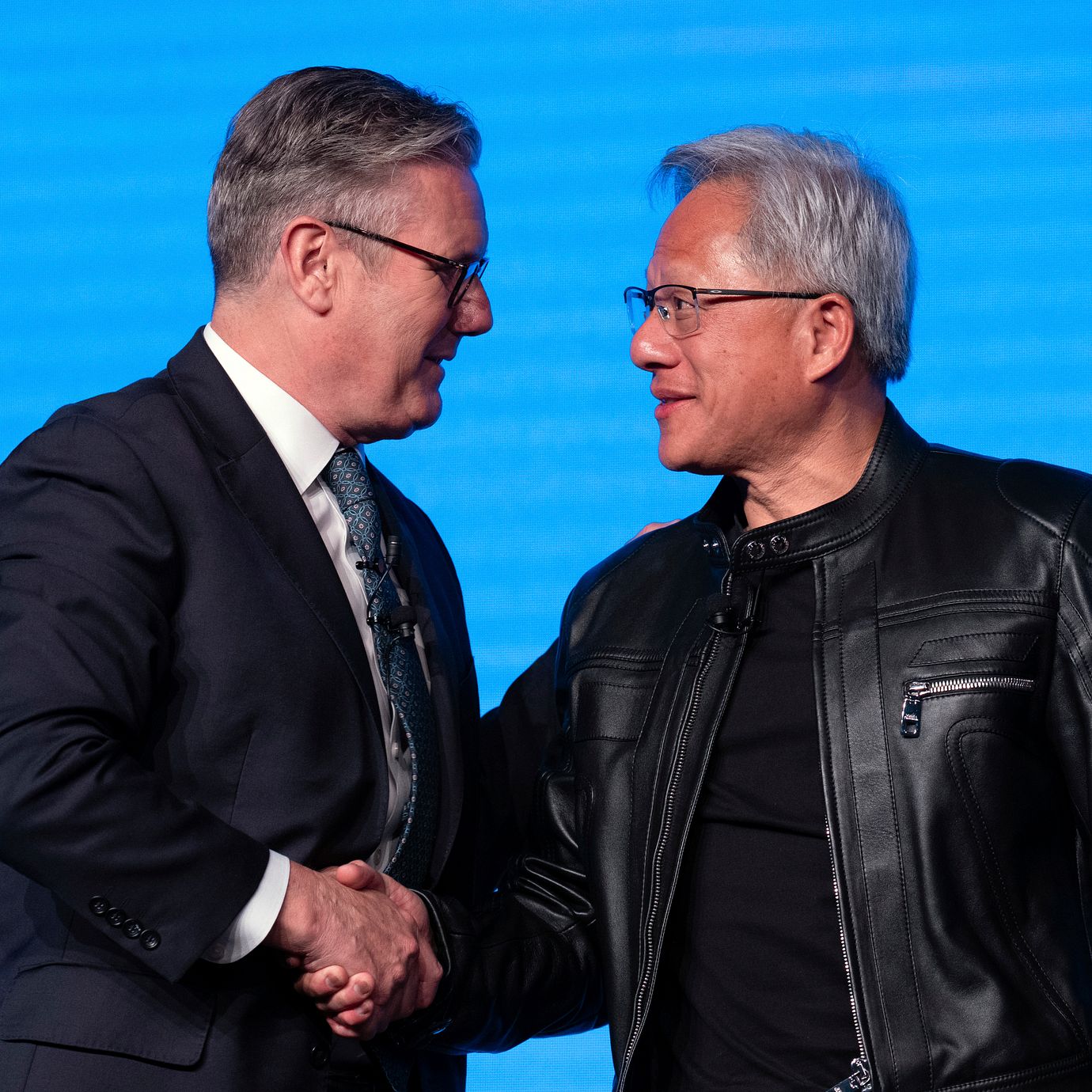
The UK’s efforts to build “sovereign” AI systems to bolster its national AI capabilities are reliant on both chips and cash from the world’s most valuable company.
For instance, Nvidia is planning to invest £500mn into London-based Nscale, a deal that includes selling hundreds of thousands of its chips to the “neocloud” start-up that was founded only last year and which — largely thanks to Nvidia’s patronage — is already valued at $3bn.
It is a model Huang is replicating from Europe and the Middle East to Japan and Malaysia, striking strategic partnerships with local companies to meet politicians’ desperation to ride the AI wave.
The strategy underscores how Huang, who until last year had engaged little in politics during the three decades since he co-founded Nvidia, is leaning into his newfound star power and personally shaping the tech giant’s relationship with the world.
“People are starting to feel now that they have become critically dependent not just on Nvidia, but almost on Jensen himself,” says one executive involved in a major national deal with Nvidia, who asked to remain anonymous.
Huang’s goal is to expand the $4.4tn chipmaker’s market to include the only potential customers with deeper pockets than Big Tech companies: nation states.
“People are starting to feel now that they have become critically dependent not just on Nvidia, but almost on Jensen himself”
After decades in the shadow of Silicon Valley’s software and consumer internet groups, a combination of scarcity, geopolitics and breakneck growth have thrust the chipmaker into the spotlight. Over the three years since ChatGPT’s debut, Nvidia’s share price has increased by some 1,000 per cent — and Huang is not wasting the superstar status this has brought him.
Jay Puri, Nvidia’s executive vice-president for worldwide field operations, says its sovereign strategy has been long in the making.
“We’ve never felt that these Big Tech companies would forever be our only customers,” he says. While the biggest cloud providers were natural first movers in AI, by incorporating it into their software, “we have always been planning on a bigger strategy as to how to take AI to the rest of the world.”
Yet in the process, Nvidia is treading a fine line between promoting national self-sufficiency in AI abroad and championing American technological supremacy. At the same time as urging world leaders to spend big on “indigenous-built AI infrastructure”, Huang has become the foremost ambassador of the Trump administration’s AI Action Plan, with its commitment to “exporting American AI”, from hardware and models to governance.
For some critics, there is a fundamental contradiction between urging countries to establish their own AI ecosystems at the same time as Huang is also pushing them to rely on Nvidia’s products.
“Jensen is doing this amazing job of going around telling every country: ‘You need to stop being an AI taker and become an AI maker’,” says one UK tech investor. “But implicit in that is of course: ‘You have to be a taker of my chips.’ He’s interested in the UK being sovereign only so much as it benefits him.”
It was in February 2024 at the World Governments Summit in Dubai that Huang made his first major foray into international chip diplomacy.
“Every country needs to own the production of their own intelligence, which is the reason why there’s this idea called sovereign AI,” Huang told the audience. “You own your own data . . . you cannot allow that to be done by other people.”
Just as Big Tech companies are engaged in an arms race to build AI infrastructure, Huang is urging national governments to follow suit. While he frames the argument in terms of national interest, he is hoping to reduce his company’s reliance on a handful of large customers who are also developing their own rival AI chips.
As well as selling to governments themselves, Huang is establishing new AI-focused cloud providers that, while small today, could soon turn into robust local competitors to Amazon, Microsoft and Google, who dominate the market and so control access to many of Nvidia’s chips.
“It’s a pretty extraordinary position for a company to be in”
In the past 12 months, Huang has met publicly with at least a dozen foreign heads of state and government as he aggressively lobbies for Nvidia’s interests abroad. Behind the scenes the engagement is frenetic, with multiple meetings per month between Nvidia and government officials around the world.
“They have all been reaching out to Nvidia, and many of them have now had direct conversations with Jensen,” says Puri. “It’s a pretty extraordinary position for a company to be in, but that’s where we are.”
Puri, one of a small inner circle of top Nvidia executives, often accompanies Huang on his trips abroad, or deputises for him when he is unable to meet officials. The range of interest is intense, he says, from the Kingdom of Bhutan to the world’s richest economies. Governments, he adds, are becoming “the catalysts to invest in AI”.
The campaign is starting to pay off. Since the start of the year, Nvidia has had a hand in the announcement of more than 20 “sovereign” projects spanning North America, Europe, the Middle East and Asia.
“A year ago, only a smattering of countries had sovereign AI strategies,” says John Roese, chief AI officer at Dell, which packages Nvidia’s AI chips into servers. “It happened quickly, and it’s driven by one very simple goal: I want my country not to be on the wrong side of this very disruptive transformation going on in the global economy.”
Actual revenue from sovereign AI is “very very small at the moment but it should be quite large in the future”, Huang said in London this month.
That’s a relative term for a company with revenues last year of $130bn; by August of this year, chief financial officer Colette Kress said the company was on track to generate more than $20bn in sovereign revenue for 2025, more than double that of 2024.
Bank of America analysts expect the total market for “sovereign” deals to hit $50bn in the coming years.
Most sovereign deals involve public-private partnerships that are seeking to mobilise private investment.
The $500bn Stargate initiative to build out US infrastructure announced in the Oval Office in January, for example, was led by OpenAI, Oracle, Abu Dhabi investment vehicle MGX and SoftBank, which owns chip designer Arm.
The following month, the EU launched a €20bn fund as it sought to mobilise €200bn of investment in AI “gigafactories”. Nvidia has also targeted telecoms operators and equipment makers. Deals announced over the past year include with Germany’s Deutsche Telekom, France’s Orange, Sweden’s Ericsson and Japan’s SoftBank.
“The reality is that a lot of governments don’t necessarily trust the big [US] cloud providers, so they would rather trust their own national flagship operator to take care of that,” says an executive involved in a sovereign infrastructure project with Nvidia.
“It’s just too large a force to be ignored”
According to research by Omdia, Amazon, Google, Meta and Microsoft alone represented 48 per cent of total global capex on data centres in the first half of 2025.
But governments care less about the immediate return on their investment than they do about the need to develop strategic autonomy, says Stacy Rasgon, analyst at Bernstein. “Sovereign nations have unlimited amounts of cash, and they don’t necessarily have to build a business out of it — it’s for their own use,” he says.
AI is becoming a “burning issue” for governments which are chasing productivity gains that will give competitive edges for their domestic industries, says Mark Papermaster, chief technology officer at AMD, Nvidia’s most significant competitor in AI chips.
A 10 per cent productivity gain from AI would add $10tn to the global economy, he says. “It’s just too large a force to be ignored.”
One place where this message is clearly landing is the Middle East. In May, Huang toured the Gulf states with Trump as the administration appeared to shrug off Biden-era concerns about exporting leading American AI technology.
The oil-rich states of the Gulf are trying to position themselves as hubs for AI and its infrastructure. The scale is staggering; sponsors say the UAE’s Stargate AI data centre campus will require 5GW of power — roughly the same as the entire city of New York.
These facilities require huge sums of investment but not large numbers of workers, making them an unattractive prospect in densely populated countries.
By contrast, the UAE and Saudi Arabia have swaths of uninhabited land, plenty of excess energy, and a strong desire to diversify their economies away from relying on oil exports.
The region has a youthful, tech-savvy population of keen AI users but lacks local semiconductor production, relying on export licences from the US to obtain the most powerful chips made by Nvidia, which has slowed their supply.
Still, the oil-exporting nations are also cash rich. MGX, the Abu Dhabi investment vehicle, is dedicated entirely to buying stakes in promising AI companies and backing AI infrastructure projects, including a $30bn AI Infrastructure Partnership with BlackRock and Microsoft and a French initiative to build Europe’s biggest AI campus.
The UAE in particular “has a lot of what it takes to be competitive in AI”, says Keegan McBride, a tech policy adviser at the Tony Blair Institute. While many governments “got caught off guard” by the sudden emergence of AI, McBride adds, the UAE — which appointed the world’s first AI minister in 2017 — was not one of them.
“The real question national governments need to answer is: what are they trying to achieve with this spending?”
Abu Dhabi has not only spent on AI projects abroad. It has also set up an AI university and worked to develop its own large language models through the state’s Advanced Technology Research Council, which has over 1,300 researchers, according to its secretary-general Faisal Al Bannai.
“We need to build technology that we own in the UAE to serve us as a country but [also] to act in the export market and really be able to export these products,” Bannai told a conference earlier this year.
But the UAE’s resources make it an outlier. Although it’s not “uncommon for governments to be building their own large language models”, says McBride, “the question is, can most governments afford to build a model that remains competitive at the frontier? And the answer to that is almost certainly no.”
For all of Huang’s talk of the importance of AI sovereignty, no region of the world except China has managed to build a viable AI hardware and software ecosystem that could decouple it from American technology.
For Lennart Heim, a researcher at Rand, a think-tank, sovereign AI is a meaningless marketing term. “The real question national governments need to answer is: what are they trying to achieve with this spending?” he says. “I think many countries to this date don’t know the answer.”

Nvidia is mirroring the strategy of the tech giants that preceded it, says Martin Chorzempa, senior fellow at the Peterson Institute, a Washington think-tank. “All of the dominant US technology companies have global user bases and locked-in network effects around the world,” he says.
According to the British investor, real sovereignty involves a project akin to China’s efforts to build an entirely new semiconductor design and manufacturing industry, from Huawei and Cambricon to SMIC. But doing that takes “guts, commitment and real money”, as well as patience, that many politicians in the UK and Europe seem to lack.
The few potential hardware challengers to Nvidia in Europe are still in the early stages of growth. One such company is Dutch start-up Axelera AI, which received a €61.6mn EU grant earlier this year.
“Europe would first like to reduce this dependency on the hyperscalers, because if you look at the situation today, most of the software services provided to European companies are provided by US hyperscalers,” says Axelera’s chief executive Fabrizio Del Maffeo.
This, he says, is the “first step” in a longer journey towards a more meaningful decoupling from the US ecosystem. Europe’s DARE initiative aims to build a competitive EU AI accelerator within three years, he notes.
Anne Hoecker, head of Bain’s technology and cloud services practice in the US
The sovereign AI narrative is also complicated by broader unease over whether AI will be as transformative a technology over the coming years as its acolytes suggest.
As Nvidia aggressively expands its customer base, the potential for over-reach grows too.
“Any time you have an industry with a lot of customers, there is a bigger risk that you build overcapacity,” says Anne Hoecker, head of consultancy Bain’s technology and cloud services practice in the US. “A lot of our clients are seeing returns on investment, but it’s not universal.”
For as long as the world is focused on AI, however, Huang is confident that they will keep spending on Nvidia’s technology. And now, he has friends in high places.
AI is “taking over the world”, Trump said in September as he sat next to Keir Starmer during his state visit. “You’re taking over the world Jensen. I don’t know what you’re doing here . . . all I can say is we both hope you’re right.”
©The Financial Times Limited 2025. All Rights Reserved. FT and Financial Times are trademarks of the Financial Times Ltd. Not to be redistributed, copied or modified in any way.