De vilda marknaderna bakom Polymarkets ”sanningsmaskin”
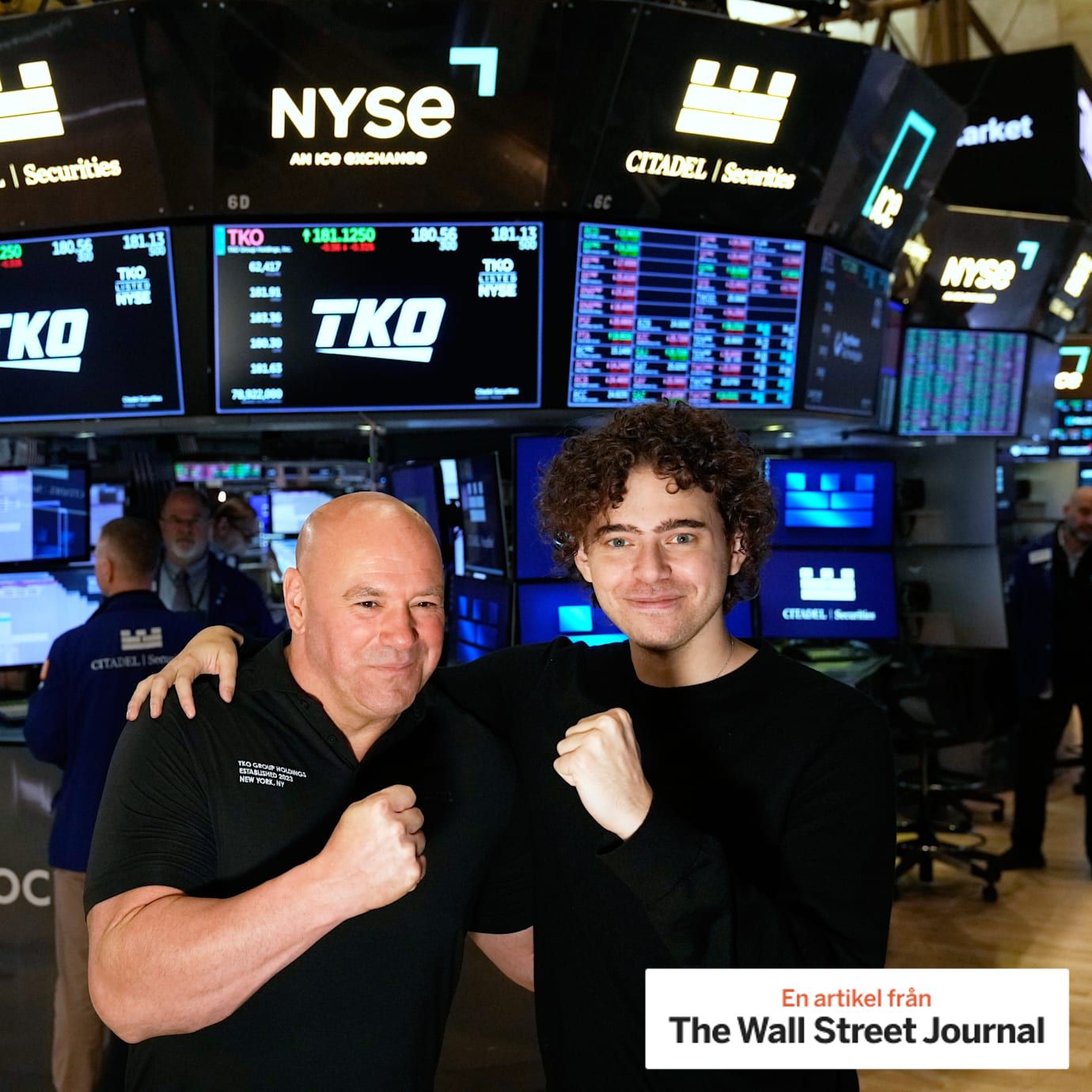
Vem vinner nästa val? Faller Nicolás Maduro? Och vem tar hem ett Nobelpris? På den kryptobaserade bettingplattformen Polymarket satsas pengar på allt från världspolitik till kultur och sport.
Nu värderas bolaget till motsvarande 90 miljarder kronor. Grundaren Shayne Coplan beskriver Polymarket som en ”global sanningsmaskin”.
Kritiker varnar dock för anonym handel, marknadsmanipulation och svag reglering. Trots återkommande kontroverser har plattformen tagit klivet in i finansens finrum, skriver Wall Street Journal.
 The Wall Street Journal
The Wild Markets Behind Polymarket’s ‘Truth Machine’
Shayne Coplan has built the crypto-based betting platform into a $9 billion company; Justice Department probe gets shelved.
Just before dawn on Nov. 13, 2024, FBI agents smashed through the door of Shayne Coplan’s penthouse apartment in Manhattan, barged into his bedroom and grabbed his phone.
Federal prosecutors were investigating whether the cryptocurrency-based betting platform he founded, Polymarket, where users can wager on everything from presidential elections to the identity of the next James Bond actor, was violating laws designed to prevent money laundering.
Fourteen months later, the fortunes of the shaggy-haired 27-year-old couldn’t be more different. The Justice Department has dropped its probe. Donald Trump Jr., whose venture-capital firm is an investor, joined the company as an adviser. The New York Stock Exchange’s parent company struck an investment deal that boosted Polymarket’s value to $9 billion and made Coplan a billionaire. And his startup, which had long been off-limits to U.S. users, was cleared to launch a betting app for them.
Polymarket’s rise comes as wagering on sports, bitcoin, elections and just about everything else has grown ubiquitous, and barriers between traditional investments, crypto and gambling are eroding.
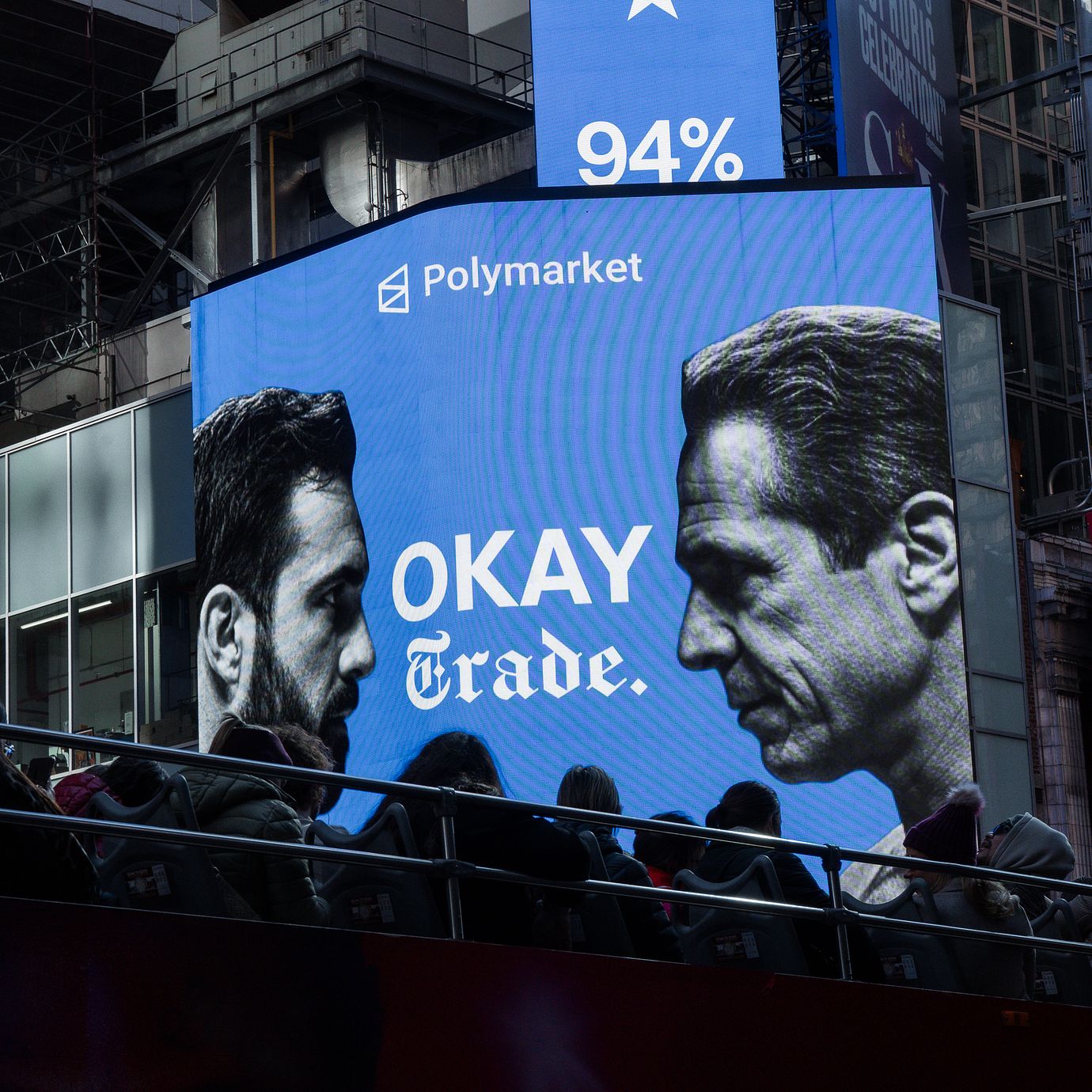
The predictions derived from Polymarket’s betting action—Coplan has called the operation a “global truth machine”—are now cropping up everywhere. Analysts and national news outlets cite them regularly. Viewers of the Golden Globes saw them on their TV screens. Google, X, the National Hockey League and Dow Jones, the publisher of The Wall Street Journal, have all struck data partnerships with Polymarket.
Yet for all its mainstream success, Polymarket hasn’t managed to stamp out controversy tied to its freewheeling markets, most of which remain unregulated.
In the past few months alone, there have been flaps over the possible manipulation of bets tied to the Russia-Ukraine war, traders seeming to have advance knowledge about the ouster of Nicolás Maduro and the winner of the Nobel Peace Prize, and disputes about whether bets are being resolved fairly. Polymarket’s popular international platform still doesn’t require identity checks for most users, making it largely anonymous. And researchers have cast doubt on whether its billions of dollars in reported trading volume are genuine.
“The vision that I know that my team and I want to build has not come to life fully yet”
Rajiv Sethi, a Barnard College economics professor who has studied prediction markets, said what concerns him the most is that Polymarket doesn’t know the real-world identities of most people who trade on the platform. “What that means is people can do all kinds of things that they would not be able to do on other markets,” he said.
That anonymity, he said, could allow Polymarket users to trade on classified information or have more than one account, buying and selling between them to artificially boost trading volume.
Polymarket has said it complies with all applicable laws, and that because its technology provides real-time transparency into trading, episodes of possible manipulation and insider trading are quickly exposed.
“The moment there’s a suspected insider, it’s pointed out on X, and it’s visible on Polymarket immediately,” Coplan said in an interview. “So it’s not like it’s done in darkness.”
Coplan has said he expects billions of people will eventually use the platform. He foresees its predictions being used to inform government policy and to help people understand whether to trust the information they find online. “The vision that I know that my team and I want to build has not come to life fully yet,” he said. “We still have a long way to go.”
Polymarket’s backers speak glowingly about the promise of harnessing the wisdom of the crowd, arguing that people who put money on the line are more likely to be right than purported experts and biased commentators.
“With prediction markets, if you make a dumb bet, you lose,” Vitalik Buterin, a prominent crypto founder and Polymarket backer, wrote online in December.
Bookmakers outside of the U.S. have long offered wagers on elections, sports and even papal conclaves. They set the odds, take in the bets and pay off the winners.
The businesses run by Polymarket and its chief U.S. competitor, Kalshi, are different. They typically list contracts that pay $1 if a bet proves correct and zero if not. The contract prices fluctuate as traders, weighing the likelihood of various outcomes, buy and sell contracts. Those prices imply probabilities: If a contract tied to the collapse of Iran’s regime is trading for 41 cents, Polymarket’s website will say there’s a 41% chance of that happening.
Despite its high valuation, Polymarket has almost no revenue. It could make money by charging fees to those buying and selling contracts, but so far it has kept fees at zero on nearly all of its markets as it strives to attract more users.
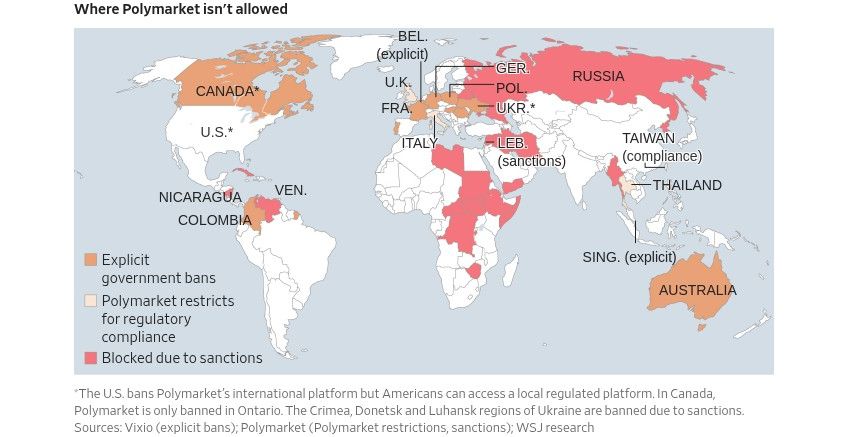
Regulators have long been wary of prediction markets. In some countries, they have run afoul of gambling officials, who regard the platforms as unregistered casinos. In the U.S., their bets are considered derivatives under the oversight of the Commodity Futures Trading Commission. Federal courts are still weighing whether prediction markets can legally offer sports betting.
Suspicious activity
In recent months, as Polymarket publicized the launch of its regulated U.S. platform, it was dogged by episodes of suspicious activity in its offshore betting markets.
In November, Polymarket angered some users with a ruling that Russia had seized the Ukrainian town of Myrnohrad—a decision that benefited those betting the town would be captured by Nov. 15. In fact, Russia hadn’t captured the town.
The bet was settled using an online map maintained by the Institute for the Study of War, a Washington think tank. That map—very briefly—was wrong. The institute fixed it the next morning, after the bets had already been settled. The think tank apologized for what it said was an “unauthorized and unapproved edit” and fired an employee over the incident.
Polymarket users suggested the map had been rigged, zeroing in on a bet in which an anonymous user turned $62 into more than $6,700 shortly before the Myrnohrad market was resolved.
Asked about the incident, Coplan said Polymarket needs to “troubleshoot” the process for resolving bets as the company grows.
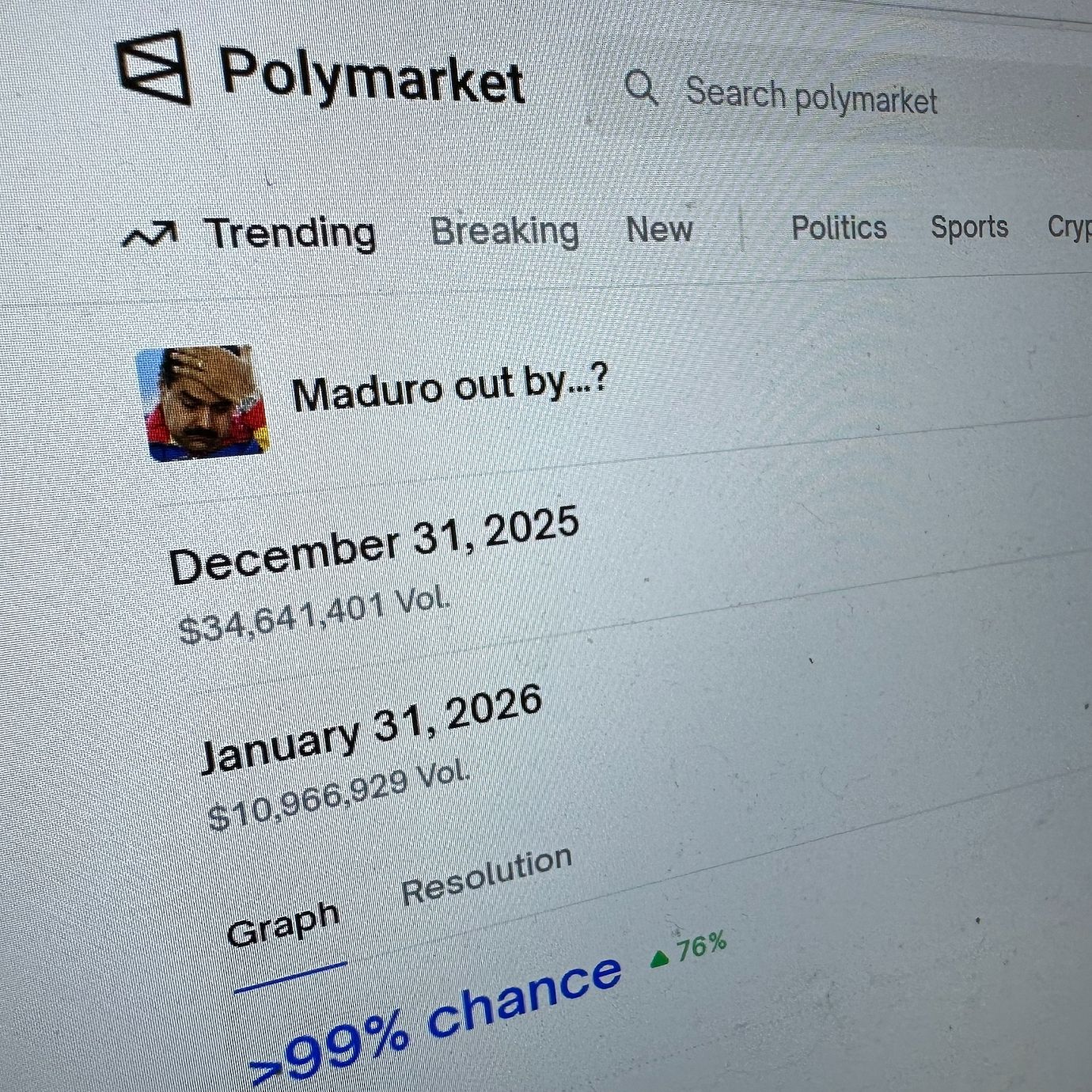
There were more raised eyebrows in early January when a mystery trader earned more than $400,000 betting on the downfall of Maduro. Many of the bets came just hours before the surprise U.S. military operation to remove the Venezuelan leader. More than two dozen House Democrats have since signed on to a proposed bill to ban government employees from trading on inside knowledge on prediction markets.
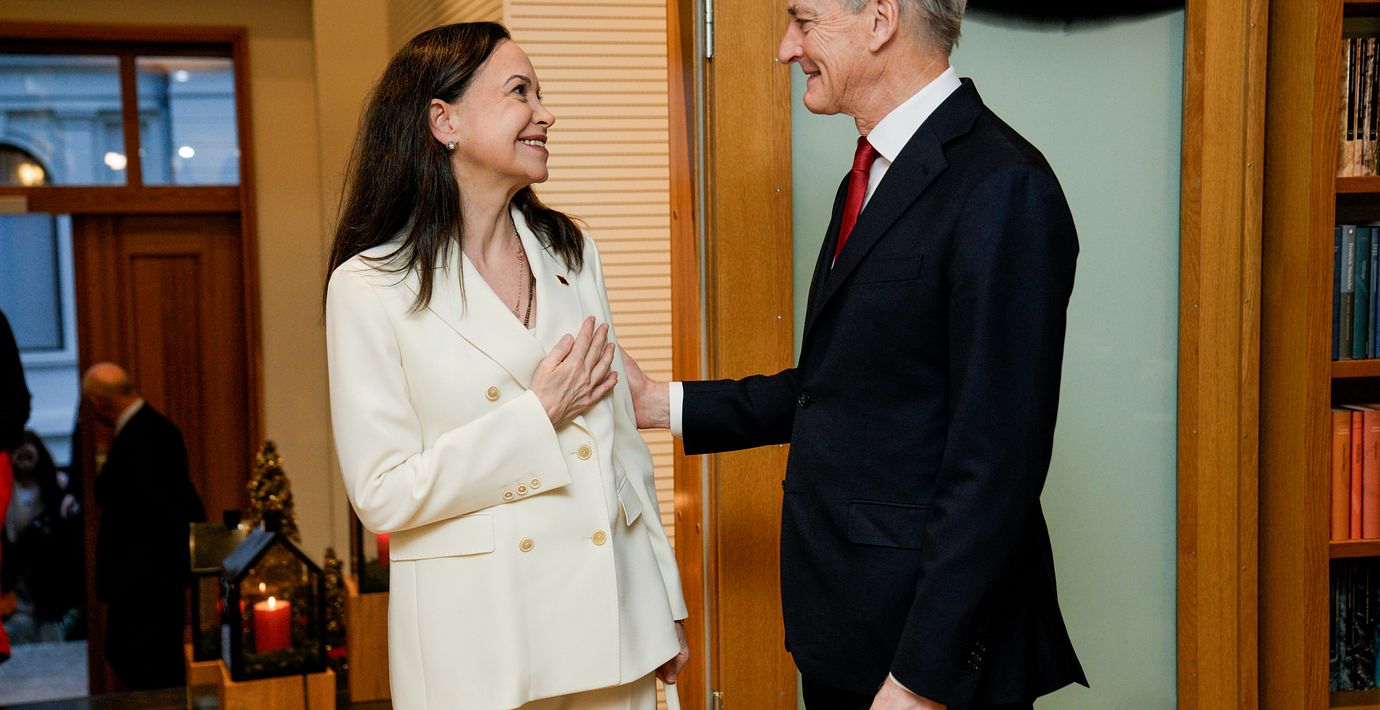
Months earlier, a trader identified only as 6741 made more than $50,000 betting that Venezuelan opposition leader María Corina Machado would win the Nobel Peace Prize. The bets, placed the night before the announcement, led the Norwegian Nobel Institute to investigate whether it had been the target of espionage.
Some traders suggested the institute accidentally leaked the news by posting files about Machado in an obscure corner of its website. An image of her face was uploaded about an hour and 40 minutes before the announcement, according to cybersecurity firm Patchstack. A Nobel spokeswoman said the institute prepares online materials about winners “in a secure, isolated offline environment.”
Some wagers have led to disputes over which side is the rightful winner. Last year, users bet on whether Ukrainian President Volodymyr Zelensky—known for military-style attire—would be seen wearing a suit by July. After he attended a June 24 summit wearing a black, suit-like outfit, a battle erupted over how to classify it. Some users had hundreds of thousands of dollars at stake. The decision came down in favor of traders who didn’t view Zelensky’s outfit as a suit.
Angry traders slammed Polymarket on social media, complaining that a cabal of big traders had skewed the resolution process. Samuel J. Gosling, a software engineer in Ireland, lost about $1,000. “A lot of people would assume that it is a suit,” he said. “If you ask anyone in the Western world, ‘Is this man wearing formal attire?’ they would say yes.”
Early prediction markets focused on topics such as economic indicators and elections. Polymarket lets users bet on a head-spinning array of things, many of them frivolous.
In August, after dildos were thrown on the courts during some WNBA games, Polymarket listed contracts on when the next such incident would occur. Players denounced the bets as crass and disrespectful. Others noted that Polymarket was providing an incentive for bettors to throw dildos at games.
In the recent interview, Coplan called those bets “silly” and said Polymarket no longer lists such contracts. “It’s not what we want to be known for,” he said.
College dropout
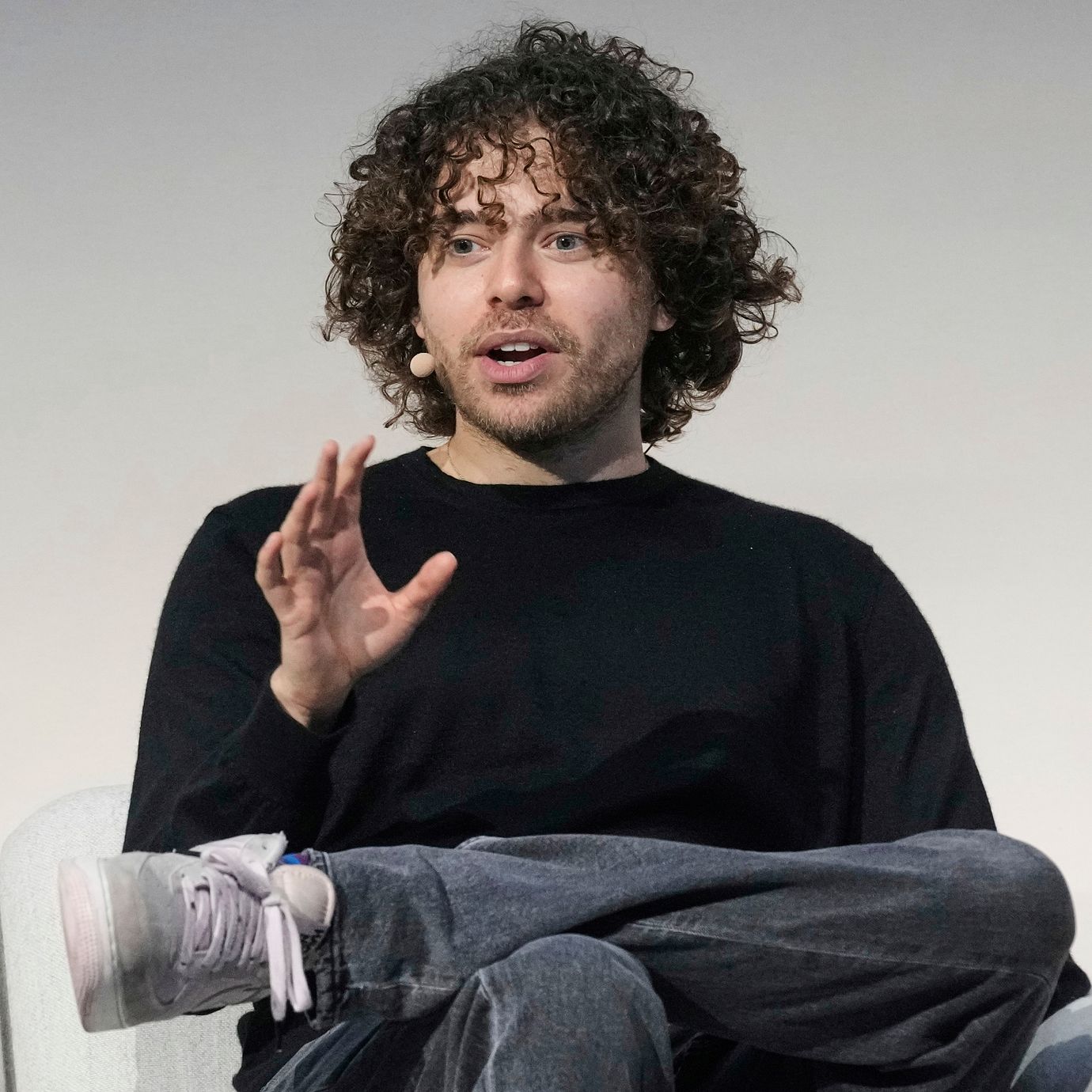
Coplan grew up on Manhattan’s Upper West Side. As a boy, he was cast as “cute kid” in a little-seen 2006 movie directed by his film-professor mother. He attended a selective public high school, wrote songs and played guitar, keyboards and ukulele.
He got into the cryptocurrency startup scene early on, after dropping out of New York University. After his first crypto venture, Union Marketplace, failed to gain traction, he pivoted to prediction markets.
He launched Polymarket in 2020, raising a $4 million seed round from investors such as Naval Ravikant, an early investor in Uber Technologies. He told some investors that Polymarket would grow into a $100 billion company.
“A lot of people wouldn’t invest because they thought Shayne was nuts,” said Samir Vasavada, an early investor in Polymarket. “It was to an extreme the amount he believed in himself.”
Polymarket set up shop in Manhattan’s SoHo neighborhood. Coplan struck some colleagues as a difficult boss. He often yelled at employees, and sometimes participated in video meetings shirtless, people familiar with the matter said.
“Look, I’m super passionate about my work,” Coplan said in the interview. “And sometimes things get heated.”
Three economists at the University of Iowa developed the first experimental prediction market in the 1980s. For decades, entrepreneurs struggled to turn the concept into successful businesses, partly because of resistance from the CFTC, which blocked contracts tied to sports and elections in a bid to separate the worlds of Wall Street-style financial trading and gambling.
Coplan’s backers knew he was taking a risk and that his platform could end up being quashed by regulators. “Shayne might end up a billionaire, or a CFTC casualty,” New Form Capital, an investor in Polymarket’s seed round, wrote in a 2020 memo.
The CFTC deemed Polymarket to be an unregistered exchange that was failing to comply with various agency rules, including safeguards against market abuse. In a January 2022 settlement, Polymarket agreed to pay a $1.4 million fine and stop offering its betting markets to Americans. That way, it wouldn’t need to register as an exchange. It didn’t admit any wrongdoing.
Coplan pressed on, lining up fresh funding from VC firms. And the platform kept drawing users, who now had to attest that they weren’t from the U.S.
Soon it was an open secret among traders that Americans were using Polymarket despite the ban. By using virtual private networks, U.S. bettors could make it appear that they were in other countries.
Because Polymarket took bets in crypto without requiring identification checks, it was easy for Americans to deposit funds. Research by CryptoQuant, a blockchain analytics firm, shows millions of dollars were moved to Polymarket wallets from Robinhood Markets—a platform with a predominantly U.S. customer base—after the CFTC settlement. Some users didn’t bother hiding that they were Americans, openly discussing their Polymarket trading on X.
Under investigation
In the spring of 2024, the U.S. Attorney’s Office for the Southern District of New York opened a criminal probe into whether Polymarket was violating anti-money-laundering laws or acting as an unlicensed money transmitter by serving U.S. users without the needed licenses, according to people familiar with the investigation.
The Biden administration was cracking down on crypto. Binance, the world’s largest crypto exchange, had recently pleaded guilty to those same violations.
Joe Biden’s disastrous debate performance that June triggered a surge of bets that he would drop out of the race, putting a spotlight on Polymarket. Coplan sought to promote Polymarket with both parties, but the company found a warmer reception from Republicans, who were embracing the crypto industry.
During the Republican National Convention, a photo circulated online showing Coplan at a table with Donald Trump Jr.; Omeed Malik, founder of 1789 Capital, a VC firm that backs businesses aligned with conservative values; David Sacks, now the White House crypto czar; and other tech investors.
Coplan said the group welcomed him with open arms when he said he was from Polymarket. “These guys were like, ‘Oh, Polymarket’s awesome. It is what I’m checking, it’s useful, you know, it’s better than polls,’” he recalled.
Republicans had another reason to cheer Polymarket: As the election approached, its markets suggested Trump was likely to win, even though polls showed him in a dead heat with Kamala Harris.
A recent Columbia University study found signs of wash trading in about 25% of Polymarket’s volume
Meanwhile, federal investigators expanded their probe to include potential wash trading, according to the people familiar with the investigation. Wash trading is a practice in which traders move assets back and forth to create the illusion of genuine activity. Such transactions can benefit the traders by making them eligible for rewards tied to high volume. They also can make a trading platform appear more active than it really is.
A recent Columbia University study, co-written by Sethi, found signs of wash trading in about 25% of Polymarket’s volume. The company’s terms of use prohibit wash trading.
Investigators wanted to know whether the company was aware that it was serving U.S. users. Not only would this be a violation of the CFTC settlement, it would show that Polymarket was breaking laws designed to safeguard against money laundering. Such laws require financial businesses that serve Americans to verify the identities of their customers, among other measures.
The investigators obtained a search warrant for Coplan’s electronic devices, which they thought might contain evidence that he was communicating with customers he knew to be American, the people said.
After more senior Justice Department officials worried that any search might be seen as political interference in the election, the people said, the raid was delayed until after Election Day.
Trump’s win was a validation for Polymarket, largely silencing critics who had suggested the platform was being manipulated in Trump’s favor.
1789 Capital made its first investment in Polymarket before the election. After Trump won, Donald Trump Jr. became a 1789 partner and the firm invested in Polymarket again. Neither investment was disclosed publicly at the time. All told, 1789 Capital has invested at least $10 million, said one person familiar with the matter.
Polymarket denounced the raid as “obvious political retribution” by the outgoing administration
A few days after the election, Coplan attended the Las Vegas meeting of a Trump-allied donor network called the Rockbridge Network. Shortly after he returned to New York, FBI agents broke down his door with a battering ram.
Polymarket denounced the raid as “obvious political retribution” by the outgoing administration. The company’s lawyers arranged a meeting with senior prosecutors, where Polymarket lawyer Orin Snyder heatedly accused the office of pursuing the probe at the behest of Biden’s White House, according to the people familiar with the investigation.
After Trump took office, the new administration dialed back enforcement actions against the crypto industry. Last April, Deputy Attorney General Todd Blanche instructed prosecutors to focus crypto cases on swindlers who hurt investors and on the financing of terrorism, drug trafficking and other forms of organized crime.
Polymarket’s lawyers reached out to Blanche’s office to complain about the continuing probe, the people familiar with the investigation said. They submitted thousands of pages of documents to Manhattan prosecutors and had additional calls and meetings with them to push for the case to be dropped.
Nicholas Roos, a federal prosecutor who had co-led the case against fallen crypto tycoon Sam Bankman-Fried, informed Polymarket’s lawyers by letter on July 1 that the investigation was being shelved. He cited information provided by Polymarket, as well as “relevant precedent and current policies of the Department of Justice,” according to a copy reviewed by the Journal.
Coplan marked the one-year anniversary of the FBI raid by posting on X a picture of a cake. “Cheers to free markets, the American dream, and $3000/hr lawyers,” he wrote.