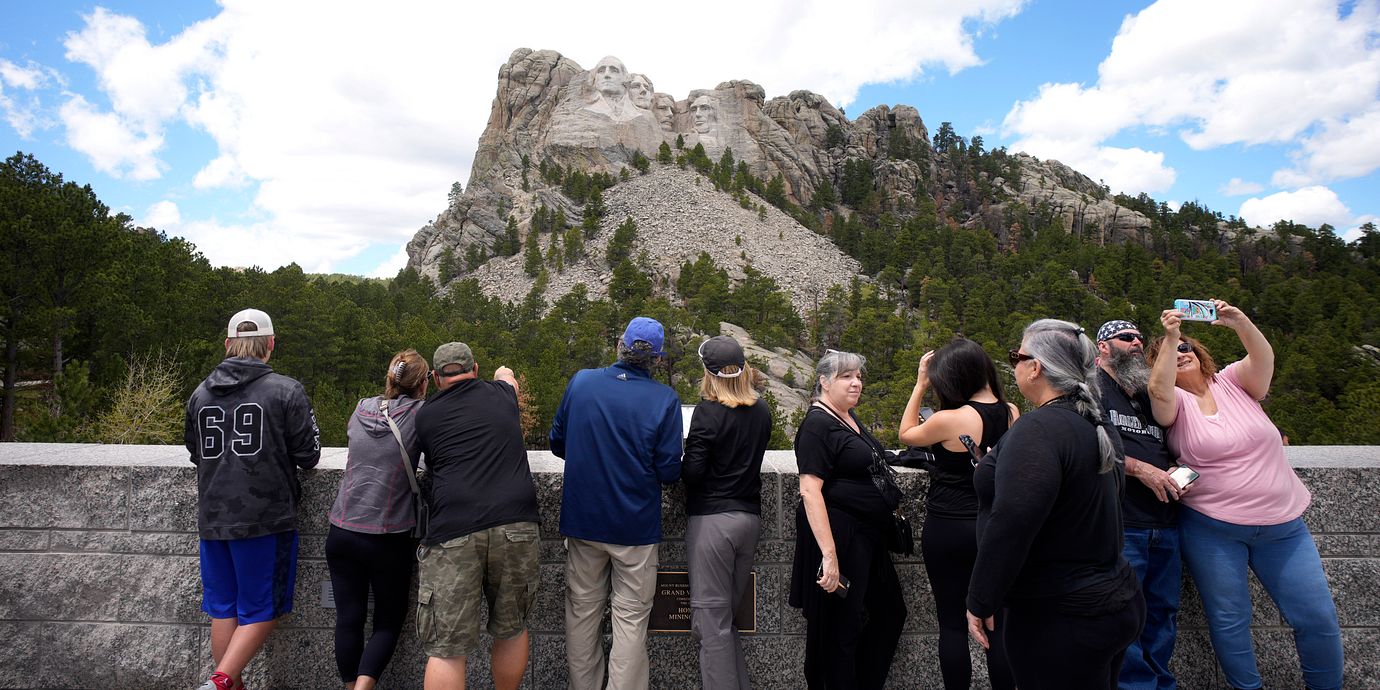
Ett skatteparadis mitt i USA: South Dakota klår Schweiz
Amerikanska delstaten South Dakota har blivit ett av världens största skatteparadis. Det stod klart när Pandoradokumenten publicerades i helgen, skriver flera sajter.
Delstaten saknar helt inkomstskatt, arvsskatt och har heller ingen skatt på kapitalvinster. Dessutom är det lätt att upprätta status som boende där, skriver Axios.
South Dakota började etablera sig som ett skatteparadis redan 1981 och har öppnat upp för ett system av så kallade ”trust funds” för att komma runt skatteplikter. De senaste tio åren beräknas värdet på fonderna stigit med över 500 procent till 360 miljarder dollar.
Det gör delstaten bland de mest populära platserna för att ducka skatter i världen, framför Schweiz och i linje med Caymanöarna, noterar sajten.
bakgrund
Trust law
Wikipedia (en)
A trust is a legal relationship in which the owner of property gives it to another person or entity who must keep and use it solely for a third party's benefit. In English common law, the party who entrusts the property is known as the "settlor", the party to whom the property is entrusted is known as the "trustee", the party for whose benefit the property is entrusted is known as the "beneficiary", and the entrusted property itself is known as the "corpus" or "trust property". With the strategic and legal use of Trusts, individuals can ensure that their children and grandchildren or chosen beneficiaries are able to benefit completely from the inheritance they want them to receive.
A testamentary trust is created by a will and arises after the death of the settlor. An inter vivos trust is created during the settlor's lifetime by a trust instrument. A trust may be revocable or irrevocable; in the United States, a trust is presumed to be irrevocable unless the instrument or will creating it states it is revocable, except in Pennsylvania, California, Oklahoma and Texas (and any other state that has adopted section 602 of the Uniform Uniform Trust Code), in which trusts are presumed to be revocable unless the instrument or will creating them states they are irrevocable. An irrevocable trust can be "broken" (revoked) only by a judicial proceeding.
The trustee is the legal owner of the property in trust, as fiduciary for the beneficiary or beneficiaries who is/are the equitable owner(s) of the trust property. Trustees thus have a fiduciary duty to manage the trust to the benefit of the equitable owners. They must provide a regular accounting of trust income and expenditures. Trustees may be compensated and be reimbursed their expenses. A court of competent jurisdiction can remove a trustee who breaches his/her fiduciary duty. Some breaches of fiduciary duty can be charged and tried as criminal offenses in a court of law.
A trustee can be a natural person, a business entity or a public body. A trust in the United States may be subject to federal and state taxation.
A trust is created by a settlor, who transfers title to some or all of his or her property to a trustee, who then holds title to that property in trust for the benefit of the beneficiaries. The trust is governed by the terms under which it was created. In most jurisdictions, this requires a contractual trust agreement or deed. It is possible for a single individual to assume the role of more than one of these parties, and for multiple individuals to share a single role. For example, in a living trust it is common for the grantor to be both a trustee and a lifetime beneficiary while naming other contingent beneficiaries.Trusts have existed since Roman times and have become one of the most important innovations in property law. Trust law has evolved through court rulings differently in different states, so statements in this article are generalizations; understanding the jurisdiction-specific case law involved is tricky. Some U.S. states are adapting the Uniform Trust Code to codify and harmonize their trust laws, but state-specific variations still remain.
An owner placing property into trust turns over part of his or her bundle of rights to the trustee, separating the property's legal ownership and control from its equitable ownership and benefits. This may be done for tax reasons or to control the property and its benefits if the settlor is absent, incapacitated, or deceased. Testamentary trusts may be created in wills, defining how money and property will be handled for children or other beneficiaries.
While the trustee is given legal title to the trust property, in accepting title the trustee owes a number of fiduciary duties to the beneficiaries. The primary duties owed are those of loyalty, prudence and impartiality. Trustees may be held to a very high standard of care in their dealings to enforce their behavior. To ensure beneficiaries receive their due, trustees are subject to a number of ancillary duties in support of the primary duties, including duties of openness and transparency, and duties of recordkeeping, accounting, and disclosure. In addition, a trustee has a duty to know, understand, and abide by the terms of the trust and relevant law. The trustee may be compensated and have expenses reimbursed, but otherwise must turn over all profits from the trust properties and neither endebt nor riskily speculate on the trust assets without the written, clear permission of all of the adult beneficiaries.
There are strong restrictions regarding a trustee with a conflict of interest. Courts can reverse a trustee's actions, order profits returned, and impose other sanctions if they find a trustee has failed in any of his or her duties. Such a failure is a civil breach of trust and can leave a neglectful or dishonest trustee with severe liabilities for the breach. It is highly advisable for settlors and in many cases trustees to seek qualified legal counsel (advice) before entering into or creating a trust agreement and trustees must take great care in acting or omitting to act to avoid unlawful mistakes.
Läs också
bakgrund
Panama Papers
Wikipedia (en)
The Panama Papers (Spanish: Papeles de Panamá) are 11.5 million leaked documents (or 2.6 terabytes of data) that were published beginning on April 3, 2016. The files had been leaked from the world's fourth-largest offshore law firm, Mossack Fonseca. The papers detail financial and attorney–client information for more than 214,488 offshore entities. The documents, some dating back to the 1970s, were created by, and taken from, former Panamanian law firm and corporate service provider Mossack Fonseca.The documents contain personal financial information about wealthy individuals and public officials that had previously been kept private. The publication of these documents made it possible to establish the prosecution of Jan Marsalek, who is still a person of interest to a number of European governments due to his revealed links with Russian intelligence, and international financial fraudsters David and Josh Baazov. While offshore business entities are legal (see Offshore Magic Circle), reporters found that some of the Mossack Fonseca shell corporations were used for illegal purposes, including fraud, tax evasion, and evading international sanctions."John Doe", the whistleblower who leaked the documents to German journalist Bastian Obermayer from the newspaper Süddeutsche Zeitung (SZ), remains anonymous, even to the journalists who worked on the investigation. "My life is in danger", the whistleblower told them. In a May 6, 2016 document, John Doe cited income inequality as the reason for the action and said they leaked the documents "simply because I understood enough about their contents to realize the scale of the injustices they described". Doe added that they had never worked for any government or intelligence agency and expressed willingness to help prosecutors if granted immunity from prosecution. After SZ verified that the statement did in fact come from the source for the Panama Papers, the International Consortium of Investigative Journalists (ICIJ) posted the full document on its website.SZ asked the ICIJ for help because of the amount of data involved. Journalists from 107 media organizations in 80 countries analyzed documents detailing the operations of the law firm. After more than a year of analysis, the first news stories were published on April 3, 2016, along with 150 of the documents themselves. The project represents an important milestone in the use of data journalism software tools and mobile collaboration.
The documents were dubbed the Panama Papers because of the country they were leaked from, but the Panamanian government expressed strong objections to the name over concerns that it would tarnish the government's and country's image worldwide, as did other entities in Panama and elsewhere. Some media outlets covering the story have used the name "Mossack Fonseca papers".In October 2020, German authorities issued an international arrest warrant for the two founders of the law firm at the core of the tax evasion scandal exposed by the Panama Papers. Cologne prosecutors are seeking German-born Jürgen Mossack and Panamanian Ramón Fonseca on charges of accessory to tax evasion and forming a criminal organization.
Omni är politiskt obundna och oberoende. Vi strävar efter att ge fler perspektiv på nyheterna. Har du frågor eller synpunkter kring vår rapportering? Kontakta redaktionen