Fläskbrist i Thailand leder till krokodil och korruption
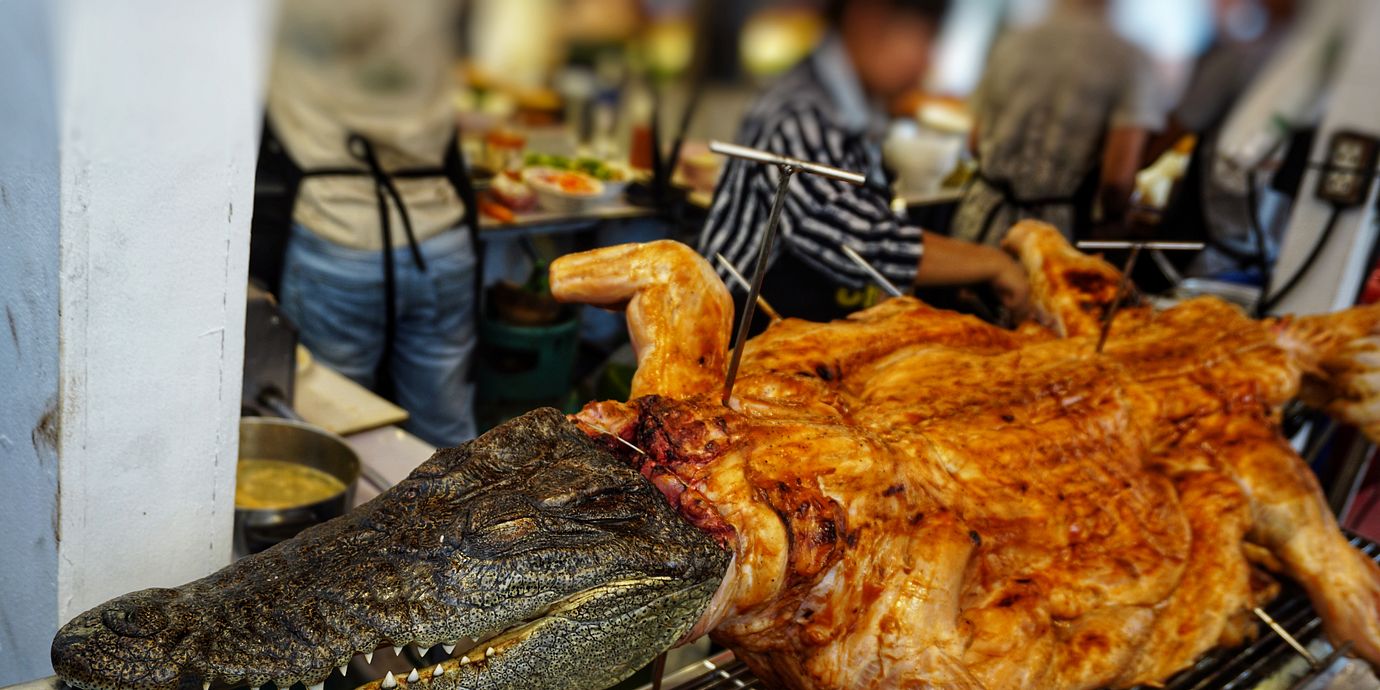
Thailand har drabbats av afrikansk svinpest. Sedan i somras har nästan 160 000 grisar avlivats. Bristen har lett till att efterfrågan ökat på det billigare substitutet, krokodilkött, enligt Nikkei Asia.
Myndigheterna misstänks ha försökt mörka utbrottet när de hävdade att andra sjukdomar orsakat grisdöden, skriver Nikkei. Bland annat har det största oppositionspartiet, Pheu Thai Party, meddelat att de ska skicka bevis till den nationella antikorruptionskommissionen.
Läs även
bakgrund
Thailand har utbredd korruption och har flera gånger upplöst det största oppositionspartiet
Wikipedia (en)
Until 22 May 2014, the politics of Thailand were conducted within the framework of a constitutional monarchy, whereby the prime minister is the head of government and a hereditary monarch is head of state. The judiciary is independent of the executive and the legislative branches.
Following the coup d'état of 22 May 2014 revoking the 2007 constitution, a military organization called National Council for Peace and Order (NCPO) had taken over administration. The chief of NCPO abolished the national assembly and assumed the responsibilities of the legislative branch. Under the martial law enforced throughout the kingdom, military courts have been tasked to be responsible for some cases that are normally under the civilian courts. However, the court system, including the Constitutional Court, still remains in existence, even without the constitution. The NCPO was formally dissolved following the swearing-in of the new cabinet on 16 July 2019.Thai kingdoms and the late Kingdom of Siam were under absolute rule of kings. After the "democratic revolution" in 1932, led by Westernized bureaucrats and a tradition-oriented military, the country officially became a constitutional monarchy with a prime minister as the government head. The first written constitution was issued. Politics became the arena of fighting factions between old and new elites, bureaucrats, and generals. Coups happened from time to time, often bringing the country under the rule of yet another junta. To date Thailand has had 20 charters and constitutions, reflecting a high degree of political instability. After successful coups, military regimes have abrogated existing constitutions and promulgated interim charters. Negotiations between politicians, bureaucrats, influence peddlers, Corporate Leaders and Army Officers have become a driving force in the restoration of temporary political stability.
The Economist Intelligence Unit rated Thailand a "flawed democracy" in 2019, a major increase of 1.69 points (of 10.00) from the last year; it had been in the "hybrid regime" category.
Omni är politiskt obundna och oberoende. Vi strävar efter att ge fler perspektiv på nyheterna. Har du frågor eller synpunkter kring vår rapportering? Kontakta redaktionen