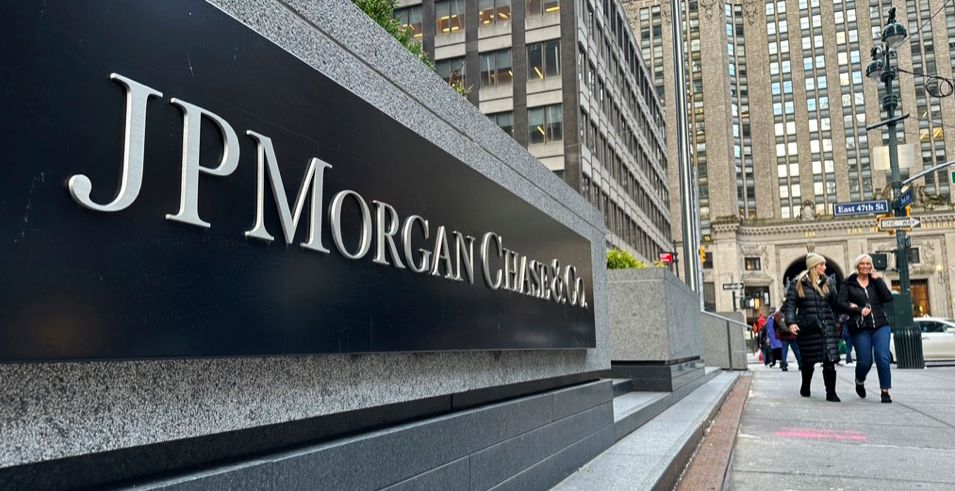
JP Morgan: Kreditfrossan leder till dyrare finansiering
Det har blivit dyrare för banker att finansiera sin verksamhet efter kreditfrossan i kölvattnet på de uppmärksammade konkurserna i Tricolor och First Brands. Det varnar JP Morgan, skriver Financial Times.
Storbankens analytiker noterar att investerare är oroliga för att banksektorns balansräkningar ska innehålla dolda kreditrisker. Konkurserna har ökat fokus på riskerna med alternativ kreditgivning, så kallad private credit, som ofta bygger på snåriga och svåröverskådliga affärsupplägg.
Tricolor var verksamt inom privat långivning och riktade in sig på riskfyllda lån till bilköpare. First Brands tillverkade delar till fordonsindustrin och var till stor del finansierad genom privata lån.
bakgrund
Private credit
Wikipedia (en)
Private credit is an asset defined by non-bank lending where the debt is not issued or traded on the public markets. "Private credit" can also be referred to as "direct lending" or "private lending". It is a subset of "alternative credit". Estimations of the global private credit industry's size vary; as of April 2024, the International Monetary Fund claims it is just over $2 trillion, while JPMorgan claims it to be $3.14 trillion.
The private credit market has shifted away from banks in recent decades. In 1994, U.S. bank underwriting covered over 70 percent of middle market loans. By 2020, U.S. banks issued/held around 10 percent of middle market loans. The direct lending market expanded rapidly after the 2008 financial crisis, when the SEC tightened restrictions and capital requirements on public banks. As banks decreased their lending activity, nonbank lenders took their place to address the continued demand for debt financing from corporate borrowers.
Private credit has been one of the fastest-growing asset classes. By 2017, private debt fundraising exceeded $100B. In 2024, private debt funds provided 77% of leveraged buyout debt financing globally, representing the highest share since 2015. Banks provided the remaining 23%, notably representing the lowest share for banks over the same period.
One factor for the rapid growth has been investor demand. As of 2018, returns were averaging 8.1% IRR across all private credit strategies with some strategies yielding as high as 14% IRR. Returns have exceeded those of the S&P 500 index every year since 2000. At the same time, supply increased as companies turned to non-bank lenders after the 2008 financial crisis due to stricter lending requirements. Private credit investment rose in emerging and developing markets by 89% to US$10.8 billion in 2022.
One recent trend has been the rise of covenant-lite loans (which is also an issue for publicly traded investment grade and high yield debt). This has been driven by investor demand for the relatively high yield compared to alternatives and a willingness to accept less protections. This has resulted in fewer company restrictions and fewer investors' rights if the company struggles. That being said, for the investment firms, covenant-lite loans can also be helpful because of the negative optics if a portfolio company goes into default, and fewer restrictions means fewer ways a company can go into default.
Omni är politiskt obundna och oberoende. Vi strävar efter att ge fler perspektiv på nyheterna. Har du frågor eller synpunkter kring vår rapportering? Kontakta redaktionen