Kongresstöd för reform som kan stoppa techjättars förvärv: ”Inte längre bara snack”
Republikanerna och Demokraterna kan, om de enas, genomföra den största reformen av USA:s konkurrenslagstiftning på flera årtionden, skriver WSJ.
Båda partierna har talat om att rusta upp regelverket. I den reform som föreslås nu finns det bland annat förslag om en högre tröskel för branschdominerande företag att göra bolagsförvärv. Förslaget innebär att vissa techjättar skulle kunna tvingas att dela upp sina verksamheter i separata enheter.
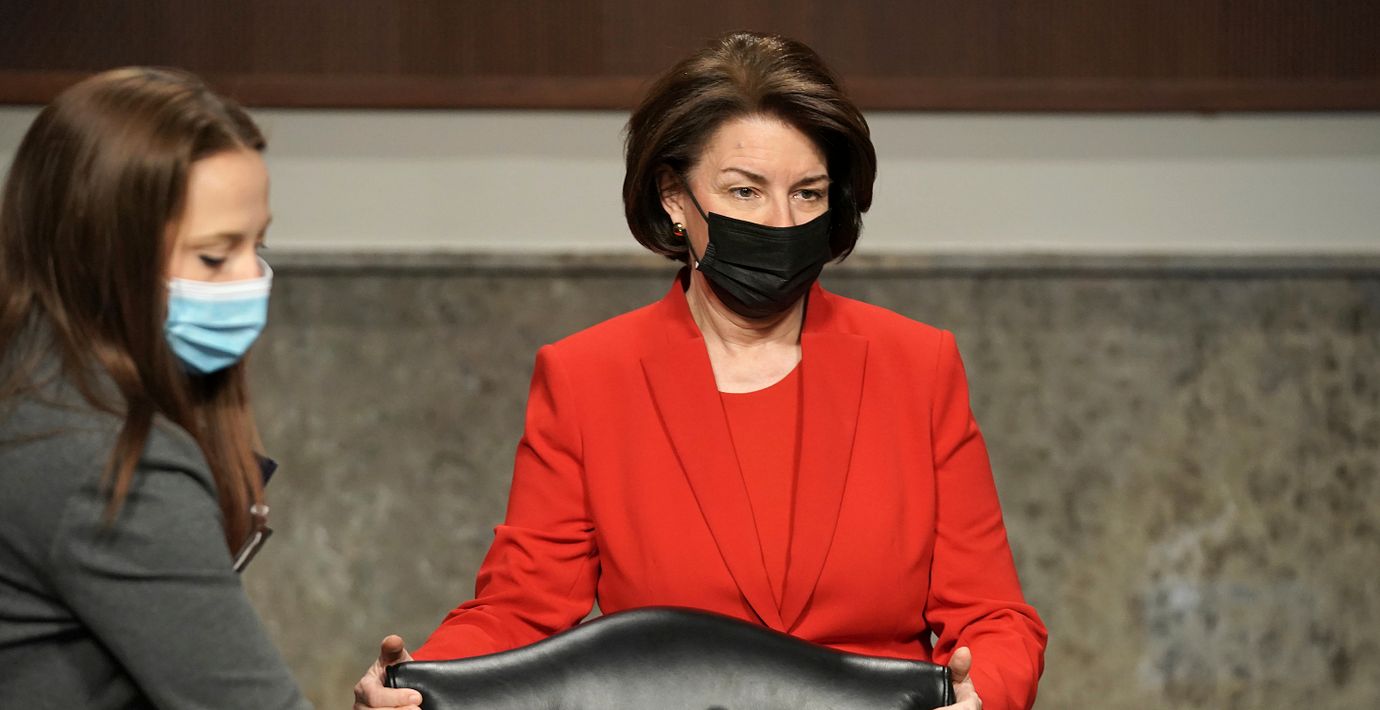
– Samtalen är mer verklighetsförankrade nu än någonsin, säger demokraten Amy Klobuchar som leder ett underutskott på ämnet.
– Det är inte bara snack. Människor vill se handlingskraft, säger hon.
USA:s konkurrenslagstiftning
Wikipedia (en)
In the United States, antitrust law is a collection of federal and state government laws that regulate the conduct and organization of business corporations and are generally intended to promote competition for the benefit of consumers. The main statutes are the Sherman Act of 1890, the Clayton Act of 1914 and the Federal Trade Commission Act of 1914. These Acts serve three major functions. First, Section 1 of the Sherman Act prohibits price-fixing and the operation of cartels, and prohibits other collusive practices that unreasonably restrain trade. Second, Section 7 of the Clayton Act restricts the mergers and acquisitions of organizations that would likely substantially lessen competition. Third, Section 2 of the Sherman Act prohibits the abuse of monopoly power.Federal antitrust laws provide for both civil and criminal enforcement of antitrust laws. The Federal Trade Commission, the Antitrust Division of the U.S. Department of Justice, and private parties who are sufficiently affected may all bring civil actions in the courts to enforce the antitrust laws. However, criminal antitrust enforcement is done only by the Justice Department. U.S. states also have antitrust statutes that govern commerce occurring solely within their state borders.
The scope of antitrust laws, and the degree to which they should interfere in an enterprise's freedom to conduct business, or to protect smaller businesses, communities and consumers, are strongly debated. Some economists argue that antitrust laws, in effect, impede competition, and discourage businesses from activities that would be beneficial to society. One view suggests that antitrust laws should focus solely on the benefits to consumers and overall efficiency, while a broad range of legal and economic theory sees the role of antitrust laws as also controlling economic power in the public interest. A survey of 568 members of the American Economic Association (AEA) in 2011 found that a majority of 87 percent of respondents broadly agreed with the statement "Antitrust laws should be enforced vigorously."
Läs även
Omni är politiskt obundna och oberoende. Vi strävar efter att ge fler perspektiv på nyheterna. Har du frågor eller synpunkter kring vår rapportering? Kontakta redaktionen