Mellanösterns AI-doldis G42 i kläm mellan supermakterna
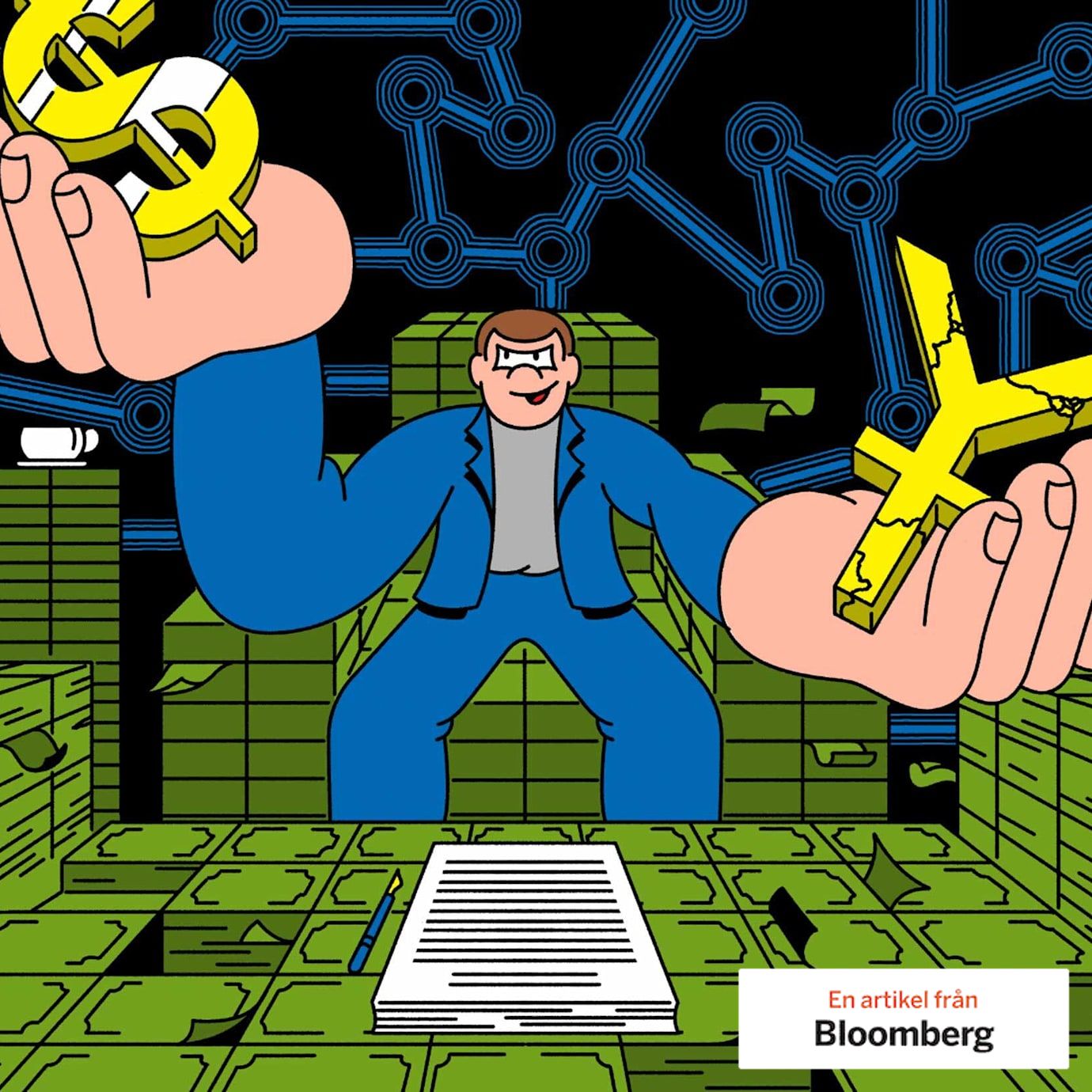
Relativt okänt för västvärlden seglar den Abu Dhabi-baserade startupen G42 upp som en allt viktigare spelare inom AI, rymdteknik och genteknik. Bolaget har ett tätt samarbete med både USA och Kina, skriver WSJ.
Men i takt med att det geopolitiska spelet mellan supermakterna intensifieras har bolaget insett att det inte kan spela för båda lagen. Ett nytt partnerskap med Microsoft blev tillslut det avgörande draget.
 Bloomberg
Caught Between the US and China, a Powerful AI Upstart Chooses Sides
Abu Dhabi-based G42 found it could no longer play for both teams.
G42, a startup in Abu Dhabi, has made itself into an up-and-coming technology conglomerate over the past six years, with a sprawling product portfolio that extends into large language models, human genomics and spacecraft. While mostly unknown outside of the Middle East, G42 has become intertwined with some of the biggest US technology and artificial intelligence companies, including Amazon.com Inc. and OpenAI Inc. A defining moment for G42 came on April 16, when Microsoft Corp. revealed a $1.5 billion stake in the company. “We choose Microsoft as our key partner,” Peng Xiao, G42’s chief executive officer, said in an interview with Bloomberg News ahead of the announcement. “We feel very privileged that they felt the same way.”
The new relationship was remarkable to those who’ve been paying attention to G42’s rise. Delicate geopolitical dynamics have surrounded the organization from its inception. G42 isn’t a normal tech startup. Its chairman, Sheikh Tahnoon bin Zayed Al Nahyan, is a powerful member of the Abu Dhabi royal family and a critical figure in global finance and Persian Gulf security. G42 and its growing cast of related entities are all part of his $1.5 trillion corporate empire and serve as a plank for the United Arab Emirates’ plans to put AI at the center of its economic future.
“We choose Microsoft as our key partner. We feel very privileged that they felt the same way”
In the US, though, the most relevant matter is G42’s connections to China. The UAE company began as a data analysis and surveillance operation in a country where the lines between the state and the private sector are blurred and industry players have few qualms about working with Chinese businesses. G42 teamed up with Chinese medical companies on Covid-19 tests and vaccines, bought electronics equipment from Chinese suppliers and directly financed several Chinese startups, including TikTok parent ByteDance Ltd.
When G42 first started inking deals with American companies to sell AI services and build supercomputers, US officials worried it could open backdoors for the Chinese government, especially when G42 began moving rapidly into cloud computing and chips, the building blocks of advanced AI. In January, Mike Gallagher, who chaired the China select committee as a Republican congressman, called for the US to consider sanctions unless G42 severed ties with its Chinese investments and suppliers such as Huawei Technologies Co.
US intelligence officials were particularly fixated on Xiao, say people with direct knowledge of the matter who requested anonymity because they weren’t authorized to speak publicly. A China-born technologist, Xiao was educated in the US and worked at MicroStrategy Inc., a Virginia business intelligence firm, where he maintained a low public profile. He received US citizenship—only to renounce it after moving to the UAE in 2015. Xiao told Bloomberg News in an interview earlier this year that he relocated to the country after his friend Yousef Al Otaiba, the son of an oil magnate and ambassador to the US, recruited him to lead Pegasus, a unit of the spyware firm DarkMatter that was affiliated with the UAE’s national security apparatus. In November 2023 the New York Times reported that the Central Intelligence Agency kept a classified profile on Xiao, a 50-year-old exercise fanatic with a taste for well-tailored suits. G42 said at the time that it will “remain in full compliance” with US regulations.
But Xiao and Abu Dhabi’s leaders were able to work out a quiet arrangement with the US to navigate the intensifying rivalry between the two global superpowers. Last summer officials from the US Bureau of Industry and Security, an agency that monitors export controls and treaties, flew to the UAE for a series of private meetings with Xiao and other G42 representatives, according to people familiar with the discussions. The Americans presented an ultimatum: The US was in an economic war with China, and G42 needed to pick a side. A representative for BIS didn’t respond to requests for comment.
“This is the kind of partnership that can really bring the cloud and AI to the Global South, probably a decade faster than would otherwise be the case”
In the months that followed, Xiao declared that G42 was divesting its Chinese holdings and removing Chinese companies from its supply chain. Talal Al Kaissi, a G42 executive vice president, said in an interview in the fall that the company would limit any partnerships with Chinese tech. “Let’s put it this way,” he said, “it’ll make it much more difficult for ourselves if we were to expand on that in any way.”
A G42 spokesperson told Bloomberg News last week that the divestment came from a desire “to partner with the most sophisticated AI technology companies in the world.” The company declined to answer follow-up questions.
Microsoft’s investment was a tangible reward for the decision to part ways with China. In a photo-op accompanying the news, Xiao posed at a table signing documents next to Brad Smith, Microsoft’s president and G42’s newest board member. Sheikh Tahnoon stood behind them, beaming.
In a joint interview, Smith and Xiao said they worked in “close collaboration” with the US and UAE governments. Smith called the deal a “first step” for the two companies, hinting at services in Africa and Central Asia, geographies where the US has worried about China’s creeping influence. “This is the kind of partnership that can really bring the cloud and AI to the Global South, probably a decade faster than would otherwise be the case,” Smith said.
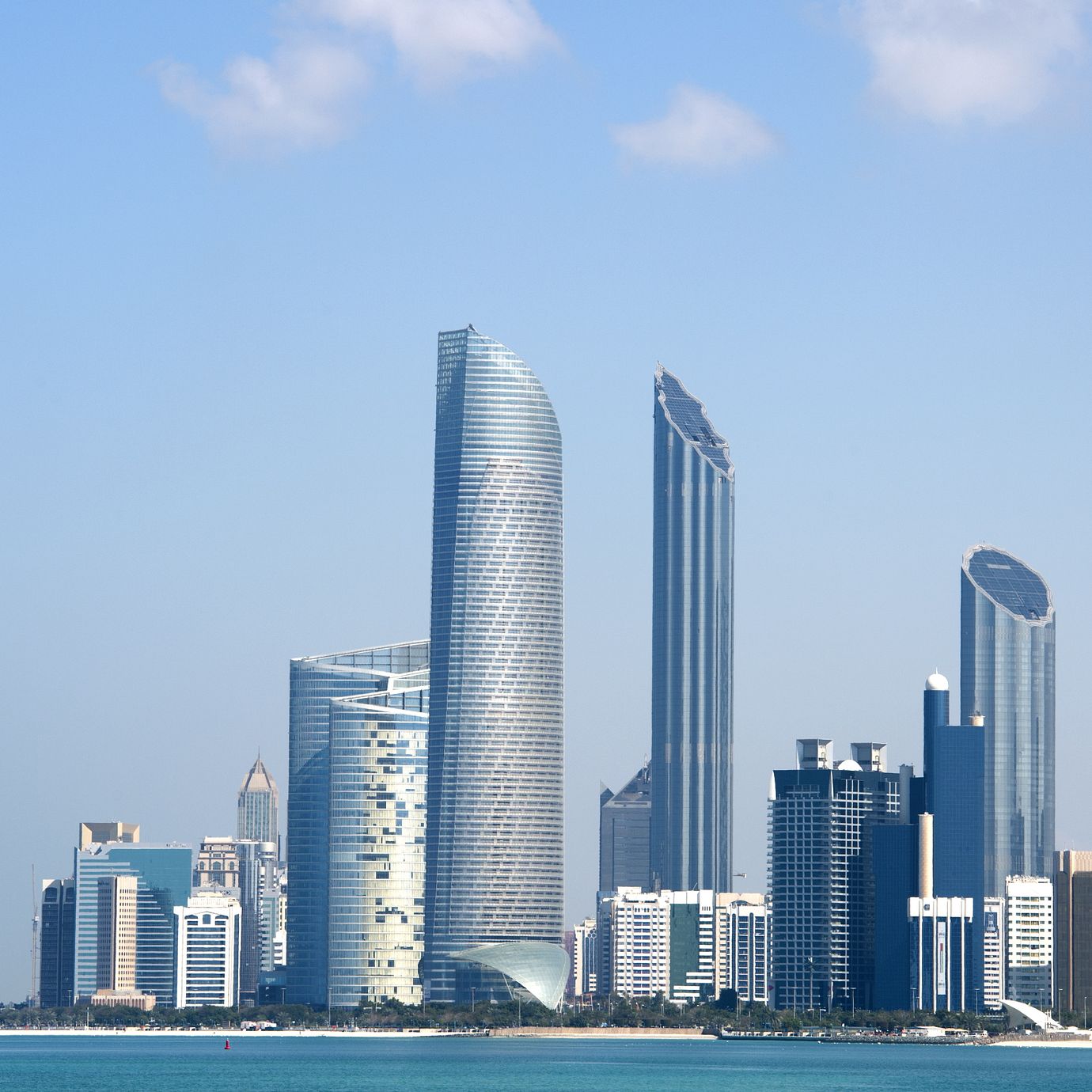
G42’s ability to pull this off illustrates the leverage a tech powerhouse in the Gulf has in America’s current cold war. The UAE, a key US military ally, is seen as a moderating force in the increasingly volatile Middle East. The oil-rich emirate of Abu Dhabi controls three sovereign wealth funds, making the city-state a frequent stopover for bankers, venture capitalists and tech tycoons. Around the same time as the Xiao-Smith photo, OpenAI’s Sam Altman visited Abu Dhabi to pitch a global coalition for building chips and data centers to support AI software. The nation, Altman said on a prior visit, was talking about AI “before it was cool.”
The expansive vision of Abu Dhabi’s AI crown jewel is evident in its name. The “42” is a nod to the Douglas Adams sci-fi classic, The Hitchhiker’s Guide to the Galaxy, where the number signifies the answer to a question about the meaning of “life, the universe and everything.” (The “G” stands for “group.”) The company has separate divisions to focus on data centers (Khazna), cloud computing (Core42) and “predictive analysis” (Presight), and it has one coming on geospatial analysis and satellites (Space42). G42 is also working with the UAE’s government to sequence the DNA of the Emirati population under a health unit (M42). People who have worked with G42 but asked not to be named to preserve relationships with the company say its weakness can be a lack of focus, citing several projects that were announced and quickly flamed out. G42 doesn’t disclose sales, though some of its larger subsidiaries do, and those units, such as Presight, rely heavily on contracts with the Abu Dhabi government and corporate investors.
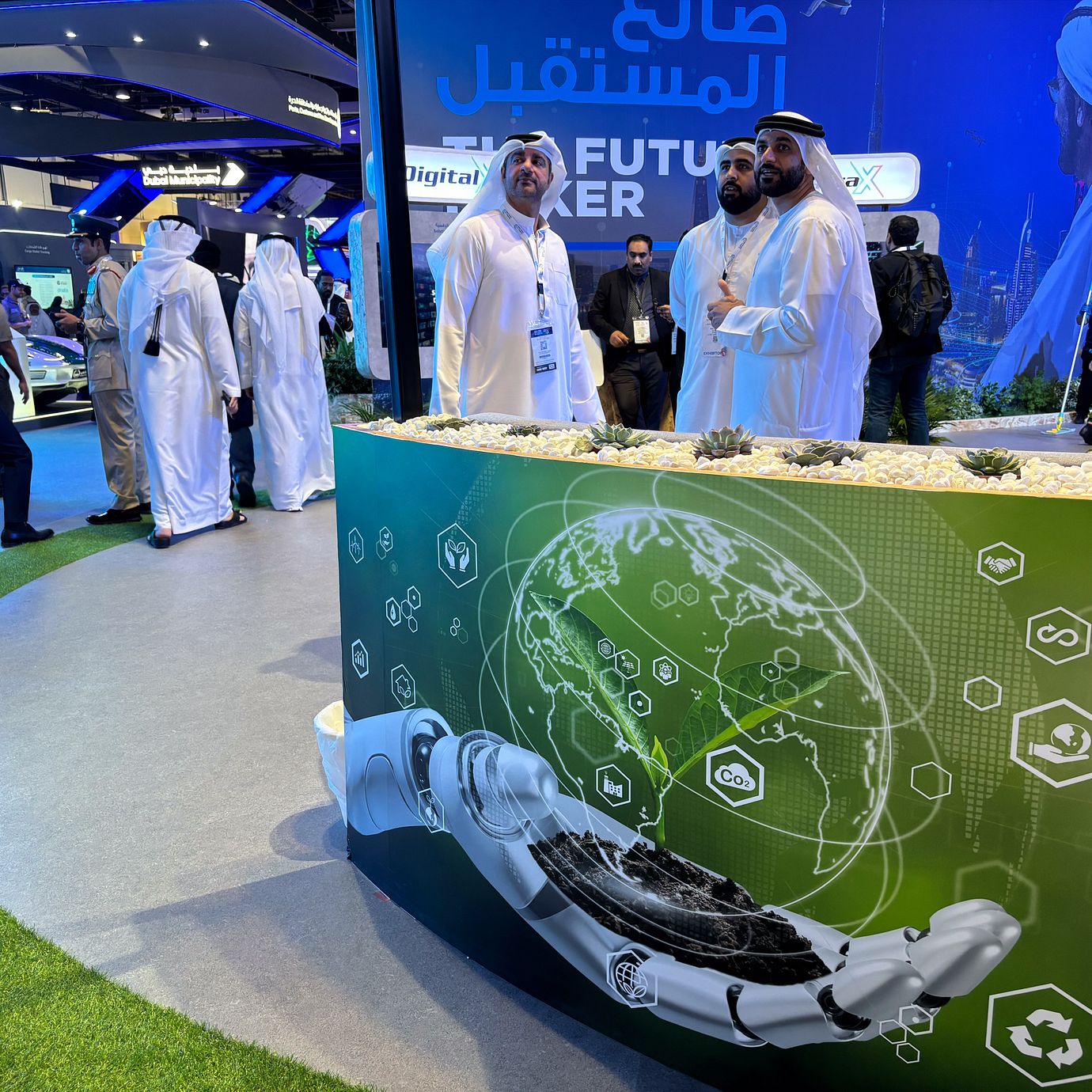
The DNA sequencing project revealed limitations in G42’s capability to navigate the US-China rivalry. When G42 started its genomics program, the company used medical equipment for gene sequencing from the UK’s Oxford Nanopore Technologies, US-based Illumina and China-based BGI Genomics. Covid arrived soon after, and G42, like other companies, directed efforts to handle the pandemic. G42 began using BGI equipment to test Emiratis for the disease.
The use of Chinese-made technology caused an outcry in the US, where one official called BGI “the Huawei of genomics.” Further complicating things for G42, Illumina sued BGI over a patent dispute. After those two incidents, G42 created an internal wall. Chinese nationals on staff could deal solely with BGI machines and data, only Americans could touch the Illumina equipment, and the teams worked in separate facilities, says Nitin Saksena, a scientist who managed G42’s genomics program. “It was very, very chaotic,” he says. (The US sanctioned BGI in 2023.) Saksena, who left the company in 2022, says that G42’s genomics program can still be a “game changer” in medicine and health but that the company underestimated American hostility to Chinese tech. The UAE is “trapped in the middle,” he says.
Breaking ties with the world’s second-largest economy wasn’t a decision G42 took lightly. Ripping out Chinese hardware will cost it hundreds of millions of dollars, a hit the company told officials it’s willing to absorb to partner with the US, according to people familiar with the company. Xiao himself has been telegraphing the urgency of mending fences with Washington to achieve G42’s sci-fi-like ambitions.
“America needs the UAE on our team”
As it stands, though, it looks like G42 and its CEO have come out of a delicate period with more influence than ever, according to a US official familiar with the business operations, who wasn’t authorized to discuss diplomatic matters and asked not to be named. In recent months, Xiao won seats on the UAE’s new Council for Artificial Intelligence and on the board of MGX, a new Emirati investment vehicle aiming to spend some $100 billion on AI.
It’s not certain that G42’s Chinese divestment commitments and Microsoft alliance would assuage all US security concerns about the company and Xiao. Some members of Congress are considering a call for an intelligence briefing on the Microsoft deal, according to a congressional aide familiar with the discussions.
But for some US officials, the benefits of having a wealthy technology ally are worth the risk. The Gulf is one of the only places outside of Taiwan with the cash and gumption to build or fund semiconductors. “The reality is we need more chips,” says Mike Rounds, a Republican senator from South Dakota. In a speech in Washington in 2022, Rounds called on the US to invest in AI with a gusto “equal to or perhaps greater than” that of the Manhattan Project. He offered a template for America to follow: the UAE and G42.
Even Gallagher, who’s been a harsh critic of G42, welcomed news of the Microsoft deal: “America needs the UAE on our team.”
For more articles like this please visit us at bloomberg.com