Polens nya högerpresident har redan skrämt investerare
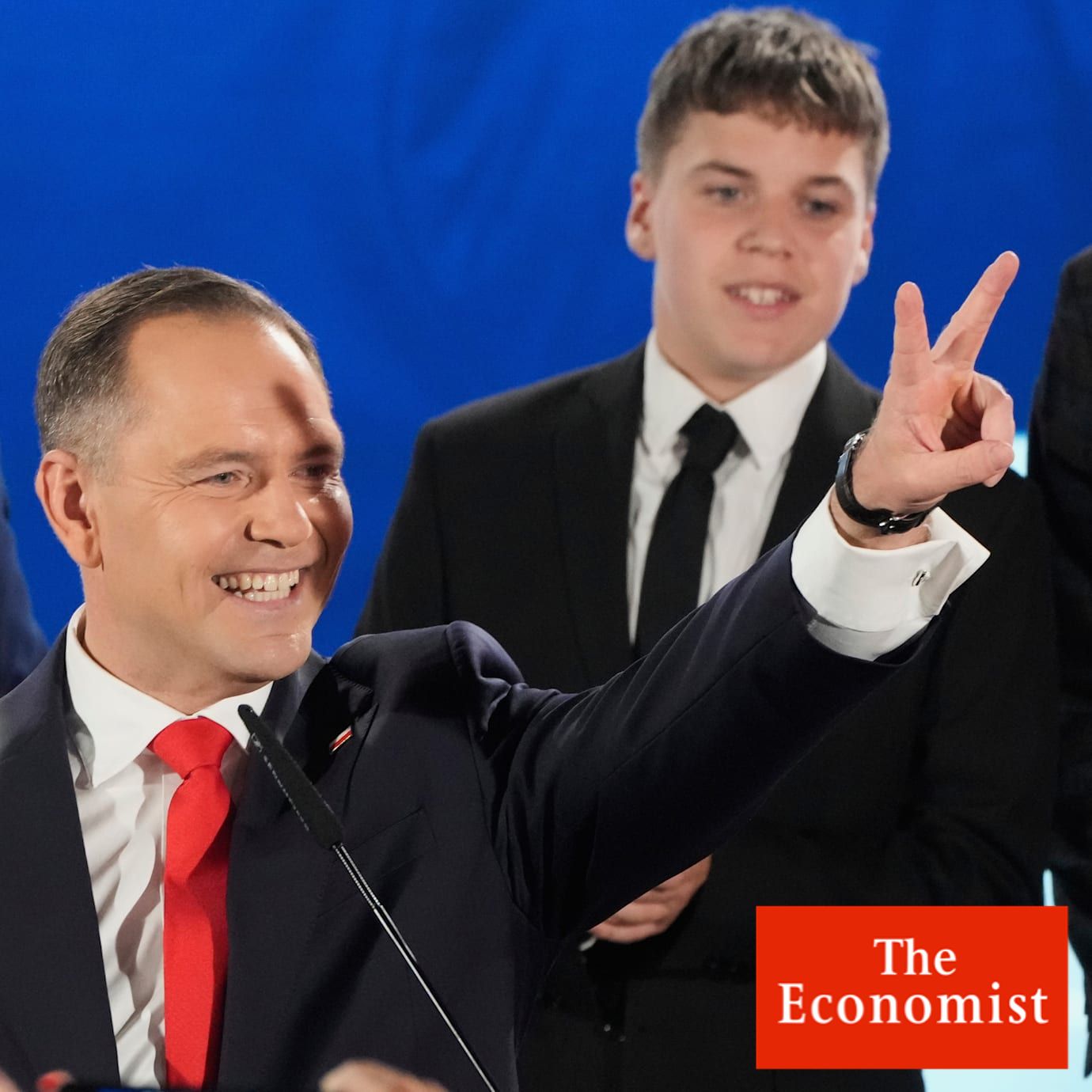
Karol Nawrockis seger i det polska presidentvalet skapar oro bland investerare, skriver The Economist. Som kandidat för det högernationalistiska partiet Lag och Rättvisa lovade han att ”inte låta Tusk konsolidera sin makt”. Han väntas nu använda sin vetorätt för att stoppa regeringens reformer, bland annat inom grön omställning och EU-integration.
Warszawabörsen, som varit en av världens bäst presterande i år, föll 2 procent efter valresultatet. Nawrocki, som backas av Trumpadministrationen och Europas ytterhöger, ses som en risk för både rättssäkerhet och investeringsklimat.
 The Economist
What Poland’s new hard-right president means for Europe
Karol Nawrocki is the liberals’ nightmare.
The presidential election in Poland on June 1st was a distillation of the political choice facing all of Europe these days. Rafal Trzaskowski, the liberal mayor of Warsaw, was backed by the centrist, pro-European government. Karol Nawrocki, a nationalist historian and former amateur boxer, was nominated by Law and Justice (PiS), the hard-right opposition party, and supported by Donald Trump’s administration and by populists abroad.
The campaign was bitter, and close enough that the exit polls on the evening of the election had the Warsaw mayor narrowly ahead. But when all the votes were counted it was Mr Nawrocki who had won, taking 50.9% of the vote to Mr Trzaskowski’s 49.1%. The final results, published early on June 2nd, put the margin of victory at some 300,000 votes.
Mr Nawrocki’s victory has already spooked investors
Mr Nawrocki presented himself as the candidate to hold the government of the prime minister, Donald Tusk, in check. “We will not allow Donald Tusk to consolidate his power,” he said at his post-election rally, denouncing the government for aiming to achieve a “monopoly”. For supporters of Mr Trzaskowski or Mr Tusk that has an ironic ring. Since coming to office in 2023 the prime minister has been trying to undo PiS’s attempt at state capture while it was in power from 2015 to 2023, when it packed the courts and independent institutions with its cronies. Conflicts with European courts led the European Union to cut off aid for years.
Mr Nawrocki’s victory may now cripple the government’s effort to repair the rule of law. The PiS-backed candidate is new to politics, but he will wield a simple and powerful tool: he can use the presidential veto to block Mr Tusk’s agenda. The government lacks the two-thirds majority in parliament needed to override it. The hard right’s win seems also likely to touch off a crisis for Mr Tusk’s eclectic coalition, which includes everything from progressive leftists to a conservative farmers’ party. PiS will doubtless try to persuade right-leaning MPs to defect and bring down the government. Even if it fails, the next elections to parliament are due in 2027.

Either way, Mr Tusk appears now to be a lame duck. Mr Nawrocki’s victory has already spooked investors. Poland’s stockmarket, one of the world‘s best performers this year, dipped by as much as 2% after the results were announced.
Mr Trzaskowski owes his loss in part to the government’s inability to deliver. When Mr Tusk won the election in 2023, he promised to quickly purge PiS’s cronies from the courts, public media and state-owned companies. But the outgoing president, Andrzej Duda, also aligned with PiS, blocked crucial reforms and routine appointments. Mr Tusk put much of his rule-of-law agenda on hold. That was hardly Mr Tusk’s fault, but on other priorities, such as liberalising access to abortion (which PiS had all but entirely banned), he was unable to get his unruly coalition to agree. Poles have clearly lost patience: in an exit poll on Sunday by OGB, a Polish pollster, 47% of voters said they had a poor opinion of the government, while just 30% had a favourable one.
With Mr Nawrocki in the presidential palace, Mr Tusk’s chances of improving his position are slim. The president-elect’s rhetoric on election night was largely negative. He bashed the government’s economic policies and, more concretely, pledged to limit its power. In addition to frustrating efforts to depoliticise the courts and liberalise abortion laws, he has promised to block Poland’s pivot towards green energy.
For many of Mr Nawrocki’s opponents, the most troubling aspect of his victory is his tainted past
Early elections would probably not go well for Mr Tusk and his Civic Coalition (KO). Polls suggest that PiS would have the best shot at forming a new government. It might form a coalition with Konfederacja, a libertarian hard-right party popular with young men, whose candidate drew nearly 15% of the vote in the first round of the presidential elections.
The Polish presidency is not responsible for EU policy. Mr Tusk, not Mr Nawrocki, will continue to attend EU summits. Nonetheless, the president-elect can be expected to try to shift the country in a Eurosceptic direction. He was endorsed during the campaign by Viktor Orban, Hungary’s prime minister, and by others from the EU’s populist bloc. “We don’t want to be a European Union province,” he told supporters at a rally. Mr Nawrocki has also turned away from PiS’s traditionally firm support for Ukraine, pledging during the campaign to oppose the country’s admission to NATO, though this is currently unlikely to happen any time soon.
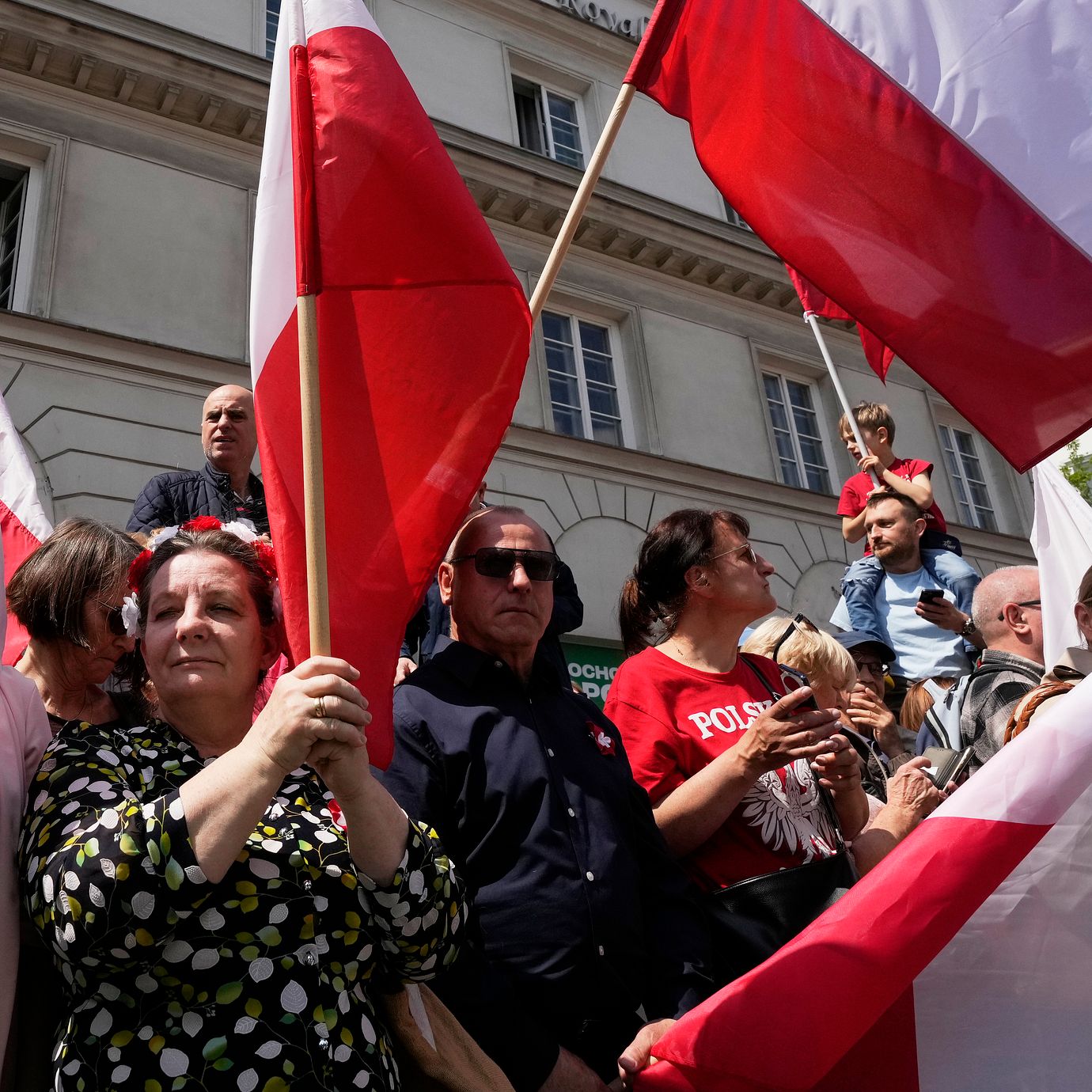
For many of Mr Nawrocki’s opponents, the most troubling aspect of his victory is his tainted past. In the last weeks of the campaign, journalists reported claims that in the early 2000s he procured sex workers for guests at a hotel where he worked. He denies those allegations. He has acknowledged, however, that in his 20s he engaged in mass brawls with other football hooligans. Newspapers reported for weeks on his relationship with an aged neighbour, whom he allegedly scammed out of his flat. Mr Nawrocki and his allies call such allegations a smear campaign by Mr Trzaskowski and the state media.
The hopes of the new president’s supporters seem to consist mainly of things he should prevent
Having a president with such a reputation is a poor sign for the health of Polish politics. Radoslaw Markowski, a political scientist at the University of Social Sciences and Humanities in Warsaw, finds it worrying that “a man with no political qualifications, who muddles basic issues and has a muddy past” could become president. Other Poles worry more that Mr Nawrocki’s rhetoric will alienate European allies. “Poland has always been at the centre of European wars,” said Marcin, a voter in Warsaw. “No one is going to come defend us if we cut ourselves off from the rest of the continent.”
For supporters of PiS, Mr Nawrocki’s win is a triumph over the international liberal elite. Others on the hard right congratulated the winner as well. Slawomir Mentzen, the leader of Konfederacja, said he hoped the president-elect would “not repeat the mistakes of [his] predecessors”. Those who backed him after voting for other candidates in the first round, Mr Mentzen wrote on X, expected him to block new taxes and “restrictions on freedom of speech”, and to “not put the interests of Ukraine on an equal footing with ours”. The hopes of the new president’s supporters seem to consist mainly of things he should prevent.
© 2025 The Economist Newspaper Limited. All rights reserved.