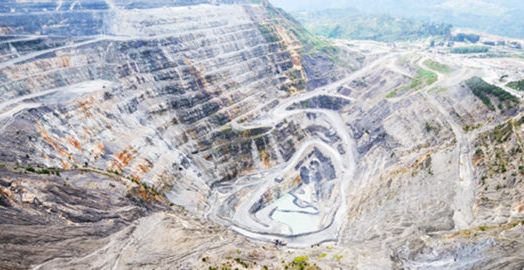
Regering lägger beslag på gigantisk guldgruva
Regeringen i Papua Nya Guinea verkar vilja lägga beslag på den stora Porgera-guldgruvan, uppger den kanadensiska ägaren Barrick Gold enligt TT.
Militär och polis har enligt myndighetskällor skickats till gruvan, som ligger i ett svårtillgängligt och osäkert höglandsområde.
Regeringen menar att det 20-åriga kontraktet med Barrick Gold och kinesiska Zijin Mining har löpt ut. Barrick Gold håller inte med, och kallar det en tvångsnationalisering, skriver TT.
Porgera står för en tiondel av Papua Nya Guineas exportintäkter och i fjol bröts över 8 ton guld i gruvan.
Papua Nya Guinea
Wikipedia (en)
Papua New Guinea (PNG; , also US: ; Tok Pisin: Papua Niugini; Hiri Motu: Papua Niu Gini), officially the Independent State of Papua New Guinea (Tok Pisin: Independen Stet bilong Papua Niugini; Hiri Motu: Independen Stet bilong Papua Niu Gini), is a country in Oceania that occupies the eastern half of the island of New Guinea and its offshore islands in Melanesia, a region of the southwestern Pacific Ocean north of Australia. Its capital, located along its southeastern coast, is Port Moresby. The western half of New Guinea forms the Indonesian provinces of Papua and West Papua. It is the world's 3rd largest island country with 462,840 km2 (178,700 sq mi).At the national level, after being ruled by three external powers since 1884, Papua New Guinea established its sovereignty in 1975. This followed nearly 60 years of Australian administration, which started during World War I. It became an independent Commonwealth realm in 1975 with Elizabeth II as its queen. It also became a member of the Commonwealth of Nations in its own right.
Papua New Guinea is one of the most culturally diverse countries in the world. It is also one of the most rural, as only eighteen per cent of its people live in urban centres. There are 851 known languages in the country, of which 11 now have no known speakers. Most of the population of more than 8 million people lives in customary communities, which are as diverse as the languages. The country is one of the world's least explored, culturally and geographically. It is known to have numerous groups of uncontacted peoples, and researchers believe there are many undiscovered species of plants and animals in the interior.Papua New Guinea is classified as a developing economy by the International Monetary Fund. Strong growth in Papua New Guinea's mining and resource sector led to the country becoming the sixth-fastest-growing economy in the world in 2011. Growth was expected to slow once major resource projects came on line in 2015. Mining remains a major economic factor, however. Local and national governments are discussing the potential of resuming mining operations at the Panguna mine in Bougainville Province, which has been closed since the civil war in the 1980s–1990s. Nearly 40 per cent of the population lives a self-sustainable natural lifestyle with no access to global capital.Most of the people still live in strong traditional social groups based on farming. Their social lives combine traditional religion with modern practices, including primary education. These societies and clans are explicitly acknowledged by the Papua New Guinea Constitution, which expresses the wish for "traditional villages and communities to remain as viable units of Papua New Guinean society" and protects their continuing importance to local and national community life. The nation is an observer state in the Association of Southeast Asian Nations or ASEAN since 1976, and has already filed its application for full membership status. It is a full member of the Pacific Community (SPC), the Pacific Islands Forum (formerly South Pacific Forum) and the Commonwealth of Nations.
bakgrund
Porgera-gruvan
Wikipedia (en)
The Porgera Gold Mine is a large gold and silver mining operation in Enga province, Papua New Guinea (PNG), located at the head of the Porgera Valley. The mine is situated in the rain forest covered highlands at an altitude of 2,200 to 2,700 m, in a region of high rainfall, landslides, and frequent earthquakes.The Porgera Gold Mine is operated by the Porgera Joint Venture (PJV). It began production in 1990 and was developed and operated by Placer Dome which was acquired in 2006 by Barrick Gold, the world's largest gold mining company at that time. Emperor Gold Mine, holding a minority stake of 20%, sold to Barrick in April 2007. This gave Barrick (Niugini) a 95% ownership of the operation. The remaining 5% is owned by Mineral Resources Enga (MRE), which is owned by the Enga Provincial Government, the Papua New Guinea National Government and the Porgera Landowners Association. Barrick Gold Corporation and Zijin Mining Group each own 50% of Barrick (Niugini) Ltd.
Porgera Gold Mine is the second largest mine in Papua New Guinea and is regarded as one of the world's top ten producing gold mines. In 2009 it produced 572,595 ounces of gold and 94,764 ounces of silver and had 2,500 employees and 500 contractors. Since it began operating, the mine has produced more than 16 million ounces of gold and almost 3 million ounces of silver, accounting for about 12 percent of Papua New Guinea's total exports. The mine's proven and probable mineral reserves as of 2009 amount to 8.1 million ounces of gold.
Porgera Gold Mine is controversial. It has consistently been criticised for environmental and human rights issues. Its own internal investigations have revealed that killings, brutal gang rapes and beatings have been carried out by mine security personnel.
Omni är politiskt obundna och oberoende. Vi strävar efter att ge fler perspektiv på nyheterna. Har du frågor eller synpunkter kring vår rapportering? Kontakta redaktionen