bakgrund
Relationen Japan-Sydkorea
Wikipedia (en)
After the division of Korea, Japan and South Korea established diplomatic relations in December 1965, under the Treaty on Basic Relations between Japan and the Republic of Korea, with Japan recognizing South Korea as the only legitimate government of the whole Korean peninsula.
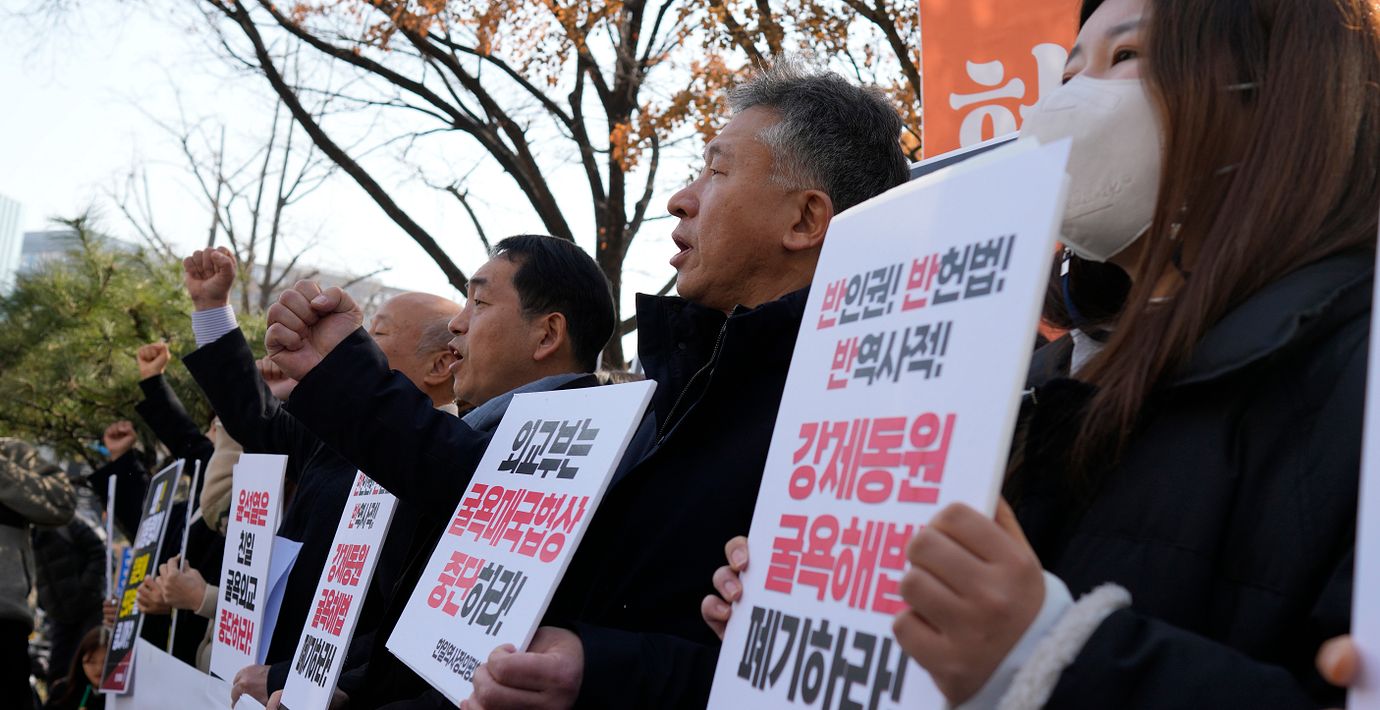
Japan and South Korea are neighbors, and they are both major non-NATO allies of the United States in East Asia. Despite this, the relationship between the two states has greatly deteriorated in recent years, characterized by strong mutual distrust and a number of disputes. These disputes include: territorial claims on Liancourt Rocks (Dokdo or Takeshima), Japanese prime ministers' visits to Yasukuni Shrine, differing views on Imperial Japan's treatment of colonial Korea, and Japan's refusal to negotiate Korea's demands that it apologize or pay reparations for mistreatment of World War II comfort women from Korea. The Diplomatic Bluebook of Japan by the Ministry of Foreign Affairs of Japan in 2018 removed the phrase present in the previous year referring to the ROK as "Japan's most important neighbor that shares strategic interests with Japan." In 2021, South Korea dropped its description of Japan as a "partner" in its latest defense white paper. These tensions have complicated American efforts to promote a common front against Chinese threats in the region.According to a 2014 BBC World Service poll, 13% of Japanese view South Korea's influence positively, with 37% expressing a negative view, while 15% of South Koreans view Japanese influence positively, with 79% expressing negatively, making South Korea, after China, the country with the second most negative perception of Japan in the world. Due to the antagonistic nature of the relationship, the two countries have been described as being in a state of "cold war" by various media commentators.