Ukrainas drönare utmanar batterilogiken i kriget
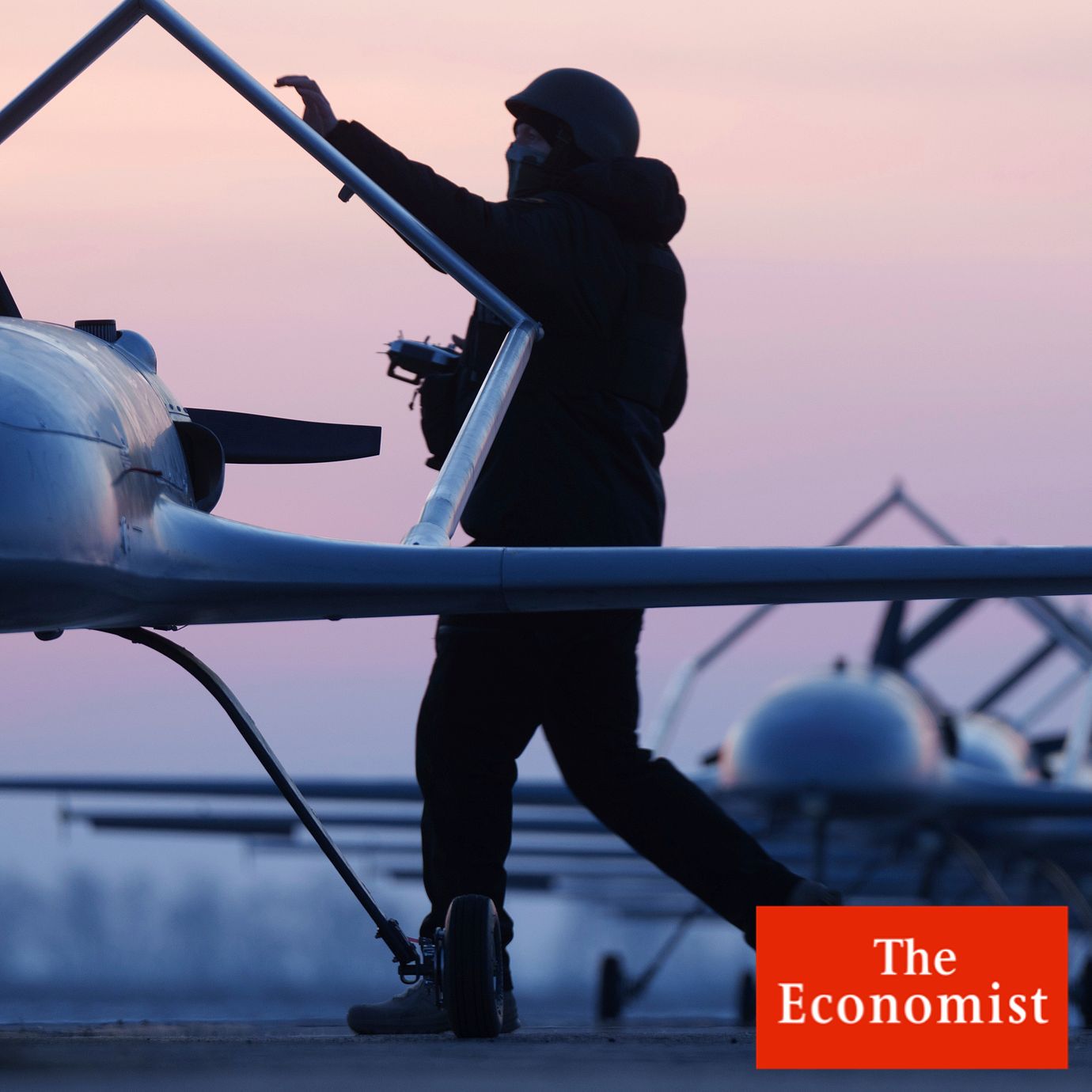
Ukrainas omtalade attack med 117 hemmabyggda drönare, som slog ut ryska flygplan i juni, visar att krigets batteribehov är något helt annat än elbilarnas.
Politiker i väst vill subventionera elbilsbatterier i säkerhetens namn. Men drönare kräver små, enkla batterier – inte avancerade EV-paket.
– Det är otänkbart att en Tesla-fabrik skulle vara lika användbar som en fabrik i Detroit under andra världskriget, säger en försvarsentreprenör.
I praktiken är det gruvor och metallförädling som avgör vem som vinner teknikracet i krigstid, skriver The Economist.
 The Economist
The economic lessons from Ukraine’s spectacular drone success
National security is a weak argument for battery subsidies.
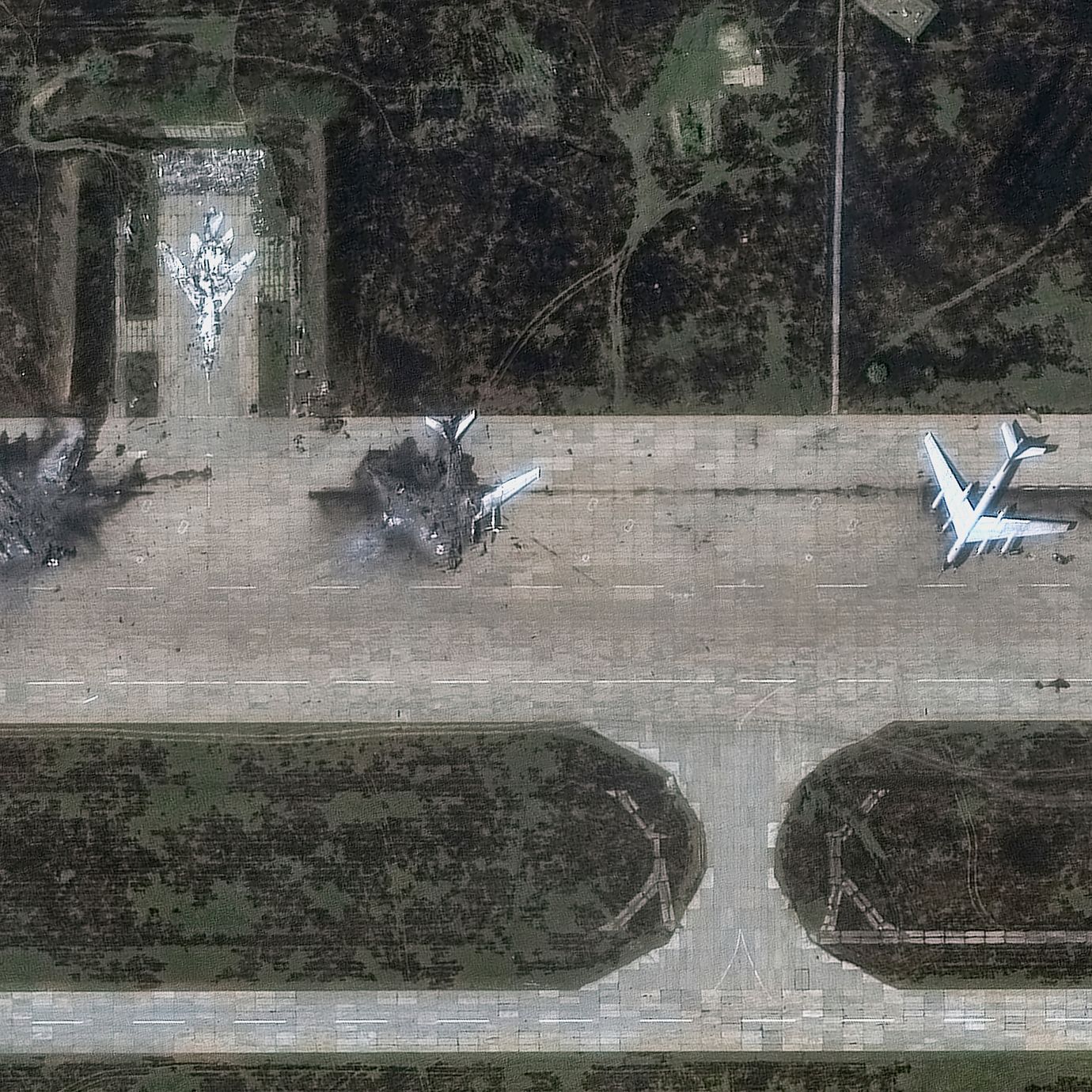
On June 1st Ukraine took military raiding into the 21st century. It did so with little more than ingenuity and 117 drones, which emerged from trucks across Russia—everywhere from Siberia to the Chinese border—and destroyed a dozen or so planes in Vladimir Putin’s long-range air fleet. The raid came amid the Russian president’s relentless bombardment of Ukraine. On June 9th he launched his biggest drone strike of the war, sending 479 machines to hit Ukrainian airfields, cities and factories.
As many as half of casualties on the front line are inflicted by drones, according to a Ukrainian doctor. The “Spider’s Web” operation was a demonstration of the machines’ supreme importance. For the West, it was also a reminder that an important military technology is dominated by an adversary, namely China, which supplies batteries and motors used by both sides. That raises a question. If, say, a conflict over Taiwan were to escalate, could America and its allies step up production fast enough?
Many people believe that a country with a vibrant electric-vehicle industry has a decisive advantage in the manufacture of drones. Lots of the batteries for EVs use lithium-ion technology; so, too, do most shorter-range drones. And in the race for battery supremacy there is only one winner: China, which accounts for 85% of global EV capacity. The European Union is studying whether this dominance would put China ahead in the event of a conflict; American officials are under pressure from companies and think-tanks to dole out subsidies to ensure that the country wins any “battery war”. If subsidising battery production is such a good idea, then President Donald Trump’s budget bill, which promises to end all EV subsidies, is a hugely damaging policy.
America has sought an EV industry to rival China’s since 2009, when the Obama administration first subsidised consumer purchases. Joseph Shapiro of the University of California, Berkeley, and Hunt Allcott of Stanford University estimate that, in 2023, each additional EV sold owing to subsidies cost the government $32,000. Supporters of such an approach see this as sensible not just on environmental grounds, but on national-security ones. The batteries produced by a healthy EV industry could, in the event of a conflict, be repurposed to fuel drones.
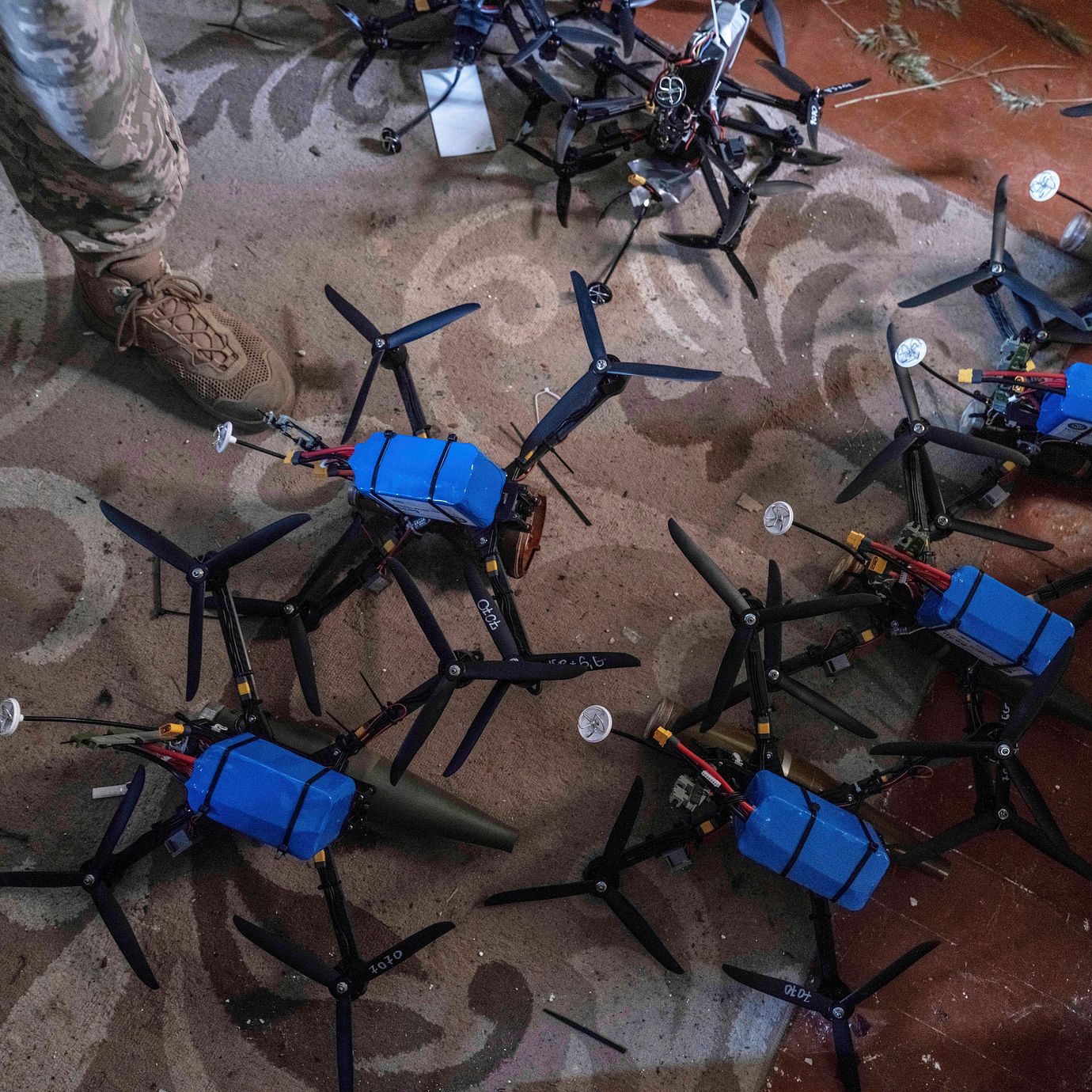
Most Ukrainian drones are single-use, short-range “kamikaze” ones that travel just a few kilometres before blowing themselves up
Consider the mechanics of warfare in Ukraine, however, and the argument becomes less compelling. Ukraine’s drones range from small, autonomous boats patrolling the Black Sea to aircraft that travel hundreds of kilometres into Russia. Most are designed to be made from parts that are cheap, easy to find and simple to put together, according to a firm a few miles outside Kyiv, which builds them in an airy suburban home. Another firm, established two years ago and now making some of Ukraine’s most sophisticated drones, locates its production line in a series of garages, so as to minimise disruption from Russian airstrikes.
Most Ukrainian drones are single-use, short-range “kamikaze” ones that travel just a few kilometres before blowing themselves up—more akin to munitions than aircraft. The batteries of some store a mere 77 watt-hours of energy, compared with the 20,000-100,000Wh common in EVs. Meanwhile, production lines have become less flexible owing to the high-tech nature of modern EV-making. “It is unimaginable...that a Tesla factory would be anywhere near as useful for production as a Detroit factory was in the second world war,” says the boss of a defence firm.
China has grown closer to Russia, so Ukrainian drone producers have found their old Chinese suppliers less keen to do business. Several, including Wild Hornets, now import battery cells from South Korea and assemble their own packs. Pawell, another firm, is working on its own battery chemistry. Already, building batteries in Ukraine is only a little more expensive than buying them from abroad. Wild Hornets sells its ones for simple drones at $90 a piece. Drone batteries, it turns out, are simpler to make in wartime than an EV industry is to nurture in peacetime.
Indeed, American battery-makers could adjust quickly if required—without the need for assistance from EV-makers. For proof, look at their response to the supercharged subsidies that the Biden administration introduced in 2023. Although America’s capacity still lags far behind China’s, the country’s production has surged from 0.11 terawatt-hours in 2022 to 0.44tWh this year. Include production in Europe and among East Asian allies, and that is already sufficient to furnish Ukraine with kamikaze drones for 3,750 years at the current rate of use.
Drop a bombshell
Were American drone production to be hamstrung in a conflict with China, it would not be by industrial capacity. Ukrainian firms are now discovering that the most pressing shortage is motors, rather than batteries. They need magnetic components containing rare-earth metals that are produced and refined by China. More mineral refining, not manufacturing, is the solution.
Another question is whether America’s armed forces would be able to adapt to drone warfare. So far, the Pentagon has been slow to adjust to the pace of drone experimentation and manufacturing demonstrated by Ukraine. The US Army seeks to put 1,000 drones in each of its dozen divisions. The Pentagon’s Replicator Initiative, launched by the Biden administration, aims to field “tens of thousands” of AI-enabled drones. Ukraine claims to have produced 1.5m drones last year, and does so at far lower cost, in part because it is less squeamish about using parts from China.
Industrial-policy advocates might like to rescue EVs from Mr Trump’s chainsaw. Unfortunately for them, arguments involving national security offer little protection. America does not need a bigger battery industry to master drone warfare. It needs more mining, more refining and more imagination.
© 2025 The Economist Newspaper Limited. All rights reserved.