Zelda och Donkey Kong kan förlösa Nintendo
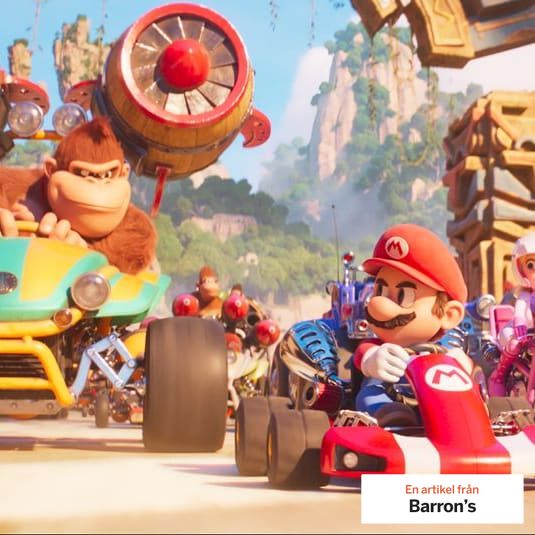
Ända sedan Super Mario såg dagens ljus år 1985 har Nintendo varit helt fokuserat på tevespel – fram tills nu. Super Mario-filmens succé innebär en efterlängtad breddning av affären, skriver Barron’s som rekommenderar köp av aktien.
Det finns mer oförlöst potential i gamingjättens populära karaktärer, som Donkey Kong, Peach och Zelda. Intäkter från biografer kan få ledningen att börja snegla på temaparker, som varit en stor framgång för Disney.
Ytterligare en katalysator för aktien är det senaste Zelda-spelet, som är den största lanseringen på flera år. Investerare tycks inte alls se tillväxtpotentialen, då aktien har släpat efter börsen i år. Men aktieägarna lär bli de största vinnarna på nästa försäljningshit, skriver affärstidningen.
 Barron's
The New Zelda Is Good for Nintendo Stock. The Real Boost Is Still to Come.
Super Mario Bros. hit the scene in 1985, creating a lifetime of loyalty for Nintendo. Now, films and theme parks are extending the attachment to younger generations.
For decades, Nintendo has taken a singular approach to business: making the best videogames possible. The narrow model has frustrated analysts and investors, who’ve seen a treasure trove of much-loved characters and intellectual property—Mario, Luigi, Donkey Kong, Peach, Zelda, Kirby—just waiting to be unleashed.
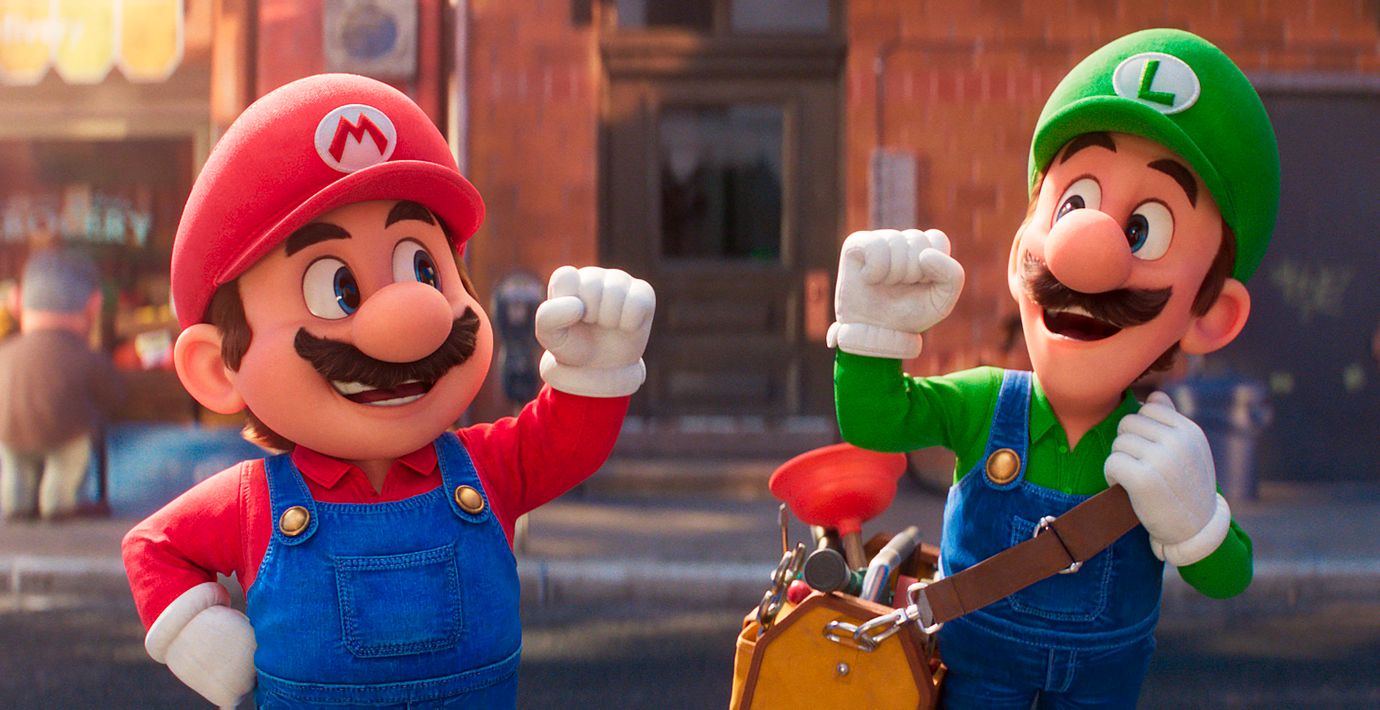
Nintendo’s fans are finally getting their wish. The Super Mario Bros. Movie has given Nintendo its first massive hit outside the gaming space. The movie, released in early April, has grossed $1.16 billion across the world, already eclipsing blockbusters like Minions and Captain America: Civil War, according to Box Office Mojo.
The movie should boost interest in Nintendo’s nascent theme park efforts. Comcast’s Universal theme parks in Japan and California have Super Nintendo World areas, with a third one planned for Orlando.
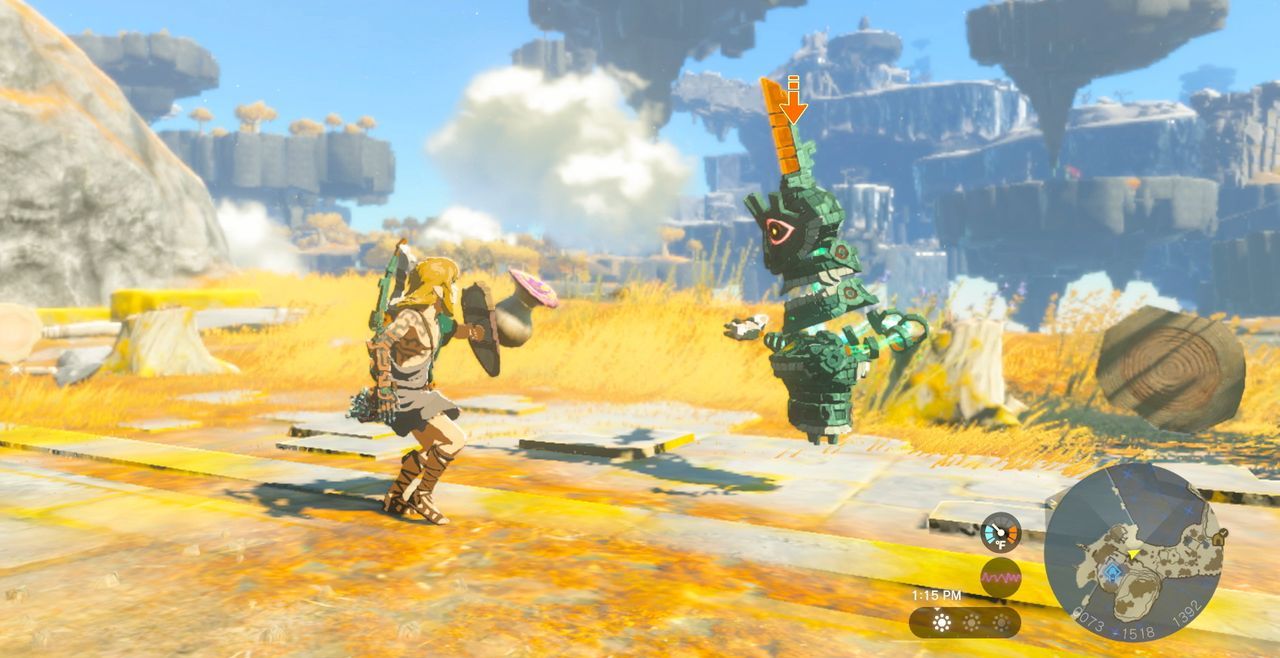
The games still matter, too. On Friday, Nintendo released The Legend of Zelda: Tears of the Kingdom, which should be Nintendo’s biggest software release in years.
All of the buzz is a precursor to the main event: a new Switch console, likely due out in the next two years. Investors shouldn’t wait to buy the stock.
Nintendo’s American Depositary shares (ticker: NTDOY) are up just 0.9% this year, lagging behind the Nasdaq Composite’s 17.8% run. The performance suggests that investors have yet to embrace Nintendo’s growing appeal. The release of Zelda could be the first of several catalysts for the stock in the year ahead.
“I think the positivity around the name improves because Zelda has a chance to be one of the top-selling games you’ve ever had on the Switch,” says Wedbush Securities analyst Nick McKay.
Over the longer term, the Mario movie encapsulates Nintendo’s staying power and unique roster of content.
“It’s one of the few global [intellectual properties] that requires absolutely no education for the vast majority of consumers,” says Julia Alexander, director of strategy at media research firm Parrot Analytics. “When you look at a character like Mario, you look at a universe like the Super Mario World universe, it is so attractive because it is so universally accessible for generations of consumers.”
The original Super Mario Bros. hit the scenes in 1985, creating a lifetime of loyalty to Nintendo. Those consumers are now buying Nintendo games for their children—and grandchildren.
“For Nintendo, the film aspect of this is a chance to expand its general audience even more, and to really double down on the adoration that consumers feel for its brand,” Alexander says. “The goal is to monopolize attention across active and passive and immersive entertainment.”
Nintendo is Winning the Long Game
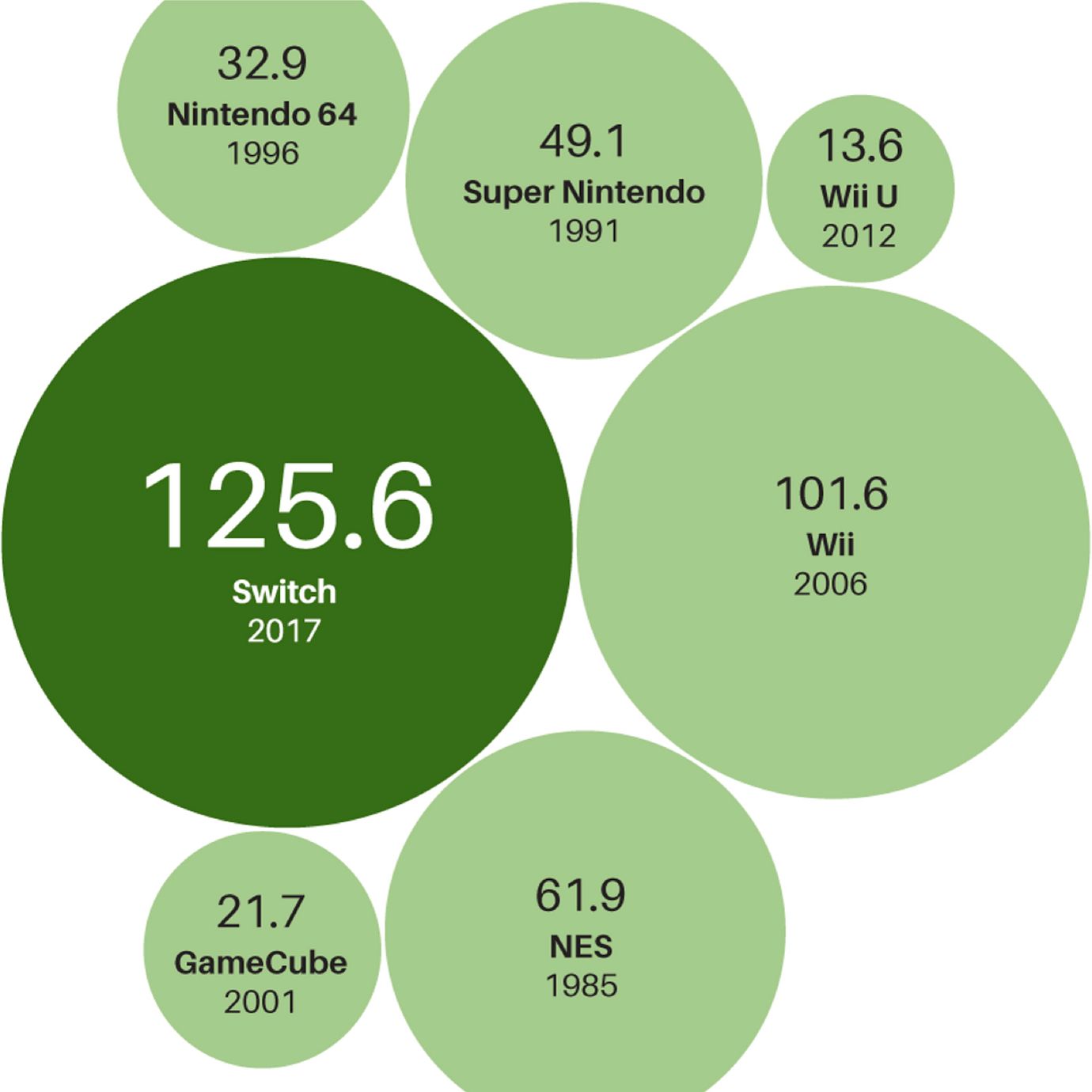
The Switch is Nintendo’s best selling home console ever. It has helped to expand the company’s market across the world.
Nintendo has always been conservative about how it drives interest to its games, but the Mario movie’s success could finally spur management to take more risks. Walt Disney (DIS) has found huge success in creating a flywheel effect, with movies driving interest to theme parks, driving interest to merchandise, which all drives interest back to movies.
Nintendo has more than just Mario and Zelda to work with. Other properties that could work in film and TV include Donkey Kong, Pikmin, Metroid, and Kirby.Barron’s highlighted these franchises in December 2021, when Wall Street was buzzing about “the metaverse.” The movie and the new theme park expansions represent key steps successfully taken since then, though Nintendo will need to be careful with its partners to ensure it doesn’t dilute its brands.
“In order to have a franchise last 40, 50, 60 years and to continue to feel fresh for new generations, there has to be new experiments made with the way that these things are released,” Alexander says. “While gaming will keep it fresh when they experiment with different formats within different videogames, you also have to experiment with new ways to access new audiences. So that’s what the film really represents.”
On the gaming side, conditions are somewhat challenging, which seems to have unnerved investors. The console gaming software market declined an estimated 4.2% in 2022, to $51.8 billion, according to a report from market research firm Newzoo.
On Tuesday, Nintendo reported a 6% decline in revenue for its fiscal 2023 ended March and a 15% drop in operating profit. Switch console sales fell by 22% to 18 million units for the same period.
The lukewarm results may actually be good news for investors. As the Switch enters its seventh year, its faltering sales makes it more likely that Nintendo quickens the launch of its next console, a move that is likely to trigger stock gains.
Nintendo released the Switch in 2017 as its first hybrid console, allowing gamers to play the system at home through a dock connected to a television or on the go as a handheld. The Switch has sold more than 125 million total units, surpassing the Nintendo Wii as Nintendo’s best-selling home console. Typically, the company launches a new home hardware platform every five to six years. The Switch’s success allowed the company to extend that timeline, but Nintendo won’t sit still for much longer.
The company didn’t respond to a request from Barron’s to discuss its timeline and strategy.
Jefferies analyst Atul Goyal says there is a 70% probability that the next console will be released this fiscal year, which ends in March 2024, and a near 100% chance by next fiscal year. Historically, new consoles have been released with big Nintendo franchise games, which tend to spark increased revenue and profits in the 12 to 24 months following a hardware launch, he says.
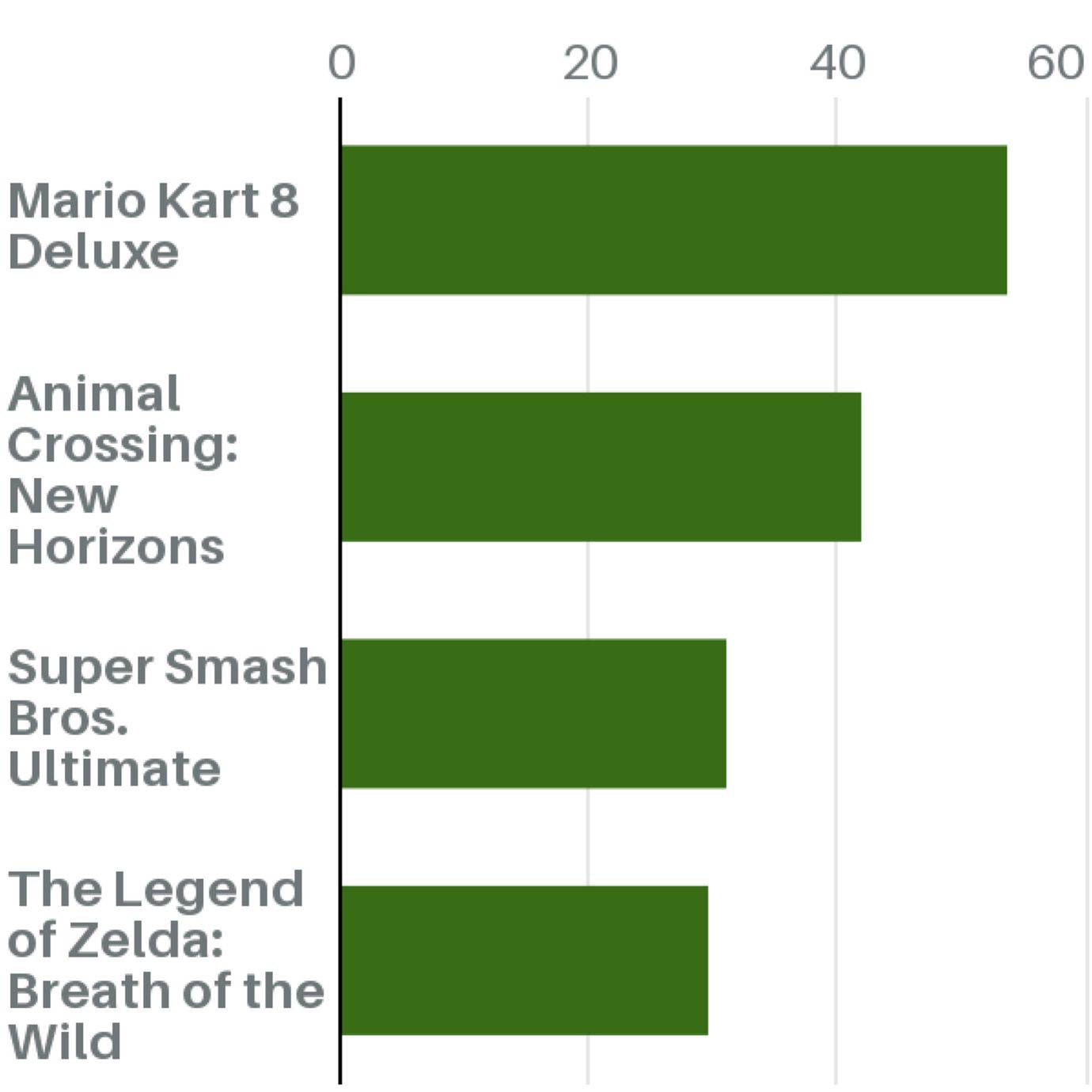
Mario and Friends
Nintendo’s top-selling games continue to be driven by the company’s unique characters and intellectual property.
None of those gains appear reflected in Wall Street models—or Nintendo’s stock. For the current fiscal year, the analysts forecast a 20% drop for earnings. A surprise Switch release could boost those profit figures by at least 30%, depending on launch date, says Goyal.
As investors await the launch, shares of the Kyoto, Japan–based company’s American depositary receipts have struggled, down nearly 35% from their early-2021 highs. Wall Street expects a profit decline for each of the next two fiscal years. Even with these conservative estimates, the stock currently trades at a reasonable 19 times 2024 fiscal year earnings, or just 14 times after subtracting the company’s large pile of cash.
But a launch would likely send the stock to new highs. The 30% annual earnings boost estimated by Goyal in year one of a new console could easily extend into a second year, given the flood of new games and increased buyer interest. Assuming Nintendo’s stock maintains an undemanding multiple of roughly 20 times, the new console could drive the stock 70% higher from a recent close of $10.51.
And there’s reason to believe the next console cycle could do even more for the stock, since game purchases are increasingly digital, with incremental opportunity for paid updates and downloads over time. That is boosting profits and margins for game makers.
”There is a risk: Nintendo’s console hex”
There is a risk: Nintendo’s console hex. The company has followed a bizarre back-and-forth pattern from success to disappointment for the past two decades. The poorly selling GameCube in 2001 was followed by the megahit Wii in 2006. Then, a big drop off to the Wii U in 2012 was succeeded by the flourishing Switch. If this pattern holds, the next console will be a flop.
But the hex is likely to be broken. Nintendo’s console performance has been inconsistent because the company has made dramatic changes to its hardware with each generation. But the Switch has been so triumphant that there’s a clear path to create a successor with improved technical capabilities, without taking huge creative risk.
Goyal believes that Nintendo’s next piece of hardware will be similar to the Switch and be “backward compatible” with current-generation software.
Meanwhile, Nintendo’s conservative nature has made for a pristine balance sheet, with $14 billion in net cash that helps to secure a 2.6% dividend yield. Nintendo’s market value of $50 billion looks too low given that Microsoft has agreed to pay $69 billion for Activision Blizzard, a videogame firm with weaker titles than Nintendo’s and less in the way of proven staying power.
Nintendo is unmatched when it comes to its stellar brand, customer loyalty, and decades-old franchises. Gamers are keen for a new console, but it is investors that are likely to be the biggest winners from Nintendo’s next hit.