ABB kan bli en börsvinnare på Modis seger i Indien
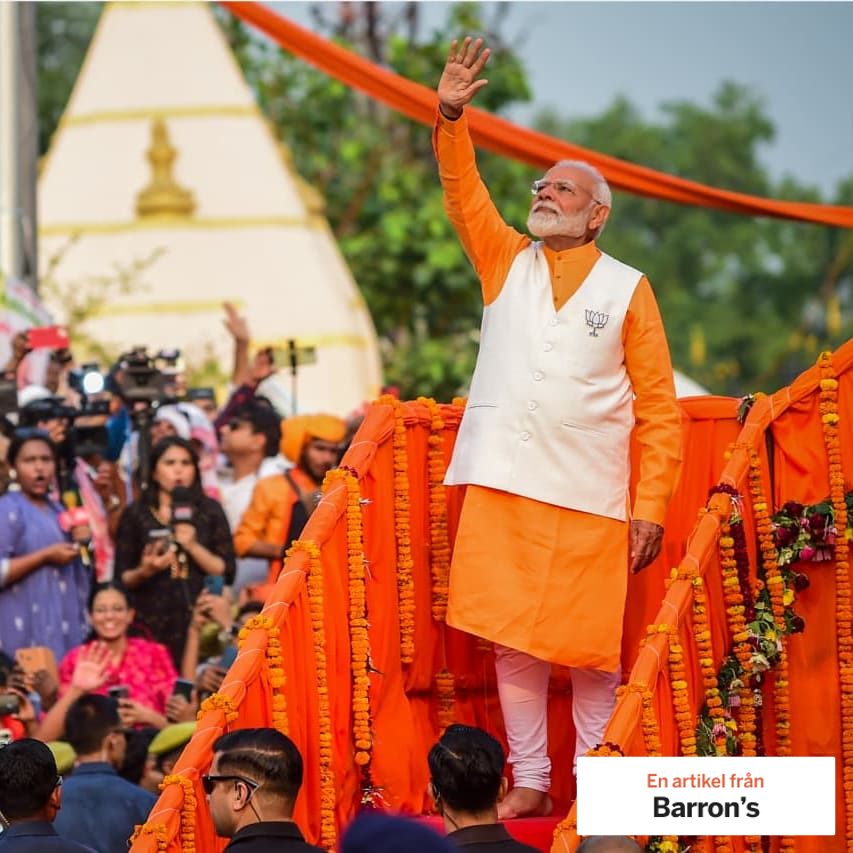
Indien har upplevt en infrastrukturboom under Narendra Modis tio år vid makten. ABB och Siemens har redan dragit nytta av den enorma tillväxten i landet.
När Modi nu går mot en ny mandatperiod finns det flera aktier som investerare kan hålla utkik efter, skriver Barron’s. Förutom den svenska industrijätten lyfts sex andra börsval fram.
– Indien befinner sig på en helt annan infrastruktursresa än Kina eftersom en stor del har finansierats av privata aktörer, säger Srishti Ahuja, M&A-ansvarig på EY i New Dehli.
 Barron's
India Is Building More Roads and Railroads. 7 Stocks to Buy.
Infrastructure is key to the prime minister’s ambitions to make India a global manufacturing center.
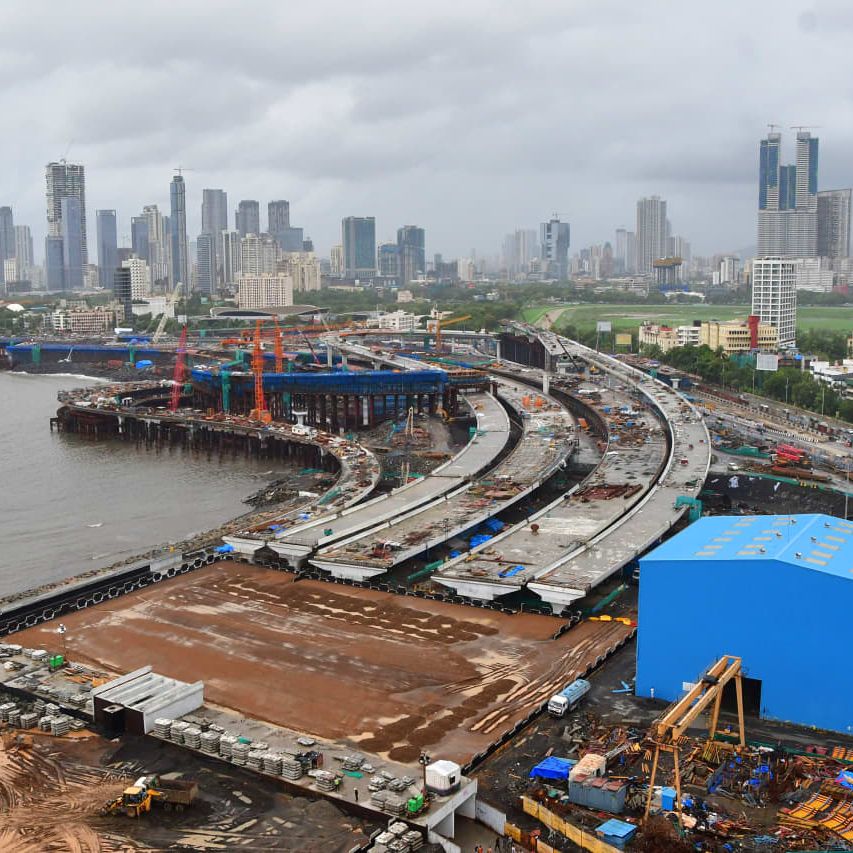
India is building, like crazy. Expenditures on road construction have jumped 12-fold since Narendra Modi became prime minister 10 years ago. Budgets for urban metro systems are up eight times, and railroads five times.
Total infrastructure spending over the past five years has come to about $800 billion, estimates Srishti Ahuja, an EY mergers-and-acquisitions partner at EY in New Delhi who is focused on the sector. Relative to gross domestic product, that’s similar to the U.S. spending $6 trillion, or five times as much as the huge 2021 infrastructure bill provided.
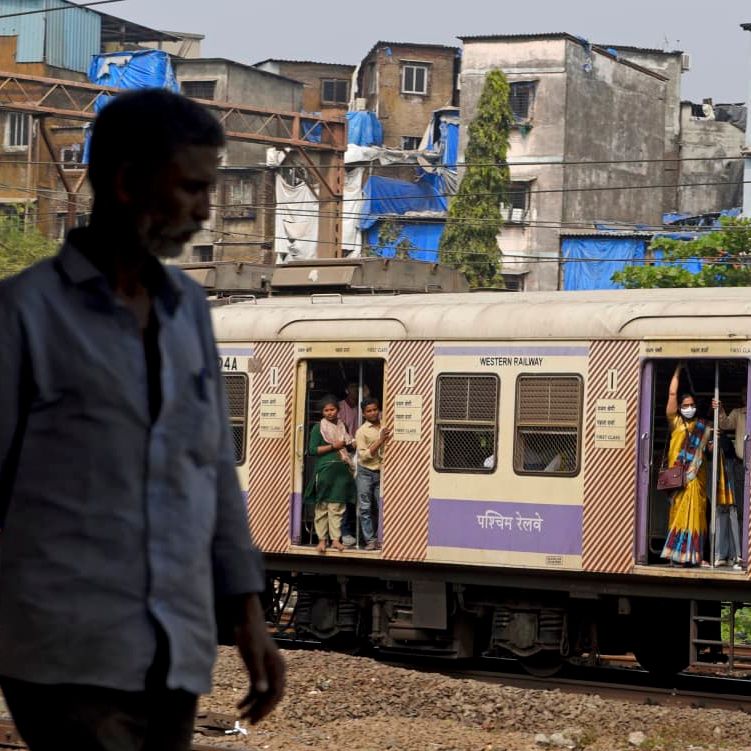
And it shows. “Dedicated freight corridors” to Mumbai and other ports will cut train times in half, says Angus Shillington, deputy portfolio manager for emerging market equities at VanEck. A two-hour commute across Mumbai now takes half an hour. “Indian airports are much better than in the U.S.,” says Conrad Saldanha, a senior emerging markets portfolio manager at Neuberger Berman.
Modi, 73, promises much more of the same in a third term, which he is expected to win once votes are finally counted in India’s multistage election on June 4.
There’s just one thing missing from this dynamic picture: private capital, especially domestic private capital. India’s treasury has footed more than 75% of the infrastructure bill so far, estimates Miren Lodha, senior director for research at CRISIL Market Intelligence & Analytics in India.
Modi could afford it, as an express digitization campaign brought swaths of the country’s informal economy online, and paying taxes. “Revenue has been growing twice as fast as GDP,” Shillington notes.
Ever-improving infrastructure is a key to Modi’s ambitions to make India a global manufacturing center, and leapfrog Japan and Germany as the No. 3 world economy. Not to mention creating jobs for young Indians, where unemployment among restive 25- to 29-year-olds tops 14%.
Technocratic Modi lieutenants, such as road transport minister Nitin Gadkari and railways minister Ashwini Vaishnaw, are revising the creaky image of Indian bureaucracy, pushing projects through efficiently and with perceived financial probity. “They’re really good at laying down the regulatory stuff, then delivering at scale,” Shillington says.
“India is on a very different infrastructure journey from China because a large part has been funded by private players”
Focus over the next five years will shift to power, particularly renewable power. Modi’s government aims to install about 270 gigawatts of solar and wind power by 2030, nearly as much as current U.S. capacity, says Lodha.
This sort of state spending can’t go on the same way forever, though. Modi has relaxed the fiscal hawkishness of his early years; combined central and state budget deficits may exceed 7% of GDP, a sobering figure even at India’s rate of growth.
The government aims to double the private sector’s share of infrastructure investment over the next five years, Lodha says. That means bringing in $225 billion to $250 billion. “The government wants to lift its foot off the pedal a bit to focus on fiscal consolidation,” he says.
India also needs private-public partnerships to avoid the excesses of its neighbor China, where state planners built ghost cities and roads to nowhere along with genuine improvements. “India is on a very different infrastructure journey from China because a large part has been funded by private players,” Ahuja says.
Or hopefully will be. Global long-horizon investors—Middle Eastern sovereign-wealth funds, Canadian pension funds, family offices, European utilities, and road builders—are starting to bite on India projects, Ahuja says. “New investors are coming in, and the deal sizes are getting larger.”
Indian domestic capital not so much. The dominant state banks are just recovering from a 2018 crisis that exploded nonperforming loan ratios well over 10%—partly driven by massive credits to mining and telecommunications, infrastructure priorities of the last decade. Smaller, better-managed privately owned rivals like HDFC Bank or ICICI Bank have all the business they can handle writing mortgages and other loans for a burgeoning middle class.
“The government banks are being very cautious on infrastructure, and the nonstate banks are not involved in a big way,” says Venkat Pasupuleti, portfolio co-manager for India at Dalton Investments.
The shift to renewable energy will bring India’s big private conglomerates more into the mix. The country’s two richest men, Mukesh Ambani of Reliance Industries , and Gautam Adani, with his eponymous empire, have large ambitions in solar power. Newly built solar generation is already cheaper than coal across the Asia-Pacific region, and will be a third cheaper by 2030, predicts consultant Wood Mackenzie.
The would-be Indian green oligarchs still face obstacles. Electricity distribution remains largely in the hands of regional state monopolies, which work with leaky aging equipment and politicians who force them to subsidize farmers and other influential groups. The result is a debt mountain in the $100 billion range, and clogged-up reform.
“You don’t go back from this kind of momentum”
India, like the U.S., also wants to accelerate its green transformation while reducing dependence on China, which dominates the relevant supply chain. Slashing dependence is more like it. Modi’s government slapped a 40% tariff on ready-built Chinese solar modules, and 25% on individual solar cells, in 2022. It has added heavy domestic-content requirements for projects with state involvement.
All of these challenges, however, look more like footnotes to the momentous history in progress with Indian infrastructure. The question is less whether Modi & Co. are remaking the face of the country, but how fast and efficiently. “You don’t go back from this kind of momentum,” says VanEck’s Shillington.
Cashing in on Indian infrastructure stocks is another matter. “I believe in the larger growth story, but it has not been an easy space to invest in,” says Dalton’s Pasupuleti.
Ambani’s Reliance, India’s largest-cap stock, remains a multi-profile conglomerate whose main businesses are oil refining and internet. Adani does offer pure plays like Adani Green Energy, but global investors remain wary since U.S.-based short seller Hindenburg Research raised governance questions last year.
If you blinked during the rally in other Indian infrastructure names, you might have missed it. Larsen & Toubro , an engineering firm that is the leading traditional sector play, looks pricey after a two-thirds’ increase over the past year, at least to Pasupuleti. “We may get back in with a price correction,” he says.
L&T’s run is modest compared with rail-related names like Indian Railway Finance , which has shot up fivefold. Other more-or-less blue-chip infrastructure shares have doubled. These include locally listed Indian units of European equipment giants Siemens and ABB, and state-owned energy providers Power Grid Corp. of India and NTPC, formerly National Thermal Power.
That leaves cement as Pasupuleti’s preferred proxy for infrastructure at the moment. Shares in industry leader UltraTech Cement have gained some 30% over the past 12 months.
Despite some wobbles on the campaign trail, a third term for Modi and his Bharatiya Janata Party looks about as safe a bet as you can make in democratic politics. A continuation of India’s infrastructure revolution is safer still; no one has an interest in stopping it. Investing in that revolution is much riskier business.