Bolaget bakom dietskam omfamnar Ozempic

I decennier har Weight Watchers – Viktväktarna på svenska – missionerat för poängstyrda livsmedel och självkontroll som nyckeln till viktminskning, med tv-profilen Oprah Winfrey som storägare.
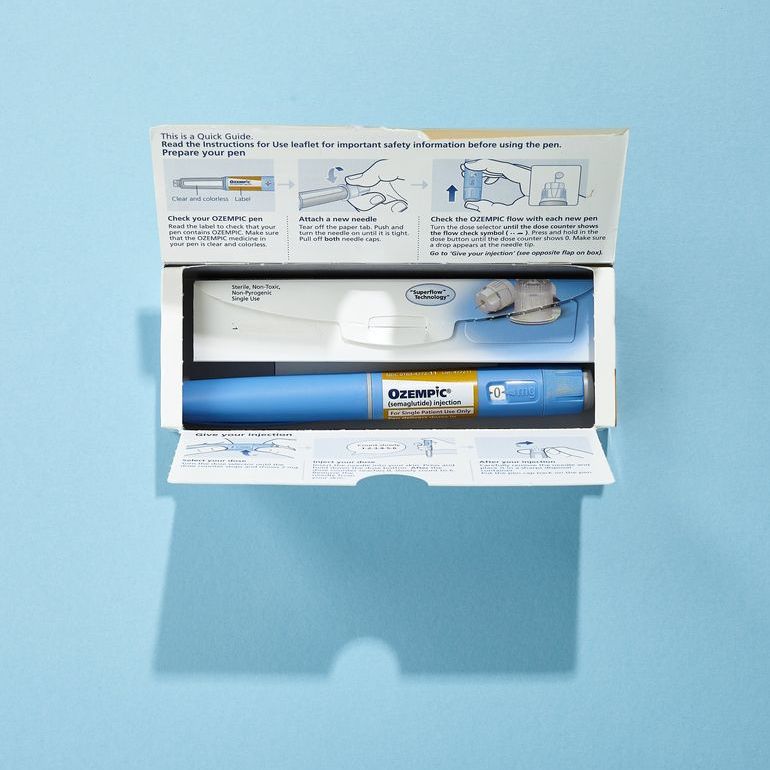
Men sedan läkemedel som Ozempic gjort entré har bolaget gjort en helomvändning, skriver Wall Street Journal. Borta är skuldbeläggandet av de som inte lyckas hålla jämna steg med dieterna. Nu är övervikten inte längre de överviktigas fel – och tack vare förvärvet av webbläkarmottagningen Sequence är WW redo att kapa åt sig en del av läkemedelskakan.
 The Wall Street Journal
The Company That Defined Dieting Is Sorry It Told Us to Have More Willpower
Ozempic, Oprah and apologies: WeightWatchers says there’s no shame in being overweight, or in taking new weight-loss drugs
WeightWatchers Chief Executive Sima Sistani hears from them all of the time, those customers she thinks her company has failed. They fill her Instagram inbox with messages detailing their years on the WeightWatchers count-your-points program, a frustrating pattern of fluctuating weight that only made them feel like they weren’t trying hard enough.
Today, Sistani has a message for her members: It’s not your fault.
“We introduced the shame for people for whom diet and exercise wasn’t enough,” she said at a recent event, seated next to the company’s investor, board director and the most famous dieter in America, Oprah Winfrey.
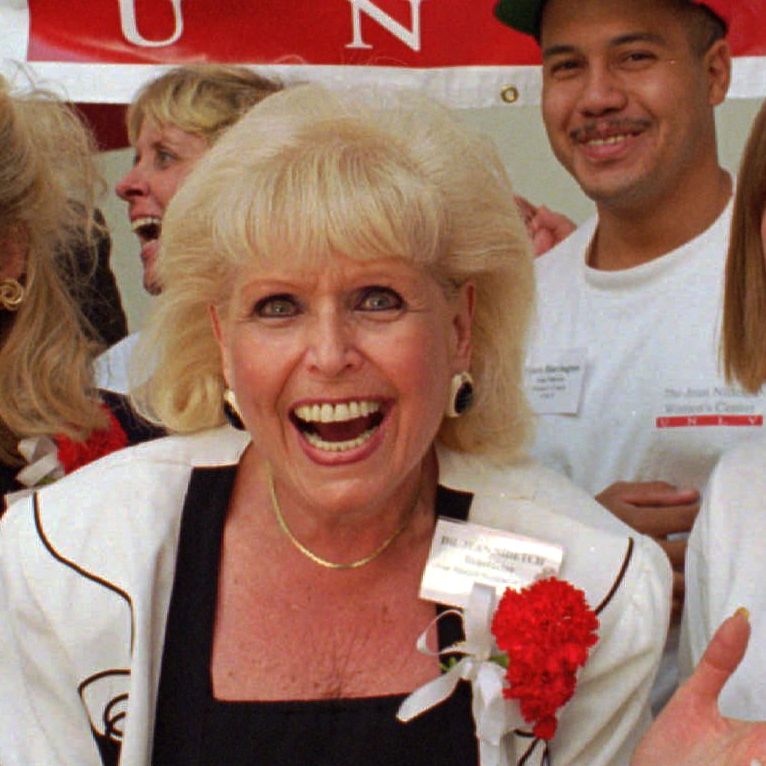
For decades, WeightWatchers told the world that weight loss came through sheer willpower—“choice, not chance,” as its founder, Jean Nidetch, said in the 1960s. Now, thanks to new drugs like Ozempic, Sistani is rejecting that blame-the-dieter approach in favor of the view that obesity is an illness—one her company can help cure.
The promise that a doctor’s prescription can eliminate extra weight for good has touched off a seismic moment in global health, and compelled WeightWatchers to undergo its most radical change yet.
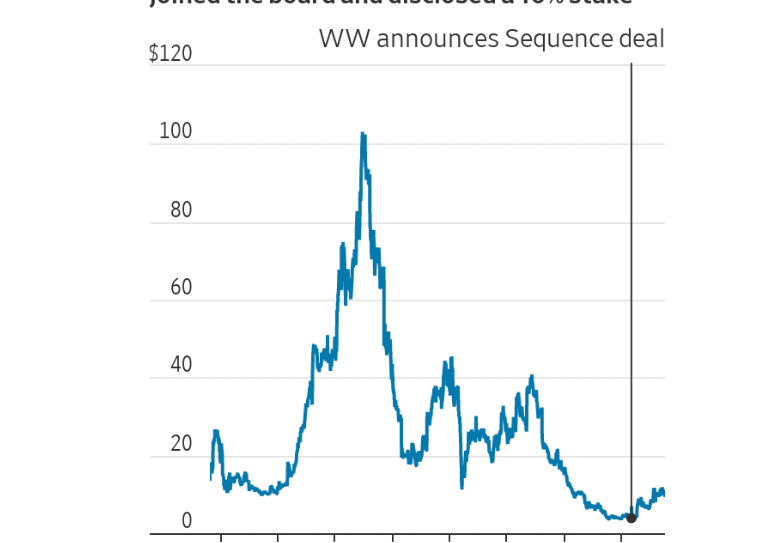
So that it could prescribe weight-loss drugs, the company paid $106 million to acquire a telehealth company called Sequence. But Sistani’s biggest change has been cultural, as WeightWatchers wades into a fraught debate: Whose fault is it if you’re fat? And were those decades of WeightWatchers’ count-your-points plans liberating or stigmatizing for millions of customers? Much like Mattel and its reckoning in this summer’s blockbuster movie over the Barbie doll’s impossible proportions, WeightWatchers has opted to apologize for much of what made it iconic.
“We want to be the first to say where we got it wrong,” Sistani said.
Today, most WeightWatchers members subscribe to a digital plan for about $20 a month that includes access to an app with recipes, nutrition plans and chats with coaches to keep track of how each food ranks on the company’s iconic points scale. A more expensive plan combines that with in-person or virtual workshops. More recently, the company has expanded into prescription drugs like Ozempic, which has attracted a small but growing group of members who typically pay about $100 a month.
Every person should be able to choose what wellness and good health means for them without scrutiny, stigma or shame”
The shift toward pharmaceuticals has put an awkward spotlight on WeightWatchers’ most famous member.
At one point in the conversation with Sistani, shown on the OprahDaily website, Winfrey described having an initial reaction to new weight-loss drugs as an “easy way out” that she herself wouldn’t take. When a partial piece of her quote circulated the next day, WeightWatchers shares fell 15% as some investors assumed that meant a national tastemaker was shunning the treatment. (In fact, that reflexive dismissal, she acknowledged later in the segment, was yet another example of introducing shame around weight loss.)

“My position on the use of prescription medication was misconstrued and taken out of context,” Winfrey said in a statement to The Wall Street Journal. “To be clear, I believe that prescription medications are an important and viable option to consider for people who struggle with weight and health related issues. Every person should be able to choose what wellness and good health means for them without scrutiny, stigma or shame.”
The stock gyration highlighted a tension within WeightWatchers over Winfrey’s involvement. On Instagram in recent months, she posted photos from travels around the world—dancing in Marrakesh, riding camels in Jordan. Some WeightWatchers employees shared the posts with one another, noting that she looks great, and has clearly lost weight. It seemed the perfect opportunity to hawk WeightWatchers, but Winfrey wasn’t talking about WeightWatchers anymore.
Associates from her WeightWatchers days started to wonder: Was Winfrey on Ozempic?
Winfrey hasn’t said.
“I don’t think it’s for me to answer,” said Sistani, citing the “private medical information of a member.”
“It’s an important question, and what we saw with that event was her starting that very important conversation,” she added.
‘Illegal’ foods
Kelly Bryant Pelton is among those who has lived through every iteration of Sistani’s company. She was introduced to WeightWatchers at age 12, when her parents shipped her to a college campus in North Carolina to attend what she called a “fat camp” run by the company. She returned seven weeks later about 20 pounds thinner, with a rulebook in hand.
“My 13th birthday party didn’t have a cake,” she said.
As a teenager, she avoided food WeightWatchers deemed “illegal” and endured its fad diets (liver once a week). Eventually she attended in-person meetings at her hometown YMCA, struggling under a weight that crested at nearly 300 pounds in her late 40s. In recent years, she downloaded its app and saw the brand move to an overall message of “wellness.”
Each approach left her with the same result: fleeting weight loss, frustration, quitting—and repeat. “It worked,” she remembered. “But it only worked for a short while.”
Now, at 54 years old, Pelton weighs 185 pounds, dipping below 200 pounds for the first time she can remember. She credits the only permanent solution she’s found: Ozempic.
When it comes to such members, “I don’t care if they come back to WeightWatchers,” said Sistani. “If they’ve found a group and solutions that are working for them, that is so great.”
‘Let’s do this together!’
To open its Ozempic chapter, WeightWatchers is once again counting on the messaging power—and public history—of Winfrey.
“You all have watched me diet and diet and diet and diet,” she said to the audience last month.
In 1988, she dropped 67 pounds and strutted across the set of her TV talk show in cinched, size 10 Calvin Klein jeans. Decades before she’d embrace WeightWatchers, she used a separate program called Optifast—an 800-calorie-a-day liquid regimen—to lose the weight, an endorsement that flooded the company with more than a million callers. (Winfrey would gain much of the weight back and disparage liquid diets two years later.)
When Winfrey began conversations with WeightWatchers in 2015, the media mogul was at a crossroads. Her talk show had ended. No single project replicated the reach of a syndicated talk show, so Winfrey cobbled together various pursuits: film roles (“Selma”); podcasts (“SuperSoul Conversations”); and WeightWatchers.
The arrangement also made her one of its biggest shareholders, with a roughly 10% stake. WeightWatchers stock doubled on the news of the collaboration and Winfrey made a paper profit of $75 million on her investment by the end of trading that day.
“Let’s do this together!” she proclaimed in her first ad for the program.
Behind the scenes, she counseled then-CEO Mindy Grossman as she navigated a cultural shift embodied in plus-size mannequins and body positivity as she embraced a new company motto: “Healthy is the new skinny.”
Marketing got rid of “before” and “after” photos. Even the word “diet” was excised from the company’s marketing. Winfrey uploaded cooking videos to Instagram from her Montecito, Calif., kitchen, but topics like gratitude were also on the menu.
The wellness push stretched the amount of time the average user stayed with the program. The stock went skyward—sending Winfrey’s shares up more than sevenfold in value, peaking in the summer of 2018 at $548 million.
“You have Netflix for entertainment, Amazon for shopping and Spotify for music. We want WW to be your wellness coach and partner,” said Nick Hotchkin, then the company’s chief financial officer.
Miriam Barry, a 69-year-old educational advocate in Brooklyn, N.Y., watched as the WeightWatchers she once knew changed before her eyes. Barry attended her first meeting as a 12-year-old in a Rochester, N.Y., synagogue basement, learning what she couldn’t eat and what she could. (“Kale,” she remembered.)
But then, as the “WW” wellness shift came into focus, the leader would ask: “What are you proud of this week?”
More than just linguistics were at work. As a general-wellness service, WeightWatchers wouldn’t be a subscription to turn off once the pounds were shed, but a community of support offering mental-health services and general health advice.
“This is not a marathon. It is not a sprint. It is a way of being in life,” summarized Winfrey. “Forever.”
Wellness journeys
A narrative about “wellness journeys” corrected an attitude exemplified by Nidetch, the Queens, N.Y., mother of two who founded the company, grew WeightWatchers out of a mahjong group and cut the size tags out of her muumuus.
WeightWatchers International was incorporated in 1963—the “international” was superfluous, since the company had no overseas presence, but Nidetch was ambitious. By 1967, New York City had nearly 300 classes a week. Eleven years later, H.J. Heinz acquired the company for $71 million.
Then WeightWatchers survived Lean Cuisine, Bud Light, Jazzercise and Jane Fonda’s workout videos. Its simple system—a low-point banana in the morning means you can afford to have high-point pizza at night—and bootstraps approach seeped into American culture.
Nidetch was ahead of her time, Sistani said. The program treated dieting like a game and “a way to build healthy habits that would put today’s algorithm creators to shame,” she said.
“I don’t want spokespeople to have to do the hard work”
Celebrity endorsers helped mainstream the program. Lynn Redgrave was the first. Sarah “Fergie” Ferguson followed, punching back against tabloids that had labeled her the “Duchess of Pork.” DJ Khaled, James Corden and other stars preached points, too.
Today, such celebrity ambassadors are fading into the background. “I don’t want spokespeople to have to do the hard work,” Sistani said.
Winfrey’s presence dwindled, too, leading executives inside WeightWatchers to wonder if she’d grown tired of the partnership. She had skipped board meetings early in her time there, the company disclosed, and has never attended an annual meeting—even when they were held virtually.
That disappearance reflected a steady reduction of Winfrey’s stake in the company, from a peak of 10% to a 1.4% stake, about 1.1 million shares, worth about $12 million in August.
“I chose to rebalance my overall portfolio, which had included a significant stock position in WeightWatchers,” said Winfrey in her statement. “I’m enthusiastic about the company’s Sequence purchase and am in favor of potential new treatment options for obesity and related health issues.”
Earlier this week, she bought 3,696 shares in the company.
Her first WeightWatchers-associated appearance in months was the September panel discussion with Sistani about weight-loss drugs.
The panel, shown on Winfrey’s website and taped before a live audience, hearkened to her talk show in its mix of empathy and instruction. Winfrey counseled the audience to use “people-first” language around the issue—not an “obese person,” but a “person with obesity.”
‘Nobody’s dying from losing their hair’
Morgan Stanley predicts the new class of weight-loss medications such as Ozempic will become pharmaceutical blockbusters, worth a collective $54 billion by 2030. The analog its analysts draw: high-blood-pressure medications, which went from a nascent market in the 1980s to a $30 billion one a decade later.
WeightWatchers jumped in to the arena March, paying $106 million to buy Sequence, a subscription service that prescribes the class of weight-loss drugs via telehealth appointments. For the first time, that allowed WeightWatchers members to get prescriptions to drugs like Ozempic that the company hoped they would couple with workshops and other traditional offerings.
As part of its deal with Sequence, WeightWatchers says medicine can be supplemented by coaching sessions on overall health—such as including high-protein foods and other lifestyle adjustments. The company had 37,000 members subscribing to its Sequence telehealth program at the end of its most recent quarter.
“Last time I checked, nobody’s dying from losing their hair”
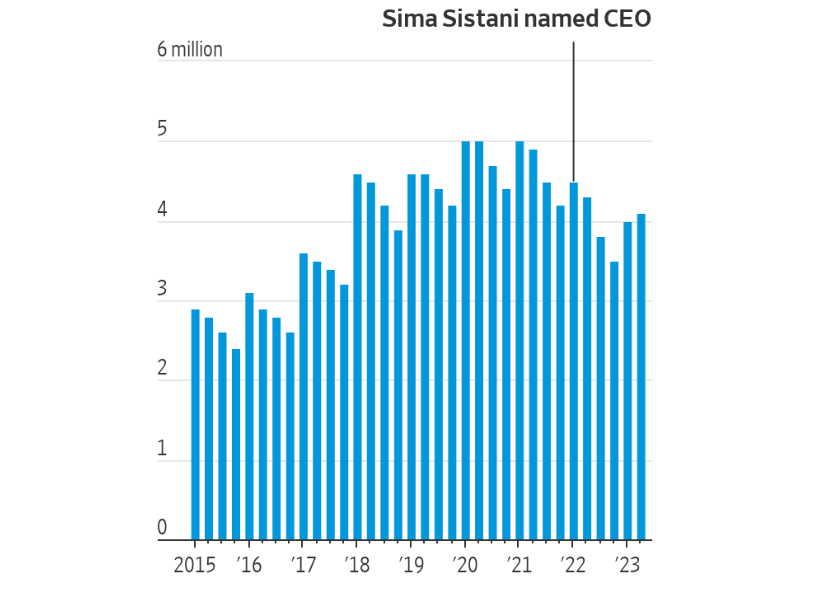
The company’s total membership grew in the most recent quarter to 4.1 million, the first time in WeightWatchers history that the second quarter—when New Year’s resolutions start to wane—has shown a boost.
The potential upside is significant. Medicare currently doesn’t cover anti-obesity medications, and Sistani said her company stands to benefit if Medicare stops classifying such drugs as vanity prescriptions, as hair-loss medication is.
“Last time I checked, nobody’s dying from losing their hair,” she said.
A representative for the Centers for Medicare and Medicaid Services said the organization would continuously review the medications and their eligibility.
The Renegades
For some members, Sistani’s embrace of pharmaceuticals feels like a betrayal, part of a companywide shift away from what made WeightWatchers effective and comfortable. A veteran of Silicon Valley, Sistani pushed to update WeightWatchers technologically in ways that chafed many longtime users.
Many members were told to meet virtually as the company’s real-estate footprint shrunk. Barry, who had been an on-and-off member since that synagogue session as a teenager, started hosting a club in her living room when meetings dried up in Brooklyn. They call themselves “The Renegades.”
Kelly Bryant Pelton, the former WeightWatchers user in Ohio, started her own group, too—a Facebook group for women taking Ozempic and similar drugs. She assumed she’d draw 50 people. Today she has more than 23,000 members.
“When you know better, you do better”
They gather to talk about side effects and what it’s like to drop the weight so suddenly. Her husband still reflexively apologizes when he can’t find a parking space near a store entrance, and she has to remind him she can walk now without losing her breath or tripping.
Her next goal for the group: organizing in-person meetings, kind of like her WeightWatchers days.
“I’ve met so many versions of Kelly,” said Sistani.
She recently met one face-to-face. When a woman in the Winfrey audience said she’d lost 100 pounds on the former WeightWatchers program but gained it all back, Sistani apologized for failing her. She quoted Maya Angelou, the poet who was a close personal friend of Winfrey’s.
“When you know better, you do better,” she said.
—Suzanne Vranica contributed to this article.