Dragkamp om medelklassen skjuter över målet i jämnt val
Den amerikanska medelklassen har det jobbigt och bara jag kan fixa det. Så låter det från både vice president Kamala Harris och före detta president Donald Trump, när de tävlar om osäkra väljare i ett extremt jämnt, skriver Barron’s.
Samtidigt påpekar tidningen att kandidaterna, i sin iver att vinna mark bland fackföreningsvänliga väljare i nyckelstaten Pennsylvania, håller på att förlora den större ekonomiska bilden ur sikte. De fokuserar på industriarbeten fastän merparten av USA:s BNP skapas i servicesektorn.
 Barron's
Trump and Harris Are Losing Sight of the Real Economy
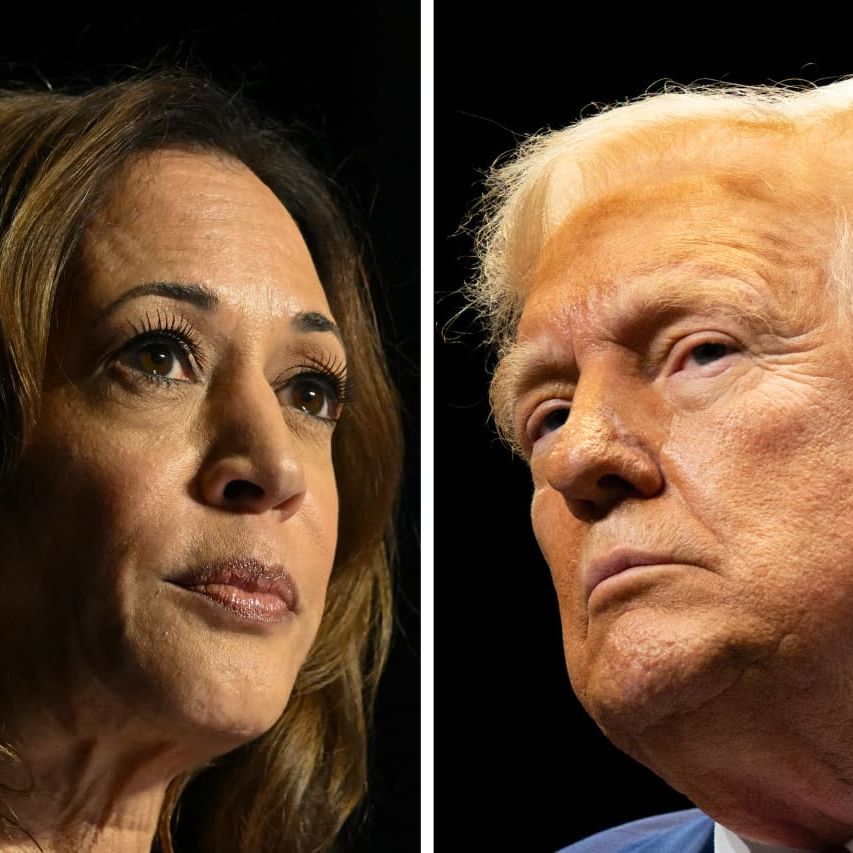
In dueling swing-state economic speeches this week, Vice President Kamala Harris and former President Donald Trump have zeroed in on one crucial idea: The American middle class is in trouble, and only their respective policies can fix it.
That focus on the middle class reflects a tight race in the swing states that will determine the election. What was once a wide gap in voters’ sentiments about the two parties has narrowed considerably. To get ahead, they are throwing the economic kitchen sink at the problem, each proposing a raft of new policies aimed especially at restoring manufacturing jobs in the American heartland. But with policies driven by attempts to edge ahead by tiny margins in states such as Georgia and Pennsylvania, it isn’t clear that either candidate’s platform will significantly move the needle.
Dumping Biden gained Democrats a lot of ground, but taking any more from Trump will require some creativity
A race that seemed like a lost cause for Democrats after President Joe Biden’s disastrous June 27 debate performance has become too close to call, especially in the swing states that will decide the vote. Harris’ ability to close the gap on economic issues has been vital to the party’s resurgence. September polling data from Morning Consult finds 48% of likely voters trust Trump to handle the economy, compared with 47% for Harris, a sharp improvement from where Biden was polling.
Harris’ challenge is that it isn’t clear voters prefer her plans, particularly on issues such as inflation. “I’m not sure it’s the messaging that’s been so effective as it’s been just a change in messenger,” said Cameron Easley, lead U.S. politics analyst for Morning Consult, a business-intelligence firm.
Dumping Biden gained Democrats a lot of ground, but taking any more from Trump will require some creativity.
There’s a reason Trump is continually pushing his plans for tariffs: Voters like them, despite the economic burden they are likely to impose. “The word tariff, properly used, is a beautiful word. One of the most beautiful words I’ve ever heard,” Trump said in Savannah, Ga., on Tuesday. He pledged to impose new tariffs on companies that don’t manufacture in the U.S. as part of an effort to “rescue the middle class.”
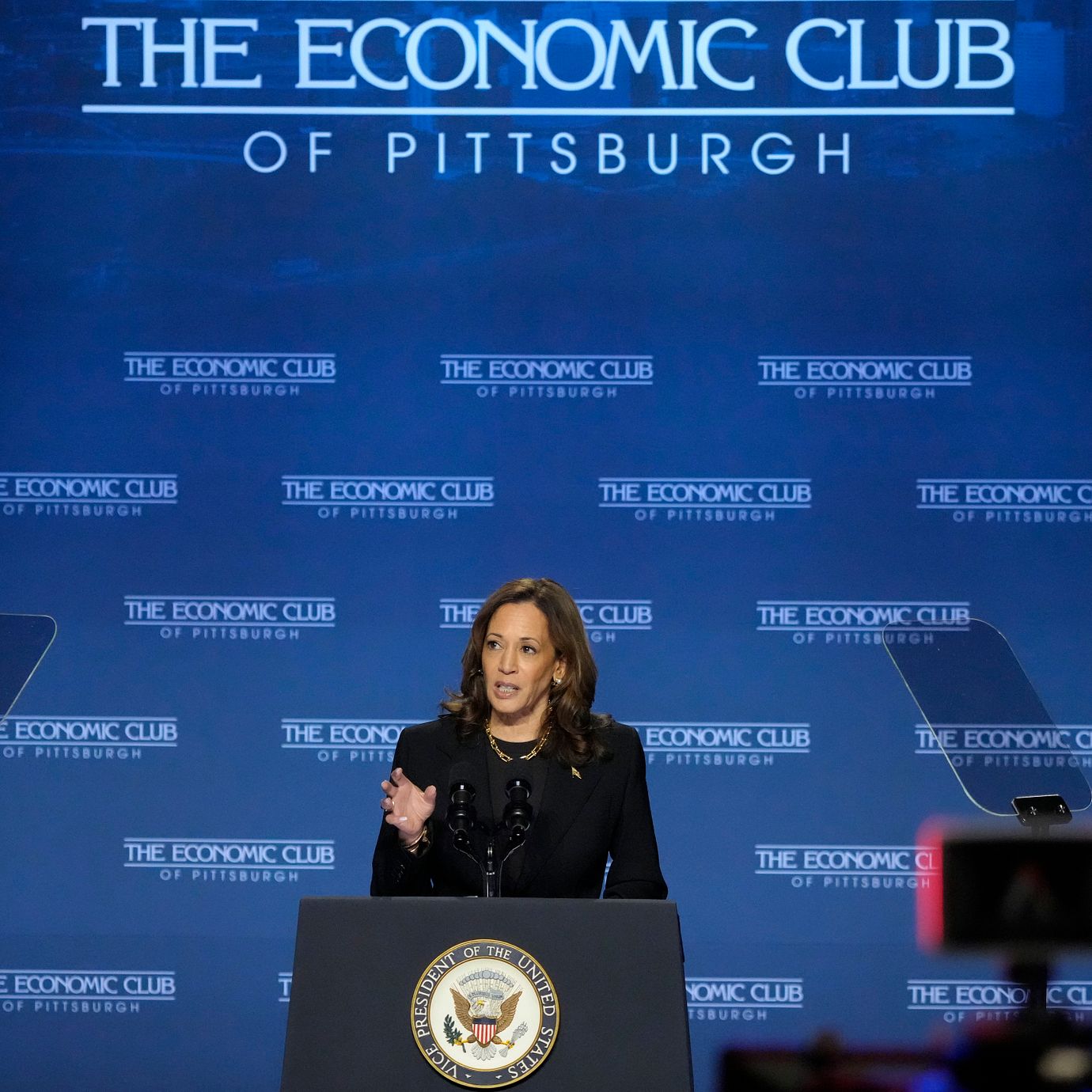
Harris is also looking abroad defensively as she thinks about how to strengthen the middle class, she said in a speech in Pittsburgh Wednesday. One of the pillars of her “opportunity economy” plan is “leading the world in the industries of the future, and making sure America, not China, wins the competition for the 21st century.” She is promising a beefed-up version of Biden’s industrial policy, to steer investment into sectors including artificial intelligence, biotech, and—her crypto critics may be happy to hear—blockchain.
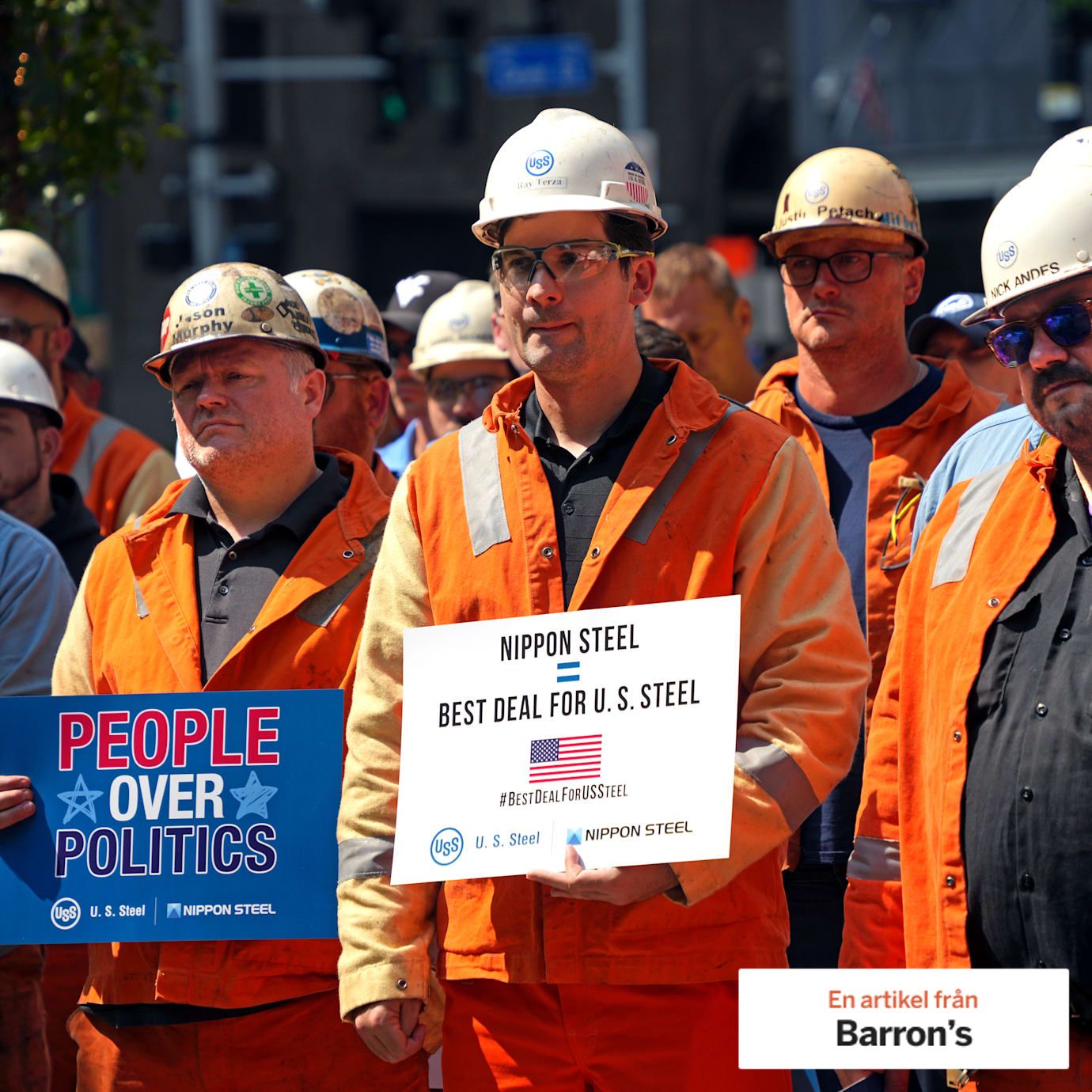
That sounds promising, but campaign politics are already getting in the way of the industries of the present. She didn’t mention it in her Pittsburgh speech, but Harris has pledged to block the proposed merger between U.S. Steel and Japan’s Nippon Steel. She has the strong backing of the United Steelworkers in doing so, but if the deal fails, U.S. Steel is unlikely to be able to come up with the $2.7 billion in investments Nippon has pledged
U.S. Steel’s management has warned it may need to close regional facilities, which the union dismisses as empty threats. Her campaign declined to comment.
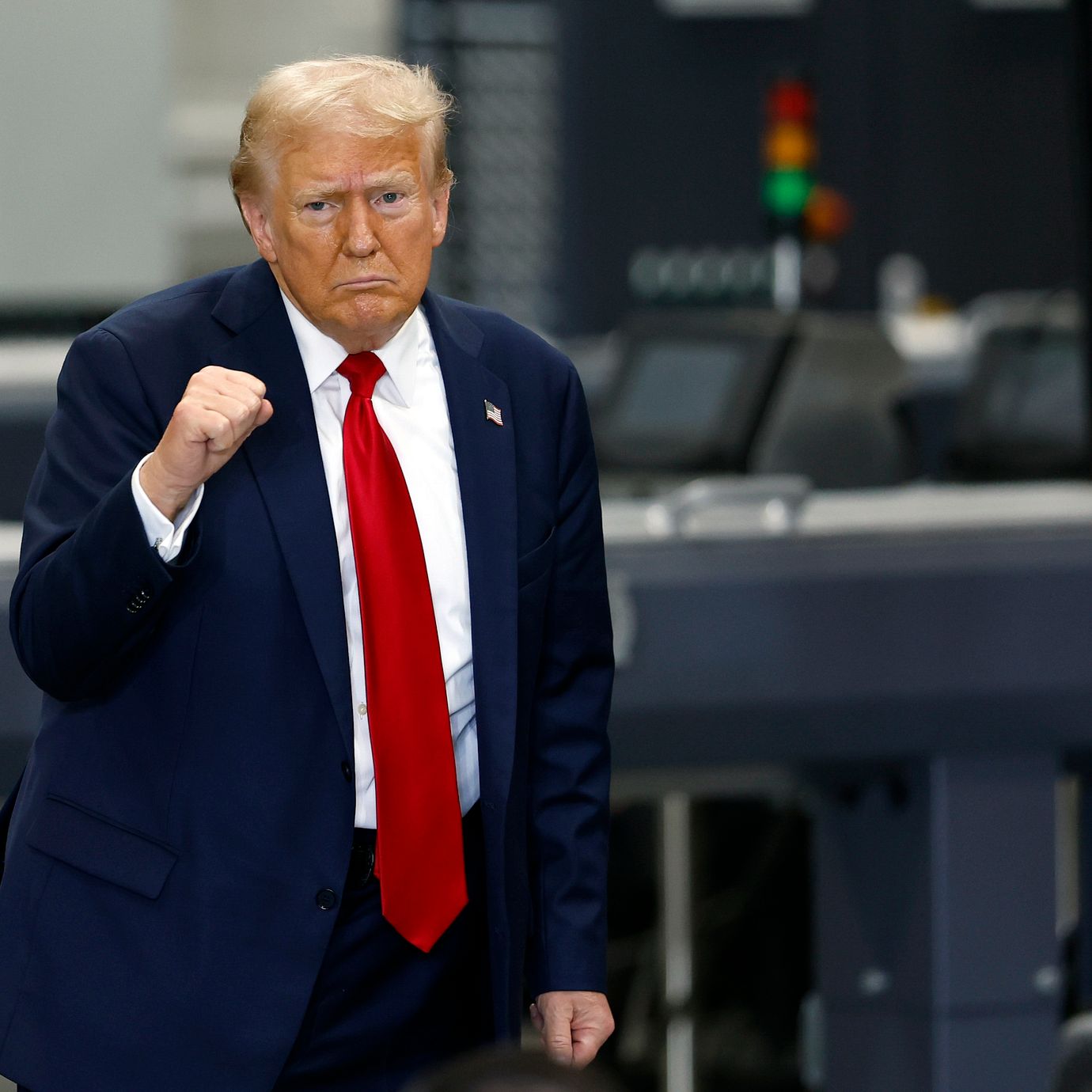
Trump, in Savannah, reiterated that he, too, plans to block the deal. Asked about the risks of blocking the deal, Trump campaign senior advisor Brian Hughes blamed Biden and Harris for the company’s problems. “The way to save American companies and prevent foreign ownership is to unleash domestic energy production to drive down costs and apply smart tariff policies that force foreign companies to play on a level playing field against American workers and American innovation,” Hughes said in an email statement.
In their push to gain ground among union-friendly voters in Pennsylvania, the two campaigns risk losing sight of the broader economy. Manufacturing accounts for 567,000 jobs in the commonwealth, according to ZipRecruiter. That might seem like a large number, but it amounts to just over 10% of the 5.5 million total private jobs in Pennsylvania. While the two candidates promise a manufacturing renaissance, the economy increasingly runs on services, which account for more than 70% of the value created by the U.S. economy, according to government data.
A global strategy that started from the way the U.S. economy currently operates would look very different from the defend-and-protect strategies the political candidates are offering up, says Marko Papic, chief strategist at BCA Research. “The three things that the U.S. has in excess are domestic consumption, private sector liquidity, and top-notch tourism destinations with appeal to Chinese travelers (Las Vegas and California being the two obvious destinations!),” Papic writes in a recent note to clients. “All three can be enlisted successfully in the economic and geopolitical fight against China while enabling U.S. businesses to generate the necessary tax revenue with which to finance U.S. national security priorities.”
But “Bring China to Vegas” isn’t quite as compelling a slogan as “Keep Steel American.”
Harris and Trump will continue to compete on policy as the campaign grinds toward a finish. The two have pledged deep tax cuts without a considered plan for how to offset the falling revenue that will result, even as federal deficits sit well above their peacetime averages. Both will struggle to deliver those cuts given that Congress remains a hostile place to enact legislation of almost any kind.
The renaissance of the middle class that both candidates are promising will be tempting to many voters. Delivering it, however, will be another matter entirely.