Favoritorden och emojin som Chat GPT använder mest
Chat GPT har en egen stil och använder vissa ord mer än andra. Efter att ha analyserat 330 000 meddelanden på engelska från AI-boten har The Washington Post försökt att bena i vad som egentligen kännetecknar att en text är skriven av AI.
Tidningen har hittat flera mönster – men också emojin som Chat GPT använder allra mest.
(Svensk översättning av Omni.)
 Washington Post
What are the clues that ChatGPT wrote something? We analyzed its style.
Analyzing 330,000 messages from OpenAI’s ChatGPT revealed its favorite emoji and other telltale patterns in how the chatbot uses language.
How can you tell if something was written by ChatGPT?
The Post analyzed 328,744 publicly shared messages from the chatbot in English to find patterns in how it uses language. (The Post has a content partnership with OpenAI, which created ChatGPT.)
ChatGPT has fallen in love with emojis. By July, 70 percent of all messages contained at least one. ChatGPT’s favorite emoji is the white check mark in a green box. The chatbot used it 11 times more often than humans did across the publicly shared messages analyzed by The Washington Post, from May 2024 through July 2025.
So far in 2025, at least a quarter of the chatbot’s messages contained the brain or the check emoji.
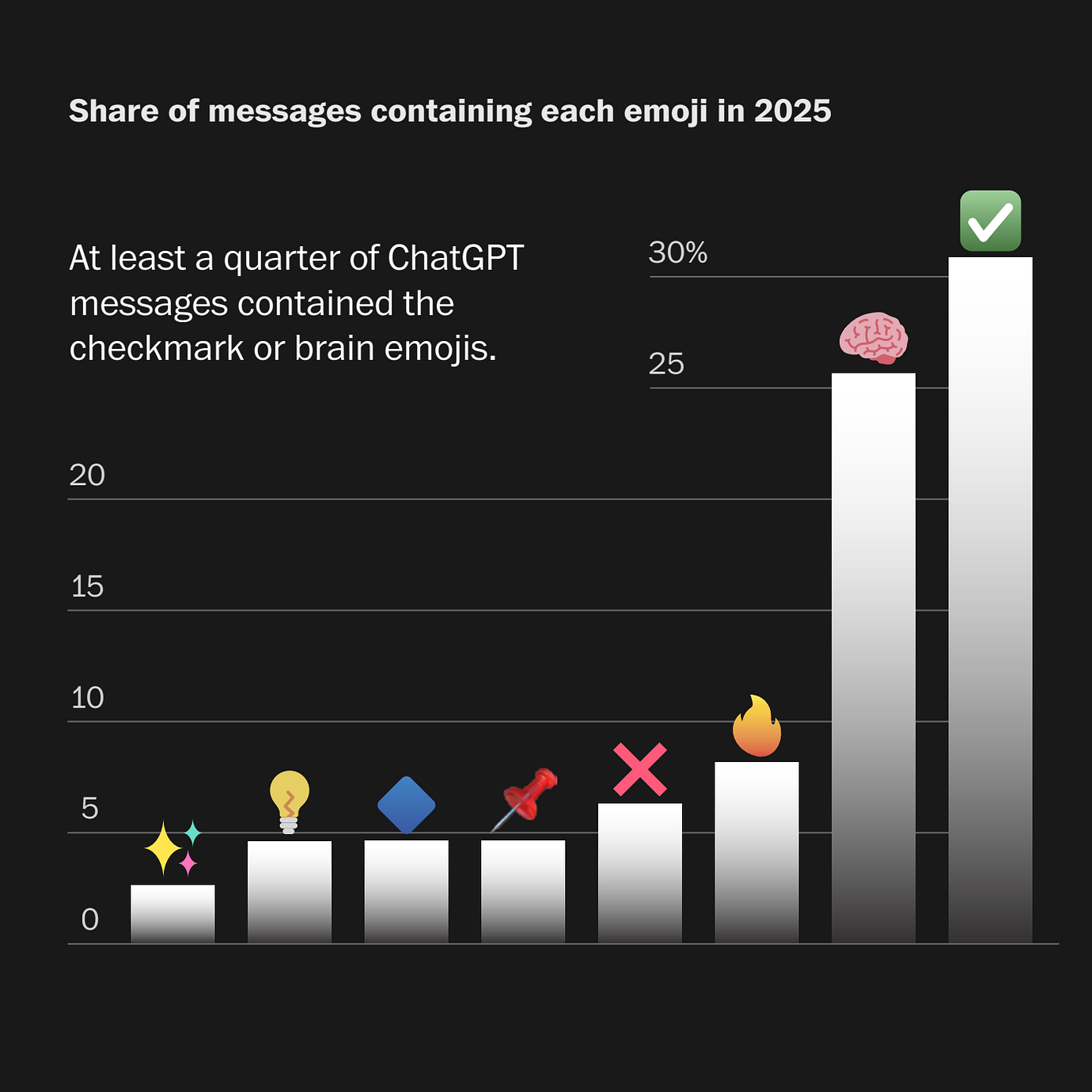
ChatGPT also really likes the brain and the small blue diamond. The chatbot used them 10 times more than humans did.
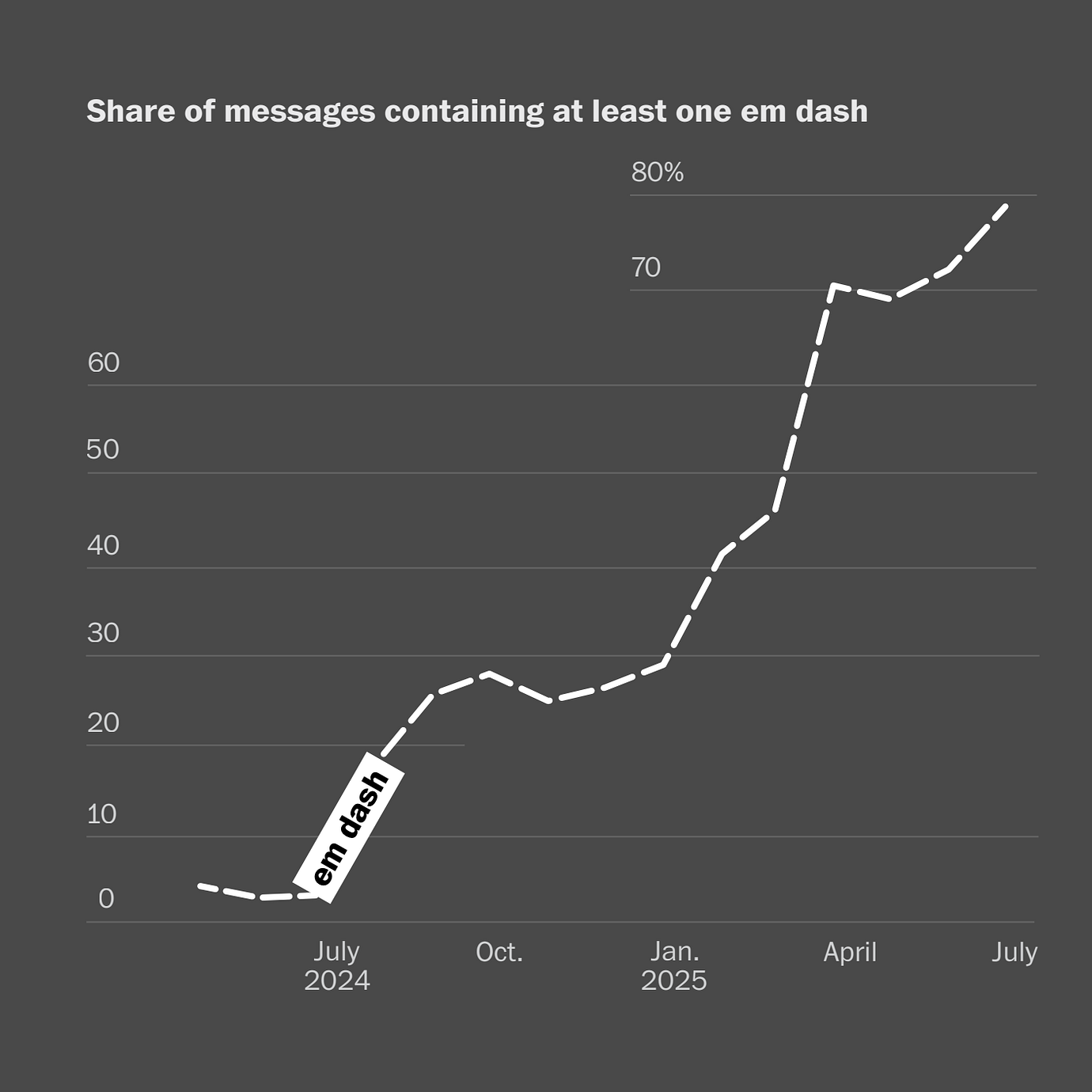
Some people believe that em dashes (–) are a sure sign of ChatGPT-generated text. They’re onto something. (Human journalists – famously – love them too.) A year ago, fewer than 1 in 10 ChatGPT responses used an em dash. The chatbot’s em dash usage took off early this year, and by summer, more than half of its responses included an em dash.
Writers often rely on clichés. So does ChatGPT.
It frequently uses versions of the phrase “not just X, but Y,” which appeared in 6 percent of chats in July.
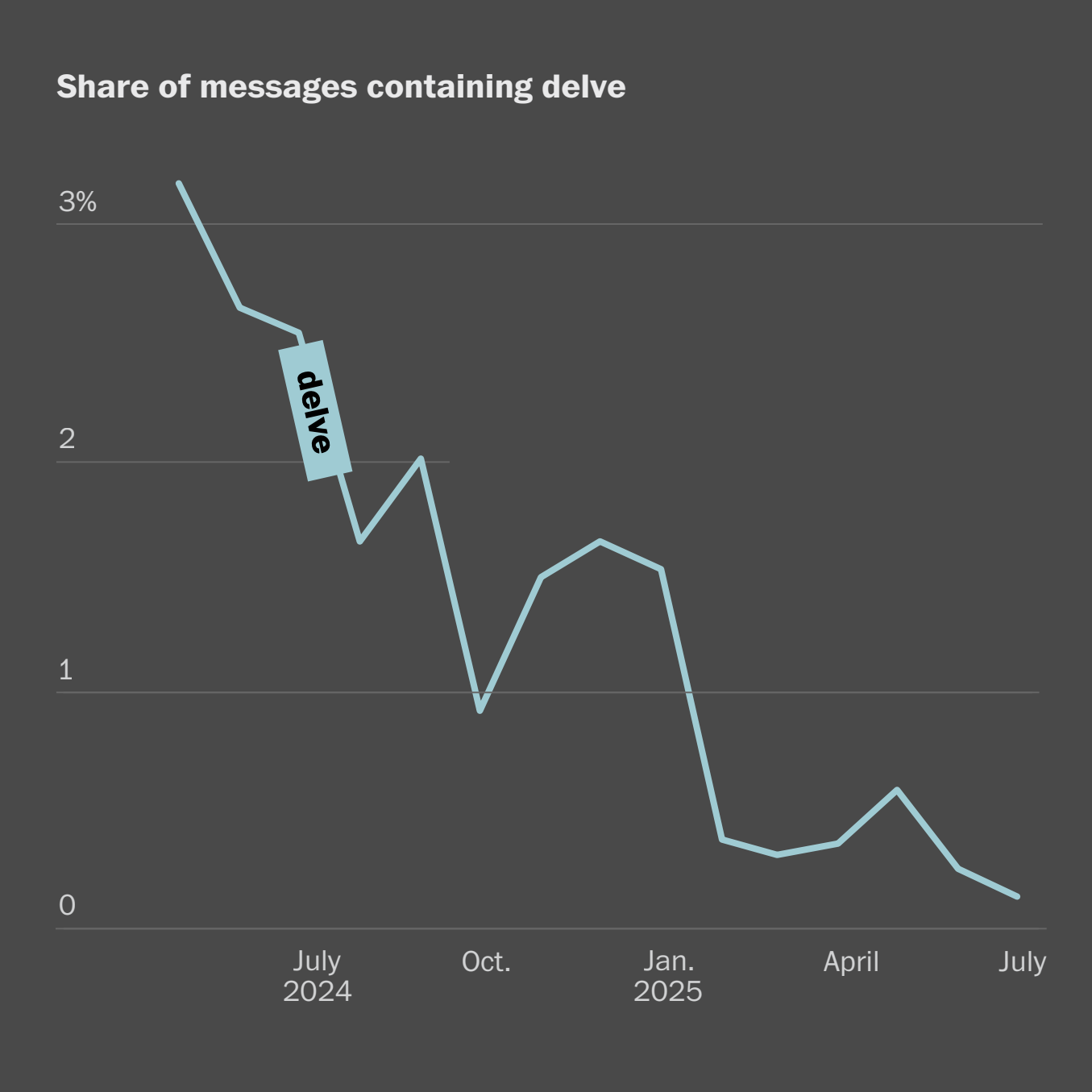
In 2023, ChatGPT became notorious for using the world “delve.” But the chatbot has been cutting back on that. In July 2025, “delve” occurred in only 1 in 1,000 chats seen by The Post.
ChatGPT has also cut its use of other words that can sound overly formal. It has curbed its use of these words: ensure, various, crucial, significant, and approach.
ChatGPT has hugely increased its use of contractions like “isn’t.” This might help the chatbot sound more human. It uses “you’re” or “it’s” in almost a third of chats, and has begun using “don’t” or “isn’t” more, too.
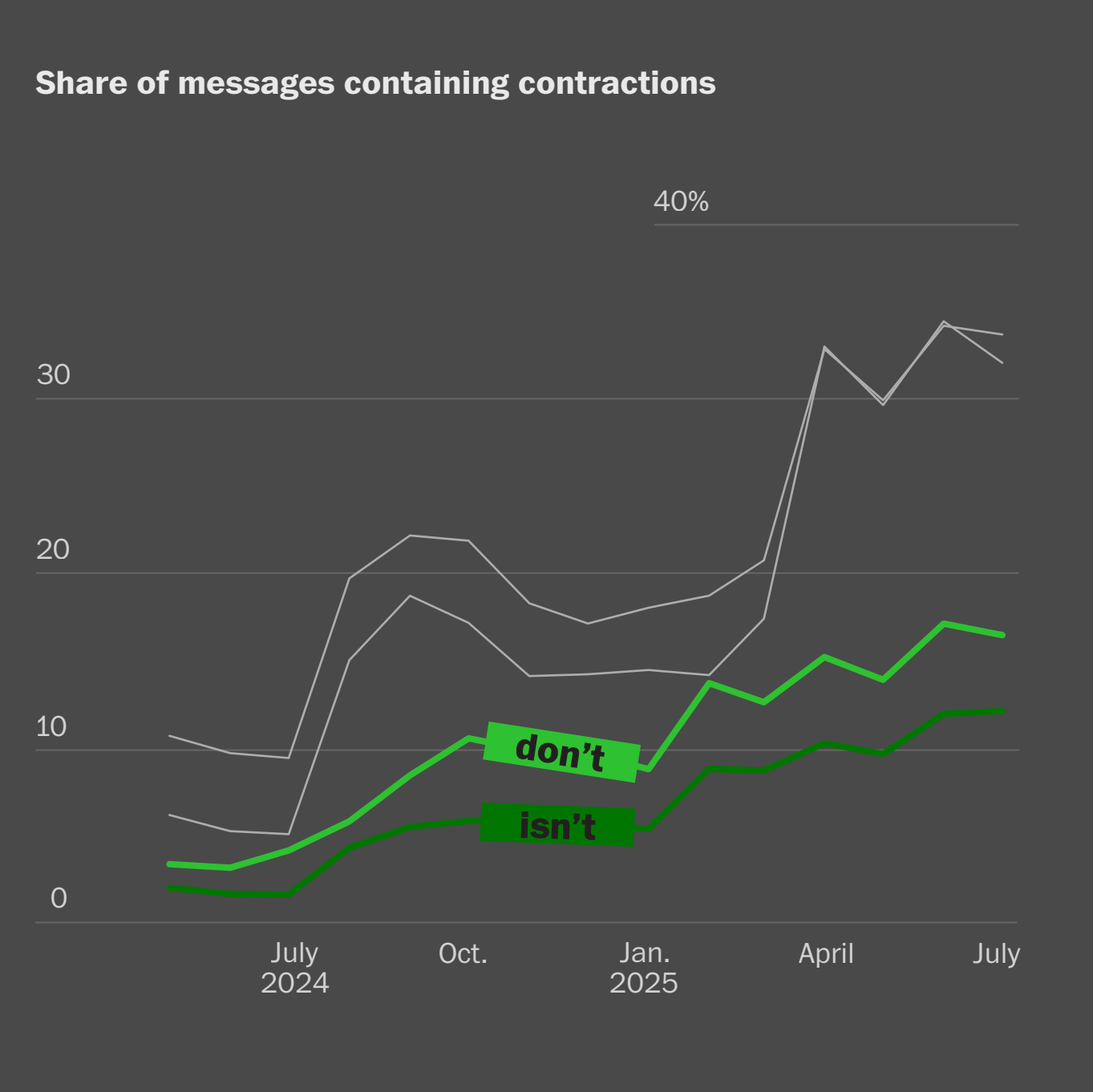
The Post analyzed chats through July, and the chatbot’s use of language has probably continued to evolve.
So how can you spot text written by ChatGPT recently? “Core” is one clue. The chatbot uses “core” five times more often than it did last year. ChatGPT has also started to use the word “modern” more often: It appeared more than 8 percent of messages in July.
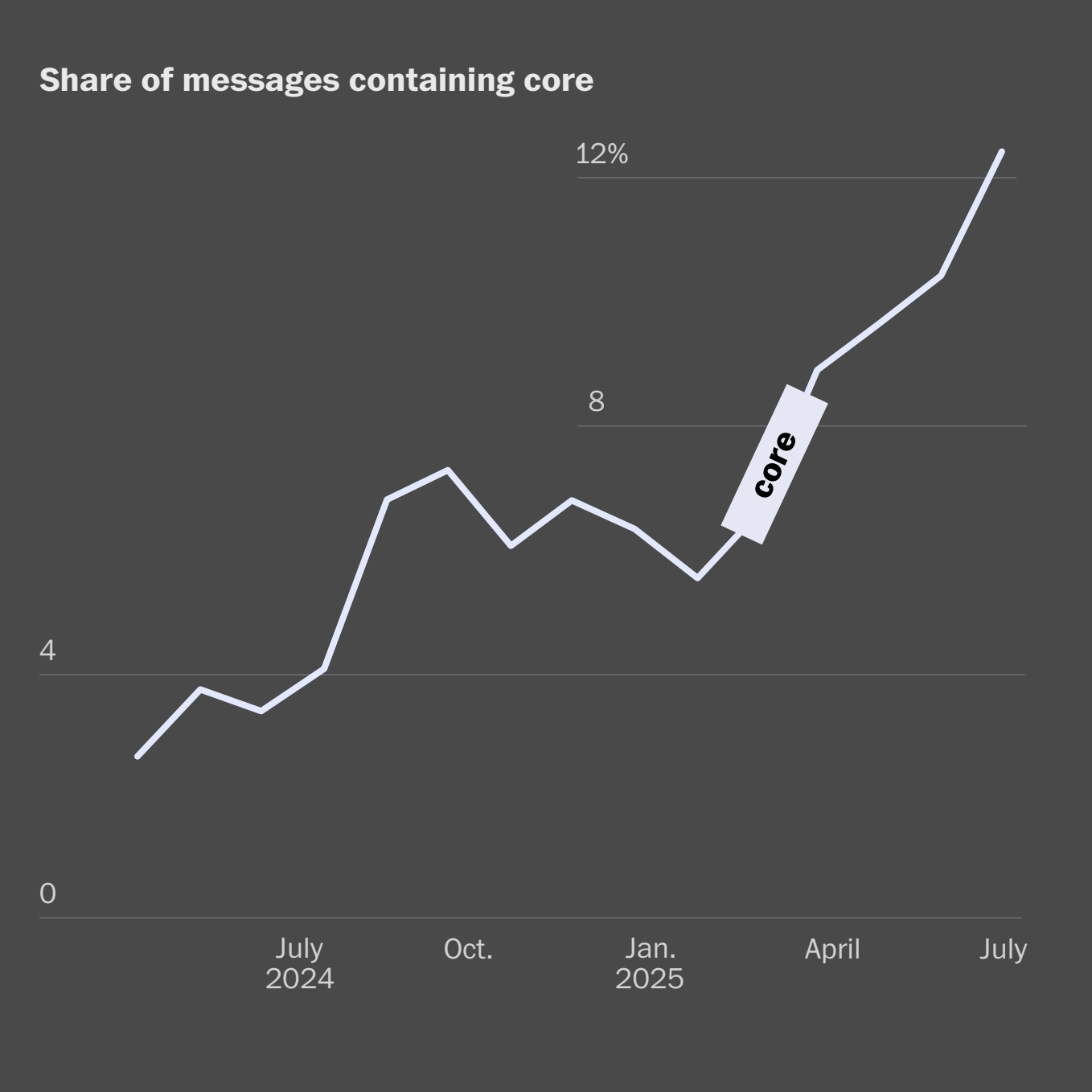
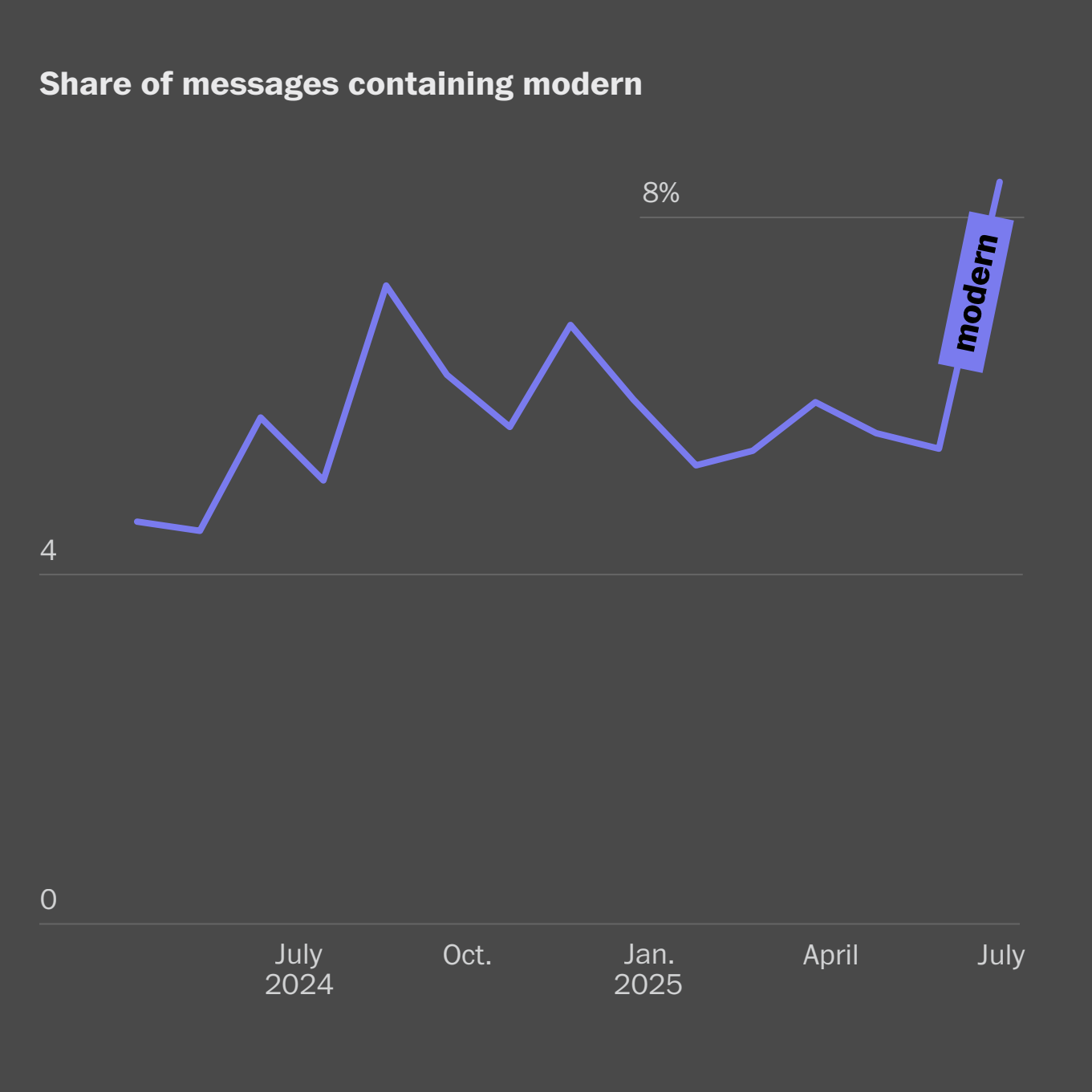
Looking for these patterns might help you spot emails and documents written with help from ChatGPT.
But don’t forget: They can appear in writing from not just chatbots, but also humans – that’s the core of this modern problem.
Methodology:
The Post analyzed ChatGPT conversations that were shared publicly and preserved by the Internet Archive, from a list maintained by Henk Van Ess. The analysis drew on 37,929 ChatGPT conversations that were primarily in English and focused on the 328,744 messages from OpenAI’s GPT-4o model that were at least 10 words long, from May 2024 to the end of July 2025.
© 2025 The Washington Post. Sign up for the Today's Worldview newsletter here.