Gamers i uppror mot spelindustrins sikte på NFT och kryptovaluta
Spelindustrin har gjort återkommande försök att införa non-fungible tokens (NFT) och en kryptobaserad affärsmodell i sina spel. Men deras hängivna kunder har slagit bakut och fått industrin att backa från sina visioner, skriver Bloomberg.
På många sätt är spelvärlden en potentiellt lovande miljö för NFT och kryptovalutor, då användarna redan befinner sig i en virtuell värld där det pågår transaktioner. Men spelarna förstår inte på vilket sätt det skulle bidra med något positivt, säger spelutvecklaren Nick Kaman.
– Vi menar att NFT varken är miljövänligt eller användbart, och anser att det i själva verket är ett j-vla bedrägeri.
 Bloomberg
How Gamers Beat NFTs
Fans have largely triumphed against the gaming industry’s efforts to incorporate nonfungible tokens—and this is one mutiny that may really matter.
Nick Kaman’s video game development studio, Aggro Crab, has tied its image closely to making fun of cryptocurrency. Its first major game, Going Under, is a broad satire of capitalism and startup culture, full of gags about the gig economy, data mining, and the blockchain. “A third of the game is us just attacking crypto,” he says. “That was the whole joke.” One level requires players to traverse a dungeon where workers physically mine a substance called Styxcoin for their boss, the ferryman Hu$tlebone$. (Upon his defeat, a message flashes across the screen: ASSET LIQUIDATED.) So Kaman was alarmed earlier this year when he learned from Twitter that Aggro Crab’s publisher, the equivalent of a record label in the games industry, had become the latest to try selling nonfungible tokens. The NFTs would cost players real money and, he said, cost him both customers and his self-respect.
“We believe NFTs cannot be environmentally friendly, or useful, and really are just an overall f---ing grift,” Kaman and his co-founder, Caelan Pollock, said hours later in a joint statement condemning the decision. They pledged to sever the studio’s relationship with the publisher, Team17 Group Plc, unless Team17 abandoned its planned tokens, a collection of cutesy cartoon invertebrates called MetaWorms, based on a long-running series about annelids with heavy artillery. In case the studio logo of a frowning crab holding a knife left anything to the imagination, they closed with “I f---ing hate it here.”
“We believe NFTs cannot be environmentally friendly, or useful, and really are just an overall f---ing grift”
Other development studios affiliated with Team17 quickly issued their own denunciations. These included Ghost Town Games, creator of popular food-prep series Overcooked, and Playtonic Games, which made the old-school adventure Yooka-Laylee and its sequel. Internally, Team17 employees also expressed reservations. A day after the initial announcement came the retraction. The MetaWorms were dead. “We have listened to our Teamsters, development partners, and our games’ communities, and the concerns they’ve expressed,” the publisher posted on social media, “and have therefore taken the decision to step back from the NFT space.” That hasn’t changed. In retrospect, Kaman says in an interview, it’s tough to imagine why Team17 thought it would be a good idea.
But for the better part of the past year and a half, a whole lot of people in the games business thought NFTs sounded great. With crypto booming in the summer of 2021, NFT backers grew beyond the Bitcoin faithful to include Mark Zuckerberg’s Meta, the traditional financial industry, and a string of game publishers whose market values range from modest (Team17, about $700 million) to massive (the crypto-curious Square Enix, $5.2 billion). With games, the idea, broadly speaking, was to merge the well-established, wildly profitable act of selling digital items and the buzzy world of web3, the catchall term for a hazy mix of blockchain, cryptocurrency, and virtual-reality technologies that always seem to be over the next horizon.
Established companies have often framed NFT projects as decentralized, revolutionary, bottom-up wealth creation. They are, somehow, not being ironic. For investment firms, these digital certificates of authenticity were supposed to create a new asset class with built-in scarcity, like fine art or New York real estate. Game publishers saw them as the latest in a long line of digital items that have amounted to found money. Yet it’s been avid gamers, many of whom regularly pay extra for flashy in-game outfits that do nothing besides look cool, who have most clearly rejected efforts to push NFTs on them.
Gamers and industry types have waged a war of public opinion online, dismissing NFT advocates as hucksters, vowing boycotts, and generally making a scene. Protests unraveled or headed off the addition of NFTs or blockchain initiatives by Valve’s Steam marketplace, which has since banned blockchain tech; Stalker2, the Chernobyl disaster sequel; the serial-killer-vs.-survivors game Dead by Daylight; voice actor Troy Baker; Electronic Arts and Sega, which both walked back initial stated interest in NFTs; Discord, the standard chat app for gamers; and, in late July, the Microsoft-owned juggernaut Minecraft. “The initial backlash from consumers was a response to the shallow game mechanics and Ponzi-scheme-like practices that informed most of the early designs,” says Joost van Dreunen, a games industry analyst and investor who teaches about the business of video games at New York University. “It isn’t fun or sustainable.”
This backlash has been distinct from the broader carnage in cryptocurrency markets, where Bitcoin’s price has dropped below $20,000, down more than 70% from its November peak, and Coinbase Inc., the leading crypto exchange, has laid off 1,100 people, almost one-fifth its workforce. Irate gamers weren’t exactly a leading indicator of the macroeconomic trends that factored into the crypto crash, like rising inflation. But NFT boosters benefited from the wave of crypto speculation, too, and from people being trapped inside during a pandemic with nowhere to go. The gaming outrage has provided valuable data about what might be next.
“We already have metaverses here”
Gamers, after all, have bought into most of web3’s underlying concepts for decades. Persistent online worlds date back to the disco era, when early computer networks and dial-up modems let nerds fight their way through text-based dungeon adventures. The idea of a metaverse is old hat to 2000s devotees of Second Life or World of Warcraft, and Zuckerberg’s recently unveiled VR avatar became a meme after many observed that it wouldn’t look out of place on the Nintendo Wii. Some fans of Grand Theft Auto Online have been playing the game for nine years across three generations of home consoles. “We already have metaverses here,” Strauss Zelnick, chief executive officer of publisher Take-Two Interactive, told GamesIndustry.biz earlier this year. “I would argue we have the biggest and best.” No other group is more comfortable existing in virtual worlds and owning digital items.
Over the past decade or so, gamers have also steadily proven willing to pay more in new ways for the privilege of playing. Games that required long hours of mindless grinding to collect gold or find the best items gave rise to new product types and secondary markets that served as shortcuts. Players spend real money to progress faster, to unlock once-standard features, even to fund a game’s development. Buying a flashy digital sword with fake gold in 2006 isn’t all that different from buying a Bored Ape with a digital token right now. All of which is to say, when your blockchain-besotted sales team has lost the likes of Aggro Crab, you’re in trouble. With NFTs, the industry pushed its most loyal customers, and some collaborators, to their limits. The lessons they learned can serve as a cautionary tale for anyone still trying to sell skeptics on the metaverse.
The video game industry was built on cash grabs. During the heyday of the arcade, games were known by another name: quarter munchers. They were designed to be tough, forcing players to drop in more coins for another chance to avoid the dreaded words “Game over.” The success of Atari in the 1970s and Nintendo Co. in the 1980s had a lot to do with the idea that you paid upfront for a home console and then that was it—any game you bought was yours to play, forever. Instead of needing a stack of quarters at the ready, you could learn cheat codes to play any part of the game you wanted, anytime. But the industry adapted as arcades shrank and the online world grew. The 2000s brought home consoles with serious internet connections. The Xbox 360 and PlayStation 3 were the first to incorporate regular updates and expansions for games after release, and to charge for much of that material.
Sometimes this downloadable content was great—the new storylines added to Grand Theft Auto IV and the horror megahit BioShock, for example, were like getting a whole extra game. Other times, not so much. A later game in the popular Elder Scrolls series charged players $2.50 extra for “horse armor,” a new outfit for their virtual steeds that didn’t help them in any material way. It became enough of a punchline that on April Fools’ Day 2009, the publisher doubled the armor’s price and called it a sale. Over time, this type of product evolved into what are now known as cosmetics, including bonus character costumes, weapon and vehicle designs, and victory dances that players can buy directly within a game. The selection is often artificially limited because it changes weekly or daily. The implied pitch is akin to overpriced concert merch: If you don’t buy now, you might never get another chance.
The video game industry was built on cash grabs
During the same period, smartphone app developers resurrected the arcade, or something like it. Free-to-play games like Candy Crush did away with infinite lives, charging players for the chance to take another shot at the level that just beat them. (Otherwise, they might have to wait hours for their lives to recharge.) Like arcade games of old, some free-to-play titles were tuned to ensure that players would come tantalizingly close to progressing if only they spent a little more money. Generally it’s possible to advance in free-to-play games without paying real cash, but doing so requires so much time and patience that many cave. The most profitable mobile games work this way.
On consoles as well as phones, these trends have converged into the “live service” model, an attempt to develop intra-game communities that keep players spending. Many of the biggest hits, including Fortnite, are now free to play and make billions from unique cosmetics. Players can pay for these limited-time items directly or gamble on loot boxes, randomized items that are the equivalent of a pull on a slot machine. (Some games, such as the Mad Max-esque Fallout 76, still rely on a steady stream of new players to buy the game outright and offer years’ worth of updates as part of the deal.) The model has put a price on self-expression in virtual worlds and rewritten how video games are structured and designed. Cheat codes have become an endangered species, and the main way to see everything a game has to offer is to spend more for the privilege.
These models have been a boon for game makers. Consider the case of Activision Blizzard Inc. Over the course of 2016, the company averaged 491 million monthly users and raked in $6.6 billion in revenue, resulting in an average revenue per user of $13.45. In 2021 its average monthly users fell to 401 million, but its revenue rose to $8.8 billion, for an ARPU of $21.95. Why urge players to buy a new game when you can get them to spend more on cosmetics inside an existing one?
While game publishers have an enormous head start on persuading people to pay real money for virtual items, they also depend heavily on the goodwill of their games’ communities. A decade ago, a publisher’s sense of interaction with fans rarely entailed more than the occasional blog post or tweet. Now game companies often change their products after release based on notes from their community managers, staffers who field player feedback. Fortnite’s Battle Royale mode, which is what people picture when they think of that multibillion-dollar shooter, began life as an experimental add-on to a forgotten narrative game. On the flip side, every unpopular development choice can seriously hurt a game’s business prospects. Which leads us back to NFTs.
“Resources and time will be invested into making shallow experiences that are conduits for shitty marketplaces and cosmetics instead of focusing on making quality games”
Digital horse armor may be a waste of money, but it can at least be fun, and most buyers aren’t thinking of it as an investment. NFTs are inherently vehicles for financial speculation, and gamers worry that layering them into a fantasy world will suck out the fun. “Resources and time will be invested into making shallow experiences that are conduits for shitty marketplaces and cosmetics instead of focusing on making quality games,” warns a highly upvoted post on the r/gaming subreddit. Gamers have seen that sort of thing happen before when real money comes into play, most notably with an auction house added to the popular hack-and-slash game Diablo III a decade ago. The game’s publisher, Blizzard Entertainment Inc., removed the auction house following the outcry.
MetaWorms, Team17’s would-be NFTs, didn’t even hook into any actual game—they were just digital collectibles—but gamers worried that even that would be a slippery slope. So when game companies started announcing plans to layer NFTs into their products last year, they tended to include lots of caveats. No, they wouldn’t just be useless gewgaws. No, they wouldn’t ruin the balance of the other items in the game, either. No, they wouldn’t do crazy damage to the environment. (Crypto transactions are notoriously energy-intensive.)
Executives at major publishers expressed interest in adding NFTs to their games but were slow to commit. “We need to carefully assess many things,” Sega Corp. said in a statement in December, such as “what will be accepted and what will not be by the users.” Andrew Wilson, CEO of Electronic Arts Inc., said on a winter earnings call that his company had decelerated its web3 projects and that “what we’ve seen more recently is just how powerful the social ecosystem, the social networks borne out of engagement with our games, truly are.” In other words, we know fans will be pissed if we force this.
Smaller developers made more of the early attempts. In December, GSC Game World Global Ltd. announced an NFT auction to help fund its highly anticipated sequel, Stalker2, stressing that it needed the money to fulfill its ambitions for the game. Days later the company tweeted, “Dear Stalkers, we hear you. Based on the feedback we received, we’ve made a decision to cancel anything NFT-related.” Shortly after, the company delayed Stalker2’s release by more than six months. (The studio, based in Ukraine, suspended development indefinitely after Russia invaded.) The Team17 blowback happened in January, around the same time prolific voice actor Troy Baker, who played Joel in the seminal zombie apocalypse game The Last of Us, gave up on an NFT project he’d joined with a company called Voiceverse. Baker’s initial announcement seemed to anticipate the anger it engendered. “We all have a story to tell,” he wrote. “You can hate. Or you can create. What’ll it be?” Two weeks later, he apologized, tweeting, “After careful consideration, I’ve decided to not continue the partnership with VoiceVerseNFT.” The gamers had chosen hate.
“You can hate. Or you can create. What’ll it be?”
The most prominent, sustained effort to incorporate NFTs into mainstream video games so far has come from the publisher Ubisoft Entertainment SA, which started putting tokens into its hit shooter Ghost Recon: Breakpoint at the end of last year. Players who meet certain conditions, such as killing 100 enemies in hand-to-hand combat or sniping someone from 400-plus meters, are rewarded with in-game weapons and apparel NFTs. As with NFTs of fine art or GIFs, the distinctions between these items and the non-NFT gear are limited. The tokenized versions carry unique ID numbers visible to other players, and that’s about it. This quasi-scarcity is supposed to be the backbone of a play-to-earn model, rewarding gamers for their play time with NFTs valued in a cryptocurrency called Tezos. The idea is tempting to gaming companies, partly because they can collect Tezos commissions on any NFT resales and then translate that crypto into dollars. A less charitable interpretation is that this practice turns leisure into work.
Ubisoft didn’t bow to the vocal objections of annoyed customers, but the numbers on its two partner NFT marketplaces, Rarible and Objkt, speak for themselves. As of press time, Rarible says it has facilitated 78 sales of Ghost Recon NFTs between players, totaling about $3,900. Objkt values a complete collection of Ghost Recon NFTs at 266.49 Tezos, or $541.24. The only completist I was able to find, a crypto enthusiast named Yalexis Santiago, says getting a full set proved easy because people want to flip them and demand is low. He even has a virtual hat given only to a few dozen Ghost Recon developers. He saw one priced as high as 1,000 Tezos but got his for 80.
Santiago says maintaining his collection has been a pain, partly because of glitches and partly because the web3 system isn’t as borderless and decentralized as advertised. He was initially unable to earn NFTs through play time because the company didn’t accept that his home, Puerto Rico, is part of the US. (Through customer support, he changed his location in the company’s systems.) But his decentralized tokens are now very much centralized inside a game with one foot in the grave. This spring, Ubisoft announced that it would no longer be updating Ghost Recon, and the company hasn’t incorporated its NFT system into any other titles. Around the time of the Ubisoft announcement, the president of Blizzard, which makes World of Warcraft, tweeted, “No one is doing NFTs.”
Perhaps the greatest blow to the effort to put NFTs in games came in late July when Minecraft, a game whose success has spanned generations, banned NFTs and other blockchain tech. Such items, the developers said, “can create models of scarcity and exclusion that conflict with our Guidelines and the spirit of Minecraft.” Left unstated: Minecraft has almost total control of in-game cosmetics through its own marketplace, and owner Microsoft Corp. sees no need to open things up to web3. Minecraft is also the epitome of player creativity and customization, a limitless collection of virtual worlds where players can build and manifest anything they can imagine. That is to say, it’s a prototypical metaverse game.
“The gaming community needs to constantly remind these people that they do not want it”
Ubisoft’s largest investor is now Tencent Holdings Ltd., the tech giant whose home market, China, has banned speculative forms of cryptocurrency. Axie Infinity Ltd., the most cash-rich company attempting the crypto play-to-earn model, has imploded after a $600 million hack deprived players of their earnings. Coinbase has introduced an NFT marketplace, one designed less like a trading platform and more like an art gallery, but activity has been sluggish. The games industry’s big-name NFT efforts have waned, though Konami Group Corp. announced on Oct. 13 that it planned to create its own marketplace for trading the tokens. Kaman, the Aggro Crab co-founder, says his NFT-hating customers and colleagues shouldn’t get cocky. “The gaming community needs to constantly remind these people that they do not want it,” he says.
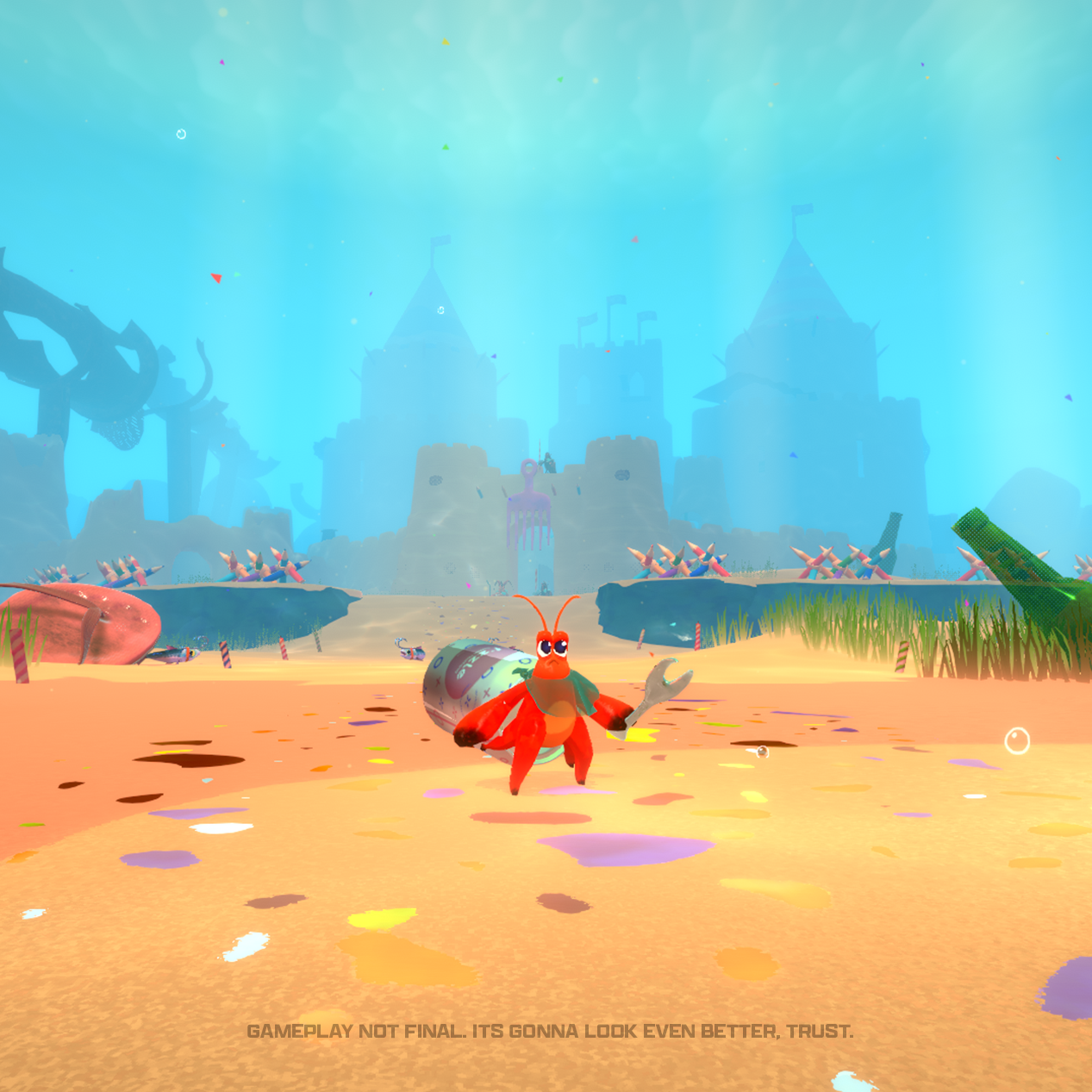
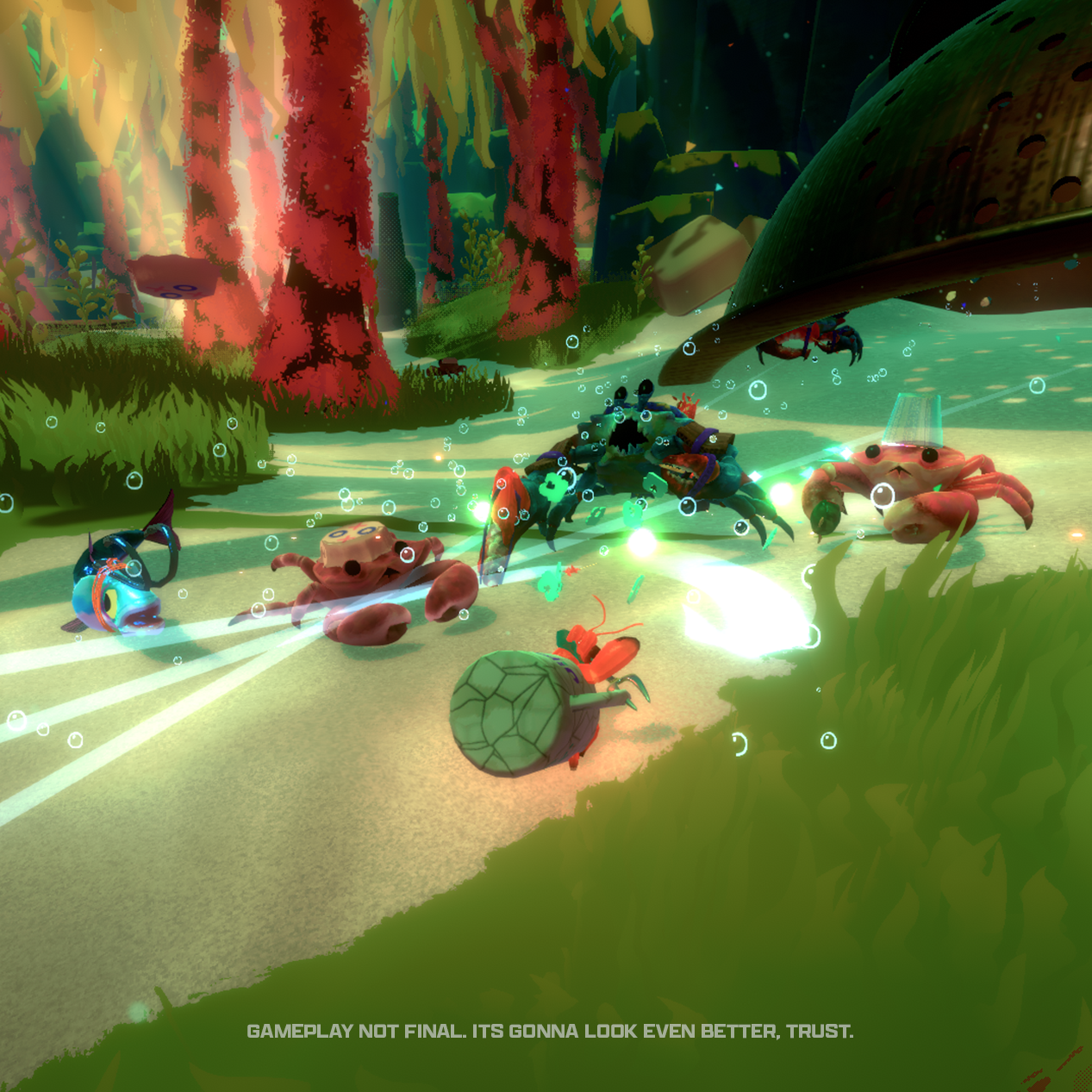
Aggro Crab recently announced its second game, Another Crab’s Treasure, an underwater adventure about a hermit crab’s quest to retrieve its shell, which has been repossessed by a tax collector. The press materials promise a game about “late-stage crabitalism, and the end of the world.” This time, Kaman and his team will be handling the publishing themselves.
For more articles like this please visit us at bloomberg.com