Guldpris varnar: ”Kan inte festa som om det var 1999”
”Historien upprepar sig inte, men den rimmar ofta.” Citatet används här som utgångspunkt för en jämförelse mellan 1990-talets marknadsrally i slutet av Greenspans räntehöjningscykel och det som utspelar sig nästan 30 år senare, med Powell vid Fed-rodret.
Då drevs börserna av dotcom-boomen – i dag är det AI-rallyt som skjuter dem mot nya rekordnivåer. Men på en avgörande punkt skiljer sig de två epokerna. Den här gången har guldpriset följt med upp, och till och med ökat mer än börsen. Det skickar en varningssignal som rör USA:s växande statsskuld, skriver Barron’s.
 Barron's
Gold Rally Is Sending a Warning. It Relates to the U.S. Debt.
History doesn’t repeat but often rhymes, as the oft-cited Mark Twain quote goes. But there are classic couplets, as well as what passes for rhymes in popular song lyrics. The latter comparison seems more apt when past market and economic cycles are seen as precedents for the present.
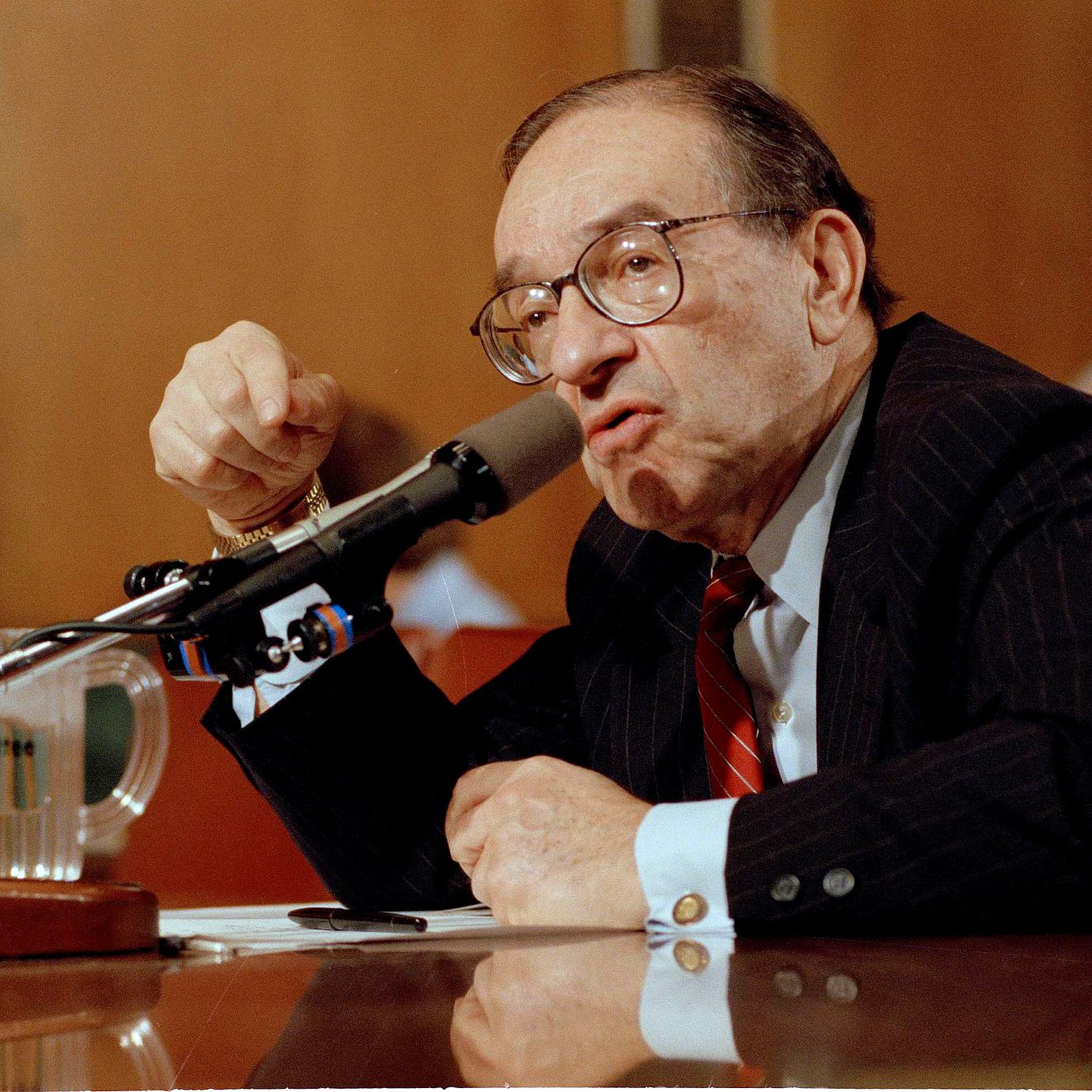
In that regard, the 1990s are viewed as a positive portent of the current decade. In 1994, the Federal Reserve sharply raised its policy interest rate to quash incipient inflation pressures. That Fed, led then by Alan Greenspan, was able to engineer a rarely seen soft landing for the economy. Once it was apparent that short-term rates had peaked (after doubling, to 6% from 3%), the dot-com bull market took off on the promise of the internet, notwithstanding Greenspan’s doubts about irrational exuberance among investors early in the legendary liftoff.
Fast forward to today, and substitute the sharp escalation by the Jerome Powell–chaired central bank in its fed-funds target range, to 5.25% to 5.5%, from near 0%, until the recent half-point cut. Once more, when it was clear the Fed was close to the end of its hiking cycle in 2023, stocks took off. This time the promise of artificial intelligence helped to send the so-called Magnificent Seven tech names sharply higher, lifting the S&P 500 to a record.
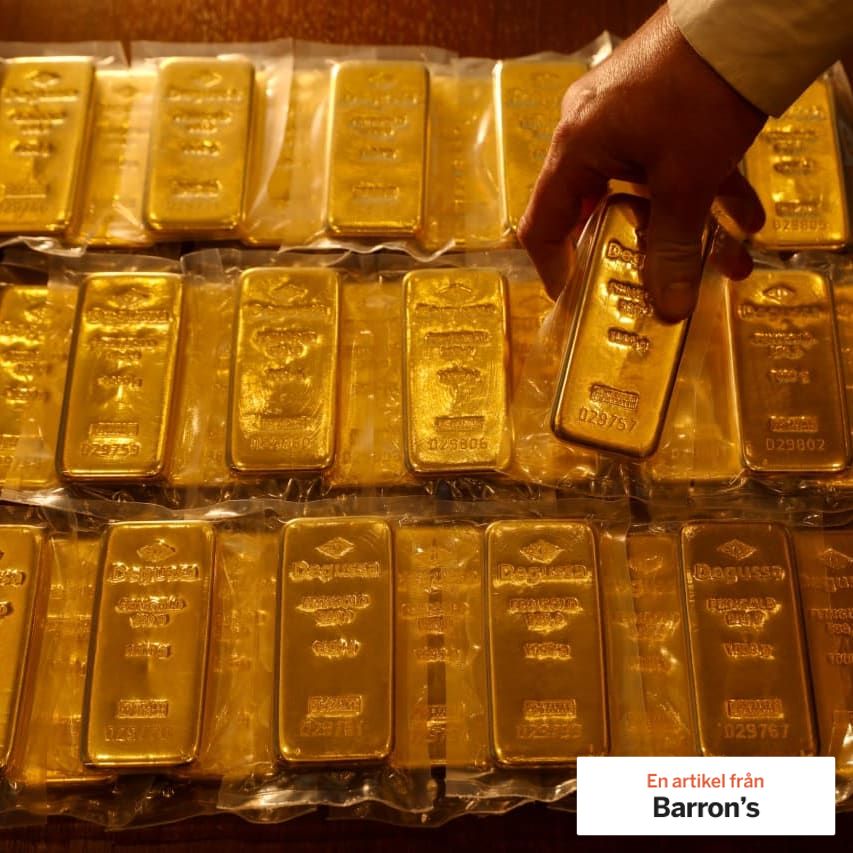
Gold has more than kept pace with stocks, outperforming the S&P 500 so far in 2024
But to invoke another cliché, it’s different this time. And what’s most different now is the U.S. fiscal position, with huge deficits likely to continue, in contrast to the steady progress to a budget surplus at the turn of the last century.
One strong hint is the gold market’s performance relative to the stock market. In the 1990s, the yellow metal truly seemed a barbarous relic when the internet’s promise seemed unlimited. Gold slumped to less than one-third of what it was worth at its previous peak above $800 in 1980. In an impeccable example of government market timing, the U.K. dumped more than half of Her Majesty’s gold reserves in the late 1990s, near the low of bullion’s bear market.
But for all the seemingly unlimited potential for AI, gold has more than kept pace with stocks, outperforming the S&P 500 so far in 2024 and in the most recent one- and three-year time spans. To cite relevant exchange-traded funds, the SPDR S&P 500 ETF (ticker: SPY) returned 21.06% for 2024 through Wednesday, 33.67% for the most recent 12 months, and 10.31% per annum for the past three years, according to Morningstar data. For the SPDR Gold Shares (GLD), the corresponding numbers are 28.54%, 38.28%, and 14.59%.
Whatever bullishness the equity returns reflect, gold’s performance suggests expectations that politicians will do whatever it takes to deal with the budget, inflation being the most expedient means by which to reduce the debt burden.
To review, as the 1990s progressed, the federal budget deficit steadily declined and moved into a substantial surplus of more than 2% of gross domestic product by fiscal 2000.
Much of the credit for the turnaround in the nation’s fisc should go to the end of the Cold War and the attendant decline in real (that is, adjusted for inflation) defense spending. Tax increases, which may be equally credited to (or blamed on) the Clinton presidency and the Newt Gringrich–led Congress, also turned the red ink to black. A robust economy mainly filled Uncle Sam’s coffers and freed up capital for the private sector.
The present situation cannot be more different. Even before the steep economic downturn from the Covid pandemic, the federal deficit ran at 4.5% of GDP, a level previously associated with recessions, despite unemployment under 4% and a then-record stock market.
Trillion-dollar deficits loom as far as the eye can see. According to the outlook of the nonpartisan Congressional Budget Office, the deficit is projected to continue to exceed 5% of GDP for the rest of the decade, climbing to 6.1% by 2034.
At that point, the U.S. could hit its sustainable gross debt limit, at over 150% of GDP, according to a new paper by Giorgi Bokhua and Mark Warshawsky published by the American Enterprise Institute, a conservative-leaning think tank. Then the Social Security and Medicare trust funds will be exhausted, which will force the programs to be reformed, likely as part of a larger fiscal consolidation.
They add that the level of sustainable debt may be overestimated, based on their assumption that interest rates won’t be forced up, relative to growth, from the exceptionally low levels of the past decade.
But government interest expenses already exceed defense expenditures, as I and others have pointed out. Moreover, this is an increasingly dangerous geopolitical circumstance, with Russia’s war on Ukraine, China’s aggressive ambitions in the South China Sea, and Israel’s conflict with Iran proxies Hamas and Hezbollah threatening to explode in a wider Middle East conflict. Contrast that with the relative stability of the post-Cold War world before Sept. 11, 2001.
Investors should keep that in mind before they think they can party like it’s 1999
As noted, the most expedient way for a government to deal with debt and defense spending pressures is inflation. Maintaining nominal (current-dollar) GDP—essentially the economy’s top line—generates revenue for taxes to pay debt-service expenses. Suppressing real interest rates further helps make the debt less burdensome. The combination is referred to as financial repression, which is essentially a polite term for screwing bond investors who get stuck with negative returns.
That may be what gold is sussing out. In this highly contentious election campaign, the deficit and debt rank lower than cats and dogs in the political discourse.
Investors should keep that in mind before they think they can party like it’s 1999.