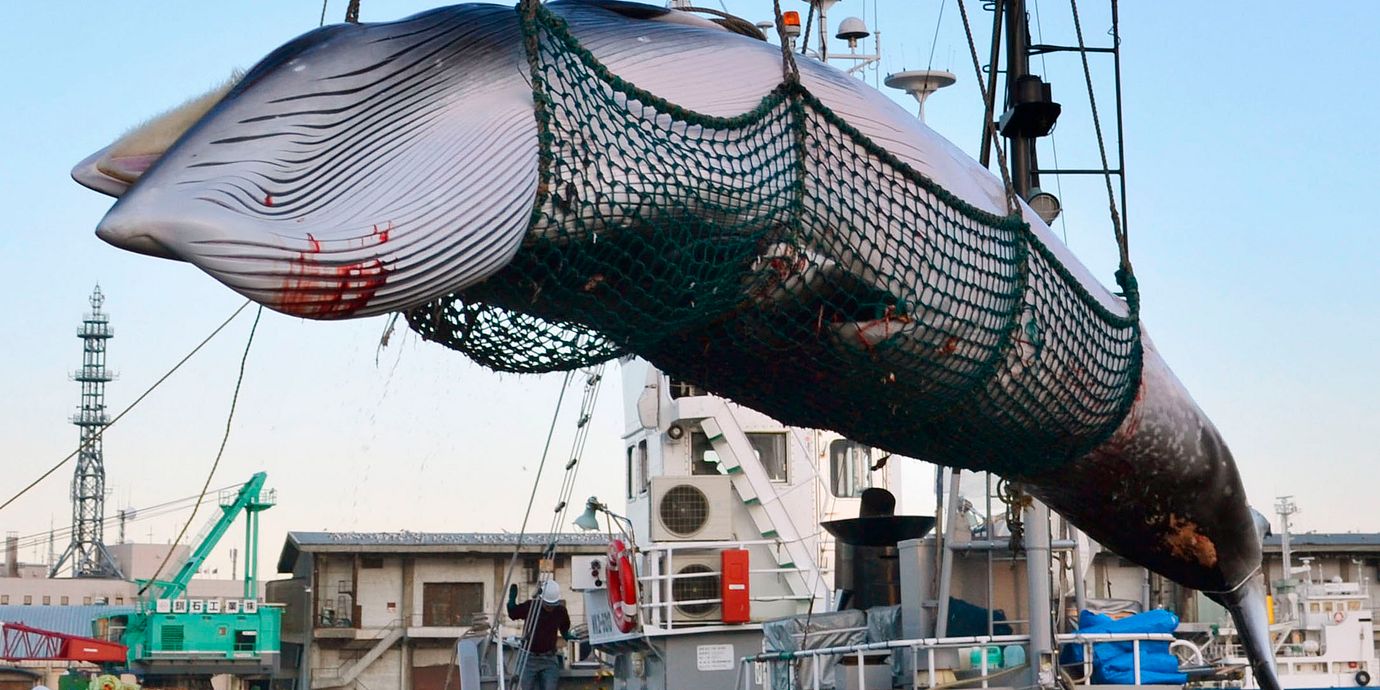
Japan återupptar kommersiell valjakt efter trettio år
Japanska valfiskare kastade loss på måndagsmorgonen för första gången på 31 år då Japan beslutat att återuppta den kommersiella valjakten. Det efter att Japan nu formellt trätt ur den internationella valfångstkommissionen (IWC), som arbetar för att skydda den hotade valen genom att reglera valfångsen, rapporterar Japan Times.
För att skydda valbeståndet har Japan har infört kvoter för hur mycket av de olika arterna som man får jaga. Ett maxantal på 227 valar per säsong är kvoten för hela industrin.
– Jag vill att valjägare ska följa fångstkvoterna och sikta på att återuppliva valjaktsindustrin, sa Japans fiskeminister Takamori Yoshikawa under en ceremoni för att hylla den japanska valindutrins renässans.
bakgrund
International Whaling Commission (IWC)
Wikipedia (en)
The International Whaling Commission (IWC) is an international body set up by the terms of the International Convention for the Regulation of Whaling (ICRW), which was signed in Washington, D.C., United States, on December 2, 1946 to "provide for the proper conservation of whale stocks and thus make possible the orderly development of the whaling industry".In 1982 the IWC adopted a moratorium on commercial whaling. Currently, Japan, Canada, and a number of other nations oppose this moratorium. The IWC allows non-zero whaling quotas for aboriginal subsistence and also member nations may issue 'Scientific Permits' to their citizens. Japan has issued such permits since 1986, Norway and Iceland whale under objection to the moratorium and issue their own quotas. In 1994, the Southern Ocean Whale Sanctuary was created by the IWC.The main duty of the IWC is to keep under review and revise as necessary the measures laid down in the Schedule to the Convention which govern the conduct of whaling throughout the world. These measures, among other things, provide for the complete protection of certain species; designate specified areas as whale sanctuaries; set limits on the numbers and size of whales which may be taken; prescribe open and closed seasons and areas for whaling; and prohibit the capture of suckling calves and female whales accompanied by calves. The compilation of catch reports and other statistical and biological records is also required.In addition, the Commission encourages, co-ordinates and funds whale research, publishes the results of scientific research and promotes studies into related matters such as the humaneness of the killing operations.On 13 September 2018, IWC members gathered in Florianopolis, Brazil, where they discussed and rejected a proposal by Japan to renew commercial whaling. Through the "Florianopolis Declaration", it was concluded that the purpose of the IWC is the conservation of whales and that they would now safeguard the marine mammals in perpetuity and would allow the recovery of all whale populations to pre-industrial whaling levels. In response, Japan announced on 26 December 2018, that since the IWC failed its duty to promote sustainable hunting, which is one of its stated goals, Japan is withdrawing its membership and will resume commercial hunting in its territorial waters and exclusive economic zone from July 2019, but will cease whaling activities in the Southern Hemisphere.
Omni är politiskt obundna och oberoende. Vi strävar efter att ge fler perspektiv på nyheterna. Har du frågor eller synpunkter kring vår rapportering? Kontakta redaktionen