Kinesiska fabriker i Mexiko hotas av Trumps tullplaner
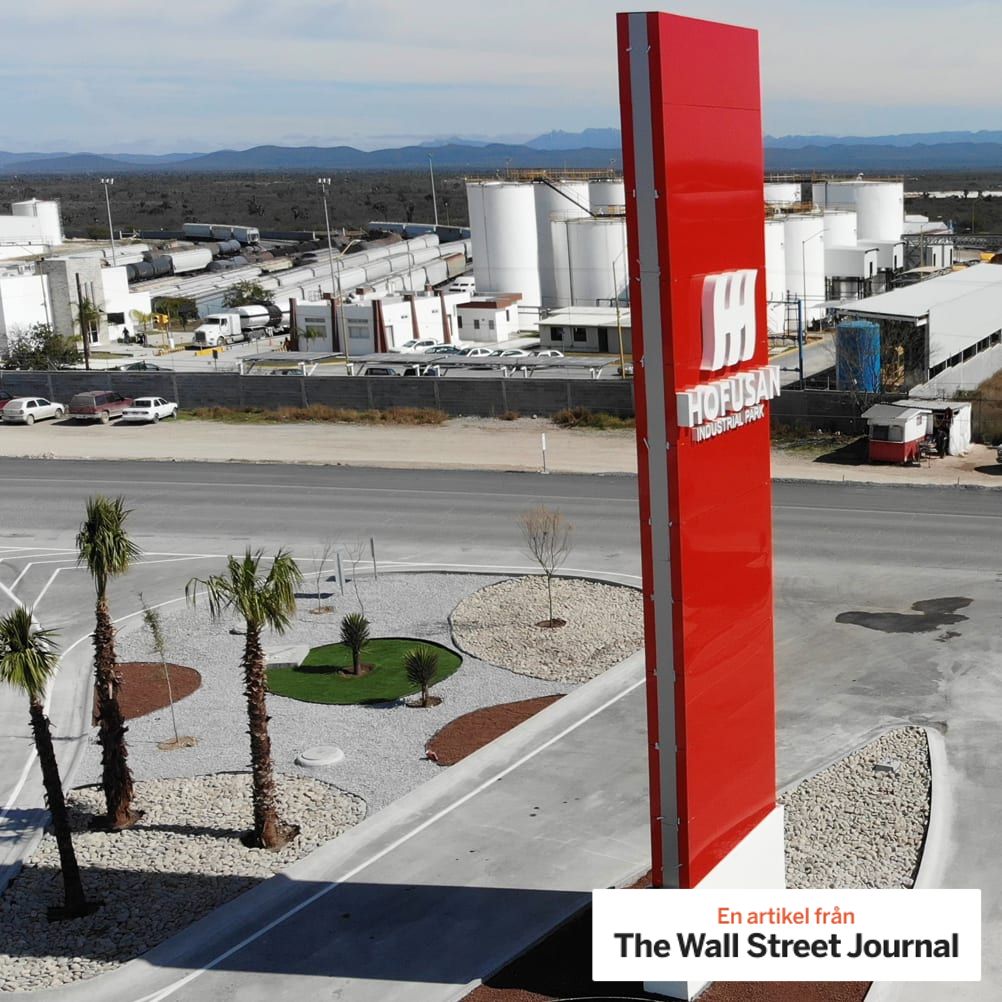
Kinesiska företag har pumpat in miljarder i mexikanska fabriker för att sälja tullfritt till USA – men Trumps nya tullhot kan sätta stopp för planerna, skriver Wall Street Journal.
I industriområdet Hofusan i Mexiko, där tjugo kinesiska bolag redan slagit rot, väntas ytterligare tjugo företag investera 500 miljoner dollar. Men framtiden är oviss.
– Såklart pratar mina kunder om effekterna av tullarna, men de kan inte göra något åt det. De måste helt enkelt acceptera lägre lönsamhet, säger Huo Pugang, som driver ett företag i Guadalajara.
 The Wall Street Journal
China’s Tariff-Dodging Move to Mexico Looks Doomed
Chinese firms invested billions of dollars on Mexican factories to make products for the American market, shipping goods tariff-free under a U.S. trade agreement now in peril.
Su Xiuyong moved to Mexico from central China 20 months ago. He doesn’t speak Spanish or English, and finds that he hates the food, but the opportunity was too good to pass up.
Su’s employer, a Shenzhen-based construction company, helped set up Chinese factories south of the U.S.-Mexico border, part of a business boom triggered in 2018 by President Trump’s first round of tariffs on Chinese imports. Su said his firm, Jilian Engineering, can build a small factory in as little as seven months in Mexico.
Chinese companies have kept many goods flowing to the U.S. by manufacturing in Mexico, where products ship to the U.S. tariff-free under the U.S.-Mexico-Canada Agreement that Trump negotiated in his first term. Chinese firms have invested billions of dollars in hundreds of Mexican factories that make auto parts, electronics, home appliances, furniture, medical equipment and other products for the American market.
To Trump’s dismay, the U.S. trade deficit with Mexico has grown to nearly $172 billion last year from about $78 billion in 2018. His administration now wants to stop what it views as a major loophole in the trade agreement he signed with America’s closest neighbors.
Trump has repeatedly singled out Mexico’s auto industry and its ties with Chinese manufacturers. American automakers import more than 40% of their parts from Mexico, many from Chinese-owned factories.
On top of 25% tariffs on all imports of steel and aluminum—plus a 25% tariff on foreign cars that goes into effect this week—the Trump administration is weighing what kind of tariffs to impose Wednesday, including specific rates for U.S. trading partners or a broad tariff that would affect virtually every country.
Unwinding crucial parts of the global supply chain will be costly and cumbersome for everyone, from manufacturers to consumers. Yet as long as the current trade agreement holds, so will the Chinese-Mexican connection to the U.S. market, experts say.
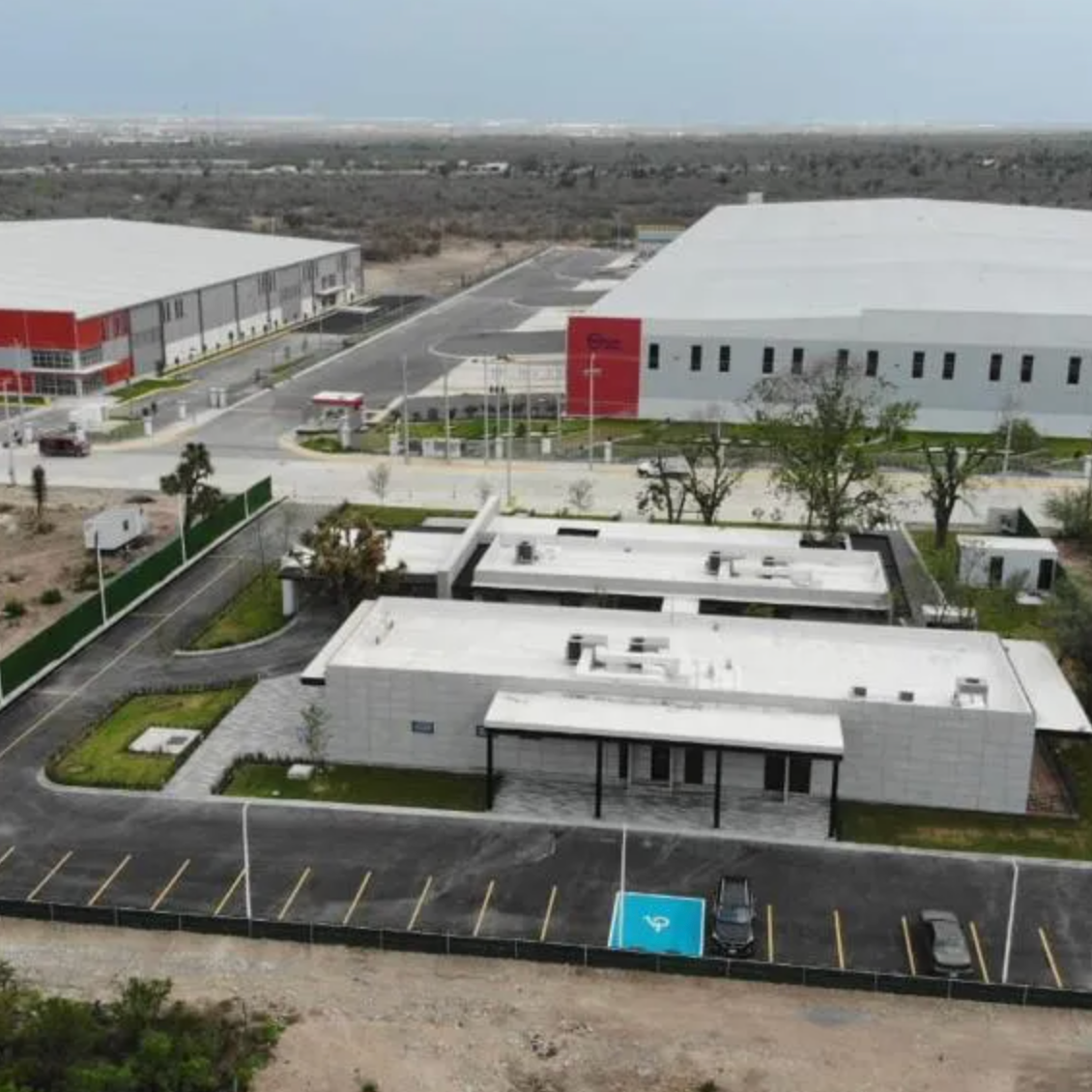
Hofusan, one of Mexico’s new industrial parks, was built on a former cattle ranch, which is around 125 miles south of the U.S. border. There are more than 20 Chinese manufacturing firms stretching across land more than twice as big as New York’s Central Park and representing a combined investment of $1.5 billion since Hofusan opened in 2018.
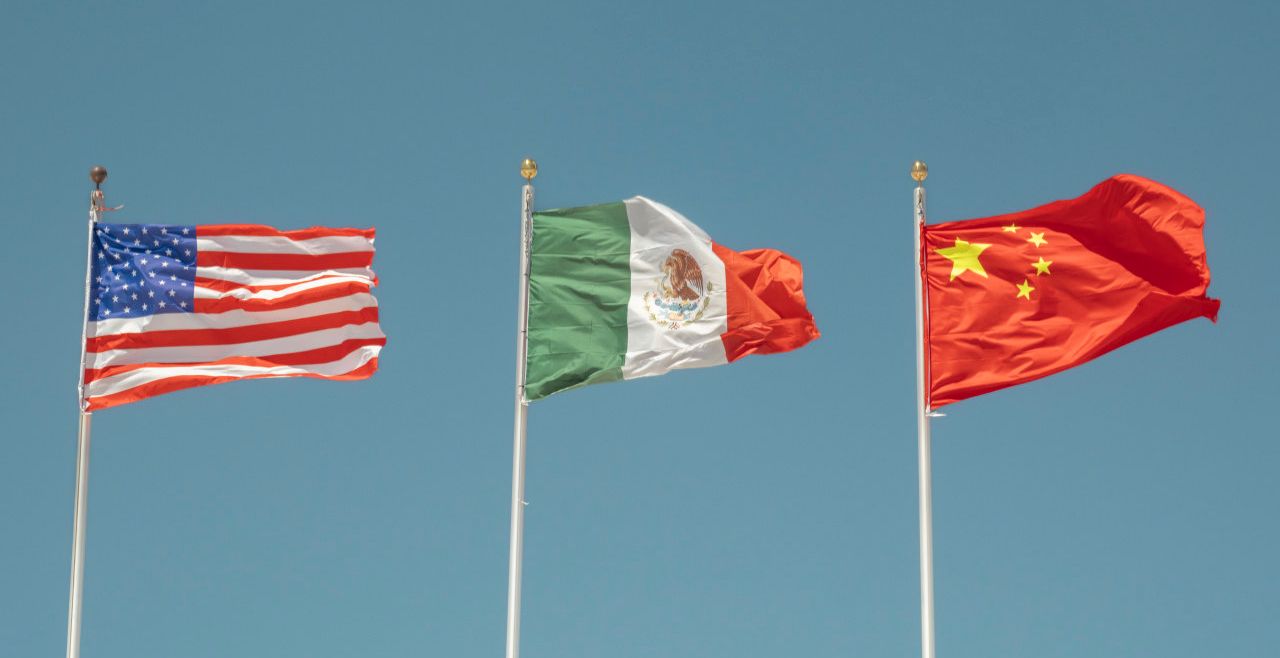
Bright red People’s Republic of China flags fly alongside those of the U.S. and Mexico at entrances to manufacturing plants in the industrial complex, which connects factories with wide boulevards.
“We are expecting the arrival of another 20 companies within the next two years with an estimated investment of $500 million,” said Cesar Santos, chairman of Hofusan. He used to raise livestock with his father on the land, which is still dotted with yucca trees.
“Many of my clients aren’t worried about unilateral U.S. tariffs on Mexican imports because they know that the product they manufacture isn’t available anywhere else,” said Santos. “It may just become more expensive.”
The Santos family has a 20% stake in Hofusan. The industrial park leases facilities or sells land to Chinese manufacturing firms aiming to set up shop in northern Mexico. China’s Holley Group, which operates industrial parks, has an 80% stake in the complex.
Tariffs announced so far on Mexico and Canada would add an average of $3,125 in costs per vehicle, analysts at JP Morgan said in a research note.
If all of Trump’s proposed tariffs are imposed, they will wipe out billions of dollars of industry profits and hurt the U.S. job market in the long run, said Jim Farley, chief executive of Ford Motor, during a February earnings call.
Few U.S. auto suppliers are considering moving production back to the U.S. from Mexico at the moment, said Dan Sharkey, a Detroit-area attorney who represents supply companies. Such moves take years and, given the uncertainty of the Trump administration’s trade policies, would be risky, he said. For nearly all of his law firm’s 90 or so clients, including U.S. auto-parts companies with Mexican factories, a 25% tariff would “take their profit margin and flip it upside down to make it a losing proposition,” he said.
“Most of our client base lived through the 08-09 crisis, got through Covid, and they are battle-hardened, and they’re saying, ‘I’m not going to pay for the tariffs,’ ” Sharkey said.
Ultimately, he said, the cost of tariffs will likely be passed to customers.
Open door
The first Trump administration’s tariffs hit thousands of Chinese products, from car parts to cheese. The levies were intended to boost U.S. manufacturing by making imports more costly.
It worked, in part. Imports from China fell sharply, accounting for only 14% of all imported goods in 2023, the lowest share in nearly two decades.
But rather than move production to the U.S., many American companies looked to countries that weren’t covered by the tariffs—and Chinese companies saw an opening.
Mexico was especially attractive. It was next door to the U.S., and the Trump administration’s 2018 trade agreement with Mexico and Canada guaranteed duty-free access to the American market, under certain rules. One requirement was that 75% of the finished products for vehicles and auto parts had to originate in North America.
The trade pact was designed to tighten rules of its predecessor, the North American Free Trade Agreement, and stimulate investment, production and employment. There remained, however, some wiggle room for Chinese companies to operate in Mexico, often at the invitation of U.S. companies seeking to avoid the new tariffs.
“A lot of companies came to Mexico because their clients told them to,” said Tao Zhang, an executive from the Chinese city of Xi’an. He moved to Mexico four years ago to work for Zhongke Construction Mexico, a firm that helps Chinese companies build factories there.
Bethel Automotive Safety Systems, a supplier of car-braking systems based in China’s Anhui province, sells to General Motors, Ford and Stellantis. The company said it started building factories in Mexico to soften the impact of U.S. tariffs, according to a January 2024 stock filing.
The company said its 215,000 square-foot Mexican factory, which began production in 2023, has created more than 500 local jobs. It is building a second, bigger factory in Mexico.
Another Chinese company, Elegant Home-Tech, which manufactures vinyl flooring, decided in July 2023 to invest $30 million to build a plant in Mexico, five years after its products were hit by 25% tariffs. The Jiangsu province-based company has since doubled its investment.
Setting up a factory in Mexico allowed the company to ship products to the U.S. without tariffs and evade uncertainties of the U.S.-China trade conflict, according to a company filing in August last year.
The rush to Mexico accelerated in 2023, after Tesla announced plans to build a gigafactory in the northern Mexican industrial hub of Monterrey. A month later, Ningbo Xusheng, a Zhejiang province-based producer of precision aluminum auto parts and a Tesla supplier, announced plans to invest $276 million to build a factory in Mexico.
A year later, Tesla said it was putting the Giga Mexico project on hold. Xusheng’s Mexico operation is nonetheless slated to start production this year. In January, it said it had secured a $262 million contract from an unnamed “major North American traditional carmaker” and planned to use the Mexico facility to fill orders.
Made in Mexico
Chinese investment has been a bonanza for Mexico, creating almost 135,000 jobs in the past four years, said Enrique Dussel, coordinator of the Center for China-Mexico Studies at Mexico’s National Autonomous University. The investments have helped Mexico surpass China to become America’s top trading partner in 2023, with two-way trade near $800 billion and rising to $840 billion in 2024.
Mexican officials say most of its exports to the U.S. have significant American content—meaning products made with components or commodities from both countries—particularly in the auto industry or, for example, American barley in Modelo beer.
Benefits from Hofusan industrial park extend to the nearby Mexican town of Salinas Victoria, where jobs used to be limited to agriculture and livestock.
“Now, only those who don’t want to work don’t work,” said Eusebio Delgado, an employee of a personnel transport company that provides services at Hofusan.
“Before, there was a lot of migration to the U.S.,” said Delgado, as he sat behind the wheel of his van, waiting for employees to finish shifts at a Chinese factory.
The municipal government of Salinas Victoria has doubled revenue from industrial property taxes and an influx of workers from other Mexican states, Mayor Raúl Cantú said.
“There was a lack of public services, from paving to trash collection to public spaces,” said Cantú. “We are addressing that problem.” One project is construction of a 5,000-seat baseball stadium.
Local officials and industry leaders say they are playing by the rules set in the current trade agreement.
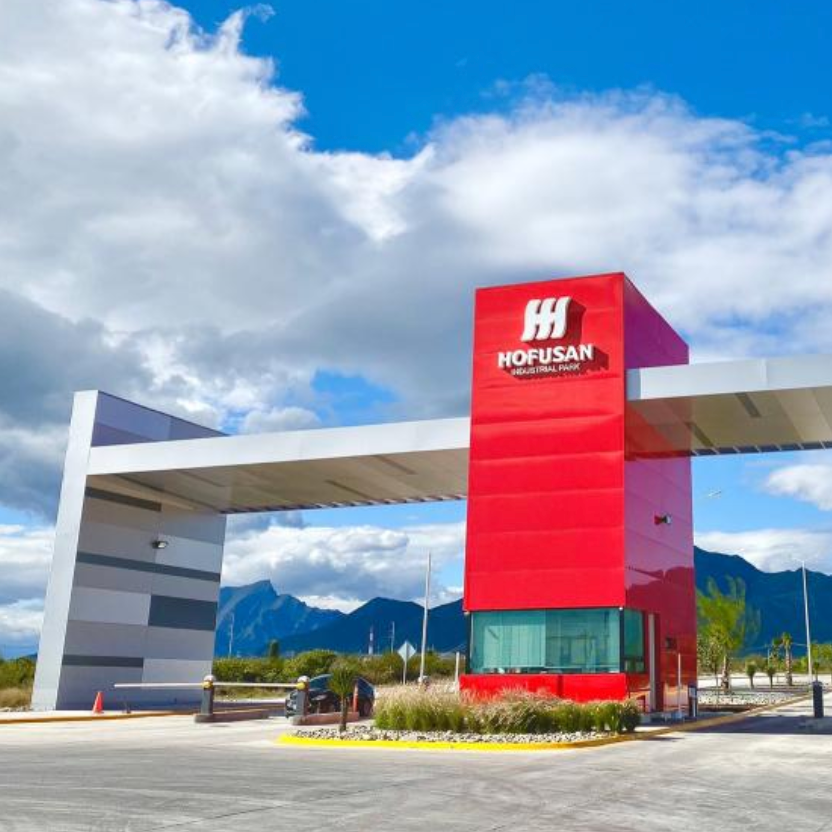
“We welcome foreign investment from wherever it comes, as long as it complies with the rules of origin and with local sourcing requirements,” said Emmanuel Loo, the economy chief of Mexico’s state of Nuevo Leon, where Hofusan is located.
Mexico is under pressure from the Trump administration to show they can police Chinese investment and make sure companies comply with existing trade rules. Negotiations to renew the trade agreement, if it survives, are expected to start soon. The U.S. has been pushing Mexico to tighten investment restrictions on Chinese companies.
One concession floated by Mexico involved matching the U.S. on China tariffs, said people familiar with the negotiations. That would cost Chinese companies, which import nearly all their factory machinery and sophisticated components into Mexico from China.
Mexican officials have halted plans by Chinese electric-vehicle maker BYD to open a factory in the country, fearing such a move would anger Trump.
“We prioritize trade with the countries with which we have trade agreements,” including the U.S., Mexican President Claudia Sheinbaum said last month. Her administration has noted that far more Chinese investment goes to the U.S. and Canada than to Mexico.
Economists say the Trump administration should have anticipated workarounds when it made the 2018 trade agreement. Expanded trade between China and Mexico was inevitable, said Scott Lincicome, an economics and trade expert at the Cato Institute, a libertarian think tank.
“All of this will be filled with factories next year. It’s already sold out”
Chinese companies poured $12.3 billion into Mexico from 2018 to 2024, according to the Center for China-Mexico Studies at Mexico’s National Autonomous University.
Su, who left a wife and children in China while he works to help build Mexican factories, said he was so busy late last year that he drove around 2,500 miles in one 11-day stretch.
“There were too many clients to meet,” he said.
Some Chinese companies have put Mexican expansion projects on hold. But those that have already invested heavily in the country are likely to try to weather the storm.
“Margins are thinner at home. They have nowhere to go,” said Guadalajara-based Huo Pugang, who has spent 14 years in Mexico working for a Chinese packaging company as a local manager. He now runs his own company serving Chinese clients.
“Of course my clients talk about impacts of tariffs, but there’s nothing they can do about it,” Huo said. “They just need to accept lower profitability.”
At the Hofusan industrial park, trucks transport cargo containers from China’s Cosco Shipping. A Chinese restaurant serves food to the approximately 200 expatriate managers and technicians who work nearby. At the industrial park’s entrance, an apartment complex of more than 100 units is under construction. There are plans for hotels, movie theaters, restaurants and a convenience store.
“All of this will be filled with factories next year,” said Santos, the chairman, pointing to a new area cleared of yucca trees. “It’s already sold out.”