Leggings och burgare är nästa måttstock för börsen
I skuggan av AI-bjässen Nvidias rapport i veckan, rapporterar även en rad konsumentinriktade bolag som Walmart, Home Depot och Target. AI i all ära – men det är de senare som kommer berätta hur den amerikanska ekonomin faktiskt mår.
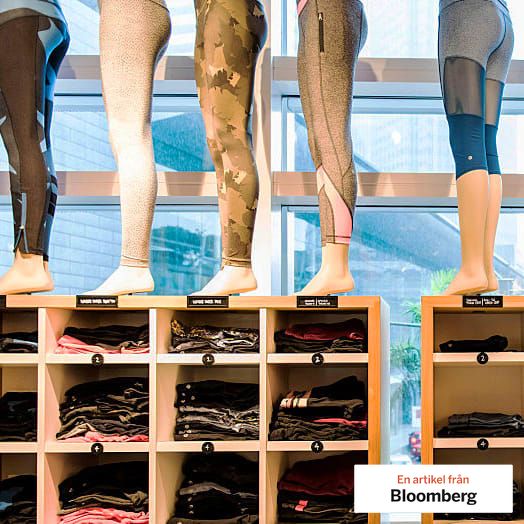
– När det kommer till kritan handlar det mer om hur många leggings och ostburgare konsumenten vill köpa, säger Wells Fargo-förvaltaren Sameer Samana till Bloomberg.
Rapporterna är extra viktiga nu, eftersom investerare och analytiker har stått utan guidning från statistik under den rekordlånga nedstängningen av statsapparaten.
 Bloomberg
‘Yoga Pants and Cheeseburgers’: Traders Turn Focus to Consumers
This week was always going to be crucial for the stock market with AI behemoth Nvidia Corp. due to report earnings. But with the results from a slew of major retailers also hitting, the next few days have suddenly become critical to traders seeking a view on the health of consumers and the economy.
In many ways, the upcoming results from Walmart Inc., Target Corp., Home Depot Inc. and other companies that sell the goods Americans buy are likely to overshadow Nvidia because they offer insights into spending patterns at a time when there’s scant data for Wall Street to go on.
”At the end of the day, it really does have more to do with how many yoga pants and cheeseburgers a consumer wants to buy”
While enthusiasm for artificial intelligence has largely driven the stock market rally over the past three years, the gains have also been undergirded by a resilient consumer. If that leg is removed, equities will be standing on a much shakier foundation.
“At the end of the day, it really does have more to do with how many yoga pants and cheeseburgers a consumer wants to buy,” said Sameer Samana, head of global equities and real assets at Wells Fargo Investment Institute. Bullish tech traders may “shout AI from the rooftops,” he added, but consumer stocks are connected to the real economy, which is where the market’s focus is quickly turning.
The need for up-to-date and forward-looking data on consumer spending – which feeds into corporate profits – is particularly acute because of the US government shutdown. Investors fear the labor market has weakened, but to what degree is unclear after more than 40 days without government figures.
Samana expects earnings from retailers to paint a picture of a consumer who is “incredibly challenged,” given the disappointing reports from others in the sector.
For example, fast-casual restaurants Chipotle Mexican Grill Inc., Cava Group Inc. and Sweetgreen Inc. all tumbled after cutting their full-year outlooks. McDonald’s Corp.’s CEO Chris Kempczinski said the chain is “cautious about the health” of the US consumer. Deckers Outdoor Corp., which owns the Ugg and Hoka footwear brands, retreated on a disappointing sales forecast. And Elf Beauty Inc.’s results reflected weakness in its namesake products.
Bearish On Retail
“Lower income households show notably weaker spending growth compared to their higher-income counterparts,” Liz Everett Krisberg, head of Bank of America Institute, wrote in a note to clients on Thursday.
Wall Street is decidedly bearish on the retail industry’s near-term outlook. Analysts expect consumer discretionary companies in the S&P 500 to post a 3.2% decline in earnings in the fourth quarter after growing 8.6% in the third quarter. That gives them the worst earnings expectations among the S&P 500 Index’s 11 primary sectors, according to data compiled by Bloomberg Intelligence. And private sentiment surveys, which Wall Street has had to rely on to a greater degree during the shutdown, are pointing toward a weaker consumer.
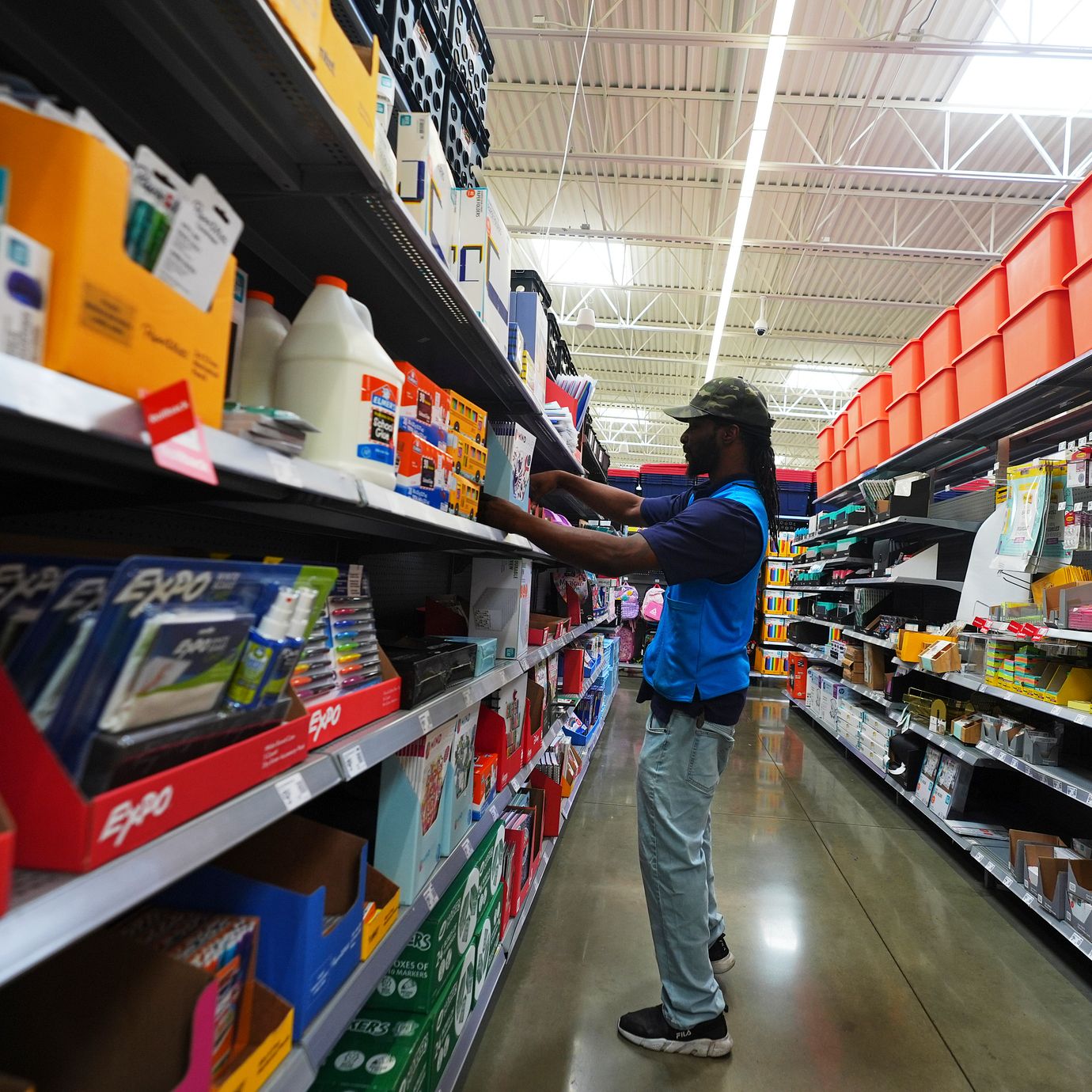
“What we can see is that consumer sentiment surveys are trending down, layoffs are trending up,” said Michael Arone, chief investment strategist at State Street Investment Management. “This would suggest that the consumer is in somewhat of a challenging position.”
Companies like Walmart and Target will likely confirm that “higher prices, a weaker job market and still steady inflation continues to weigh on consumer sentiment,” Arone said.
Consumer spending has increased for five straight months, but the rate of growth has tilted in favor of the affluent, according to research from Bank of America. So investors are watching to see if Americans who don’t fall into that category are beginning to make tradeoffs.
”What we can see is that consumer sentiment surveys are trending down, layoffs are trending up”
“Instead of buying the steak, they buy the hamburgers,” Arone said. “There’s some belt tightening across that backdrop.”
Meanwhile, traders are betting on companies that cater to higher-income shoppers. Capri Holdings, owner of the Michael Kors and Jimmy Choo brands, reported better-than-expected revenue in early November. European luxury products companies Richemont, Kering SA, Burberry Group Plc and LVMH all posted sales beats over the last few weeks.
Williams-Sonoma Inc., a home-goods retailer that sells espresso makers that cost up to $5,500, is due to report next week and may provide insight into the trend.
’Two-Speed Market’
“We have a two-speed economy, a two-speed market,” said Keith Lerner, chief investment officer and chief market strategist at Truist Advisory Services Inc.
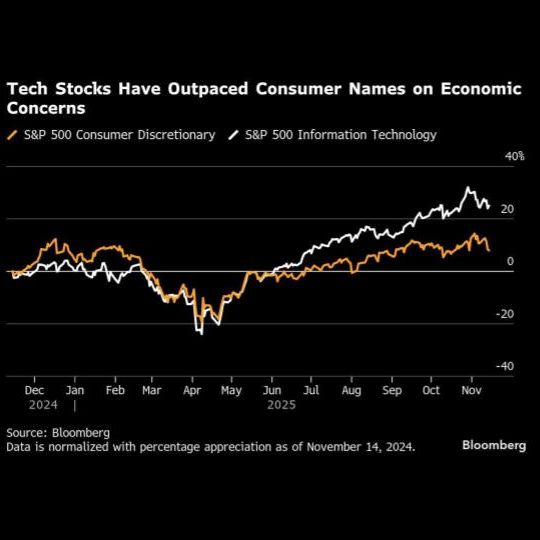
While wealthy Americans continue to spend, the reality is consumer discretionary stocks aren’t doing much better than their consumer staples cousins. The discretionary sector is the third-worst performer in the S&P 500 this year, rising less than 2.7%, while consumer staples is the second-worst performing group with a gain of less than 1%. By comparison, the S&P 500 is up 14% in 2025.
Even within the consumer discretionary sector, Big Tech is helping to drive the action. Amazon.com Inc., which is part of the group, is up 7% this year and accounts for 95% of the S&P 500 Consumer Discretionary Sector’s move.
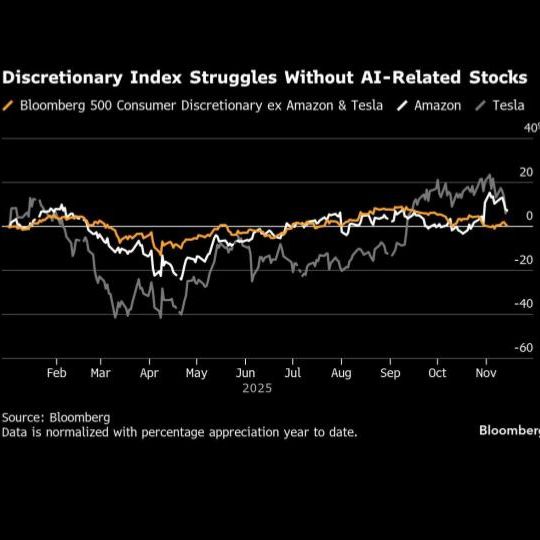
The enduring strength of tech is what continues to give investors confidence in the stock market rally. Nvidia’s results are widely expected to be positive, Lerner said, since major AI spenders such as Amazon, Meta Platforms Inc., Microsoft Corp. and Google-owner Alphabet Inc. have already reported earnings and confirmed that they plan to continue pouring cash into developing AI.
To be sure, investors have started to rotate out of expensive tech stocks and into cheaper corners of the market in the last several weeks. Amazon, Meta and Tesla Inc. were among the biggest drags on the S&P 500 this week as traders moved into less pricey areas, including consumer staples.
Strategists believe this only makes the retail earnings more significant. In fact, with so much skepticism surrounding the stocks, any signs of relief could very well spark a rally in the shares.
“The retail stuff will be important for ideas about where we are in the economic cycle,” Truist’s Lerner said. “Expectations are low, and a little bit of good news could go a long way.”
For more articles like this please visit us at bloomberg.com