Meta-anställdas oro: Tränar de sina egna AI-ersättare?

När Facebookägaren Meta meddelade sina anställda att all deras dataanvändning kommer att användas som träningsmaterial för AI, möttes beskedet av skarp kritik och stor oro bland personalen. Det skriver New York Times, som har tagit del av intern kommunikation.
Vd:n Mark Zuckerberg framhöll att bolaget vill träna sin AI-modell på ”hur smarta människor använder sina datorer för att genomföra uppgifter”.
Men nyligen meddelade techjätten sina planer att minska personalstyrkan med 8 000 tjänster – vilket genast fick en del anställda att misstänka att de i själva verket ombetts träna sina egna AI-ersättare.
 The New York Times
Meta’s Embrace of AI Is Making Its Employees Miserable
As it adapts to the artificial intelligence era, the company is pushing many of its 78,000 workers to use the technology, and preparing to lay some of them off.
SAN FRANCISCO — In an internal post last month, Meta told its U.S. employees that it was making a change that would affect tens of thousands of them.
What employees typed into their computer, how they moved their mouse, where they clicked and what they saw on their screen would be tracked, Meta said. The goal, the company said, was to capture employee data so Meta’s artificial intelligence models could learn “how people actually complete everyday tasks using computers.”
Many workers immediately revolted. In online comments, they blasted the tracking as a privacy violation, calling it antisocial and callous.
”There is no option to opt-out on your corporate laptop”
“This makes me super uncomfortable,” an engineering manager wrote in a comment in response to the announcement, which was reviewed by The New York Times. “How do we opt out?”
“There is no option to opt-out on your corporate laptop,” replied Andrew Bosworth, Meta’s chief technology officer. Employees reacted by posting more than 100 angry and surprised emoji, according to the messages.
Mark Zuckerberg, Meta’s CEO, has staked the future of his company on AI by weaving the powerful technology into apps like Facebook and Instagram and spending hundreds of billions of dollars on developing AI models and data centers. But as the Silicon Valley company tries to transition from an internet firm to an AI organization, its embrace of the technology has been awkward and, at times, downright ugly.

Meta is pushing its 78,000 employees to adopt AI tools and factoring their use of the technology in performance reviews. The company is also tracking employees’ computer work to feed and train its AI models. And it is cutting jobs to offset its AI spending, saying last month that it would slash 10% of its workforce.
That has led to anger and anxiety as employees await news of whether they are affected by the layoffs, which are slated to be carried out May 20, according to 11 current and former Meta employees. Some said they no longer saw Meta as a place for a long career. Others were looking for new jobs or trying to signal that they wanted to be laid off so they could receive severance pay, the current and former employees said.
“It’s incredibly demoralizing,” an employee who does user research wrote in an internal post, which was reviewed by the Times.
”There is no playbook for AI in the workplace yet”
The angst at Meta offers a preview of what may happen at other tech companies as they increasingly incorporate AI into their workplaces. Microsoft, Block and Coinbase have recently announced layoffs or buyouts as AI has reshaped work. The technology has been particularly disruptive at tech firms because AI tools are useful at generating code, which was typically written by the software engineers who underpin many digital businesses.
“AI can potentially make everyone a better coder and help them do way more things with fewer resources, but as a result, it also brings more intensity to the daily life of the worker,” said Leo Boussioux, a professor of information systems at the University of Washington. “There is no playbook for AI in the workplace yet.”
In a statement, Tracy Clayton, a Meta spokesperson, said the purpose of the new employee tracking program was to train the company’s AI products. “There are safeguards in place to protect sensitive content, and the data is not used for any other purpose,” he said.
Reuters and The Information earlier reported some details of Meta’s internal AI push.
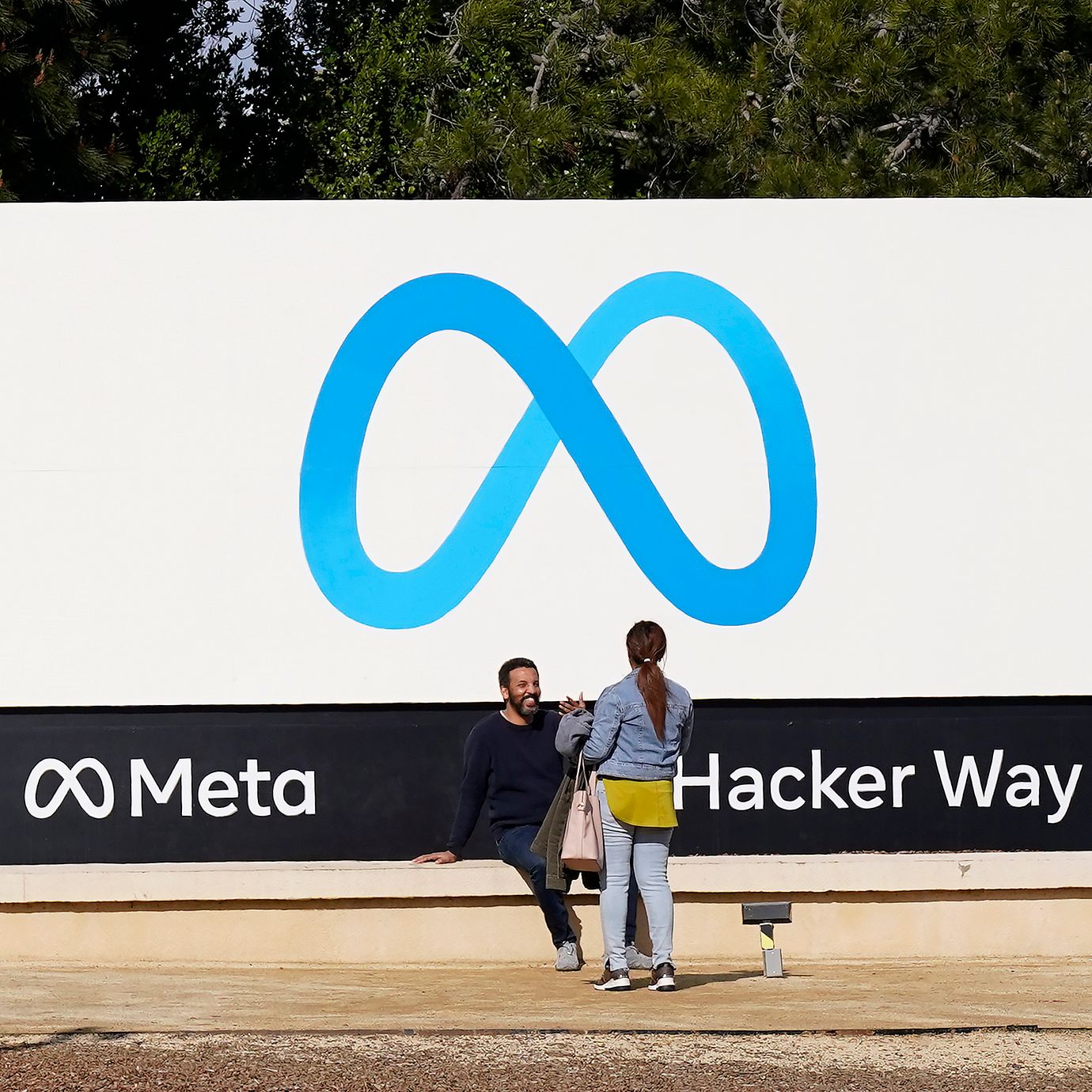
Meta began reorienting itself around AI not long after OpenAI released the ChatGPT chatbot in 2022. Last summer, Zuckerberg spent billions to create a lab for “superintelligence,” a futuristic form of AI that can act as the ultimate personal assistant, and overhauled its AI division. Zuckerberg, 41, has spoken at length about how superintelligence will improve people’s lives.
In March, Meta organized “AI Transformation Weeks” for its workers, five current and former employees said. The aim was to teach employees how to use AI coding tools and AI agents, which are digital assistants that can do tasks by themselves. Product designers, who style the way products look and how people interact with products, were told to use AI to try coding, and software coders were told to use AI to try designing products.
Meta also introduced internal dashboards to track employees’ consumption of “tokens,” a unit of AI use that is roughly equivalent to four characters of text, four people said. Some said the dashboards were a pressure tactic to encourage competition with colleagues. That led some employees to make so many AI agents that others had to introduce agents to find agents, and agents to rate agents, two people said.
”Your callousness to the concerns of your own employees is concerning”
On April 17, Reuters reported that Meta would soon lay off 10% of employees. Workers fretted over whether they had been training their AI replacements, three people said.
After Meta said late last month that it would start tracking employees’ computer use, hundreds of workers spoke up. “Your callousness to the concerns of your own employees is concerning,” one employee told Bosworth in an internal post.
In other posts that day, employees questioned whether Meta could safely secure the data it collected from workers while using that information to train AI models.
“This data is very tightly controlled,” Bosworth replied. “This will not be a leak risk.”
Two days later, Meta announced that it would lay off about 8,000 people this month. The cuts will allow the company “to offset the other investments we’re making,” Janelle Gale, Meta’s head of human resources, said in an internal message. She added, “I know this leaves everyone with nearly a month of ambiguity which is incredibly unsettling.”
Some employees have since shared layoff guides and nihilistic memes. “It do not matter,” read one meme shared internally. Employees have created at least three websites counting down to the May 20 layoffs, with one website’s header reading, “Big Beautiful Layoff,” a play on the 2025 domestic policy law that President Donald Trump called the “One Big Beautiful Bill.”
”I think we know that AI is one of the most competitive fields, probably in history”
Meta has hinted at more changes. “We don’t really know what the optimal size of the company will be in the future,” Susan Li, the chief financial officer, said during a call with investors last month. “I think there’s a lot of change right now, with AI capabilities advancing rapidly.”
The day after the investor call, Zuckerberg held a companywide question-and-answer meeting, along with other executives. During the meeting, a recording of which the Times reviewed, Zuckerberg said Meta was not gathering data on employees for “surveillance or performance tracking or anything like that.” Instead, the data would train AI on “how smart people use computers to accomplish tasks,” he said.
“I think we know that AI is one of the most competitive fields, probably in history,” Zuckerberg added.
© 2026 The New York Times Company. Read the original article at The New York Times.