Nikes antirasism-reklam får kyligt mottagande i Japan
Sportmärket Nike har gett sig in i politiken i sin marknadsföring i USA och ställde sig för två år sedan bakom NFL-spelaren Colin Kaepernick som protesterat mot rasism inom sporten. Nu prövar man sitt antirasistiska budskap på en ny marknad: Japan. Här tas dock budskapet inte emot med samma entusiasm som på hemmaplan, skriver Bloomberg.
Nike’s Anti-Racism Campaign Is Making Japan Very Uncomfortable
Its social justice playbook, which worked in the U.S., may not translate to a nation that’s much less diverse.
Shiho Takezawa, 9 December 2020
—With Marika Katanuma
Two years ago, Nike Inc. put politics at the center of its U.S. marketing strategy, embracing Black activist and former NFL quarterback Colin Kaepernick as the face of its 30th anniversary “Just Do It” campaign. Now it’s testing a new market for its anti-racism message: Japan.
Nike Japan’s latest ad, released in late November, features three young women, including one who’s biracial and one who’s ethnically Korean, who grapple with racism and bullying but find refuge and joy in their excellence on the soccer field. The company said the ad was inspired by accounts from real athletes in Japan.
The spot—using the hashtag #YouCantStopUs — caught fire online in the country, where racism and discrimination aren’t common topics of public discourse. The government census doesn’t collect data on race or ethnicity, though there are small but distinct minority groups in the country, including indigenous people and citizens of Brazilian, Chinese, and Korean descent. The official count looks only at nationality, categorizing 97.7% of the population as Japanese. “Foreigners,” which can include people born in Japan, comprise the rest.
“There is no cultural space to have a hyphenated identity in Japan. If people can say I’m Brazilian-Japanese, Korean-Japanese, or Chinese-Japanese, that shift would be powerful for this country”
“There is no cultural space to have a hyphenated identity in Japan,” says Allen Kim, associate professor of sociology at International Christian University in Tokyo. “If people can say I’m Brazilian-Japanese, Korean-Japanese, or Chinese-Japanese, that shift would be powerful for this country.”
In recent years some minority Japanese people have started speaking out about their experiences. SoftBank Group Corp. Founder and Chairman Masayoshi Son has talked about the harassment and bigotry he’s faced as a zainichi, as ethnic Koreans are known. In a 2017 survey of non-Japanese foreigners, 40% said they’d faced discrimination in housing, 25% in employment.
The Nike ad has sparked controversy. “Thumbs-down” accounted for 40% of the ratings on YouTube, where it has 11 million views. On Twitter (16.8 million views), some users said the spot was moving and empowering; others blasted the company for being anti-Japan or exaggerating the extent of racism in the country.
Nike’s social justice campaigns back home have generated plenty of buzz for the brand without turning off its customers, most of whom said their opinion of the company was neutral or unchanged a year after the Kaepernick ad first appeared. But compared with the general American public, Nike’s U.S. customers are younger, more diverse, and more politically liberal — an audience predisposed to the message.
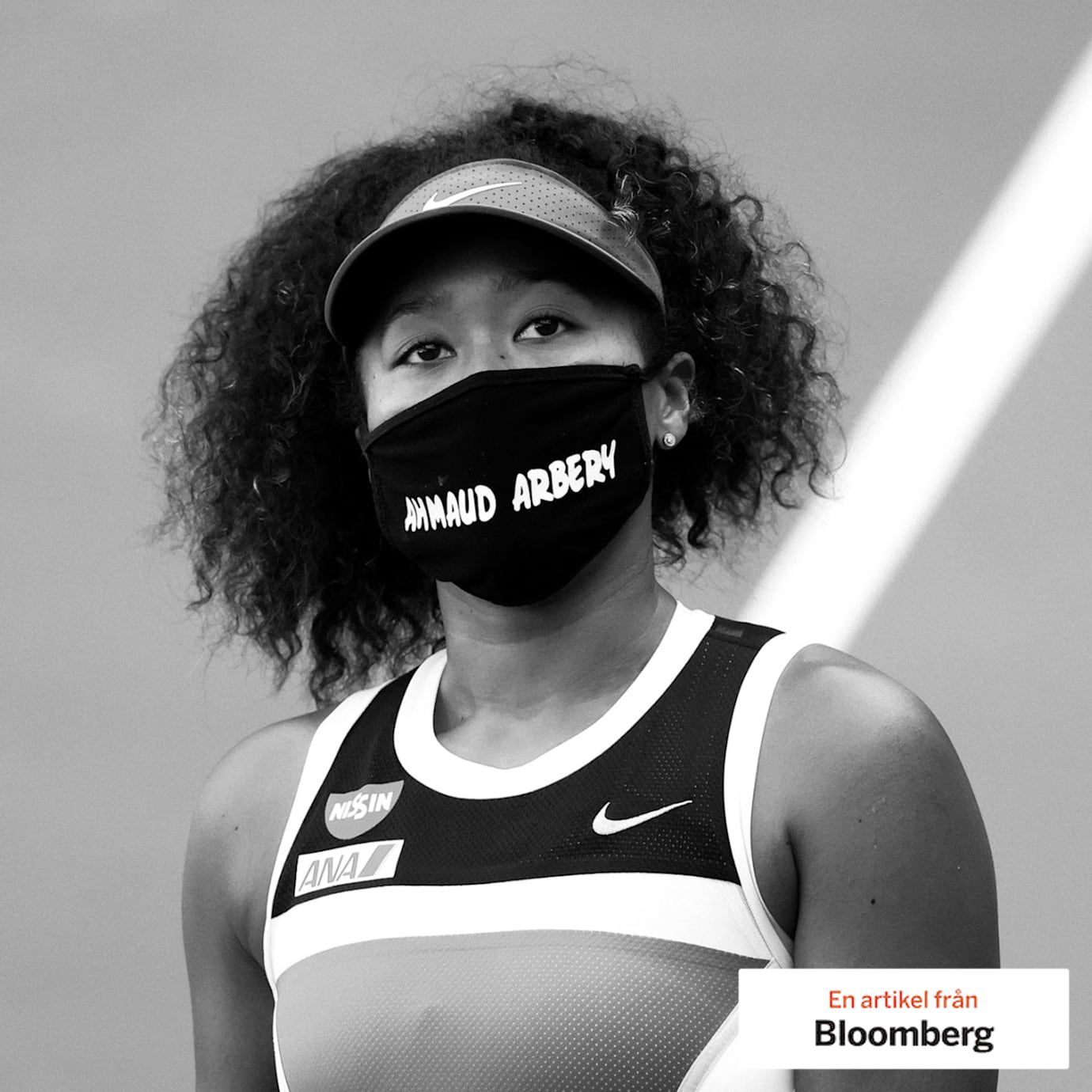
In Japan, companies typically steer clear of social issues. Japanese tennis player Naomi Osaka, whose father is Haitian, supported the Black Lives Matter movement during her championship run at the U.S. Open in September, wearing masks that memorialized Black Americans who’d been killed by police. Plenty of Japanese companies celebrated her win, but almost none — including her sponsors — mentioned her activism. In what many took to be a swipe at the seriousness of Osaka’s protest, one sponsor, Nissin Foods Holdings Co., promoted her lighthearted declaration that she was headed for a shopping spree under the caption “Here’s something cute.”
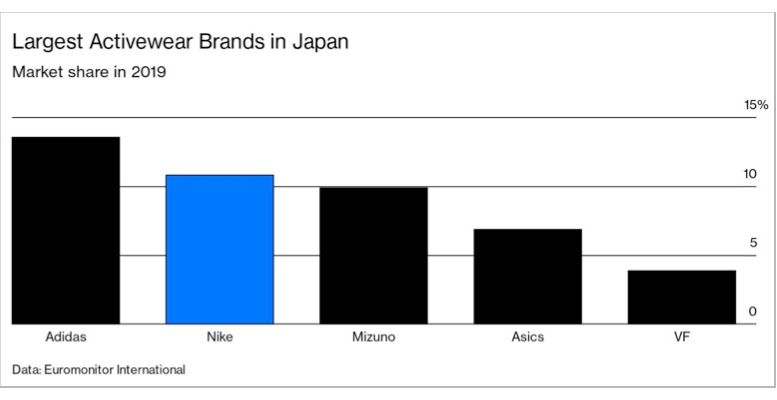
Nike is still one of the most popular sportswear brands in Japan, behind Adidas and ahead of homegrown Mizuno, according to Euromonitor International, and its products are especially hot with younger customers. But they may not be as liberal as their U.S. counterparts: Outgoing U.S. President Donald Trump, a Kaepernick critic, is more popular with younger Japanese than with their parents, according to the Social Survey Research Center in Japan.
“My family was the only Black family in the city. When I grew up and started playing basketball, I started to gain more respect, but it was hard, especially for my brother and sisters”
Japanese sneakerheads and Nike fans may not be too shocked by Nike’s anti-racism push. In addition to Osaka, the company sponsors Washington Wizards player and Japanese national basketball team member Rui Hachimura, who’s been outspoken about the challenges of being biracial in Japan. “I grew up in a small town six hours away from Tokyo,” Hachimura told reporters in October at the release of his new sneaker, the XXXV. “My family was the only Black family in the city. When I grew up and started playing basketball, I started to gain more respect, but it was hard, especially for my brother and sisters.”
Overcoming adversity through sports has long been a hallmark of Nike’s marketing image, so tying itself to social justice causes beyond its home market hasn’t been a stretch for the brand. “Racism is a problem that exists around the world,” Nike Japan said in a statement. “True anecdotes of athletes gave us an opportunity to candidly state our opinion on discrimination and bullying.”
The Nike ad also takes aim at anti-Korean sentiment, an enduring legacy of Japan’s early 20th century colonization of the Korean peninsula that pushed many zainichi to adopt Japanese surnames and hide their heritage. One of the players is shown wearing chima jeogori, a traditional Korean outfit, to the stares of passersby. At the end of the spot she’s walking through a school corridor in her soccer jersey with “Kim,” a Korean surname, written on the back over a Japanese name. In the background, students are still staring, but this time they’re smiling — and she’s enjoying the attention. In Nike-world, that’s the whole point.
For more articles like this please visit us at bloomberg.com