Novo jagar revansch i USA – tar hjälp av Mars och H&M

Novo Nordisk gör en ny offensiv i USA efter att ha tappat mark i den glödheta kampen om fetmaläkemedel.
Den danska läkemedelsjätten, bakom Wegovy och Ozempic, försöker nu lära av konsumentbolag. Detta för att få bättre fäste på en marknad där läkemedel säljs allt mer som vanliga livsstilsprodukter.
I arbetet tar bolaget in profiler med bakgrund i bland annat Mars, H&M och Procter & Gamble, skriver Financial Times.
 Financial Times
Weight-loss drugs and Mars bars: Novo Nordisk’s comeback bid
The maker of Wegovy and Ozempic wants to learn lessons from consumer groups to crack the US market.
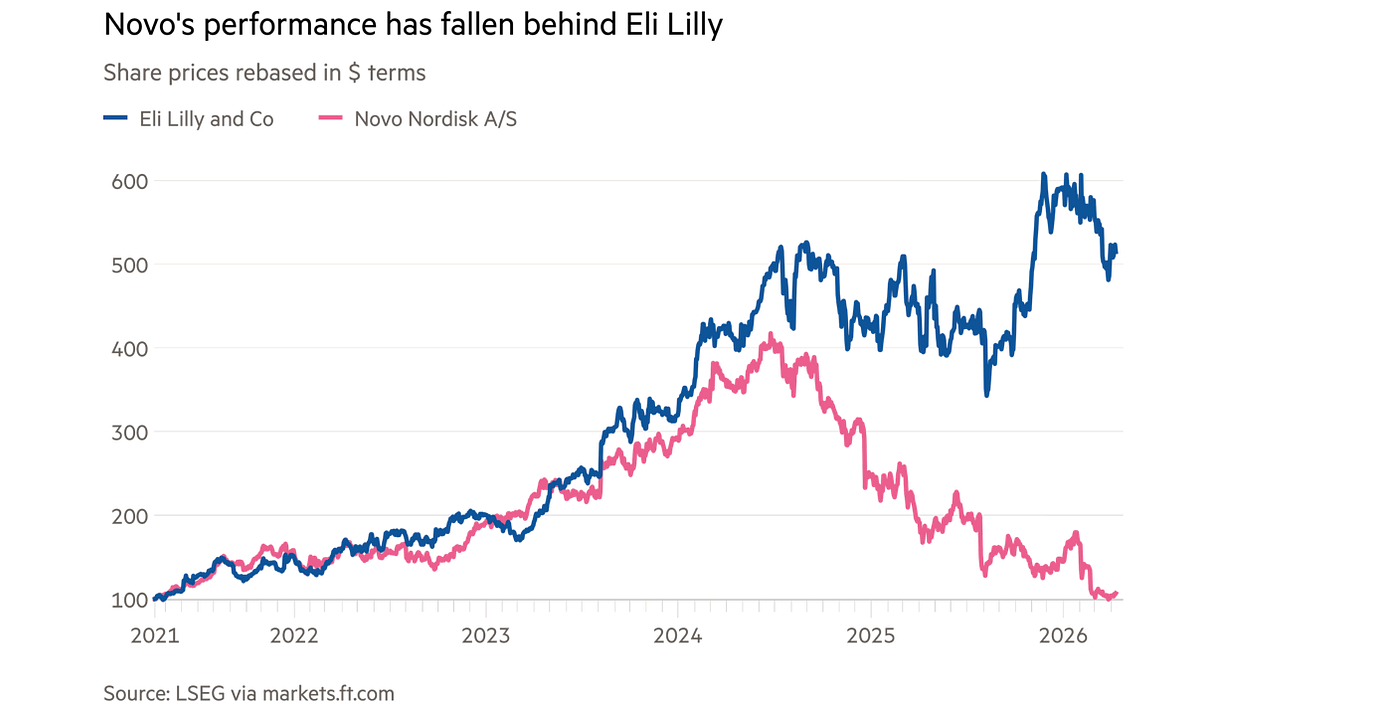
Two years ago, Novo Nordisk was Europe’s most valuable company, as excitement about its weight-loss treatment catapulted it to $650bn in market capitalisation.
Now the maker of Wegovy, the obesity medication, and Ozempic, the diabetes treatment, is no longer even among the continent’s top three pharmaceutical groups. Its shares have halved over the past year, leaving it worth far less than the UK’s AstraZeneca or the Swiss pharma giants Roche and Novartis.
The chief executive appointed to stop the rot says Novo failed to get to grips with the changing dynamics of the market, notably the US, where drugs are sold much more like consumer products than in Europe.
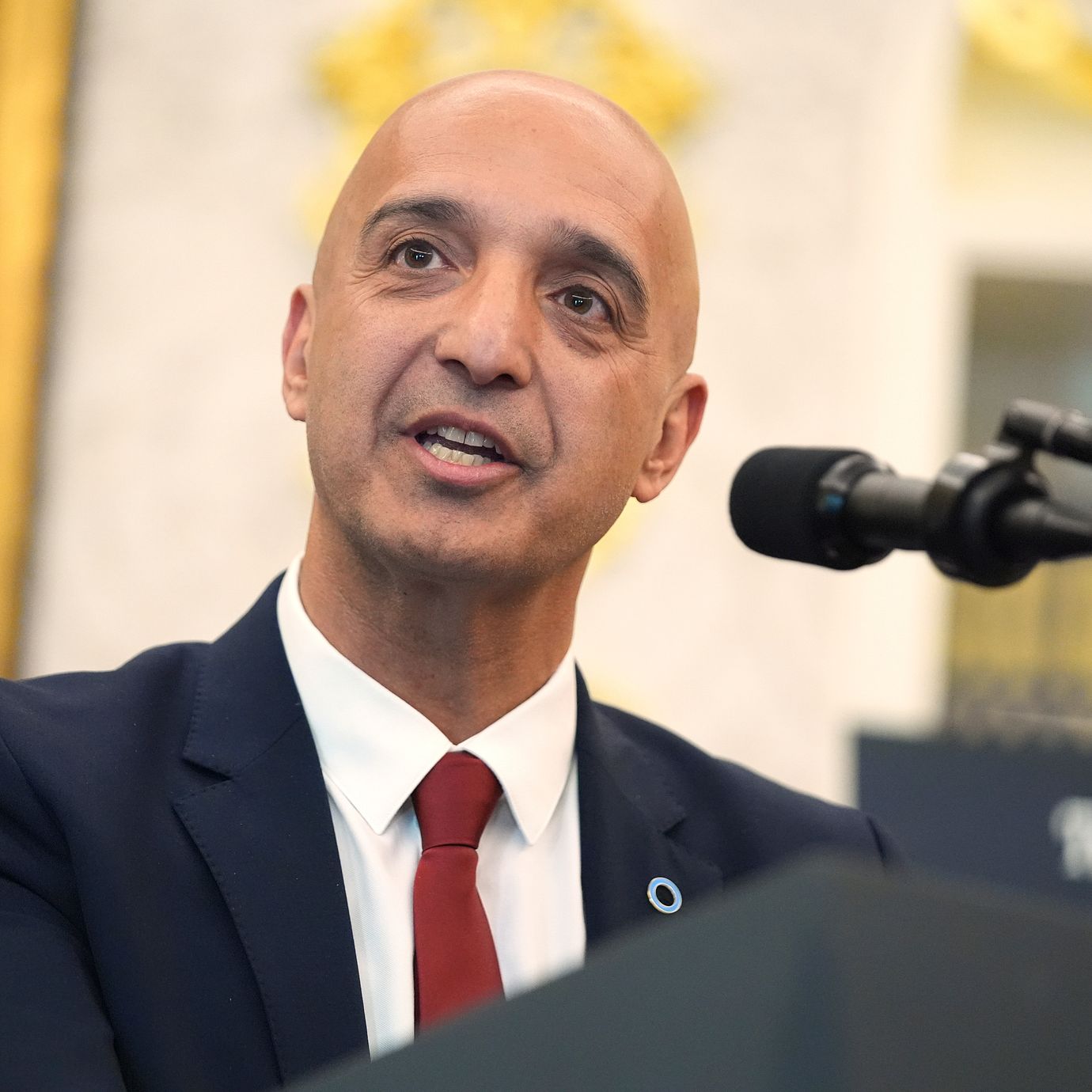
Mike Doustdar, an Iranian-born and US-raised Austrian national, has vowed to move on from a mindset that treated obesity “single-handedly from the element of medical need”.
As the company tries to step up efforts to sell directly to consumers in the US, which accounts for more than half its sales, Novo is looking to veterans from consumer goods giants such as Mars, H&M and Procter & Gamble to help it catch up with its great rival Eli Lilly — whose market value briefly surpassed $1tn last year.
The issue for the company is whether a stalwart of Danish industry can transform itself into an American-style group convincingly enough to turn the tables.
The issue for the industry is what the broader consequences are of US-led consumerisation — and what the options are for European groups at a time when President Donald Trump has a pharmaceutical agenda of his own.
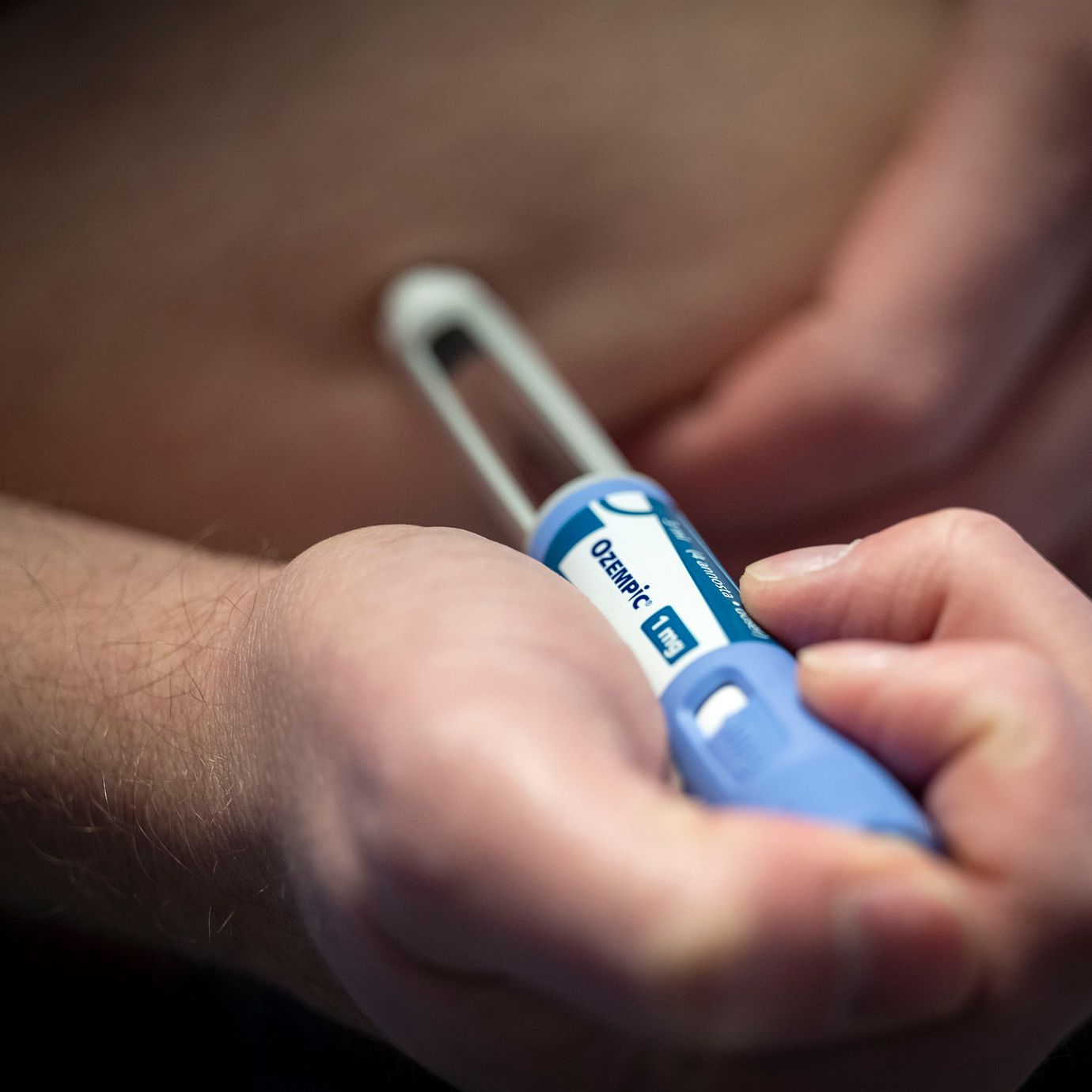
“We have had to learn new skills we did not have,” says Doustdar as he contemplates the battle between Wegovy and Ozempic, which account for almost all the company’s revenues, and their equivalents at Lilly, Zepbound and Mounjaro.
“The whole thing that happened with social media, that had not happened with diabetes, cancer or inflammation before,” the Novo chief adds in an interview.
“One patient tells another patient about a fantastic drug and then the patient themselves go[es] to procure it without [necessarily following] what the doctor says.”
By the spring of last year, Novo Nordisk was in need of a new direction.
It had been taken by surprise by the deluge of demand for weight-loss drugs, nor was it well versed in selling pharmaceuticals direct to consumers. Lilly, steeped in the ways of the US market, where medicines are routinely advertised on television, was able to steal a march on its rival.
Novo modelled its sales forecasts on Saxenda, an older drug based on liraglutide, a less effective compound than semaglutide, the active ingredient in both Wegovy and Ozempic.
One industry veteran says the closest comparison to the consumer focus on weight-loss drugs was the launch of Viagra in the 1990s
But after the US Food and Drug Administration approved Wegovy in 2021, there were more prescriptions for the drug in five weeks than Novo had received in five years for Saxenda, according to a person familiar with the company’s operations.
So-called compounding pharmacies, chemists that produce custom-made drugs using the active ingredient of branded medicines, pounced after the FDA declared a shortage in 2022, churning out their own versions of weight-loss drugs to 2mn US patients in the year to November 2024.
Novo has since invested over $4bn to step up US production and has launched lawsuits against US compounders. Wegovy and Ozempic were removed from the shortage list in 2025.
But Lilly’s expertise in the US market and Zepbound’s record have been difficult to fight.
“Given in the US drugs can be directly promoted to patients, the combination of Zepbound’s stronger weight loss and perceived better tolerability, combined with Lilly’s strong and consumer-focused marketing, have seen Lilly taking the dominant new patient share,” says James Gordon, head of European pharma research at Barclays.
One industry veteran says the closest comparison to the consumer focus on weight-loss drugs was the launch of Viagra in the 1990s.
Against that backdrop, Novo’s board decided it was time for chief executive Lars Fruergaard Jørgensen to go.
They turned to Doustdar, the executive overseeing all international operations outside the US. It marked the ultimate promotion for an executive who joined Novo more than 30 years ago as an office clerk in Vienna.
Novo’s challenges are both a warning and opportunity for the wider pharmaceutical industry.
Online retailers and social media recommendations are now far from being just a US phenomenon: a plethora of such sellers now market weight-loss drugs in the UK, continental Europe and Asia.
Doustdar says that while obesity remains a chronic, multi-faceted condition sometimes serious enough to require hospitalisation, some uses of weight-loss drugs “are borderline cosmetic treatment” that “five or 10 years ago, we were not discussing”.
With industry analysts calling on the group to learn from the fast-moving consumer goods business, Poul Weihrauch, chief executive of confectionery to petcare group Mars — and Danish national — joined Novo’s board as an observer in March, with an expectation that he will be made a non-executive member next year. His brief is to boost consumer engagement for Novo’s obesity portfolio.
The group’s new US manager is Jamey Millar, a veteran of Procter & Gamble as well as Optum, the UnitedHealth Group subsidiary that is one of America’s largest pharmacy benefit managers. Helena Saxon, another new board member, is an executive at H&M.
To focus more on cosmetic demands, Novo has partnered with telehealth companies Hims & Hers, Ro, Weight Watchers and LifeMD to sell directly to consumers. It also runs an in-house ecommerce platform, NovoCare.
It has recently introduced rolling monthly subscriptions through its telehealth partners, providing higher discounts to customers who sign up for longer periods.
Its monopoly in oral weight-loss treatments was shortlived
Such moves are part of its attempt to adapt to the changing nature of the US market as Trump pressures pharma groups to cut prices in the country to the levels charged in Europe and elsewhere.
Novo is counting on higher volumes to make up for the loss of premium prices. In February it announced plans to slash the list prices of key drugs in the US by up to half, starting from next year. Wegovy currently costs around $349 a month in the US for a 2.4mg dose, and just above £200 in the UK.
There have been some successes. Novo’s introduction of the Wegovy pill in January qualifies as one of the most successful drug launches in pharmaceutical history, racking up 600,000 US prescriptions thanks to its low starting price and first-mover advantage.
But its monopoly in oral weight-loss treatments was shortlived; Lilly’s rival product, Foundayo, went on sale last week.
“We anticipate equally competitive strategies from Lilly,” says Evan Seigerman, an analyst at BMO Capital Markets. “Lilly has successfully demonstrated skill in leveraging second-mover advantage to win in markets.”
Other challenges loom outside the US. Semaglutide is coming off patent in countries including India, Canada, Turkey, Brazil and China this year — opening the door to cheaper generic competition in markets that account for around a third of the world’s obese adults, according to health data consultancy Iqvia.
India in particular is a key market, according to Emil Larsen, Novo’s vice-president of international operations, the post previously held by Doustdar. Novo currently serves more patients in Denmark, home to just six million people, than it does in the world’s most populous country.
“There’s already a crowded marketplace [in India] and it will get more crowded,” Larsen says. “Our ambition is to remain competitive at where the prices land over the coming months.”
Reversing Novo’s recent decline will require a company that is at heart Danish to become much more American in its modus operandi, a reality that has caused some unease in the small Scandinavian kingdom.
Ahead of Doustdar’s appointment, outside investors wanted a US-focused executive to take the reins. But within the country, some asked why a Danish executive did not get the job.
“There are some private shareholders who don’t understand why the chief executive can’t be a Danish national,” says Jesper Kongskov, a prominent business commentator in Denmark. “But this is a big international company . . . we’re such a small country that with big companies we have to look outside to find the right CEOs.”
As part of the boardroom manoeuvrings that ousted Doustdar’s predecessor Jørgensen last May, the Novo Nordisk Foundation — the non-profit that is the pharma group’s largest shareholder — installed its chair, Lars Rebien Sørensen, as chair of the company too.
“They can turn things around but it will not be an easy task”
That was also a departure from Danish tradition. Foundation owners, commonplace at big Danish companies, are generally expected to have an arm’s length relationship to allow board independence.
Some of the roughly 680,000 Danes who own Novo stock directly would also like the annual meeting to be held in Danish.
Doustdar acknowledges national sensitivities, noting that although he had never previously worked at headquarters he has spent his entire career at Novo, operating in Switzerland, Austria, Turkey, Malaysia and Greece.
“I was appointed as a lifetime person not to change the culture of the company,” Doustdar says.
“I was appointed to bring speed, patient-centricity, competition knowledge — that exists in all companies but more when you’re in the front lines than when you’re in the centre.”
Still, the first act of his tenure, announcing the loss of 9,000 jobs last September, including 5,000 in Denmark, was not particularly well received by Danish shareholders. That was followed in February by deep cuts to Novo’s guidance on sales and profits for the current financial year, which it expects to fall by as much as 13 per cent.
Doustdar has signalled a willingness to boost growth through acquisitions, attempting to gatecrash its US rival’s efforts to buy US biotech Metsera last year.
Pfizer prevailed in the end, but Novo acquired US liver disease biotech Akero Therapeutics for $5.2bn, a move Doustdar says is part of a strategy of expanding into treatments for obesity-related diseases.

That has prompted questions about whether Novo will expand beyond its core therapeutic area of obesity and diabetes, which accounted for more than 90 per cent of its 2025 sales. Some investors worry that the group’s focus is too limited, though one fund manager observes that the sector “isn’t as narrow as people think it is”.
“There are so many different streams within obesity and comorbidities that you can treat,” adds the investor, who first bought Novo shares two decades ago.
Others are more concerned that the pharmaceutical industry may be learning too much from its counterparts in the consumer goods business.
Dr Marie Spreckley, a weight management researcher at the University of Cambridge, said the consumerisation of weight-loss drugs should not detract from the fact that such medicines remain “medical interventions”.
Without professional oversight, she notes, patients could suffer consequences such as bone density and muscle loss, and adds that the focus on consumer sales “leads to questions about inequality . . . People living in more deprived areas tend to be affected more by obesity and weight problems.”
As Doustdar battles to modernise Novo’s approach to marketing, reinvigorate its sales growth and restore its standing with investors, the halcyon days of 2023 feel a long time ago.
“You could say they believed they could walk on water. That’s what success does to you,” says one Danish business executive of Novo’s fall from grace. “They can turn things around but it will not be an easy task.”
©The Financial Times Limited 2026. All Rights Reserved. FT and Financial Times are trademarks of the Financial Times Ltd. Not to be redistributed, copied or modified in any way.