Nvidia utmanas i Kina: ”Naivt att underskatta Huawei”
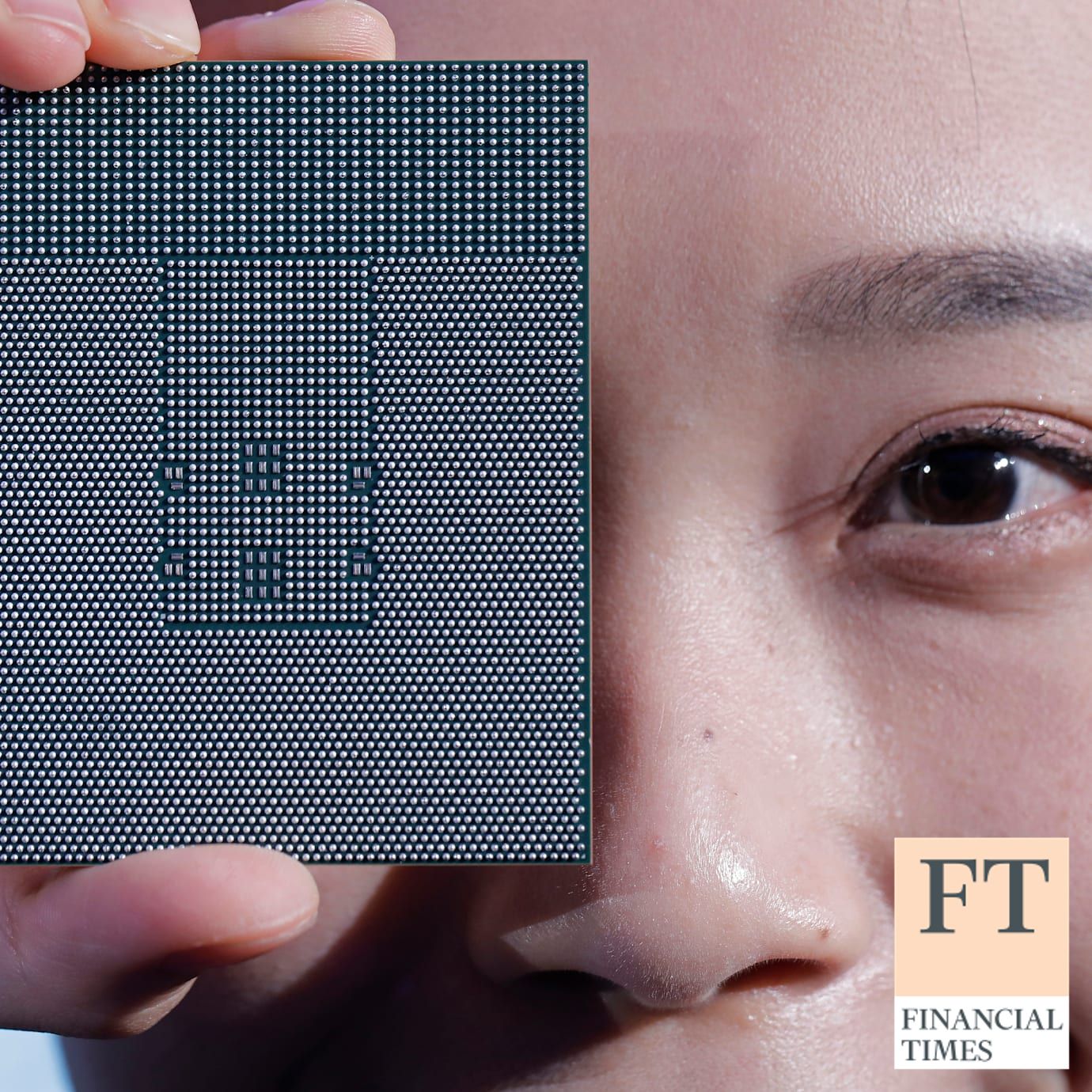
Nvidia riskerar att slås ut på sin viktigaste marknad: Kina. Amerikanska exportförbud tillsammans med kinesiska motåtgärder har drabbat chipjätten hårt, vars AI-processorer länge varit avgörande för Kinas teknikutveckling.
Huawei leder jakten på inhemska alternativ, och lockar över ingenjörer från Nvidia med dubbla löner.
– Den som underskattar Huawei är djupt naiv, varnade Nvidias vd Jensen Huang nyligen.
Läs andra delen i Financial Times tvådelade serie om världens högst värderade bolag.
 Financial Times
How long can Nvidia stay ahead of Chinese competition?
The country has been a critical market for the AI chipmaker but the company is entangled in geopolitical tensions and is watching the rise of new rivals.
In December 2011, Jensen Huang arrived onstage at a developer’s conference in Beijing armed with an announcement the importance of which few then understood.
Dressed in jeans and a black suit jacket, Nvidia’s co-founder told the audience there would be a major update to the company’s proprietary programming platform, Cuda. Parts of it would be open source and easier for developers to use. For Huang, it was a strategic play: if he could win over Chinese engineers, hopefully they would remain loyal to Nvidia for decades.
At the time, Nvidia’s China business was booming. The country was its largest market by revenue, accounting for a third of sales, due to its vast online gaming community and manufacturers making electronic goods for export. Earlier that year, Nvidia had opened a research and development lab in Tianjin, a north-eastern city, after installing a supercomputer at a government-backed research lab in the same city.
“Over the years, China has been a critical market for Nvidia to master, dominate, influence and collaborate with,” says Paul Triolo, partner at consultancy DGA-Albright Stonebridge Group. “Nvidia became embedded in key parts of the software-hardware ecosystem in China in ways that other western companies did not.”
Today that symbiosis is in jeopardy. Now that artificial intelligence systems are being deployed en masse, reshaping everything from how we communicate and work to the way we fight wars, Nvidia’s chips have become a bargaining tool in superpower politics. Their significance is such that Nvidia’s processors now feature on the agenda of US-China trade talks, alongside tariffs and market access.
As a result, the company has become the target of intense scrutiny. Washington sees China’s AI development as a national security threat and has banned the export of Nvidia’s most advanced hardware. Beijing, meanwhile, has ordered its companies to stop buying Nvidia’s AI chips and to accelerate their transition to local alternatives.
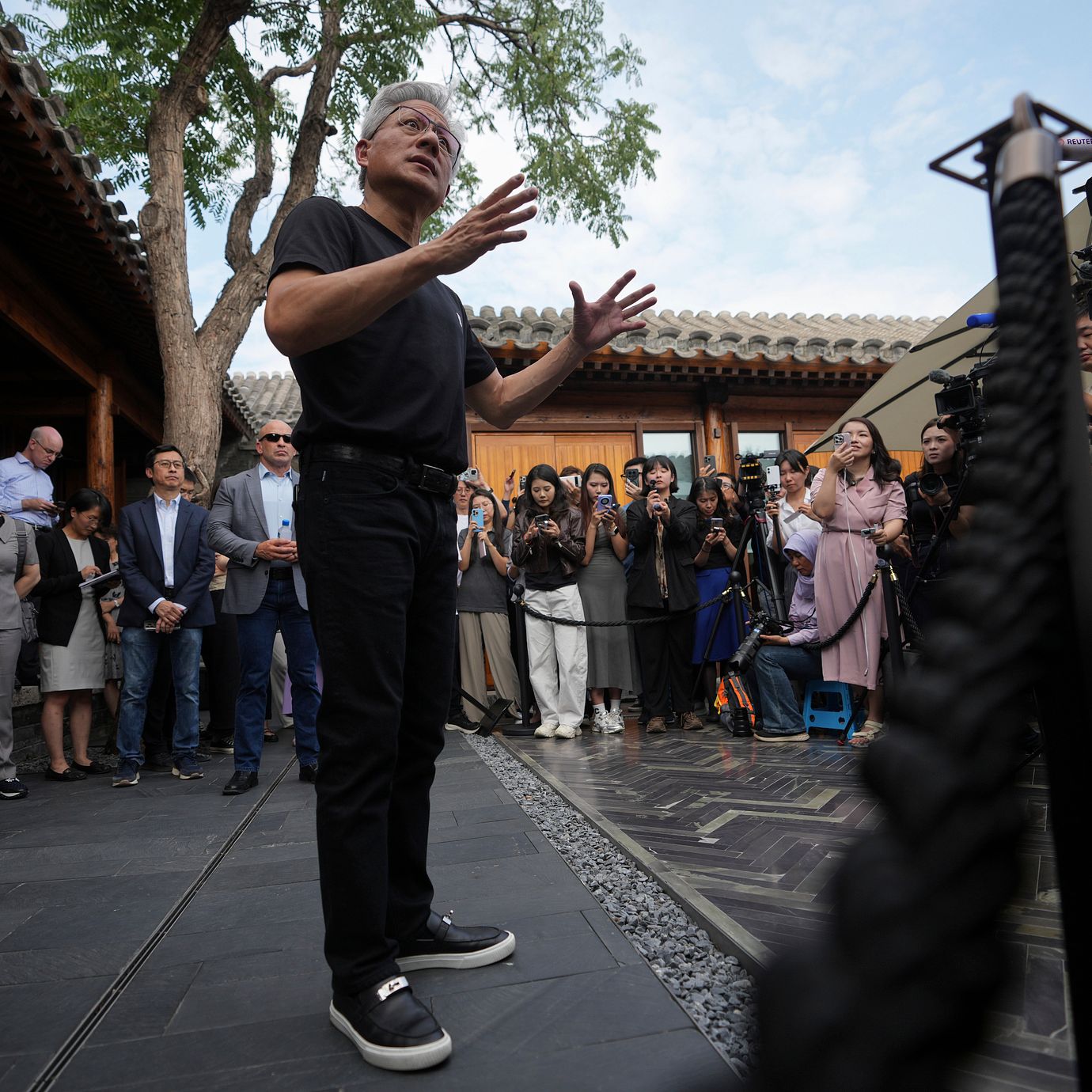
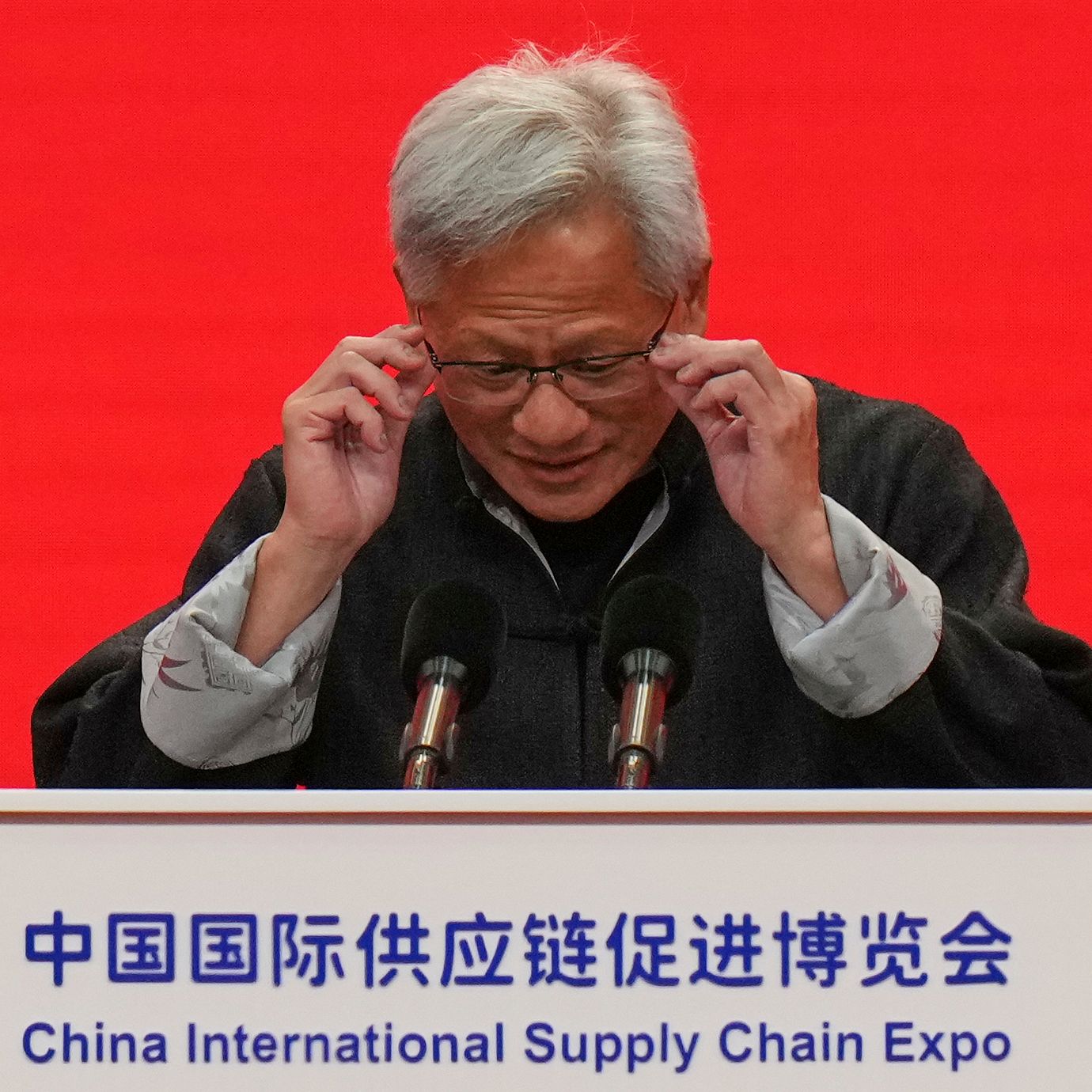
Huang, who through Nvidia’s scale and reach has assumed the unofficial post of global AI diplomat, is on a mission to save his China business. He has travelled to Beijing three times this year and Washington even more, to lobby decision makers.
“Technology leadership requires big markets,” he told reporters in Beijing in July, arguing that if Nvidia is blocked from the Chinese market, then it will accelerate the development of local rivals and “forfeit” US leadership in AI.
“Anyone who discounts Huawei and Chinese manufacturing capabilities is deeply naive”
For China, the process of tapering its dependence on Nvidia’s graphics processing units (GPUs) is fraught with complications. But analysts and industry insiders believe even with these teething pains, China’s AI industry — with tech behemoth Huawei at its centre — will eventually break free of Nvidia’s stranglehold.
“It’s a matter of time,” Huang said. “Anyone who discounts Huawei and Chinese manufacturing capabilities is deeply naive.”
Huang likes to claim that the country is home to half of the world’s AI researchers. While researchers in the west were the first to use Nvidia’s GPUs for AI workloads, it was China that first used them for the mass commercialisation of advanced AI systems.
Huang spent decades painstakingly building Nvidia’s presence in China, persevering where many other western technology leaders faltered. For him, losing the China market and its pool of AI specialists would mean far more than tens of billions of dollars in forgone sales. It would threaten Nvidia’s ambition to remain the undisputed champion of AI chips for decades to come.
“As Chinese companies transition to Huawei’s AI chips, it will create a whole rival ecosystem supported by the company’s software and hardware,” says George Chen, partner at The Asia Group. “This could threaten Nvidia’s position not only in China, but also worldwide if Huawei and other Chinese companies start exporting their AI overseas.”
He adds: “This battle is ultimately not just about winning the Chinese market, but about the long-term fight for AI dominance.”
China has been at the forefront of every technology wave enabled by Nvidia’s GPUs. Its sheer scale has magnified the company’s opportunities.
The country has the world’s largest population of gamers, a vast car market embracing driverless technology and a widening pool of AI researchers and developers. Before Beijing’s crackdown began in 2017, it had the biggest base of cryptocurrency miners. In all of these pursuits, GPUs are used to handle computationally demanding workloads.
Nvidia invested heavily in China. It built engineering capacity to satisfy government demands for market access; poured money into local start-ups; and cultivated loyalty among developers through hackathons and sponsored esports tournaments. It set up R&D facilities and sold supercomputers to universities.
By making a small portion of Cuda open-source, Nvidia allowed developers — many of them Chinese — to contribute to its software development, inviting feedback and iteration in a way that would make its hardware easier to use for training and running large language models (LLMs). Today, the proprietary Cuda software stack is seen as a key tool in locking AI developers in to Nvidia’s chips.
For Nvidia, the crypto wave in China was both a windfall and a dilemma
Sales of Nvidia’s GPUs, initially designed for gaming graphics, started to surge. “The gaming industry in China really took off in the late 2000s, with the rise of PC gaming, internet cafés and esports, which created booming demand for Nvidia’s GPUs,” says Chenyu Cui, senior analyst in Omdia’s Games practice. Between 2009 and 2010, Nvidia’s China revenue grew by 20 per cent.
The nascent cryptocurrency industry was next in line. In the early 2010s, miners flocked to Nvidia’s GPUs, which they used to accelerate the calculations required to generate tokens.
Eventually bitcoin miners began replacing Nvidia’s GPUs with specialised, so-called application-specific integrated circuit (Asic) chips tailored for the task. However, demand for Nvidia’s chips continued to grow from another cryptocurrency, Ethereum, which launched in 2015 and used more complex algorithms.
For Nvidia, the crypto wave in China was both a windfall and a dilemma. Sales surged but volatility in coin prices created chronic inventory challenges. “China was Nvidia’s biggest market back then because of mining,” recalls one senior executive at a rival company in China. “But mining is cyclical, so Nvidia had a lot of inventory issues. Its stock price was volatile.”
Nvidia attempted to stop the miners from hogging the GPUs by asking retailers to prioritise gamers, only for a thriving grey market to emerge. In Shenzhen’s vast Huaqiangbei electronics emporium, resellers tweaked gaming GPUs to boost memory and sold them to miners. These skills later proved useful when Chinese tech companies wanted to circumvent US export bans.
In the end, a cryptocurrency crash in 2018, combined with Beijing’s move to restrict digital coins, led to a decrease in demand from miners.
But it was not long before AI companies filled the gap. In 2017, Beijing issued an action plan to become an “AI superpower” by 2030. A flood of investment followed, accelerating the growth of Chinese AI surveillance start-ups — SenseTime, iFlytek and Megvii — commercialising computer vision on an industrial scale. All of them ran on Nvidia GPUs.
From the start of Nvidia’s business in China, there was an intense sensitivity about the level of expertise to place in its local operations. Nvidia employs about 4,000 staff in the country, more than 10 per cent of its global headcount. This includes engineering teams, the majority of which do run-of-the-mill work, helping customers adopt its technologies.
”The government requested that Nvidia hire engineers here in exchange for market access”
But in the past, it has also employed a small number of GPU engineers working on aspects of front-end chip design, which covers the layout of transistors and circuits. The China team has worked on designs related to chip performance and power efficiency, with the basic building blocks of the GPU determined by the US team, according to people familiar with the matter.
“Nvidia had some core engineering team in China from the early days. The government requested that Nvidia hire engineers here in exchange for market access,” says one former Nvidia employee in China. Beijing has long made requests to foreign companies to establish R&D facilities or pursue joint ventures in exchange for market access.
They add that Nvidia was “careful” about building its team in China — aware that its employees could leave to establish rival companies. “[Nvidia] went in with their eyes wide open,” the former employee says.
While Nvidia was busy expanding its China business, the mood in Washington changed. In 2017, reports emerged about human rights abuses in the north-western region of Xinjiang. The success of Chinese computer vision companies, many of which enabled surveillance in Xinjiang, caught policymakers’ attention. Concerns mounted that US technology was being used for the repression of the minority Uyghur population.
Policymakers were also increasingly concerned that the US was falling behind China in AI, which had become the largest source of AI patents, start-ups and research.
In 2015, the US blacklisted the National University of Defense Technology and three supercomputing centres, including the one in Tianjin where Nvidia had once proudly partnered. In 2019, the Trump administration added Huawei to the list, barring the sale of certain US technologies, including AI chips. That same year, SenseTime, iFlytek and Hikvision were also blacklisted.
Later, when it became clear that Chinese companies were circumventing these restrictions by accessing Nvidia’s chips through intermediaries, Washington widened the controls more broadly to China.
In 2022, the Biden administration introduced a countrywide ban on Nvidia selling what were then its leading AI chips. A year later, it extended the restrictions to the less-powerful versions that had been tailored to align with US export controls. Nvidia responded by designing the H20 chip, specifically to comply with new export rules — only to see it banned this year before a partial reprieve.
Now, Beijing is also restricting its sales in the country. Last month, the FT reported that China ordered leading tech companies to halt all purchases of Nvidia’s AI chips.
The Asia Group’s Chen says Beijing “will not change its mind that ultimately it has to rely on national champions in the long run”.
“Huawei offers a very competitive salary, offering to double the pay of Nvidia’s GPU engineers in China”
China began investing seriously in its own AI chips in the mid-2010s, as the surveillance industry boomed. China’s leading AI chipmakers, Huawei and Cambricon, both chose to build Asics, which are tailored for computer vision tasks — the form of AI used in surveillance systems — rather than GPUs. That decision, which made sense at the time, would later prove to be a hindrance.
Initially, China had a limited pool of AI specialists and American companies provided a vital training ground. Many of the leading figures in China’s chip industry began their careers at Nvidia, AMD or Intel. Leading technical figures at Chinese chipmakers Moore Threads, Biren and Cambricon all worked previously at Nvidia.
Huawei has aggressively targeted Nvidia engineers. “Huawei offers a very competitive salary, offering to double the pay of Nvidia’s GPU engineers in China. For Chinese engineers, working at Huawei offers greater responsibility and scope,” says a former Nvidia engineer. “If they stay at Nvidia, they will never be part of the core engineering team.”
Huawei did not respond to a request for comment.
In the case of AI chips, merely hiring Nvidia’s employees does not guarantee success. “Nvidia knows it’s relatively easy to build an AI chip; the difficulty is building the software behind it,” says another former Nvidia engineer, who went on to a rival Chinese company. “So if you share these resources, people may take them to other companies, but that doesn’t mean they can build a rival product.”
Chinese AI groups have struggled to use Huawei’s current generation of Ascend chips for training LLMs due to lagging software and unstable connectivity between the chips when combined into a large computing cluster. Both can create problems when performing computationally demanding pre-training runs, the step during which the model gains a broad understanding from a vast and diverse dataset of text from the internet and other sources.
Huawei is, in Huang’s telling, a “formidable competitor” poised to displace Nvidia in China one day. But it is unclear when that day might come. China’s leading AI companies — DeepSeek, Alibaba, Moonshot and others — continue to rely heavily on Nvidia GPUs for pre-training LLMs.
While many Chinese groups are increasingly turning to local alternatives for inference tasks, such as generating responses for chatbots, they still depend on Nvidia silicon to train the models in the first place.
China’s AI chipmakers have faced two key constraints: limited manufacturing capacity and an inferior software ecosystem. Both bottlenecks, however, are showing signs of easing.
On the manufacturing side, China is expanding capacity by building advanced fabrication facilities. It plans to triple its output of AI chips next year. Huawei and Cambricon used to fabricate their chips with TSMC, also Nvidia’s manufacturing partner, before US sanctions forced them to switch to local supplier SMIC.
“Although it’s not clear where things go . . . it is clear the US-China competition isn’t going away”
Huawei recently announced a three-year road map for new AI chips with enhanced memory capacity and improved inter-chip connectivity. The company is also designing a new generation of GPUs that will be more flexible, capable of handling both training and inference, according to several people familiar with the effort.
On the software side, the company is investing resources in making its chips more appealing to developers. Last month, it announced plans to open source more of its Cann software.
Huawei has invested heavily in the technology that connects tens of thousands of its chips in a single computing cluster, which allows it to overcome the weaker comparative performance of its individual chips.
Even though leading Chinese AI companies are still using Nvidia for training, many of them, including DeepSeek and Z.ai, are optimising their models to run on Ascend chips. This poses a threat to Nvidia worldwide, given Huawei’s global footprint of data centres, which developers could use to run Chinese open-source models that are growing in popularity.
Huawei’s record suggests it cannot be dismissed. Once seen as doomed by US sanctions, the company has clawed its way back to rebuild its smartphone and semiconductor businesses.
Experts believe there is little the US can do to stop Huawei’s rise. “The speed of the switchover to domestic alternatives will not be determined by Jensen or officials in the bowels of the commerce department in DC,” says Triolo of DGA-Albright Stonebridge Group.
He says the project to create a China equivalent of Cuda that is “capable of both matching some acceptable percentage of performance and acceptable to a critical mass of developers” may take at least “two more years”.
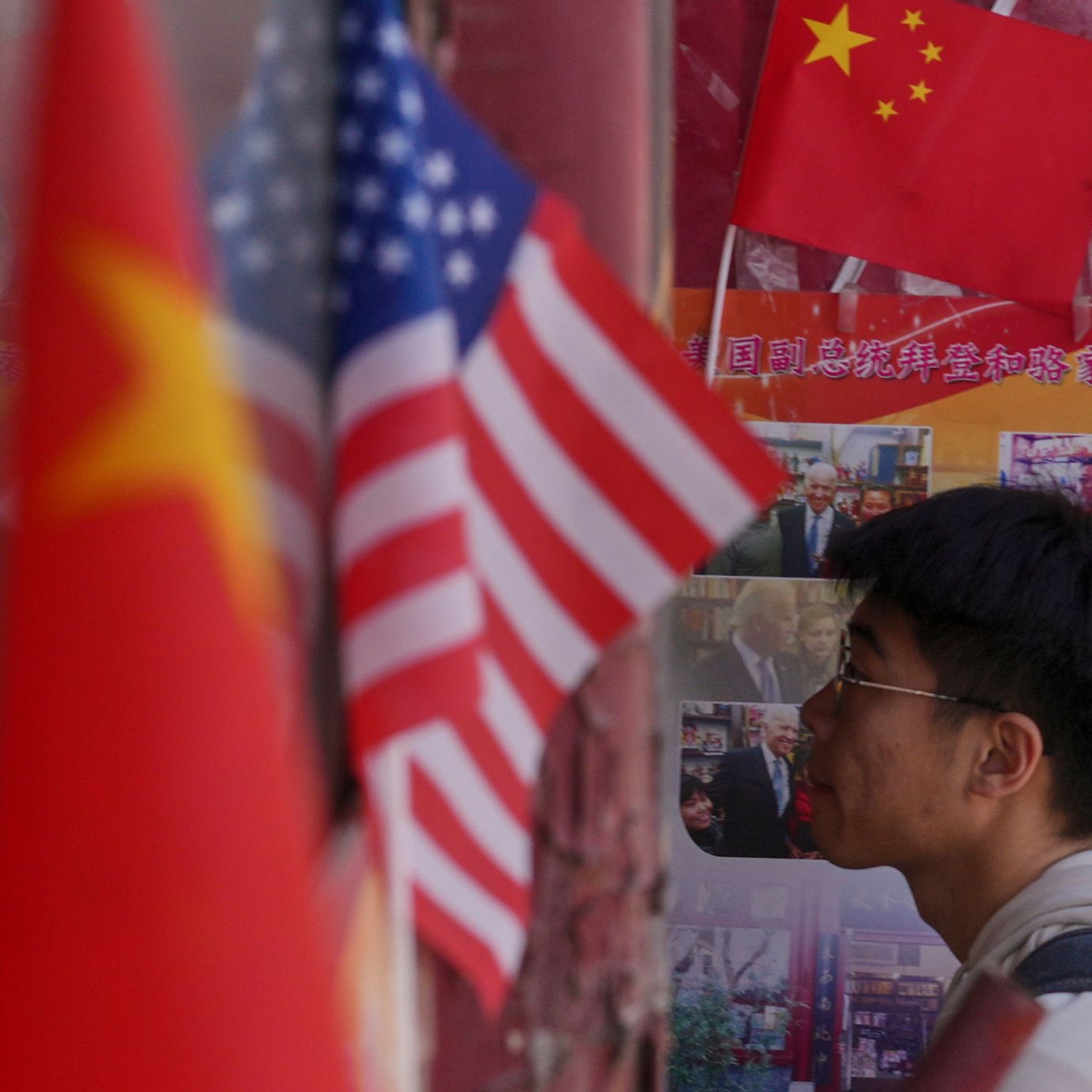
With the political momentum in both Beijing and Washington seemingly against Nvidia’s China business, many are questioning what the future holds for the company in the country.
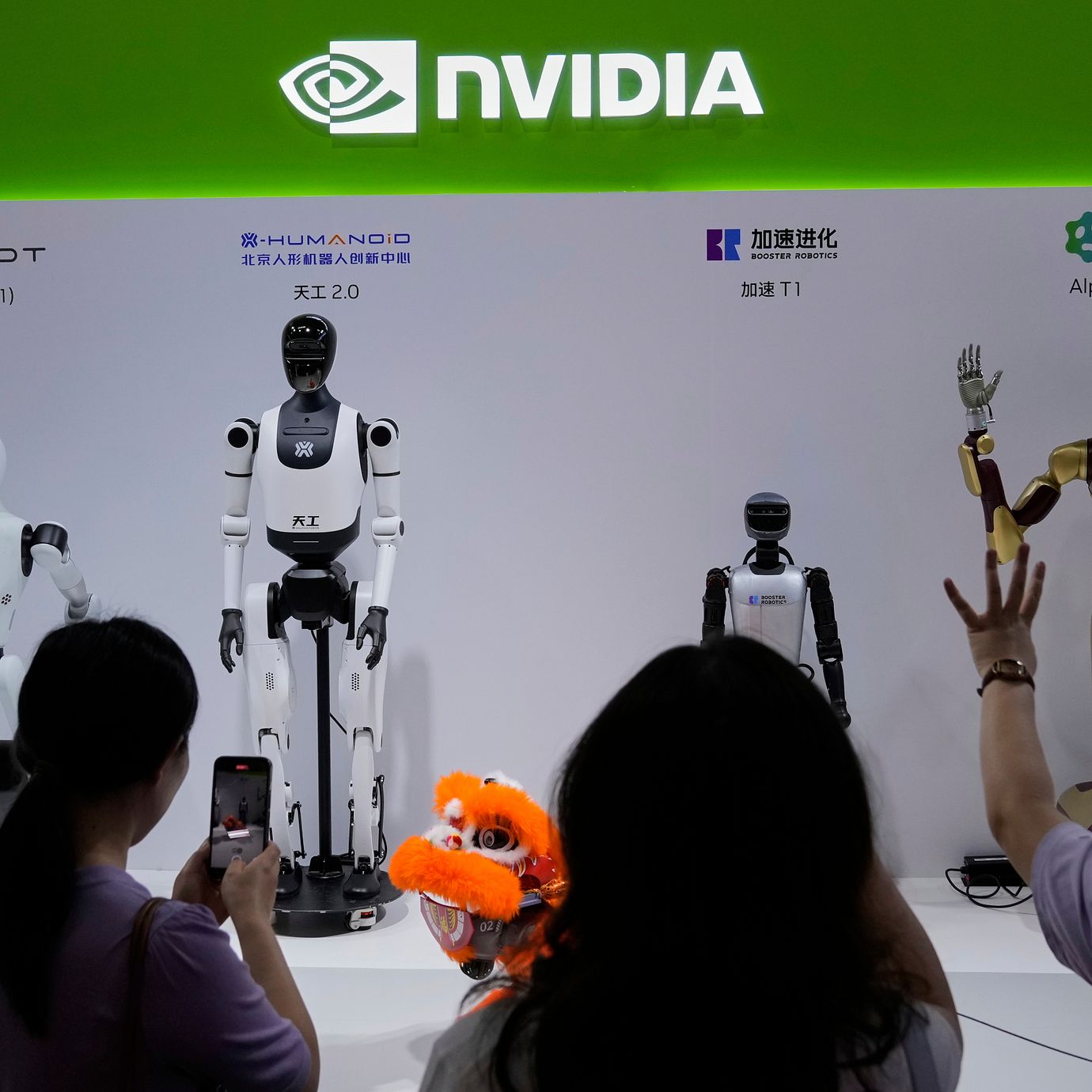
Nvidia has been touting its growth opportunities beyond data centres, in advanced manufacturing, robotics and driverless cars — all areas where Chinese companies are excelling. So far, they represent a fraction of the opportunity presented by AI data centres.
The company continues to see booming sales, even without the Chinese market. This quarter alone, the Silicon Valley group is forecast to generate $54bn in sales — part of a record-breaking $206bn expected for the fiscal year. Against such dizzying figures, the potential loss of $2bn-$5bn of revenue that had been expected in this quarter for sales of its H20 chips to China might seem like a rounding error. Nvidia has stopped including China revenues in its financial forecasts.
While Nvidia’s workforce outside China is reaping the benefits of booming demand — opening new markets and signing deals — the atmosphere is less jubilant inside China.
“The mood has definitely changed this year. While business is great elsewhere, everyone wonders where things will go here in China. If there are no more chips allowed to be sold here, what happens to the team?” says one Nvidia employee in China.
“Although it’s not clear where things go . . . it is clear the US-China competition isn’t going away,” they add.
Nvidia takes on the world
This is the second in a two-part series on how Nvidia, the world’s most valuable company, is seeking new markets to reduce its dependence on Big Tech
©The Financial Times Limited 2025. All Rights Reserved. FT and Financial Times are trademarks of the Financial Times Ltd. Not to be redistributed, copied or modified in any way.