”Olje- och gruvindustrin hotar livsmiljön i Amazonas”
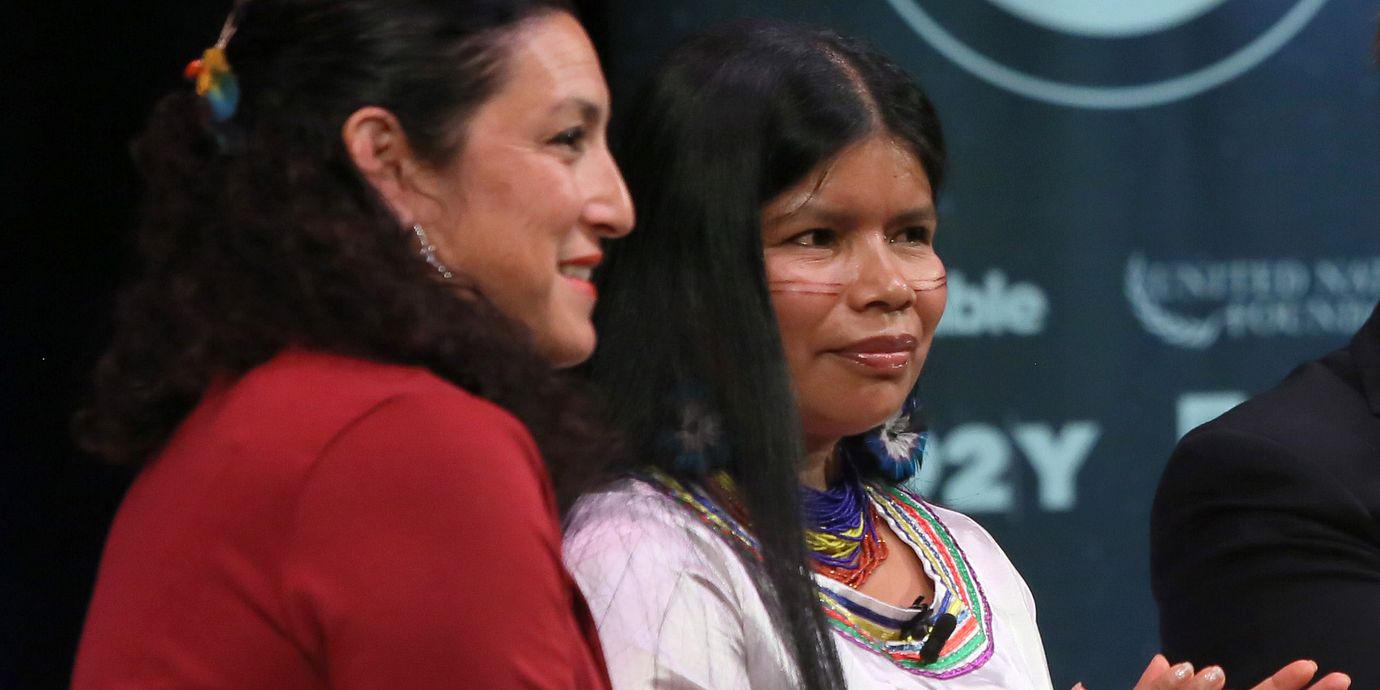
Utvinningsindustrin hotar kichwafolkets livsmiljö i Amazonas. Det säger Patricia Gualinga, människorättsförsvarare som fick Olof Palme-priset 2022, till Ekot med anledning av miljökonferensen Stockholm +50.
– Olja, gruvor, timmer och kraftverksdammar hotar oss. Vi motsätter oss vägbyggen, för med vägar kommer resten, säger aktivisten.
Även om ursprungsbefolkningar välkomnas till konferensen så lyssnar ansvariga politiker fortfarande alldeles för lite, enligt Gualinga. Hon tillägger att regeringar och aktieägare måste ta krafttag, ”annars är människans existens i fara”.
bakgrund
Patricia Gualinga
Wikipedia (en)
Patricia Gualinga, (or Patricia Gualinga Montalvo) is a female human rights defender and indigenous rights defender of the Pueblo Kichwa de Sarayaku (Kichwa People of Sarayaku), an indigenous community in the Ecuadorian Amazon.Patricia's nieces Nina Gualinga and Helena Gualinga are also environmental and indigenous rights activists. Her mother Cristina Gualinga is also a land defender, who passed down the family tradition. Her sister Noemí Gualinga, who has a lower profile as an activist, is a community leader, while her brother Eriberto Gualinga is a globetrotting filmmaker who documents the Sarayaku resistance.Gualinga currently lives in cantón del Puyo, in the Pastaza Province of Ecuador.
bakgrund
Amazonian Kichwas
Wikipedia (en)
Amazonian Kichwas are a grouping of indigenous Kichwa peoples in the Ecuadorian Amazon, with minor groups across the borders of Colombia and Peru. Amazonian Kichwas consists of different ethnic peoples, including Napo Kichwa (or Napu Runa, as they call themselves, living in the Napo and Sucumbíos provinces, with some parts of their community living in Colombia and Peru) and Canelos Kichwa (also referred to as Kichwa del Pastaza, or Pastaza Runa living in the Pastaza Province). There are approximately 419 organized communities of the Amazonian Kichwas. The basic socio-political unit is the ayllu (made up by a group of families). The ayllus in turn constitute territorial clans, based on common ancestry. Unlike other subgroups, the Napo Kichwa maintain less ethnic duality of acculturated natives or Christians.After a powerful protest of the Amazonian Kichwas held in Pastaza in 1992, the Ecuadorian state handed over the rights to 1,115,000 hectares (ha) of land for their use.Related groups:
The Inca people who established the Incan empire and colonized the Quijos.
The Chanka people from Huancavelica and Ayacucho, Peru.
The Inga people from Colombia, who speak a closely related Kichwa.
The Huanca people from Junin, Peru.
The Quijos people from the Eastern lowlands of Ecuador.
Läs mer om Stockholm +50
Omni är politiskt obundna och oberoende. Vi strävar efter att ge fler perspektiv på nyheterna. Har du frågor eller synpunkter kring vår rapportering? Kontakta redaktionen