Patagonia vill få industrin fri från evighetskemikalier

PFAS är kemikalier med praktiska egenskaper och förekommer i allt från tandtråd och mascara till matförpackningar och pekskärmar. Men ämnena tar mycket lång tid att brytas ned i naturen och kan orsaka cancer.
Nu har flera klädtillverkare, med Patagonia i spetsen, beslutat sig för att fasa ut PFAS. Men att hitta mindre skadliga ersättare har inte varit lätt, skriver Fast Company.
 Fast Company
How Patagonia and other brands are getting rid of ‘forever chemicals’ in your clothes
Hundreds of products are made with PFAS, including apparel. Here’s how clothing companies are phasing out those toxic chemicals now.
When Patagonia redesigned its Torrentshell rain jacket to get rid of PFAS or “forever chemicals,” the process took five years. It was one of the company’s final steps before reaching its ultimate goal: phasing out PFAS in all of its products, including fabrics, zippers, and thread, before 2025.
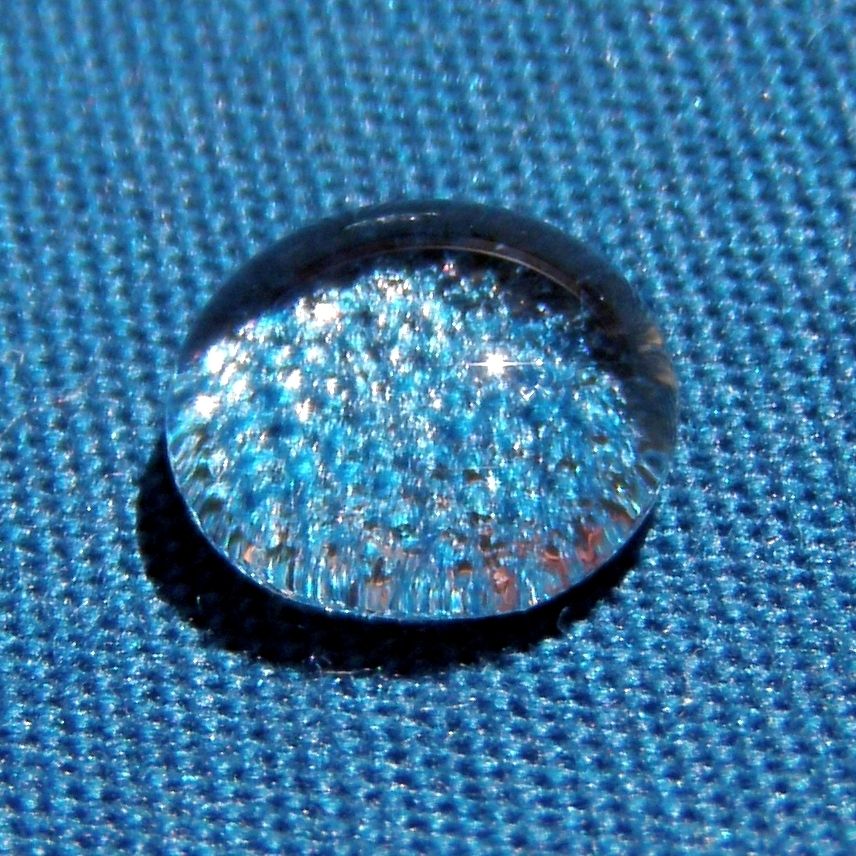
PFAS, a group of thousands of different chemicals, have been ubiquitous for decades because they’re good at making surfaces slippery, stain-resistant, or waterproof. They’re found in everything from dental floss and waterproof mascara to food packaging and your iPhone touch screen. They’re also an environmental disaster. Forever chemicals, as their nickname suggests, can take centuries to break down in nature. One report estimates that 45% of drinking water in the U.S. now contains PFAS. Studies have linked the chemicals to multiple diseases, from kidney cancer to thyroid disease.
3M, one of the largest manufacturers of PFAS, plans to stop making the chemicals by the end of next year, after settling a multi-billion-dollar lawsuit to clean up contaminated water. New regulations are also forcing brands to find alternatives to PFAS in consumer products.
California, for example, has banned PFAS in food packaging, children’s cribs, and cosmetics, among other products. A regulation banning PFAS above a certain threshold in textiles—from clothing and shoes to backpacks and shower curtains—will take effect in the state next year. (Outdoor apparel for “severe wet conditions” has a little longer to switch, with a 2028 deadline.) In New York and Washington State, PFAS in clothing will also be banned beginning in 2025. Vermont and Rhode Island are considering similar bans. Maine and Minnesota both have bans on PFAS in all products that will take effect in 2030 and 2032; multiple other states are also considering broad bans, according to Safer States, an organization that tracks related legislation.

The new laws mean that apparel companies are now racing to make sure that their products comply. Some brands, like Patagonia, began working on the challenge much earlier. The company started researching alternatives to PFOA, one type of PFAS, in 2006. The process wasn’t easy. One initial step involved converting from one chemistry—long-chain “C8” molecules—to another type called C6 that was thought at the time to be safer.
“Right around the time that we finished that conversion, a lot of studies started coming out that said, ‘Hey, these things are probably just as bad as the thing you just replaced,’” says Matt Dwyer, VP of product impact and innovation at Patagonia. So the company started over, and the challenges continued.
“It was a lot of false starts,” Dwyer says. “It was a lot of chemical companies coming to us and saying, ‘We have the magic solution, we’re ready to go,’ and then us testing it and finding out that it either didn’t work, or worked really well and was contaminated with PFAS chemistries.”

In some cases, it’s possible for brands to eliminate waterproof coatings on products completely rather than using different chemicals. “We discovered that water repellency was being used in places where it simply was not necessary,” says Kirsten Blackburn, who leads environmental and social justice programs at the shoe company Keen. “For example, why add PFAS water repellency to webbing on sandals?” Keen, which started working to eliminate PFAS in 2014, was able to get rid of more than half of the chemicals just by removing them from products where they wasn’t needed. (Other companies have chosen to get rid of certain products entirely, like Levi Strauss, which stopped making its waterproof Commuter jeans after it couldn’t find a replacement coating that performed as well.)
After Keen ditched water repellency for some products, it focused on finding alternatives for the rest—a process that took four years, more than 1,000 hours of field testing, and a $1 million investment. “We had to spend a lot of time sourcing and testing alternatives to make sure they could repel moisture, resist stains, and remain safe for humans and the environment,” Blackburn says.
”The best thing we can do for the planet is keep things in service in the wild as long as possible”
Switching the water-repellent chemistry can end up changing a material in other ways, from how it feels and looks to how it can be sewn and how long it lasts. When one fabric sample arrived at Patagonia’s lab for testing, it ripped as soon as the team tried to pick it up. The company knew that it couldn’t sacrifice quality.
For Patagonia’s Torrentshell jacket, for example, “my worst nightmare is that we do something for the planet that shortens the useful life of the jacket,” Dwyer says. “The best thing we can do for the planet is keep things in service in the wild as long as possible. Our approach was really rooted in quality and maintaining performance.”
The jacket was particularly complicated to redesign because of how it’s made, with a breathable, waterproof membrane sandwiched in the middle of a laminate. Adding new water-repellent finishes impacted some of the other attributes of the jacket, so the team had to keep testing options. But after a long process of trial and error, they found something that performed the way they wanted.
Suppliers also have to be convinced to make changes. In another case, Patagonia had tested a PFAS-free version of its Nano Puff jacket and was ready to move forward, but its supplier said that it needed more time to feel comfortable producing it, so the launch happened later.

Now, Patagonia has a list of around nine different specific chemistries that it can choose from depending on what the product needs to do and where it’s getting manufactured. The solutions didn’t exist when the company started working on the problem, Dwyer says, but that has changed.
“It’s not going to take 10 years for other brands to continue and complete this work because the solutions have been scaled—they’re out there, they’re publicly available,” he says. “The textile mills know how to apply them so they can apply these chemistries and get high levels of quality.”
If another brand calls, Patagonia also offers help. “One of the foundations of our innovation strategy in our philosophy is that if it’s that good for the planet, why would we keep it to ourselves, right?” says Dwyer.
There are still some cases where alternatives don’t perform as well as PFAS; it’s harder for fabrics to resist oil than water, meaning that products without PFAS could stain more easily. Firefighting gear, which also needs to be able to resist oil and fuel, still may arguably need to use older formulas. “This is an area where innovation is still needed to move the needle on replacements,” says Scott Echols, chief impact officer at the ZDHC Foundation, an organization that works with the apparel industry to help phase out harmful chemicals.
”We’re finding it at levels over health thresholds in drinking water across the country”
But for most consumer apparel, the switch can happen now. Brands that were slower to act are now changing practices because of the new state laws, and similar proposed legislation in the EU.
Now, advocates say, laws need to go farther and cover any use of PFAS rather than just food packaging, toys, or clothing. Proposed laws that are broader have some exceptions for products like medical devices that arguably need to use PFAS but don’t yet have a good replacement.
“We can’t just keep tackling one product category at a time,” says Anna Reade, a senior scientist and director for PFAS advocacy at the environmental nonprofit NRDC. “The problem is so massive—there are hundreds of uses of PFAS across our economy, and we’re finding it at levels over health thresholds in drinking water across the country.”
© 2024 Mansueto Ventures, LLC, as first published in Fast Company. Distributed by Tribune Content Agency.