Pentagon behöver startups – men gillar inte risk

För att hänga med i den tekniska utvecklingen behöver amerikanska militären skifta fokus från de stora försvarsbolagen till startups. Men det finns ett fundamentalt hinder: Pentagon är till sin natur byråkratiskt och motvilligt till risk, skriver Bloomberg.
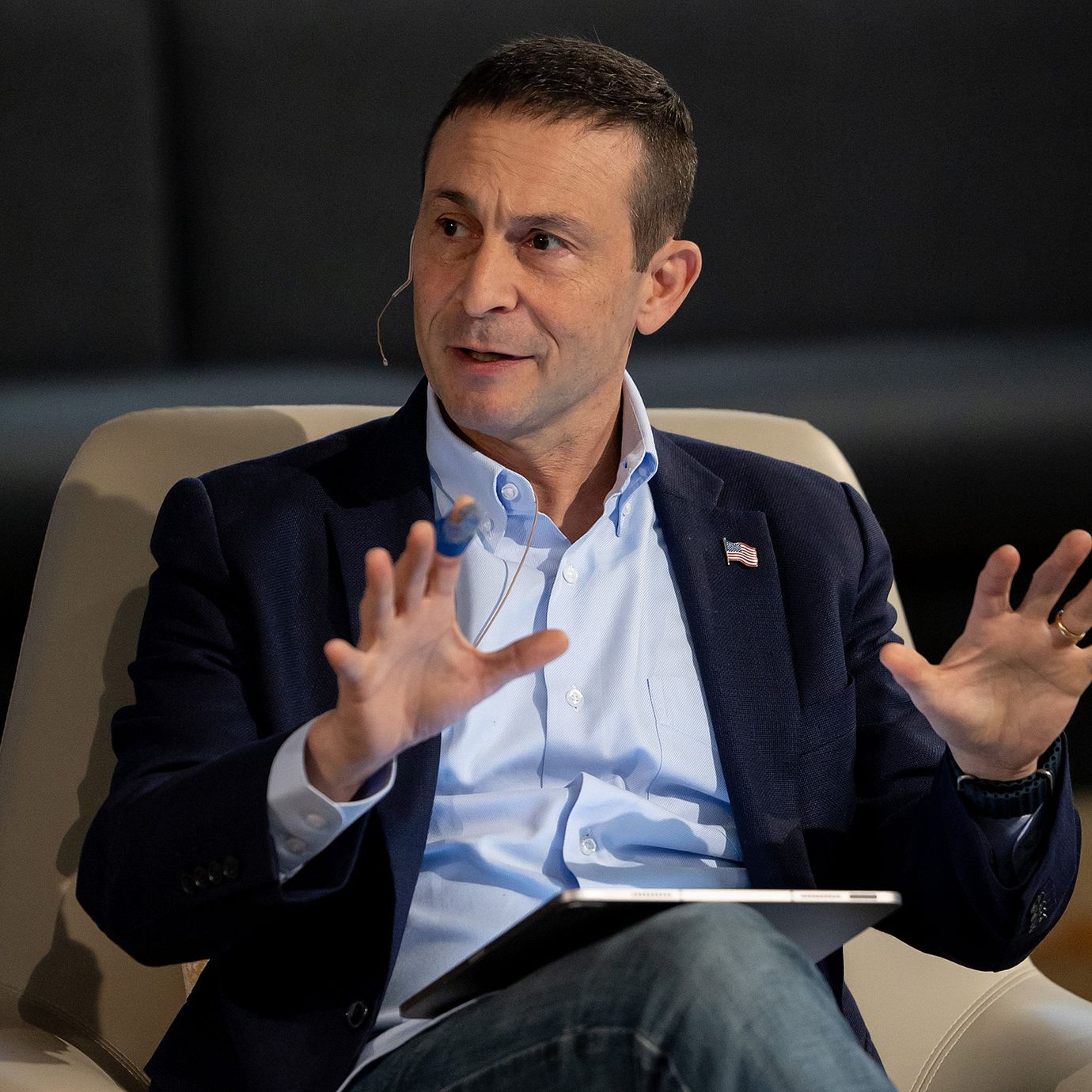
Problemlösaren Doug Beck försöker nu bygga en bro mellan Silicon Valley och försvarsmakten. Med bakgrund som både militärofficer och Apple-chef talar han bådas sidornas språk.
 Bloomberg
The Pentagon Wants to Give Defense Startups a Chance
A former Apple executive is expanding the office in charge of nurturing aspiring military contractors.
In May 2023, investors from a dozen of Silicon Valley’s largest venture capital firms descended on a spartan brick building next to a defunct naval base in Mountain View, California. The outpost houses the Defense Innovation Unit, an office that works with startups hoping to do business with the Pentagon. The investors were guests of Doug Beck on his first day in charge of the DIU, and they had grievances to air.
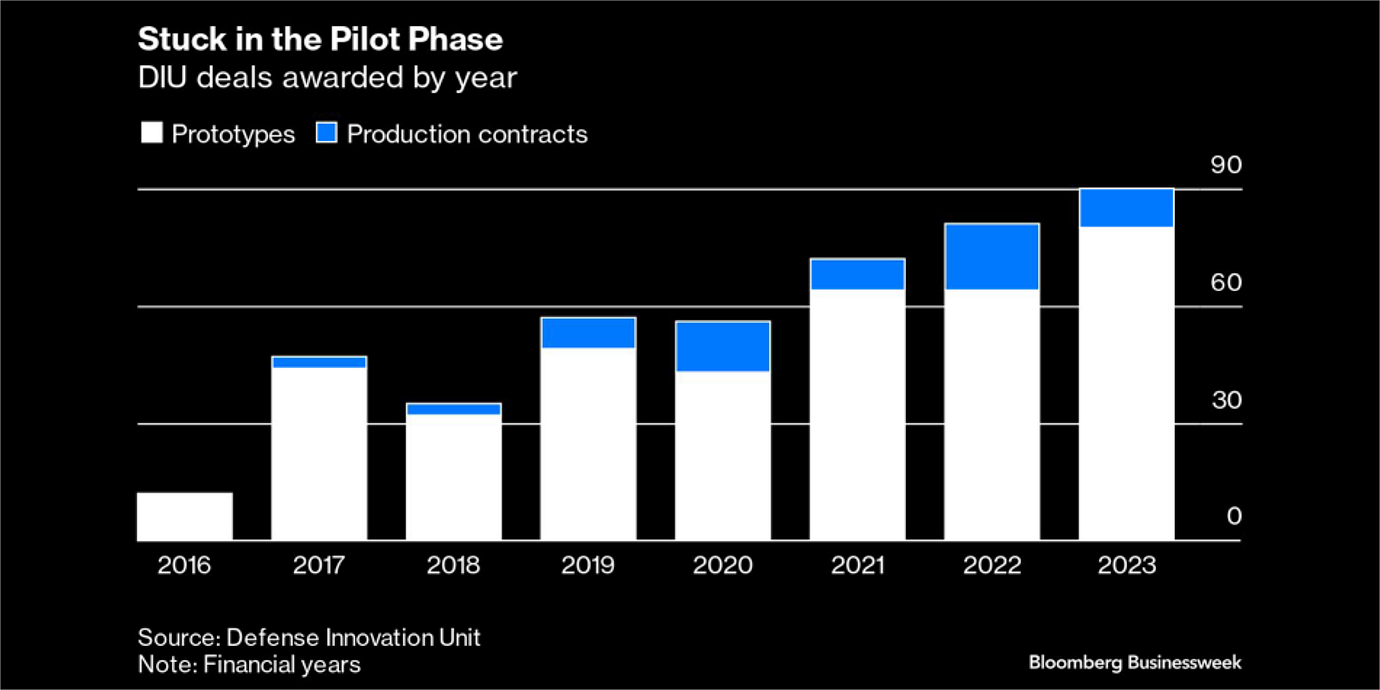
Since its inception in 2015, the DIU has handed out 62 contracts worth $5.5 billion to startups, in deals for products including autonomous drones and cybersecurity software. Many of the investors who showed up to talk to Beck backed companies that had landed those deals. They complained that the DIU often gives grants for technology pilot programs that take too long to develop into full-scale contracts or, more often, never go anywhere. The poor chances of success were damaging to the startups, which couldn’t build businesses on one-off checks. It was also worrying to people in the Pentagon, who think the US military needs to cultivate startups to deal with a rapidly evolving technology landscape.
“You can’t buy software the same way you buy an aircraft carrier”
Beck is in many ways an ideal candidate to address such concerns. A US Navy reservist who served in Iraq and Afghanistan, he’s also a former Apple Inc. executive. He says he found the feedback from investors humbling—while also agreeing with their assessment of the US Department of Defense. “We would end up with fantastic prototypes that had some demand from the department,” he says, “but they couldn’t make it to the next level of scale we need for strategic impact and that they need for the return on investment.”
The conviction behind the DIU has always been that much of the technology the US military needs is less likely to come from the so-called primes—defense contractors such as Lockheed Martin, Northrop Grumman and Raytheon that excel at building fighter jets and submarines—than from startups and other unconventional defense contractors. “The Pentagon hasn’t fully adapted to that shift,” says Paul Scharre, executive vice president and director of studies at the Center for a New American Security, a think tank focused on national defense. “You can’t buy software the same way you buy an aircraft carrier.”
Since the DIU was established, a few of the startups it has worked with have broken through. Anduril Industries Inc., which makes products including drones and surveillance systems, and Shield AI Inc., which is focused on drones, have become multibillion-dollar companies based largely on their ability to win military contracts. Still, the Pentagon remains notoriously difficult to do business with. Critics of the Pentagon’s approach—including Michael Brown, who led the DIU until 2022—say that a lack of funding and support within the department has undercut the office. Brown talked to Beck about his frustrations when Beck was considering the position. “I told him not to take the job unless he reported straight up to the secretary [of defense],” says Brown.

Sure enough, Beck reports directly to Defense Secretary Lloyd Austin, just as he reported directly to Chief Executive Officer Tim Cook at Apple. He also secured the largest yearly budget in the office’s history, after holding more than a dozen private meetings with lawmakers, hosting them at the DIU’s Mountain View headquarters and enlisting the help of startups to lobby them. As part of the government funding bill signed by President Joe Biden in March, the DIU’s annual budget will jump to more than $900 million this year, from $191 million in 2023. In another vote of confidence, Deputy Defense Secretary Kathleen Hicks in August gave the DIU a role in a Pentagon program called Replicator that’s focused on deploying autonomous systems such as self-piloting ships and uncrewed aircraft by the thousands within the next two years.
The additional money will allow the DIU to nearly double its staff. It’s already hired three senior-level officials and has plans to fill 32 new roles this year. The DIU is also requesting 50 more military and civilian staffers, though that requires approval from Congress. Beck has begun embedding DIU employees with combat commands around the world to have a real-time awareness of their needs.
“By nature, the Department of Defense is risk averse because people’s lives are at stake. At some point, that tendency starts to work against them”
Beck has also met with executives from Anduril, Saildrone, Shield and other defense tech startups, which give him good marks so far. “Doug isn’t a bureaucrat,” says Lux Capital’s Bilal Zuberi. “He doesn’t walk around with some big medals on his chest.”
At the same time that startups are hoping Beck will be their advocate inside the Pentagon, members of Congress are calling for Beck and the DIU to mirror the tech industry’s speed and risk tolerance. But people in both government and business say there are limits to how much the Pentagon can operate in the style of Silicon Valley. “By nature, the Department of Defense is risk averse because people’s lives are at stake,” says retired Air Force General Jack Shanahan, who oversaw Project Maven, the military’s most prominent artificial intelligence initiative. “At some point, that tendency starts to work against them.”
Beck believes he can be a translator between the private and public sectors. “I’m fluent in both languages,” he says. At Apple, he led sales in the Americas and northeast Asia before shifting to institutional customers like health systems, schools and governments. Throughout his time at the company, he often carried his military fatigues in the trunk of his car. He was also an adviser to Ash Carter, President Obama’s defense secretary, helped hatch the idea for the DIU, and worked part time for the office in his role as a reservist, helping introduce people there to startups.
A major challenge for Beck is to make working with the military an attractive business opportunity. Part of this is speed. The DIU says it strives to award prototype contracts within 60 to 90 days of posting a solicitation, but in 2023 it took 197 days on average. Startups not only want to move faster, they want to know they have the chance to go further. In 2023 the DIU awarded 90 contracts for pilot projects worth an average of $3.3 million, according to a DIU spokesperson. Of these, just 10 went on to win a deal with the military.
The ultimate prize for defense tech startups is so-called programs of record, which have funding tied to an explicit line item in the Pentagon’s budget and are usually renewed in subsequent years, making them a lucrative opportunity for recurring revenue. Since its inception, the DIU has helped 20 projects obtain a program of record.
“He banged on all doors of the Pentagon to make the case to move faster”
In a strategy outline from February, Beck said the DIU’s next chapter will focus on scaling commercial technology—the word “scale” appears 31 times in the report—into the military much faster. He wants the DIU to grant technology pilots only when there is already confirmed demand for a contract from the Pentagon. He also plans to use his increased budget to grant production contracts to startups waiting for other parts of the military to get their own funding to come through, a process he says can shave one to three years off the time it takes to move from a successful prototype to a real contract.
Nini Hamrick, co-founder and president of Vannevar Labs, a startup focused on battlefield intelligence software, says Beck helped her company fast-track three contracts collectively worth hundreds of millions of dollars, something the DIU didn’t have the staff to do before he took over. This cut the time it took to finalize the deals from one to two years down to three to six months. “He banged on all doors of the Pentagon to make the case to move faster,” she says.
Doug Philippone, defense lead at Palantir Technologies Inc. and co-founder of Snowpoint Ventures, a firm backing defense tech startups, says investors need to know that the Pentagon is willing to consider more than just token contracts. The sector can develop only if there are more success stories. “I think it’s really important for America for this new DIU to succeed,” he says. “I’m hopeful but skeptical.”
For more articles like this please visit us at bloomberg.com