”Respektlöst” – därför inför företag regler för mobiler
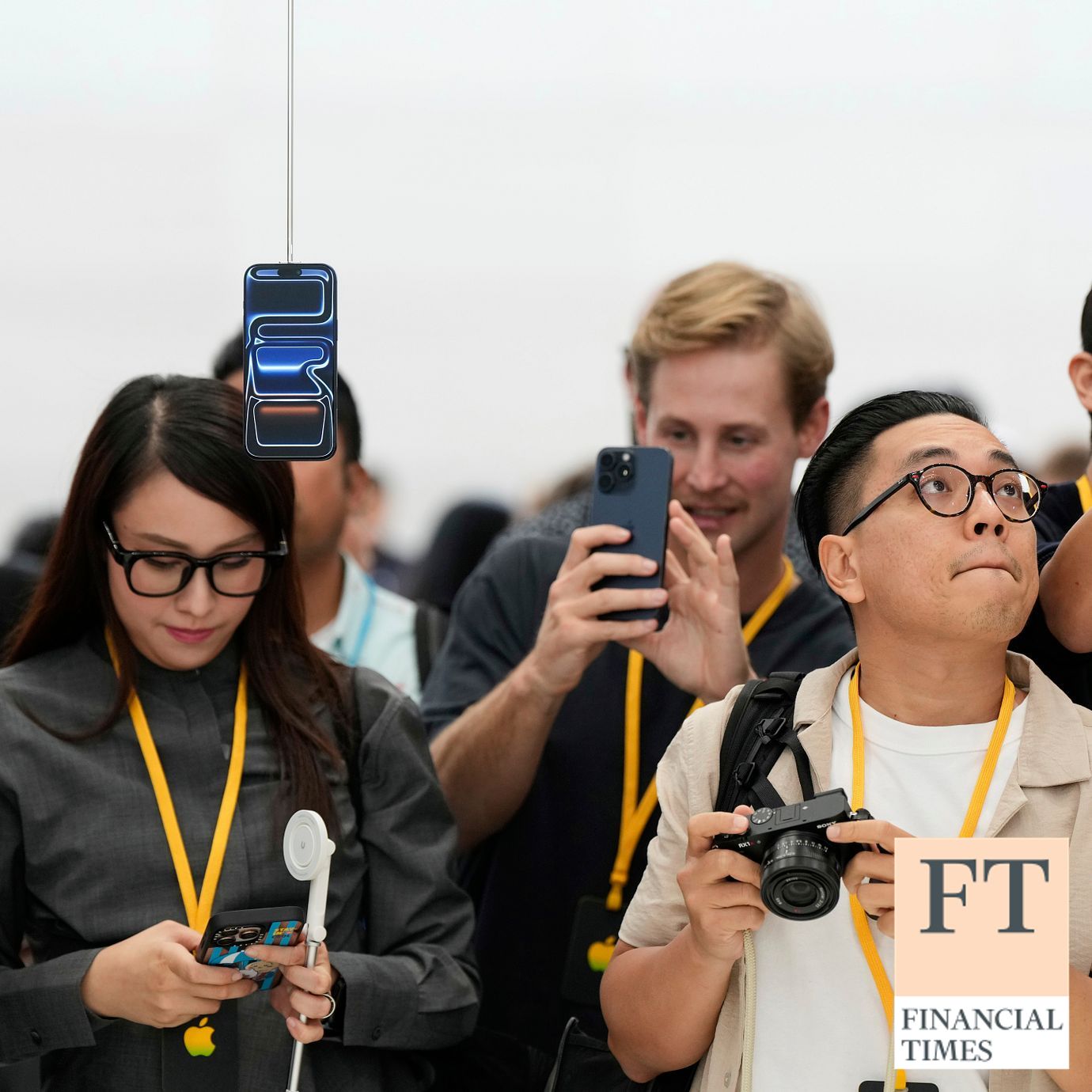
Skolor runt om i världen låser in telefoner – men också arbetsplatser, rapporterar Financial Times.
Förra året gick JPMorgan Chase vd ut med ett meddelande till aktieägarna där han rasade över att människor läser sms eller e-post i tid och otid.
”Detta måste få ett slut. Det är respektlöst. Det är slöseri med tid”, skrev Jamie Dillon.
Sedan dess har trenden att köpa förseglade fodral att ha telefonerna i eller att införa en telefonfri policy växt.
En del företag och organisationer gör det för att förhindra att viktig information ska läcka eller delas. Det finns också en tanke om att minska distraktioner och öka engagemanget på arbetsplatsen.
‘Half-amused, half-ashamed’: the employees facing phone bans at work
Some companies are asking staff to lock devices in pouches to remove distractions and protect data
“It was a hard pill to swallow,” says Kamilah Muiruri of her office policy requiring staff to put phones into lockable pouches while at their desks. “Having my phone with me is something I’ve had my whole life.”
Her employer, ID.me, a digital identity verification company, introduced phone pouches for about 290 support staff more than three years ago to protect the security of clients’ personal information. These pouches are small sealed bags that can be unlocked by tapping them against a dedicated magnetic station.
Unlike lockers they can be kept close to staff so they can hear if there are persistent callers or notifications, and be alerted to emergencies. ID.me allows staff to retrieve their phones during break times, too.
Muiruri credits the policy with improving her relationship with her device. “I don’t need as many breaks to check my phone.” There is another benefit of a locked-away phone. “It gets us to connect with each other,” she adds. “I didn’t really know people in the office as I was focusing on the friends I have outside the office. Now, we are very close as a team . . . [and] very big on going out together.”

Pouches are increasingly seen as a solution for schools, where politicians and policymakers are ordering smartphone bans to reduce children’s digital dependence. Employers are now following suit.
Some cite the motivation as preventing staff, intentionally or accidentally, from leaking sensitive information, such as customers’ private information or companies’ intellectual property. Others see them as simply a way to remove distractions, and build discipline, focus and team cohesion within their workforce.
Yondr, which makes phone pouches that block signal, says buyers include courts, childcare centres, government agencies, mining sites, political groups and companies with intellectual property to protect. “The organisations coming to us have usually already tried the honour system,” says Graham Dugoni, Yondr’s founder and chief executive. “What these environments share is the recognition that a phone policy on paper is not the same as a phone-free environment.”
Researchers have found that “phubbing” (snubbing by phone) can diminish employee engagement. Last year, Jamie Dimon, JPMorgan Chase chief executive, complained in his message to shareholders of “people in meetings all the time who are getting notifications and personal texts or who are reading emails. This has to stop. It’s disrespectful. It wastes time.”
Elsewhere, some white-collar workers are required to turn their phones face down or put them away in meetings.
Amy Brazewell, marketing manager for Emea & Canada at Phone Locker, sees increased interest from companies buying pouches for roundtables held under the Chatham House rule. “It’s a safe space and nothing is recorded.”
The desire for distraction-free focus led the Royal Court Theatre to introduce phone pouches for members of its Writers’ Card programme, which encourages playwrights to complete their work and nurture their creativity and craft through talks and networking events. “Writing is an extraordinarily difficult thing to do . . . particularly when you get to the hard part,” says Will Young, executive director. “When you get stuck, it’s easier to reach for a distraction.”
Surrendering phones to the box office to place in a pouch has been warmly taken up by “so many writers [who were] half-amused, half-ashamed”, adds Young. “It’s only a small thing, [but] there is something about that commitment [that says] ‘I’m here to work’.”
For Muiruri, going phone-free has also helped improve her concentration. “When I first started . . . I wasn’t the best employee, constantly checking my phone.”
Adrian Chadi, an associate professor of economics at the University of Southampton, says the evidence on increased productivity from mobile phone bans is limited. “It is very difficult for researchers to determine the effects of a ban compared to a situation without such a ban in the same organisational context.”
In fact it found that being able to use their phones enabled employees to better deal with personal issues that arose during work time, so removing the ban had a positive effect
His research shows the productivity of employees performing simple, routine tasks can be increased by a mobile phone ban by removing distractions. But it could be different for non-routine tasks that require knowledge and creativity. “It is also possible that employees will perceive the ban very negatively if using their mobile phone offers obvious advantages at work, [especially] as people have become accustomed to the constant availability of their mobile phones.”
Eoin Whelan, a professor in business analytics and society at the University of Galway in Ireland, conducted a study of a company that reversed a phone ban and found there was no hit to productivity among the staff that used their devices at work. In fact it found that being able to use their phones enabled employees to better deal with personal issues that arose during work time, so removing the ban had a positive effect. “It depends on the employee but in today’s world, most expect there to be a permeable boundary between work and personal life, especially those with caregiving responsibilities outside of work.”
Kyle Scofield, senior vice-president of member support at ID.me, says when the company introduced pouches, there was pushback from staff who felt management did not trust them. “It went on longer than I expected. In the first six months, violations were pretty frequent.” Today, he says, “I couldn’t tell you the last time we had anything like that.”
Scofield advises anyone contemplating distributing phone pouches in the workplace to be clear on messaging and “explain the reasoning. Consistency is important.”
For anyone thinking of reducing phone time at work, Muiruri recommends, “be open to it. I would not go into it thinking you are missing out.”
©The Financial Times Limited 2026. All Rights Reserved. FT and Financial Times are trademarks of the Financial Times Ltd. Not to be redistributed, copied or modified in any way.