Så navigerar du börsen när Fed sänker räntan

Börsen har redan prisat in sänkta räntor, vilket gör att marknadsreaktionerna kan bli mer dämpade vid onsdagens räntebesked från Federal Reserve.
Men det går fortfarande att hitta aktier med lockande värderingar, skriver Barron’s. Energiaktier som Total framstår som lovande, liksom stabila bolag som Walmart, som drar nytta av AI för att effektivisera verksamheten.
Och även om stora chipbolag som Nvidia har rusat tack vare AI-hajpen, finns det guldkorn att vaska fram inom mjukvarusektorn – däribland Oracle och Braze.
 Barron's
The Fed Is About to Give the Stock Market What It Wants. How to Play the Moment.
The market may already reflect the possibility of rate cuts, but there are still places to find value.
The wait is over.
For most of 2024, investors have been fixated on when the Federal Reserve would start lowering interest rates—and by how much. The time has finally come—financial markets are pricing in a 100% probability of easing at the Fed’s Sept. 18 meeting—and it’s looking like a toss-up as to whether it will be a quarter-point or half-point cut. Expectations for a 50-basis-point appear to be back on the table, even as inflation remains sticky and the job market, despite some recent deterioration, still looks relatively healthy.
But after all of that buildup, the actual event may fall short of expectations, at least when it comes to the stock market’s reaction. The futures market, after all, has not just factored in the September cut, but 100 basis points worth of them through the end of this year and several more throughout 2025, which could leave rates at a level of about 2.75% to 3%, compared with their current range of 5.25% to 5.5%. Despite some jaw-dropping volatility this summer, the S&P 500 index is still up nearly 18% this year and is less than 1% from a record high. Valuations, too, are starting to look stretched, with the market now trading at 20 times 2025 earnings estimates, slightly above its historical average. Fixed-income investors are betting on multiple rate cuts, too. Yields on the two-year U.S. Treasury bonds have tumbled from about 4.75% at the start of July to around 3.6%, a massive slide in a relatively short period of time.

So, the Fed’s first cut could turn out to be a classic sell-the-news event, at least initially. But it all depends on whether the cuts help stave off a recession or if they just lighten the blow of an economic downturn. Even then, rate cuts operate on a lag, so it will take time before they affect the economy, regardless of whether the first cut is 25 or 50 basis points. For now, investors and many economists are still betting on a proverbial soft-landing scenario. The Atlanta Fed’s GDPNow model puts the economy on pace for 2.5% annualized economic growth in the third quarter, hardly a sign of a significant pullback. Inflation continues to moderate, as well, with consumer prices in August rising just 2.5% from a year ago, the slowest pace since February 2021.
That sounds a lot like a soft landing, and it should bode well for stocks. Seema Shah, chief global strategist at Principal Asset Management, noted in a report that the stock market has been higher 16 out of 23 times in the six months after the first rate cut of easing cycles dating back to 1970. “The key determinant of market performance has been whether the U.S. economy avoided recession,” wrote Shah, adding that “history shows that rate cuts themselves aren’t the enemy. It’s the economic context in which they occur that investors should be paying close attention to.”
“At this stage, quality and defensiveness are the name of the game. Throw into that reasonable valuations”
But investors will need to tread cautiously. Valuations for the broader market remain rich, boosted by the high prices for Nvidia and other top tech stocks. Fortunately, there are parts of the market that still look attractive. Matt Stucky, chief portfolio manager of equities at Northwestern Mutual Wealth Management, argues that the equal-weighted S&P 500, which trades for just 16 times profit forecasts for next year, is a better bet than the market-cap-weighted version, given how heavy of a reliance the cap-weighted index has on the Magnificent Seven. Those stocks trade at an average price/earnings ratio of 28 times 2025 earnings estimates.
“At this stage, quality and defensiveness are the name of the game. Throw into that reasonable valuations,” Stucky says. “Embrace diversification.”
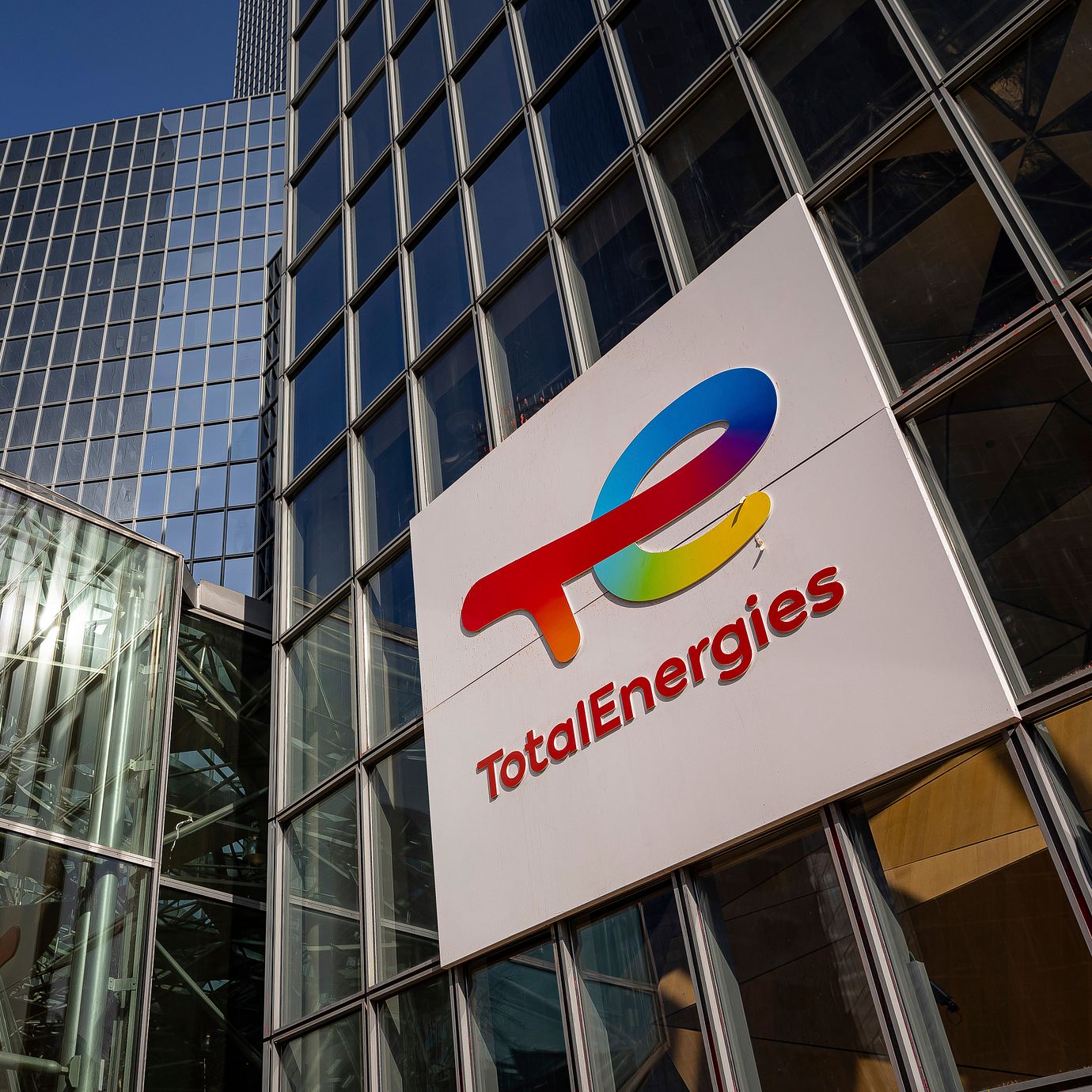
Energy in particular looks like a beaten-down sector that’s ripe for a comeback. Crude-oil prices have slid below $70 a barrel due to concerns about a slowdown in China. But geopolitical tensions remain in the Middle East, and oil stocks look tantalizingly cheap. The Energy Select Sector SPDR exchange-traded fund trades for just 11 times 2025 earnings estimates, below its historical average of nearly 16. David Allen, managing director with Octane Investments, an asset management firm focused on the energy sector, notes that there are even bigger bargains. He owns French oil giant TotalEnergies, which trades for just seven times next year’s earnings estimates.
A slowing, but not collapsing, economy could give some retail stocks a boost, too, particularly those that focus on bargain-hunting consumers. Thomas Raymond, a partner with Callan Family Office, says Walmart is a perfect example of a stock that has benefited from using artificial intelligence to streamline its operations, which has helped shares gain more than 50% this year. Walmart isn’t a tech company,” Raymond says. “But AI is an earnings elixir that can chisel down costs.”
Still, investors shouldn’t ignore tech entirely. Even though big chip stocks like Nvidia have soared this year on AI enthusiasm/hype, there are other parts of the sector that still look attractive. Lisa Shalett, chief investment officer of Morgan Stanley Wealth Management, says she still likes software stocks, for example. Analysts at UBS recently highlighted several software companies among their top tech stock picks, with Oracle, which recently announced a new cloud database partnership with Amazon.com ’s AWS unit, as one of its favorites. The analysts also like human-resources software firm Dayforce, customer-relations management provider Braze, and security software company CyberArk Software. Nick Frelinghuysen, a managing director and equity portfolio manager at Chilton Trust, said that IBM is another big tech company worth owning, calling it a “stealth transformation story” with an underappreciated software and AI business that also happens to pay a dividend that yields more than 3%.
“The deficit picture in the U.S. probably will worsen regardless of the election outcome in November”
But stocks are only a part of the equation. Even though bonds have already rallied sharply, sending their yields lower, ahead of the Fed’s first rate cut, there still are some compelling fixed-income opportunities ahead—especially if you think the Fed is likely to keep cutting rates throughout 2025. Bret Barker, managing director and co-head of global rates at TCW Group, says that he expects the Fed to “overshoot on the way down just as they did on the way up.” That could push long-term bond yields even lower and rejuvenate demand for housing. As such, Barker says he’s overweight mortgage bonds in his fixed-income portfolios.
Bond investing powerhouse DoubleLine Capital has a mortgage-backed securities ETF that yields above 4%, higher than similar ETFs from Vanguard, State Street, and BlackRock.

Rate cuts from the Fed won’t be the only factor determining where bond yields go. Increased government spending could lessen the impact of looser monetary policy. After the election dust settles, lawmakers in Washington will probably push for more fiscal stimulus at a time when the Fed is already lowering interest rates. Gargi Chaudhuri, chief investment and portfolio strategist of the Americas at BlackRock, thinks that investors should consider the shorter parts of the yield curve, particularly the “belly” in the three-to-seven-year range. That’s especially due to concerns about increased fiscal spending.
“The deficit picture in the U.S. probably will worsen regardless of the election outcome in November,” she says. “We see the yield curve steepening. Bonds are back as ballast.”
Sure, the pullback in bond yields ahead of the Fed’s rate cuts has been extreme, just as the run-up in stock prices had been extreme. It’s harder to find bargains now than it was at the beginning of 2024. But that doesn’t mean the rally for stocks and bonds is over just yet. Chaudhuri pointed out that investors still have more than $6 trillion in cash sitting in money-market funds that are suddenly going to earn a lot less now that interest rates are coming down.
If those investors haven’t succumbed to the fear of missing out on further gains in stocks and bonds yet, then it may be only a matter of time before the FOMO trade really takes hold in earnest.
Chairman Powell, it’s your move.