Spotify och Arm i börsens ingenmansland – går miste om miljarder dollar
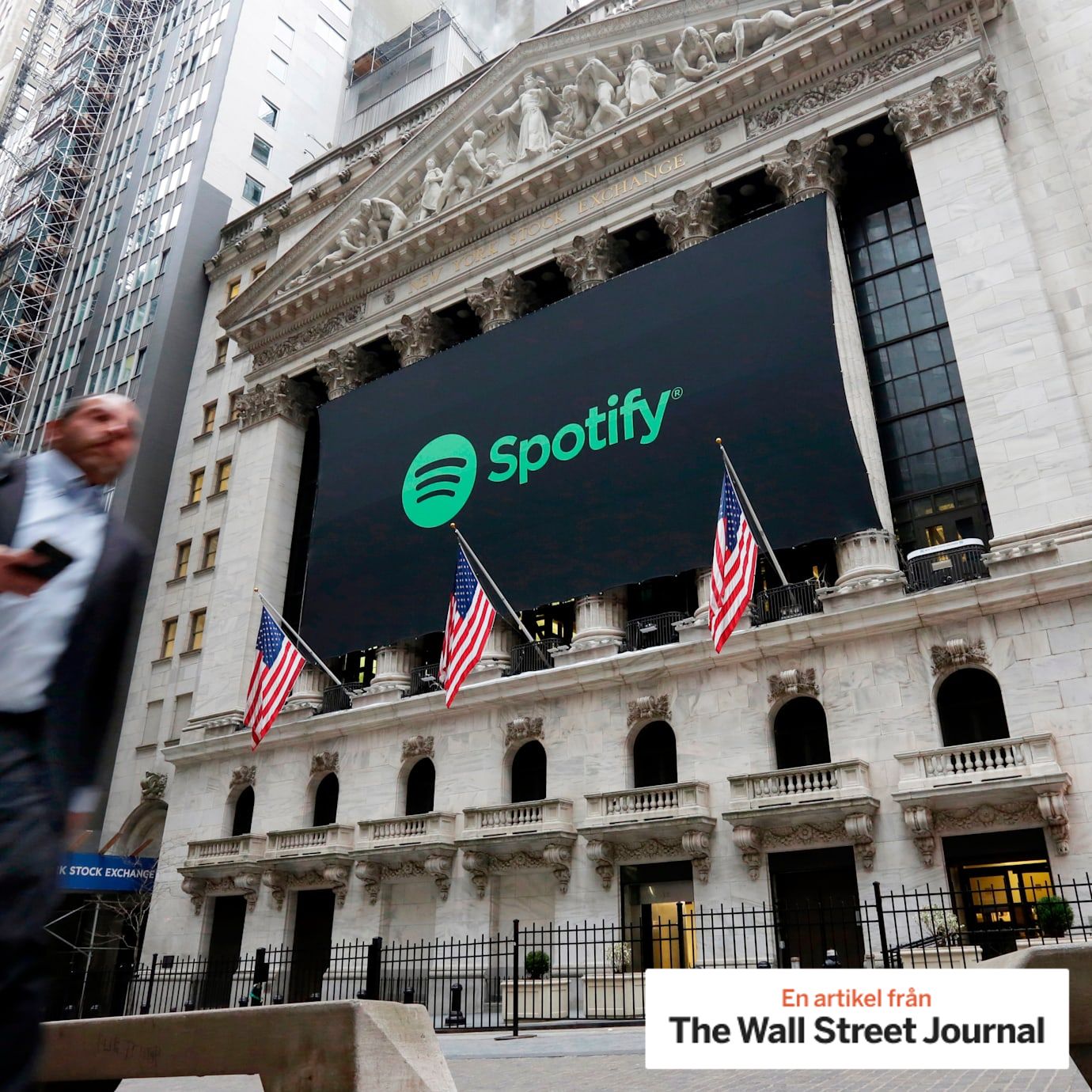
Två aktuella investerarfavoriter – den vietnamesiska elbilstillverkaren Vinfast och den brittiska chiptillverkaren Arm, men även svenska Spotify – är exempel på ett problem som drabbar allt fler globala bolag. Genom att inte lista sig i sina hemländer går de miste om miljarder dollar från passiva indexinvesterare, skriver Wall Street Journal.
Tidningen kallar dem för de föräldralösa globala aktierna. Det handlar alltså om företag som befinner sig i ett ingenmansland där de varken kvalificerar sig för sina nationella index eller för exempelvis S&P 500. Enligt WSJ återspeglar problemet att investerarvärlden är global, medan finansiell infrastruktur och handel är nationell.
 The Wall Street Journal
VinFast, Arm and Other Index Orphans Miss Out on Billions From Passive Investors
Two current market favorites are caught in a weird limbo thanks to their decisions on where to list their shares.
The hype around VinFast Auto, a Vietnamese maker of electric cars that this week was worth more than Ford or General Motors, and the imminent blockbuster IPO of Arm Holdings, a British chip designer about to list on the Nasdaq, conceals a common drawback of both: They are global orphans, missing from the major indexes.
The two sit in a weird no-man’s-land between countries, qualifying neither for their home index nor the S&P 500, thanks to their decision to list outside their home countries. They’re in a growing group of companies including the Italian fashion designer Prada, the Swedish music streamer Spotify and the German vaccine maker BioNTech, which miss out not only on the trillions of dollars tracking domestic indexes and index futures but also on global index money.
The pluses: VinFast’s U.S. listing and Arm’s planned float make it easier to garner attention from American investors. Being on the Nasdaq makes them eligible for the exchange’s own indexes and the large exchange-traded funds that track them. But even there foreign companies can suffer if they use American depositary receipts, a common way to list across borders chosen by Arm.

The weirdness isn’t just the odd company. In total, the companies that don’t qualify for any country and so miss out on MSCI’s All Country World Index, the most popular global index, are worth more than $200 billion. The New York Stock Exchange-listed Brazilian digital bank Nu Holdings is alone worth $34 billion. Investors who think they are taking a passive approach are in fact deploying their money to meet rules that are downright weird—and worse, differ between index companies and change over time.
Missing out on indexes really matters. Academic studies have repeatedly shown that winning membership in the S&P 500 leads to a pop of between 2.8% and as much as 8% in the stock price, depending on the period examined.
Arm is likely to feel the pain. It filed for its IPO this week without setting a price range, but owner Softbank put an implied $64 billion valuation on it in the purchase of stock held by its Vision Fund. Analysts think it is likely to be worth a lot less. Even at $20 billion— roughly 40 times last year’s net income, the same multiple as where the MSCI World Semiconductor and Semiconductor Equipment Index trades—it would be bigger than 170 members of the S&P. It would also miss out on being the 34th-biggest member of London’s FTSE 100 Index.
Stocks end up orphaned because of the conflict between the increasingly globalized world of investing and the domestic nature of financial infrastructure such as trading and clearing. This split has, if anything, intensified; the S&P 500 had British and Dutch companies as founding constituents in 1957 and only kicked them out, along with Canadian stocks, in 2002. Since then it has tweaked the rules to accommodate the wave of U.S. companies shifting their legal headquarters to Ireland or other low-tax locations, meaning there are now a dozen or so legally British or Irish companies in the S&P.
The FTSE 100 tightened rules for overseas members, after investor concerns about the corporate governance of emerging-market companies listed in London, while index companies changed rules for their Chinese indexes to include Chinese stocks listed through ADRs in New York.
Dimitris Melas, global head of index research and product development at MSCI, said: “Our aim is to strike a balance between creating a comprehensive representation of a market and the need to be fully investable. MSCI indexes are used to create a range of financial products, so investability is very important.” Including shares listed in different time zones, or with different clearing systems, complicates life for funds and futures products.

Yet there are plenty of exceptions, complicated by different rules at each index provider. Where a country has a lot of foreign listings, as with China, MSCI classifies the country differently and includes the foreign listings. And a country that qualifies once keeps the status forever. So MSCI’s Netherlands Index, which once included the very large U.S.-listed NXP Semiconductors, still has two U.S.-listed stocks, Coca-Cola Europacific Partners and AerCap Holdings, even though they are relatively small and NXP has since been reclassified as American.
Nasdaq-listed BioNTech, whose technology was behind the Covid-19 vaccine developed with Pfizer, is even odder. It is orphaned by MSCI, qualifying for no country index and therefore missing out on the world indexes. But Stoxx, the index group owned by Deutsche Börse, treats BioNTech as German. Meanwhile, it qualifies for Nasdaq indexes but only at a reduced weight, because only the shares used to back the ADRs count toward its size. As a result, it misses out on the popular Nasdaq-100 index and purchases by the linked $200 billion Invesco QQQ ETF and futures. Instead, it only makes it into the less-tracked Nasdaq Composite.

Listing in the U.S. brings more than just index money, of course. VinFast has attracted attention as its shares soared since reversing into a special purpose acquisition company this month, becoming the 45 most traded stock in the country on Tuesday and the 35th-largest stock in the Nasdaq Composite index on Wednesday—in spite of its owner holding more than 99% of the float. The choice of a U.S. listing for Arm, meanwhile, means it avoids British rules on disclosing related-party transactions with Softbank, its owner and the biggest shareholder of Arm’s China operations.
The conflict for investors is between choosing stock-market-based indexes, such as the Nasdaq-100 or FTSE 100 (the biggest member of which, AstraZeneca, is also the 14th-biggest member of the Nasdaq-100), or trying to get better country, regional and global exposures through indexes from S&P, MSCI, Stoxx or others that attempt to pin down corporate nationality.
The problem of fitting global companies into national indexes means there’s no perfect solution, as the weirdness of orphaned companies demonstrates. Investors shouldn’t kid themselves that any index they choose will ever be truly passive, as they’re always at the mercy of the index compiler’s compromises.