Tullpolitiken slår fel – USA förlorar på att ej samarbeta

Tullarna skulle göra underverk för den amerikanska ekonomin och dess befolkning, lovade Trumpadministrationen. Man skulle äta kakan, äta den igen och ändå ha den kvar.
I själva verket har det blivit tvärtom, skriver The Atlantic. Den amerikanska ekonomin bromsar in, samtidigt som den kinesiska växer.
USA är trots det världens starkaste ekonomi. Landet producerar lite mer än en fjärdedel av världens varor och tjänster. Tillsammans med sina allierade – som Trump nu belagt eller hotat med tullar – skulle USA kunna vara så pass inflytelserikt att omvärlden tvingas följa de ekonomiska regler man sätter upp. Men i stället för att få inflytande genom samarbete har USA valt den andra vägen. Trump driver en politik som går ut på att förmå andra att be USA om nåd.
Föga förvånande har det visat sig inte fungera.
 The Atlantic
Why Trump Is Losing His Trade War
He picked a stupid fight with the whole world. The bad results are all on him.
Donald Trump’s trade war is fast turning into a fiasco. When the president started the war, Team Trump advertised it as certain to be fast, easy, and cheap. Trump would impose tariffs. The world would yield to his will.
The tariffs would do everything at once. They would protect U.S. industry from foreign competition without raising prices, and generate vast revenues that would finance other tax cuts. Americans could eat their cake, continue to have the cake, and trade the same cake for pie—all at the same time. “There’s not going to be any pain for American workers,” Trump’s press secretary, Karoline Leavitt, vowed in April.
The advertising rapidly proved false. The U.S. economy is slowing because of the Trump tariffs; China’s is thriving in spite of them. Team Trump falsely promotes vague five-page outlines with alienated former allies as big deals; China is successfully wooing some of its former rivals, such as Vietnam. America’s standing in the world is measurably sinking; China’s is measurably rising. Courts are ruling that Trump’s tariffs are illegal; public opinion mistrusts the tariffs, regarding them as expensive and unproductive. The promise of huge flows of painless money from tariff revenues is evanescing as the fantasy it always was.
Oh, and the country’s largest chain of Halloween retailers canceled its traditional summer grand opening because of Trump-caused supply disruptions. What comes next, as things go wrong?
Trump’s first instinct is to blame the targets of his economic aggression for not cooperating with his wishes. On May 30, Trump accused China of violating an imaginary agreement with him. On June 4, he complained that Xi Jinping was “extremely hard to make a deal with.” But Trump seldom chooses to quarrel with foreign dictators, saying in the same breath, “I like President Xi of China, always have, and always will.” Today, in all-caps emphasis, Trump announced that a deal had been done, declaring that his “RELATIONSHIP IS EXCELLENT” with the Chinese president-for-life.
The lack of details in the announcement strongly suggests that Trump yielded more and gained less than his publicity apparatus wants Americans to believe. That’s because, in reality, Trump’s global trade war has always been subordinate to his domestic culture war.
Trump much prefers to vent his rage against enemies within. Get ready for him to blame the failure of his trade war on fellow Americans who did not support him enough. The Trump tariffs will be ballyhooed as an act of patriotism, a necessary sacrifice to be laid on the altar of the nation. One of Trump’s television talkers reminded viewers that Americans melted down their pots and pans to win the Second World War. If the president needs to ration dolls and colored pencils, how dare any true American raise a contrary voice?
Trump ordered the nation into economic warfare. […] The impending defeat is his personal doing, entirely his own fault
The coming call for national solidarity with Trump’s Great Patriotic War against imported Halloween costumes deserves all the scoffing it will get and more.
Trump ordered the nation into economic warfare. He did not do any of the things necessary to create any hope of success in that war. The impending defeat is his personal doing, entirely his own fault.
Recall the classic Norm Macdonald bit in which the comedian marvels that in the 20th century, Germany decided to go to war with “the world,” twice. That was meant as a joke. Trump adopted it as his actual strategy. Trump’s rationalizers invoke anxiety about China as his justification. Yes, China numbered among the targets of Trump’s “Liberation Day” tariffs. But so did Australia. So did Brazil. So did Canada. So did Denmark. So did Egypt. And on and on, through the whole alphabet of American allies and trading partners.
The United States is by far the planet’s strongest national economy, producing slightly more than one-quarter of the planet’s goods and services. Including its historic and recent partners, the United States could potentially lead a group of nations sufficiently influential to write economic rules that everybody would need to take into account. That fact underpinned the Trans-Pacific Partnership concept of the Obama years: Form a large-enough and attractive-enough club, and China will have no choice but to comply with the founding members’ terms.
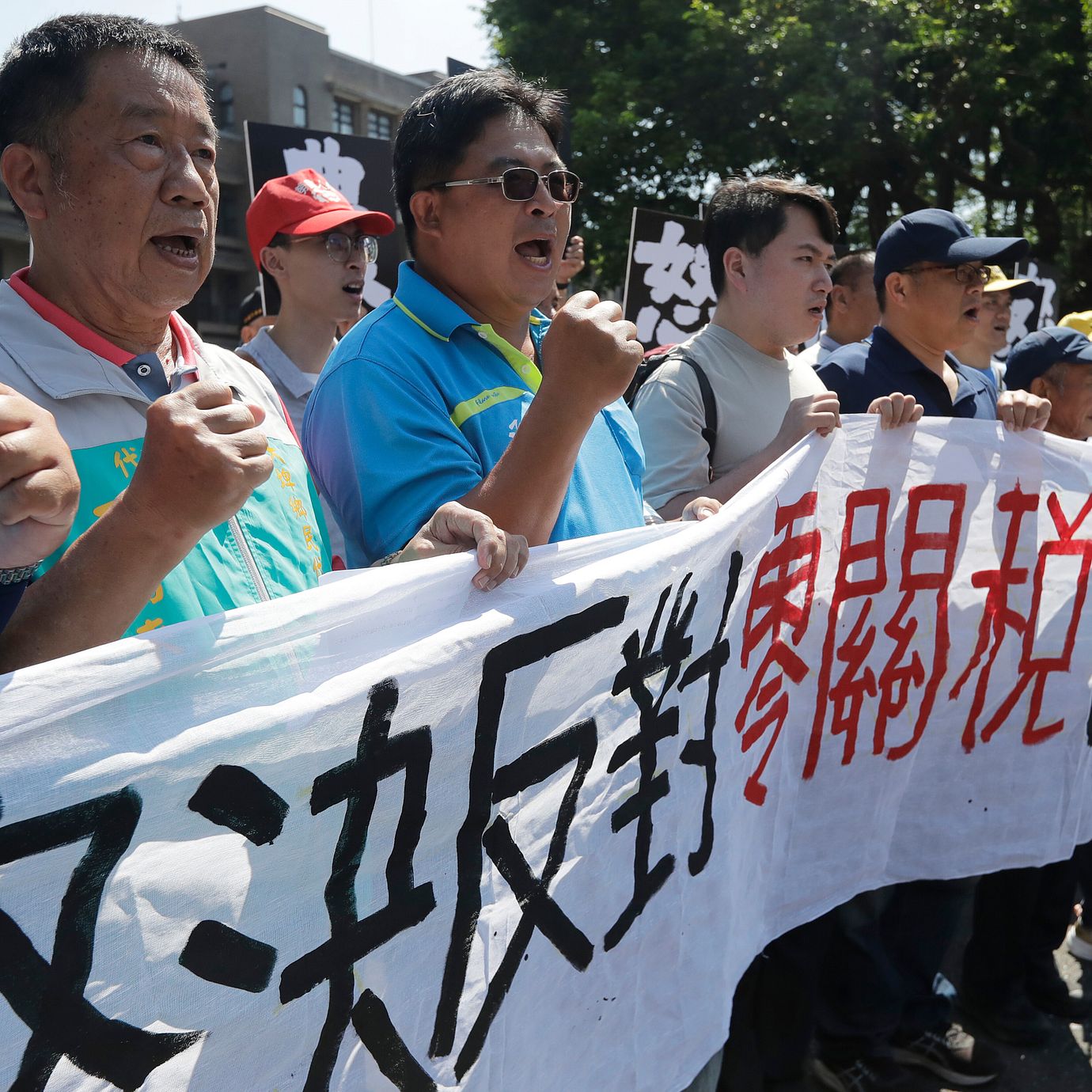
Trump’s alternative concept is for a quarter of the world economy to cut itself off from the other three-quarters, and then wait for the three-quarters to beg for mercy from the one-quarter. Unsurprisingly, that concept is fast proving a stinker.
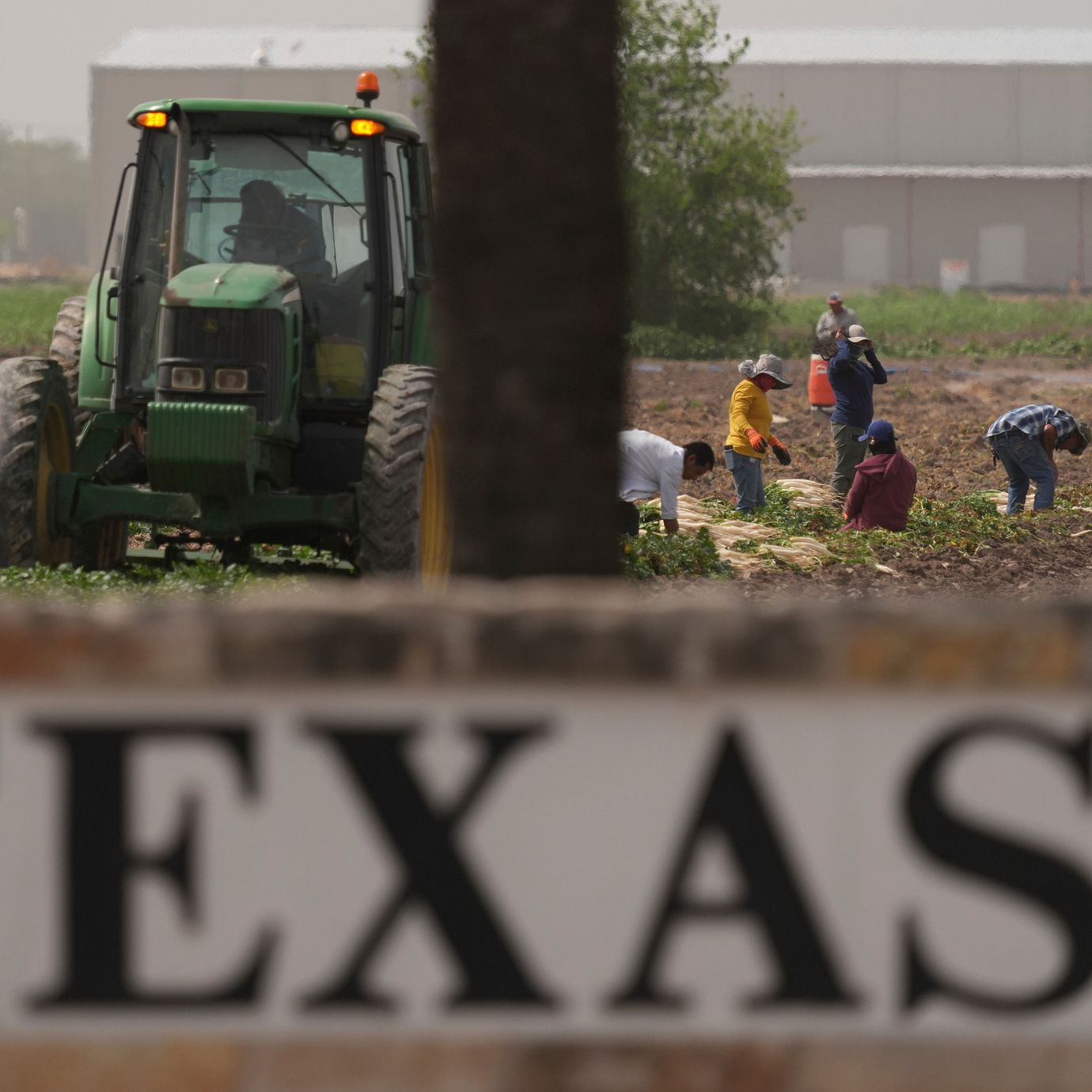
But suppose the president sincerely believed that the U.S. had no choice: The one-quarter must fight the three-quarters as a matter of national survival, or “liberation,” from the tyranny of foreign goods and services, foreign fruits and vegetables. Crazy, but suppose he did. What would follow?
A rational president would grasp that a U.S. economic war against the rest of the world would be a big, protracted, and painful undertaking. Such an enormous commitment would require democratic consent from a large majority of the public, all the more so because the United States is starting the war itself. Trump’s trade conflict is very much a war of choice. The president must explain why he chose it.
A rational president determined to fight an economic war would try to mobilize broad support from the public and from Congress. He would seek allies in Congress, and not only from his own party. He might, for example, compromise on some of his other goals. If he also wanted to tighten immigration at the same time as waging a global trade war, or to roll back DEI programs, or to cut taxes for the wealthy, or to relax anti-corruption measures, or to pardon the crimes of his violent supporters, or to plan any other ambitious but divisive project, he might think twice about pursuing them. You can’t ask your opponents to pay more and do without if you won’t forgo even a scrap of your partisan agenda. You can ask anyway, but don’t be shocked when they answer with a Bronx cheer.
He is fighting it alone, without global allies or domestic consent, because that’s his nature. It’s now also his problem
That president would also lead from the front. A president seeking to inspire Americans to endure hardship for the greater good would certainly not throw himself a multimillion-dollar birthday parade at public expense. He would not accept lavish gifts from foreign governments, would not operate a pay-for-access business that collected billions of dollars for himself and his family from undisclosed favor-seekers. While asking other Americans to accept less, he would not brazenly help himself to more. He certainly would not troll, insult, and demean those who may not have voted for him, but whose cooperation he needs now.
This president has, of course, done the most egregious version of every item above. His economic war is adjunct to his partisan culture war. He did not seek broad support. He gleefully offends and alienates everyone outside his base. Which works for him as long as times are prosperous, as they were in the first three years of his first administration. Allow things to get tough, though, and it’s a different story. Trump cannot ask for patience and trust, because at least half the country has unalterably judged him as untrustworthy and out only for himself.
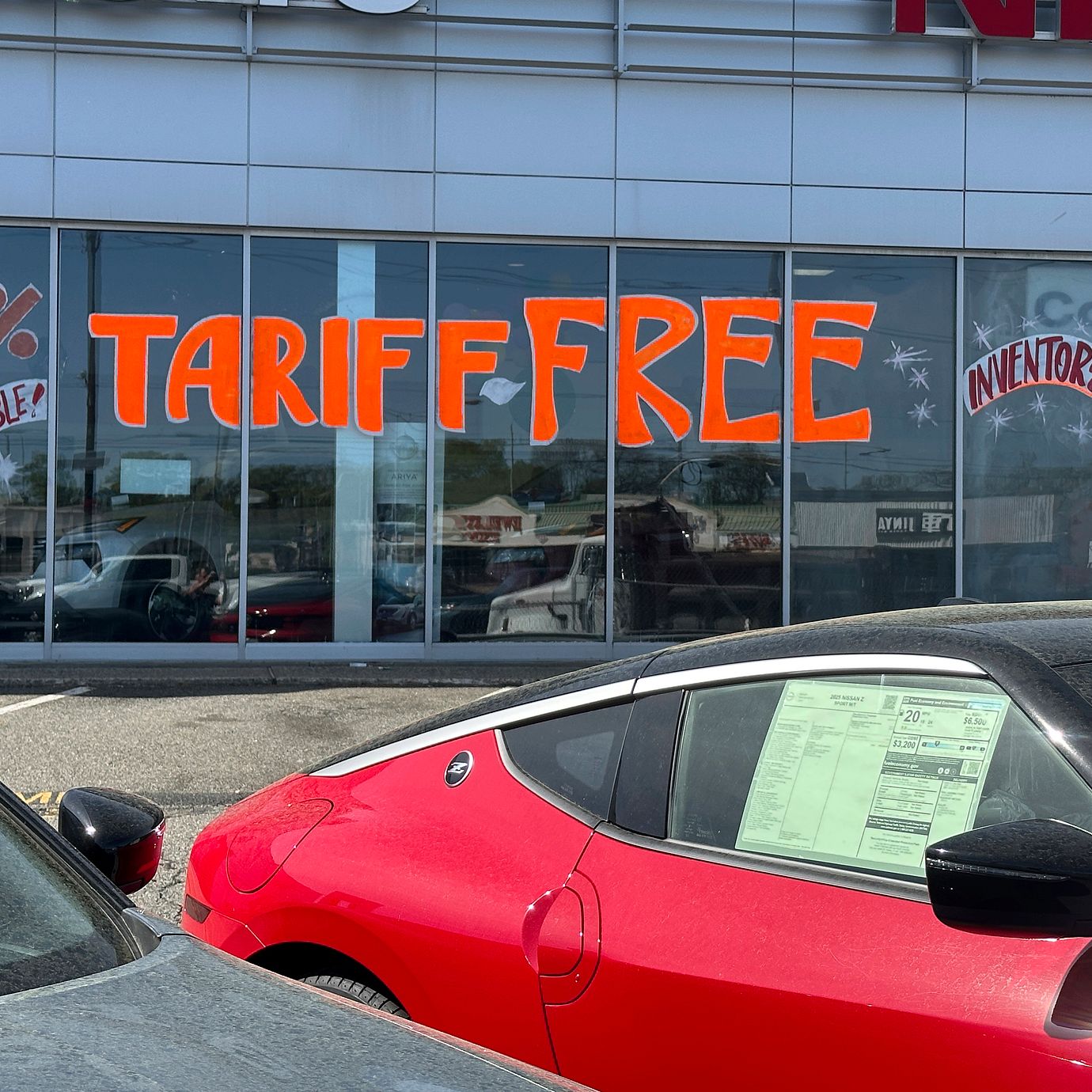
Trump bet his presidency on the theory that trade wars are “good and easy to win,” as he posted during his first term. His second-term trade war, however, is proving not so easy, and not so good, either. He is fighting it alone, without global allies or domestic consent, because that’s his nature. It’s now also his problem.
In the 1983 movie WarGames, a computer thinks its way through dozens of terrifying nuclear scenarios and concludes: “The only winning move is not to play.” In other words, the only safe way to conduct a nuclear exchange is never to have one. The same could be said of trade wars, at least when fought by one nation, however big and rich, against all the others, all at once.
Trump decided he did not care about Americans’ support for his economic war. He did not ask for their backing. He did not make any effort to win it. He willfully alienated at least half of the public. Now that he’s losing, his supporters want to scold the country because it rejects the whole misbegotten project as stupid and doomed. Don’t listen to their reproaches. This is Trump’s war, and his alone.
The only way to win now is to end Trump’s trade war as rapidly as possible. And then end the excessive, unilateral trade powers of a corrupt president who blundered into a pointless and doomed conflict without justification, plan, or consent.
© 2025 The Atlantic Media Co., as first published in The Atlantic. Distributed by Tribune Content Agency.