Uppstickarbörsen avslöjad med scientologikopplingar
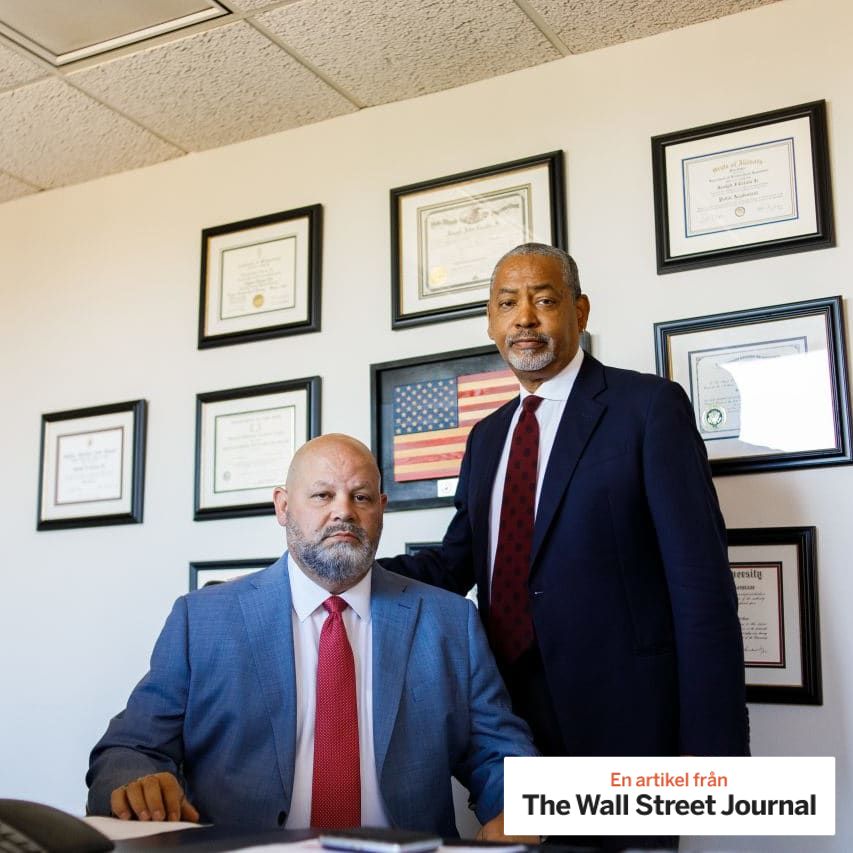
Dream Exchange har hyllats som en ny börs för svarta entreprenörer i USA. Men bakom fasaden finns starka band till Scientologikyrkan – något som inte framgått varken för investerare eller myndigheter, skriver Wall Street Journal.
Vd:n Joe Cecala är en av scientologernas största givare, och flera chefer har bakgrund i dess innersta kretsar. Anställda vittnar om att de tvingats studera L Ron Hubbards skrifter på arbetstid. Enligt granskningen har hundratusentals dollar från bolaget gått till rörelsens högkvarter i Clearwater, Florida.
– Han drog in oss för att få kapital från svarta, säger en tidigare investerare.
Finansmyndigheten SEC utreder nu företaget.
 The Wall Street Journal
They Went to Work for a Stock Exchange. Then the Scientology Ties Became Clear.
Drawn to Dream Exchange’s message of helping Black entrepreneurs, staffers were surprised by its connections to a religious group; studying L. Ron Hubbard texts in the office.
It started out as a routine workday at the buttoned-up offices of Dream Exchange, a fledgling stock exchange outside Chicago. Then Charlie Bills showed up. In flip-flops.
Bills was there last summer to see Joe Cecala, the company’s founder and CEO. He took a seat on the couch outside the executive office and was told to wait. To those around him, Bills stuck out, and not just because he was a stranger with his toes out.
Time passed and Bills grew impatient. “Joe needs to know,” he told a staffer in a gravelly voice, “he has other obligations,” according to people who heard the exchange.
Bills didn’t spell out what he meant, but the comment led employees to dig into his past. The man had a decadeslong history as an operative for the Church of Scientology and was often deployed to collect money for the religious organization.
Dream Exchange is a tiny startup with big dreams to tap the $60 trillion U.S. stock market. Cecala, who is white, has pitched the venture as a Nasdaq for Black-owned businesses. The company says it is named after Dr. Martin Luther King Jr. famous speech.
There’s more to the story. Dream Exchange and its leadership team have extensive ties to the Church of Scientology and entities connected to the religious institution, according to financial and other records reviewed by The Wall Street Journal and people familiar with the company’s inner workings.
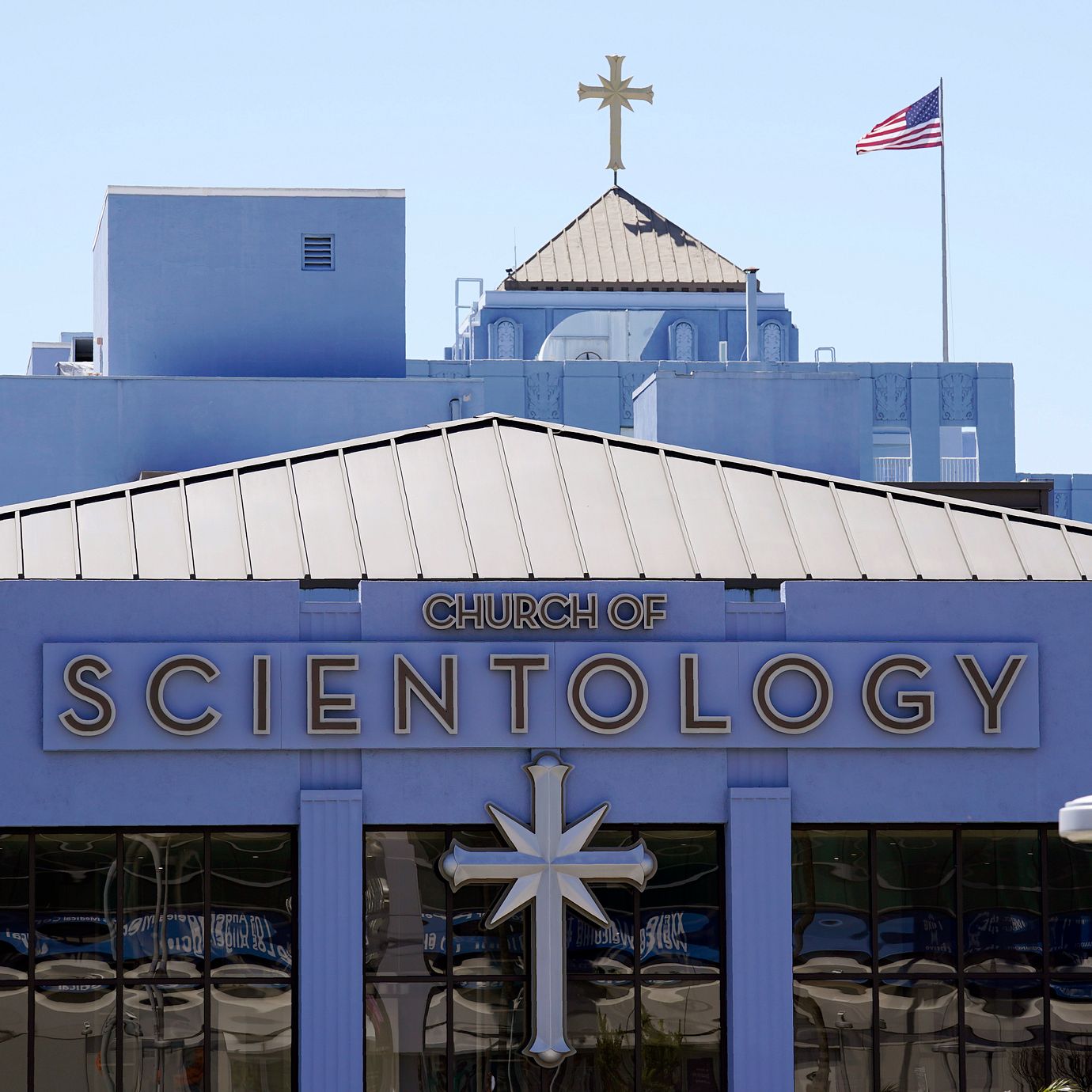
The Dream Exchange office implemented Scientology-oriented practices for staff, even if they weren’t members of the religion, such as requiring some employees to spend hours studying the writings of church founder L. Ron Hubbard in an isolated office and in one instance using an “e-meter,” a kind of lie detector used in the religion, according to people familiar with the situation.
Several of Dream Exchange’s top executives are members of Scientology. Cecala, the CEO, is so prominent a donor that he and his family have been honored at an awards gala for their giving, according to a Scientology publication describing the event.
The chief administrative officer, Brian Moxon, grew up in Scientology as the son of a longtime attorney for the church. He previously served in the Sea Organization, the religious order’s elite training ground, according to people familiar with the matter. Another executive who heads public relations previously had a career in the church’s fundraising operations.
Financial records show that funds from Dream Exchange LLC moved into an account at its parent company, owned by Cecala, that made donations to Scientology-affiliated organizations, including after Dream Exchange launched an effort to raise funds from investors in 2018. From 2010 through 2020, there were dozens of such donations from the account of the parent company owned by Cecala, totaling at least $150,000.
Several investors contacted by the Journal were unaware of the link between the upstart stock exchange—which is seeking a foothold in the cash-rich U.S. capital markets—and the religious institution
According to a person familiar with the group’s finances, donations continued into at least 2023, with amounts as high as tens of thousands of dollars in a month going to Scientology-linked organizations.
Dream Exchange, which is seeking a license from the Securities and Exchange Commission to launch an exchange, didn’t detail the connections to Scientology in its application or in materials provided to prospective investors, which otherwise described the startup’s executives, goals and strategy. The SEC faces a November deadline to decide on the application.
In February, a former employee filed a whistleblower complaint with the SEC alleging that Dream Exchange had misappropriated funds to benefit the Church of Scientology, and that the company loaned out employees to work for a local Scientology facility during business hours. The complaint didn’t describe the nature of the volunteer work.
The SEC requires would-be stock exchanges to disclose information about their ownership, affiliates and controlling officers. The religious affiliations of the officers or shareholders aren’t normally disclosed in such applications.
Investors typically want to be made aware of potential risks that could hurt the value of their investments, including outside activities and conflicts of interest for the management team.
Several investors contacted by the Journal were unaware of the link between the upstart stock exchange—which is seeking a foothold in the cash-rich U.S. capital markets—and the religious institution.
Sherman Adkins, a Virginia investor who bought shares in Dream Exchange in around 2021, was one of several Black investors who said they didn’t know about the company’s ties to Scientology. Others included lawyers, business owners and a former professional athlete.
“I haven’t seen any affiliation with anything,” he said. “If there’s something that’s commingled and taken in any other direction, I’m not aware of it.” Adkins said he would take appropriate action if he was misled.
Dan K. Webb, a lawyer for Dream Exchange, said that employees’ religious beliefs were irrelevant to the company’s operations and that the exchange has made all required disclosures to the SEC and investors.
Long a cultural curiosity, the Church of Scientology was founded in 1954 by Hubbard, a science-fiction author
Asked about the donations to Scientology-linked organizations from Dream Exchange LLC’s parent company, Webb described that company as privately held by Cecala and said the exchange had no knowledge of any personal donations that its CEO might have made. “Dream Exchange has never misappropriated investor funds,” Webb said.
Webb denied that employees were allowed to do volunteer work for Scientology during work hours, and he also denied that any employees were forced to learn or practice any Scientology principles. Webb said that Dream Exchange had no knowledge of any whistleblower complaint and hadn’t been contacted by the SEC about such a report.
Cecala, the founder, “takes great care to keep his religious beliefs and practices separate from his role as the CEO of the Exchange,” Webb said.
A spokeswoman for the Church of Scientology, Karin Pouw, said, “The Church does not engage in any business activities. The Church has nothing to do with the subject of your article except that you seek to ‘out’ and target individuals on the basis of their membership in our religion.”
“I never had any relation to Dream Exchange. Every interaction between Joe and me is based on our friendship and has nothing to do with his business,” Bills said. He also said he no longer works for the church.
A spokesman for the SEC declined to comment.
Becoming ‘clear’
Long a cultural curiosity, the Church of Scientology was founded in 1954 by Hubbard, a science-fiction author. Hubbard created a religion that promised a journey toward spiritual enlightenment, or becoming “clear.”
Although several foreign governments have described Scientology as a dangerous cult, it has tax-exempt status as a religion in the U.S. That came after a decadeslong battle with Washington, which boiled over when Hubbard’s wife pleaded guilty to criminal conspiracy for infiltrating the Internal Revenue Service in 1979.
The U.S. backed off the fight in the 1990s during the church’s heyday, when mega-celebrities such as Tom Cruise and John Travolta embodied its gospel of success.
Since then, Scientology’s image in the U.S. has deteriorated due to a series of exposés about Hubbard’s cosmic belief system and alleged human-rights abuses. Defectors from the religion and researchers have said it engages in physically and psychologically abusive behavior, ranging from pressure to have abortions to forcing adherents to hand-clean sewage from aeration ponds. Former members say they have been pressured to raise money for the church. The church has long denied wrongdoing.
Believers have dwindled in recent decades, according to Stephen A. Kent, a sociologist at the University of Alberta, who has done demographic research on the church since the 1990s.
Pouw, the spokeswoman, denied that the church was shrinking or that its image had deteriorated. She said Scientology was growing faster today than at any time in history because of its dedication to its religious and humanitarian missions.
Making the world a better place for everyone was a key tenet of Dream Exchange’s business.
Cecala has deep ties with the Church of Scientology, even achieving the title of “gold meritorious”—a designation for big donors—in recent years
Employees quickly came to understand that Scientology had a heavy influence on the outfit, but few were aware of its founder’s financial ties with it, which is why Bills drew so much attention, according to people familiar with the situation. Bills visited Dream Exchange repeatedly in 2024, according to some of the people.
Internal records reviewed by the Journal show that Bills’s interactions with Dream Exchange’s leadership go back at least a decade. In 2015, $1,579.79 of Bills’s hotels and expenses were paid for, labeled as charitable donations, by Expansion Funding Partners, a Cecala-owned company that would become Dream Exchange LLC’s parent company after its incorporation the following year.
Bills in the 1980s and ’90s held administrative positions in the Clearwater, Fla., base of Sea Organization, including overseeing part of a punitive re-education and labor program for church members called the Rehabilitation Project Force, according to Mat Pesch, a former Scientology treasurer who worked directly with him in Clearwater, and another person familiar with Scientology’s operations there.
For the past two decades, Bills was “responsible for contacting the Scientologists [in various regions] and getting them to pay money,” Pesch said. “It’s a pressure job.”
In 2010, a federal judge ruled that the Church of Scientology had a First Amendment right to punish believers as it sees fit, in a ruling that was upheld on appeal. The Church has denied that it forces people to work against their will.
Webb said Bills was a personal guest of Cecala and that Dream Exchange doesn’t have knowledge of Bills’s work history.
‘Gold meritorious’
Cecala has deep ties with the Church of Scientology, even achieving the title of “gold meritorious”—a designation for big donors—in recent years. The 59-year-old took Scientology classes since at least 2011, according to data the church has published.
A lawyer by training, Cecala worked early in his career for the founders of Archipelago, an electronic trading platform that was bought by the New York Stock Exchange. That experience inspired him to start Dream Exchange, he has said.
When Cecala founded the startup, it didn’t focus on Black- or minority-owned companies, early investor materials show. In one 2018 memo to investors, the company said it was seeking to list shares of companies involved in Rust Belt manufacturing.
By the time it debuted to the public in July 2020, the company’s ambitions had shifted. Dream Exchange said it was to be the “first-ever minority-owned stock exchange in the history of America.” It was less than two months after the murder of George Floyd, when the Black Lives Matter movement was cresting. Pictures of Dr. King appeared on the company’s website.
Webb, the lawyer for Dream Exchange, denied that the company’s focus changed.
Anchoring the company’s funding was to be a Black investor, William H. Ellison, the CEO of investment firm Cadiz Capital Holdings, the company said at the time. The touted majority stake didn’t materialize.
Dream Exchange has said it plans to seek listings from smaller, minority-owned companies, arguing that they are underserved by the major stock exchanges
Ellison told the Journal in an interview that his relationship with Cecala deteriorated over time, largely for business reasons, including his disappointment at Dream Exchange’s slow progress towards launch. He said he eventually learned that Cecala was a Scientologist but said it wasn’t a factor in the rupture.
Webb said the startup chose to terminate its business relationship with Cadiz and declined to comment on Ellison’s relationship with Cecala.
Instead, the company’s most prominent Black investor became Dwain Kyles, an entrepreneur with deep roots in Chicago’s Black business community. Dream Exchange now says it is “minority-controlled” rather than “minority-owned.”
If it wins SEC approval, Dream Exchange has said it plans to seek listings from smaller, minority-owned companies, arguing that they are underserved by the major stock exchanges. The business would make money by executing stock trades and collecting fees from the listed companies.
While waiting for a license, Dream Exchange has focused on raising money, building its brand and lobbying for legislation that would create a new type of stock exchange for smaller companies, the Main Street Growth Act. The House of Representatives passed the bill in 2018, but it was never passed by the Senate. The bill’s supporters say it could help reverse a long decline in the number of public companies by making it easier for early-stage ventures to sell shares to investors.
Salespeople were given fundraising goals of at least $150,000 a week and encouraged to target Black investors and make it seem like Dream Exchange was the toast of Wall Street, according to people familiar with the matter and documents reviewed by the Journal.
One 2024 script for salespeople said “there are firms like JPMorgan, Morgan Stanley, etc. and they will be investing significant amounts of money. Our current target is to raise $200M from these firms and we have 13 firms lined up and waiting for the application to go in.”
Another script said that Citadel “has agreed to be our customer and we are working with them on our small cap trading desk platform.”
JPMorgan and Morgan Stanley said they weren’t investors in Dream Exchange. Citadel Securities denied having any involvement in the startup.
The connection to Scientology wasn’t described in the scripts. It also wasn’t mentioned in other materials meant to inform investors and the public about the company, such as press releases, interviews or its website. (Companies aren’t required to disclose such connections in press releases and other materials.)
Employees were encouraged to use Scientology jargon like “Dev-T,” short for “developing traffic,” a phrase that means something is a waste of time or inefficient
In a document circulated to investors in 2019, one vice president, Jane Hayton, was described as having executive experience at an international nonprofit between 1989 and 2013, but didn’t name the entity. She appeared to work for IAS Administrations, a services organization that is affiliated with the International Association of Scientologists, one of the church’s primary fundraising arms, public records show. Hayton, under her previous name Jane Mella, had email addresses associated with IAS and was named as an IAS manager in a 2012 testimonial by a former Scientologist about the church’s fundraising practices.
Hayton occasionally spoke of working for Scientology in the past in conversations at Dream Exchange, according to a former employee.
Webb, who responded to emailed questions sent to Hayton, didn’t identify the nonprofit where she worked. She was hired at Dream Exchange based on her professional experience, Webb said.
In recent years, Cecala has appeared alongside David Miscavige, the church’s leader, at the opening of a church building in Chicago. In pitching large groups of entrepreneurs, Cecala didn’t mention his connection to Scientology and didn’t wear a usual bracelet bearing religious insignia, one person familiar with those sessions said.
Webb said Cecala has never concealed or promoted his religious affiliations in any business presentation while acting on behalf of Dream Exchange. Cecala never removed jewelry in an attempt to conceal his religious affiliation, but rather as part of his personal choice of attire, Webb added.
Money flows
Expansion Funding Partners was wholly owned by Cecala when he incorporated Dream Exchange LLC in 2016, financial records show.
In March 2018, Dream Exchange began a “targeted fundraising effort” to attract investors and raise up to $12.5 million, the company said in one investor update seen by the Journal. New investors pushed EFP’s ownership stake in Dream Exchange down to 65.1% by the end of 2019, the document states.
Connecting the companies was a main EFP account, which paid for thousands of expenses, such as Uber rides and lunches. Funds from Dream Exchange began flowing into EFP’s main account in May 2018. By 2019, Dream Exchange funds made up the majority of the money going into the EFP account.
That year, at least $1.47 million moved into the EFP account from Dream Exchange, more than two-thirds of the total deposited, according to the records reviewed by the Journal. In 2020, $1.54 million moved into the EFP account from Dream Exchange, or about 85% of the total deposited.
From that main EFP account, donations in 2019 and 2020 went to the Clearwater base of the church’s Sea Organization, known as Flag Service Organization, according to the records. Nearly all charitable donations from the account going back to 2010 went to Scientology institutions.
The originating account couldn’t be determined for some recent donations, according to the person familiar with the group’s finances. The Journal wasn’t able to review transaction data for all related accounts.
Publicly, Cecala preached the importance of enabling the Black community to build wealth
In 2023, the team behind Dream Exchange incorporated a new legal entity that became the main vehicle for the startup’s activities. This entity, called Dream Exchange Holdings Inc., later applied for the SEC license. Cecala’s original firm, Dream Exchange LLC, is the entity’s minority owner, with a 49.9% stake, according to disclosures in the SEC application. The disclosures don’t mention any ownership by EFP.
The majority owner of the new entity, with a 50.1% stake, became DX Capital Partners, a vehicle created to allow investors to own shares in Dream Exchange.
DX is managed by Kyles, whose father, a pastor and civil-rights activist, was steps away from Dr. King when he was assassinated in Memphis in 1968.
Kyles, who isn’t a Scientologist, has known Cecala for a long time. In 2003, a stampede killed 21 people at Chicago’s E2 nightclub, which was co-owned by Kyles. After years of legal wrangling, Kyles was found guilty of contempt for ignoring orders to close part of the club due to hazardous conditions and was sentenced to probation. Cecala told the Journal that he represented Kyles in lawsuits stemming from the tragedy.
Kyles said Cecala’s beliefs had been apparent to him since they met, and that he invested in Dream Exchange because he believed in the company’s mission.
Disclosures in Dream Exchange’s SEC application show Kyles owns a roughly 5.5% stake in the exchange and sits on the board.
Cecala owns a stake in the exchange of just under 19%, the application shows. He is currently the only Scientologist on Dream Exchange’s three-member board.
Hubbard trainings
Publicly, Cecala preached the importance of enabling the Black community to build wealth. For some of the workers joining Dream Exchange, the presence of Black investors such as Ellison and Kyles was seen as proof Cecala was the real deal, employees said.
It was only after they were hired that some Black employees said they learned about the influence of the Church of Scientology on the exchange’s operations, adding that almost immediately, they started to feel things weren’t right. Day-to-day work felt mired in religious practices and ceremonies, which some employees saw as indoctrination.
For some, it was Cecala’s requirement that they take “Hubbard College of Administration” classes, which mandated that employees memorize definitions of commonly used words for hours, a practice Scientologists believe is a step on the path toward spiritual enlightenment. Staffers spent up to eight hours a week studying the course in a room without access to their phones, food or water, people familiar with the situation said. (An executive said the classes were secular, according to internal messages seen by the Journal.)
Employees were encouraged to use Scientology jargon like “Dev-T,” short for “developing traffic,” a phrase that means something is a waste of time or inefficient. Moxon brought an e-meter to the office and used it on a non-Scientologist employee, a person who saw the interaction said.
“Any implication that Dream Exchange is forcing employees to learn or practice any religion, including Scientology, is false”
In one instance, visiting Scientologists who didn’t work at Dream Exchange punished a Scientologist employee for an alleged infraction that occurred while he was volunteering with the Chicago church. He was forced to read reams of Hubbard’s writing while isolated in an office, according to a person familiar with the matter.
“Any implication that Dream Exchange is forcing employees to learn or practice any religion, including Scientology, is false,” said Webb, the lawyer for Dream Exchange. He denied that an e-meter was ever used on an employee during the normal course of business and said the company didn’t encourage the use of religious jargon. Dream Exchange had no knowledge of the incident related to an infraction, and employees are free to move about the company’s offices, Webb said.
Frustration over the Hubbard classes and mounting racial tensions within the company prompted Cecala to call a meeting at a Baptist church in Chicago in 2023. During the meeting, the Dream Exchange founder went on a nearly uninterrupted, two-hour monologue in which he claimed to have connections to the Central Intelligence Agency and a personal spy network of “mafia guys,” according to people who heard it.
He also suggested that Scientologists who had provided backing to Dream Exchange weren’t fully aware of its mission and makeup. “We have a million dollars of investors who are Scientologists,” he said. “I’m not going to tell them I had this meeting. They’ll be off-put,” insinuating vaguely that the meeting could be against the law.
Webb said the account was false.
The company is being sued for more than $36,000 in back rent by its former landlord, who accused it of failing to make payments on its lease
The work environment became more racially charged as time went on. In late March 2024, Cecala called two members of the capital-raising team into his office over an internal incident, according to the internal complaint reviewed by the Journal.
As described in the complaint, Cecala yelled for the next two hours, talking about how he was beaten up in the “hood” more than one of the two salesmen, who were both Black, and that he “knew Black people better” than them.
Cecala also bragged that one of his friends called him “the whitest n— he knew,” using a racial slur, according to the complaint.
Webb said an internal investigation into the incident concluded there was no racial animus. He said the Journal’s description of the incident, based on the complaint, mischaracterized a confidential personnel matter.
Since at least 2022, Cecala has been spending large amounts on last-minute first-class flights, high-priced dinners and limousines, according to people familiar with the situation.
“I felt that it would be a solid opportunity to leave something for my children”
The company is being sued for more than $36,000 in back rent by its former landlord, who accused it of failing to make payments on its lease. Dream Exchange and Cecala denied the allegations in court documents. At least one other creditor has complained as recently as March that the company has missed payments, according to messages seen by the Journal.
Webb said the dispute with the landlord was related to the return of a security deposit. He said Dream Exchange minimized operational costs.
Ellison, the Black investor once promoted as a potential majority owner of Dream Exchange, criticized the startup for its heavy spending on salaries. Looking back, he said he feels that Cecala used him and his firm, Cadiz Capital, to win credibility in the Black business community, including through media interviews where he helped promote Dream Exchange. “He pulled us in to get capital from Black people,” Ellison said.
Webb denied that Ellison was used to bring in Black investors. He said the exchange has no investors who were referred by Ellison.
Harvey Catchings, a former NBA player for the Philadelphia 76ers and other teams in the 1970s and ’80s, invested in Dream Exchange last year, describing his investment as a limited amount. He said he didn’t know about the company’s ties to Scientology until being contacted by the Journal. He remains an investor and said he hopes Dream Exchange will succeed.
“I felt that it would be a solid opportunity to leave something for my children,” he said.