WSJ: Kolkraften närmar sig sista versen – men Kina och Indien fortsätter hålla emot
Det börjar bli allt mer riskfyllt för investerare och långivare att satsa sina pengar på nyproduktion av kolkraft. Samtidigt fortsätter Kina och Indien att bygga nytt – men tempot har mattats av något senaste åren, skriver Wall Street Journal. ”Vi är absolut i närheten av att se den sista kolanläggningen finansiellt slutförd” i takt med att även de asiatiska länderna drar åt svångremmen i sin finansiering, säger Tim Buckley vid tankesmedjan Institute for Energy Economics and Financial Analysis till tidningen.

Coal Projects in Asia Face Dwindling Financing as Climate Pressure Mounts
Banks pull back funds for new coal plants, a move that could accelerate world’s transition toward cleaner fuels—but China and India plans loom
Phred Dvorak, Wall Street Journal, 2 August 2021
Banks pull back funds for new coal plants, a move that could accelerate world’s transition toward cleaner fuels—but China and India plans loom
Banks are cutting off funding for new coal-fueled power plants in poorer Asian countries, a move that could hasten the shift toward cleaner energy sources in some of the fastest-growing parts of the world.
Asian financiers provide the bulk of funding for new coal projects in countries such as Vietnam and Bangladesh, after U.S. and European lenders largely stopped greenlighting coal deals over carbon-emissions concerns.
But most key financiers in Japan and South Korea as well as some in China have signaled in recent months that they are planning to stop or slow the flow of money for projects outside their borders as their governments increasingly view overseas coal projects as risky investments.
In mid-July, China’s environment and commerce ministries advised some of the country’s biggest overseas lenders against investing in coal, by jointly publishing international-investment guidelines instructing them to include climate considerations, such as carbon-emissions reduction, in their project assessments. Climate researchers have argued to political leaders that Chinese-backed coal plants or projects abroad could get shut down or canceled before investment costs or financing are recovered, and could expose lenders to reputational risks, people familiar with the matter said.
The chief economist at state-backed Industrial & Commercial Bank of China Ltd., or ICBC, told an international forum in May that the lender is crafting a road map for phasing out coal finance entirely. The bank has told activists it is withdrawing funding from two coal projects abroad, in Kenya and Zimbabwe.
In Japan, some important sources for coal-project financing in developing nations are also changing their policies. Mitsubishi UFJ Financial Group, or MUFG, and the Japan International Cooperation Agency, known as JICA, have put no-coal pledges in their lending and bond-issuance policies, prodded by climate concerns from activists and institutional investors.
State-owned Korea Electric Power Corp., or Kepco, said in October that it would stop investing in new coal projects overseas and will either eliminate or convert to natural gas two of the four coal plants it is currently developing abroad.
The pullback could force poorer countries that lack their own funding sources to crimp coal-expansion plans and accelerate transitions to energy sources such as solar and wind.
It won’t, however, affect most projects inside China and India, the two biggest sources of new carbon emissions from coal. Both countries have big pools of domestic funding and plans to keep expanding their coal-burning fleets at home.
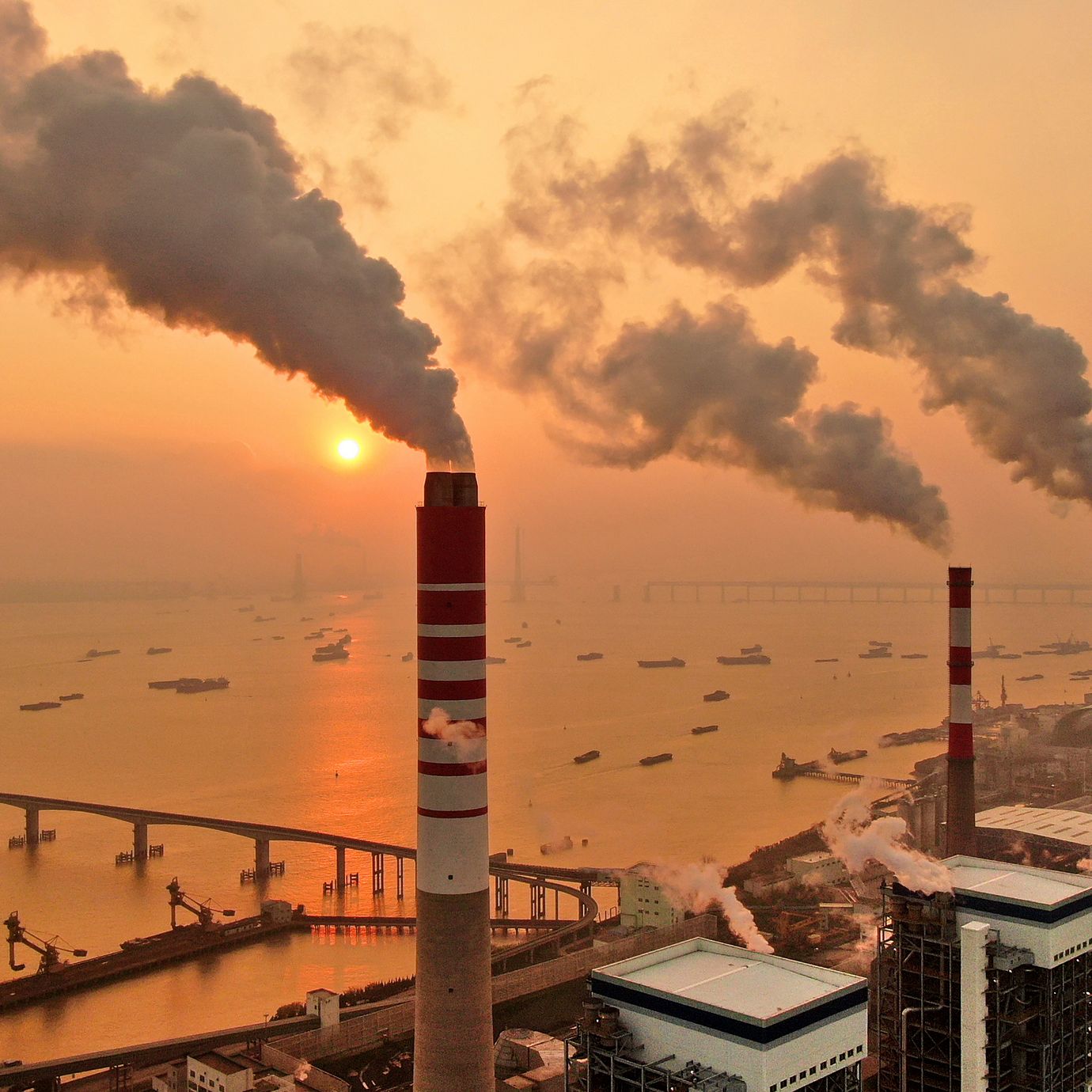
China alone accounts for more than half of the roughly 480 gigawatts of coal-plant capacity in construction or planning stages world-wide, according to data from Global Energy Monitor, a San Francisco-based nonprofit group—though not all those plants are expected to be completed.
In late July, China joined several other countries in G-20 meetings in Naples, Italy, in opposing plans to phase out coal use. China has defended the right of developing countries to continue using the fuel, since it is relatively cheap, abundant and easily transported.
China and India are building new coal-power capacity at a significantly slower pace than a few years ago. Some analysts say international and economic pressures could cause them to slow further.
China, India and Southeast Asia together account for nearly 90% of the world’s new coal-plant approvals. However, the countries’ investment in terms of gigawatt capacity was 80% less in 2020 than in 2015, according to International Energy Agency data.
“We are absolutely within sight of the last coal plant in the world reaching financial close” as Asia tightens funding, says Tim Buckley, director of energy finance studies for Australia and South Asia at the Institute for Energy Economics and Financial Analysis, a U.S.-based nonprofit dedicated to speeding the shift to green energy.
Consumption of coal, considered the dirtiest fossil fuel, will still be around for a long time. The developing world has an enormous fleet of existing coal-burning facilities that will use coal for decades to come.
“We are absolutely within sight of the last coal plant in the world reaching financial close”
Still, several factors are driving a reconsideration of new coal projects in development world-wide, around 35% of which are outside of China and India, according to GEM data.
The price of solar and other renewable energies has plummeted, while the cost of financing coal projects has risen. The amount of interest lenders charge beyond their cost of capital on loans for coal-fired power plants rose 63% in India and Southeast Asia during the past 10 years versus the previous decade, according to a recent study by researchers at the University of Oxford’s Sustainable Finance Programme.
Meanwhile, anticoal activism and international pressure have been building, especially for public financiers in Asia.
Public finance, which includes money from lenders such as the China Development Bank and JICA as well as state-owned enterprises like Kepco, is key to funding coal power in developing countries, accounting for as much as 65% in recent years, according to IEA estimates. Asian commercial banks are mostly unwilling to lend without help from state-backed financiers.
U.K. asset manager Legal & General Investment Management, with $1.8 trillion under management, sold its shares in ICBC and Kepco because it wasn’t satisfied with the companies’ approaches to coal. Japan’s Sumitomo Mitsui Trust Asset Management Co., with $750 billion under management, helped lead the push last year to pressure Kepco.
ICBC didn’t respond to a request for comment. Kepco said it decided to curb funding to coal plants abroad because of investor pressure and its own sustainable-business strategy.
Junichi Hanzawa, chief executive of MUFG’s banking unit, told The Wall Street Journal in March: “We’re hearing from stakeholders and other involved parties that they want us to strengthen” MUFG’s coal-lending policy. Two months later it closed some loopholes in a 2019 policy that halted new money for many coal-power projects and pledged to eliminate loans to greenhouse-gas emitters by 2050.
Investors note that MUFG—Asia’s No. 1 fossil-fuel lender, according to an annual ranking by a group of nongovernmental organizations—still has loopholes in its coal policy, including the ability to finance developers that could then use the money for projects on their own.
Still, MUFG and other Japanese lenders have been more receptive to investors and activists calling for changes since Japan’s government said late last year that it will eliminate carbon emissions by 2050, says Sachi Suzuki, an associate director at U.S. asset manager Federated Hermes Inc. That pledge was followed by a policy stating the government won’t support most new coal projects overseas.
All of Japan’s biggest banks now have similar no-new-coal pledges. Investors helped persuade JICA, a state-backed lender that has extended nearly $5 billion in loans for coal power since 2009, to exclude future coal projects from its bond proceeds starting in April.
“The world of 2021 is barely recognizable from five years ago when it comes to the degree and the intensity of finance campaigning”
JICA said it operates in line with Japanese government policy and declined to comment further.
“The world of 2021 is barely recognizable from five years ago when it comes to the degree and the intensity of finance campaigning and the results that are being got from it,” says Julien Vincent, founder of Market Forces, an Australia-based climate campaigner.
In China, which announced its own carbon-neutral goal last year, researchers are arguing that providing money for overseas coal power plants—for example through China’s Belt and Road development program—is no longer wise.
China’s embassy in Bangladesh told the country’s Ministry of Finance in February that it would “no longer consider projects with high pollution and high energy consumption, such as coal mining, coal-fired power stations, etc.,” according to a letter seen by the Journal.
China didn’t provide financing or investments to any Belt and Road Initiative coal projects in the first half of 2021, according to a study by the Beijing-based International Institute of Green Finance published last Tuesday. More than half of the $160 billion in coal-fired plants China announced as part of Belt and Road since 2014 have been canceled or shelved, another study by the institute found in June.
China is emphasizing “green” developments in its Belt and Road initiative, showing it is “a major global player in actively responding to climate change,” China’s Ministry of Foreign Affairs said in a statement.
Write to Phred Dvorak at phred.dvorak@wsj.com, Sha Hua at sha.hua@wsj.com and Frances Yoon at frances.yoon@wsj.com