Astra Zeneca, Airbus, Adobe – 40 lovande aktier för börsåret 2023

Barron’s experter lyfter fram 40 lovande investeringar för resten av året, däribland Astra Zeneca, Oracle, Adobe, Target, Siemens, Airbus och Biogen.
Medan AI-relaterade aktier har gått starkt sedan årsskiftet – och bidragit till att S&P 500 klättrat hela 19 procent – fokuserar panelisterna på mer bortglömda aktier och värdeinvesteringar.
”AI kan dominera investeringsvärlden inom en snar framtid. Men baserat på våra experter [...] skulle vi ändå inte blanka HI, mänsklig intelligens.”
 Barron's
40 Picks for the Rest of the Year, According to Barron’s Roundtable Pros
Our 10 Midyear Roundtable panelists see value in healthcare, industrial, media, and other stocks that the market has overlooked.
Wall Street finally found the magic bullet. Whisper “AI” in the same sentence as the name of a stock, and voilà! The shares head higher. Nvidia’s close association with artificial intelligence—it dominates the market for AI chips—has lifted its shares more than 200% this year, into the trillion-dollar market-capitalization club. Recursion Pharmaceuticals snagged a $50 million investment from Nvidia this past week to further AI-related drug discovery, and its shares shot up 90%. See how this works?
Seven AI-tinged megacap stocks have driven most of the S&P 500’s 19% gain in 2023, rescuing the index from last year’s miserable slump. But what of the rest of the market, and the human intelligence, or HI, that helps the best money managers find tomorrow’s winners? That’s what the Barron’s Roundtable has always been about.
The group also weighed in on the economic outlook, which some consider benign and others more dire
Our 10 Roundtable panelists—some growth-stock gurus, others value-investing nerds—love to hunt for overlooked stocks attached to companies with temporary problems, savvy management, and demonstrable growth potential, some of it even fueled by AI. In a recent round of phone calls, they identified 40 promising investments to consider now, including a batch of fixed-income funds that finally live up to their name.
The group also weighed in on the economic outlook, which some consider benign and others more dire. The wide range of opinions echoed those voiced on Jan. 9, when the group last met in person, in New York, with the editors of Barron’s. You’ll find their latest picks and prognostications in the edited conversations below.
AI might dominate the world of investing someday soon. But based on our experts’ judgment and generosity, we wouldn’t short HI just yet.

Abby Joseph Cohen
Barron’s: Abby, you were in the no-recession camp at the January Roundtable, a nonconsensus view. So far, so good. What is your forecast now?
Abby Joseph Cohen: My views on the economy haven’t changed much. I see inflation easing gradually and economic growth slowing in the U.S. and Europe but not skidding into a recession. I was pleased to see a pause in the Federal Reserve’s tightening last month. The Fed might well resume rate hikes, but we are much closer to the end of the cycle than not. The deficit is down, and jobs and wages are up. The last two are especially important because what typically extends an economic cycle in the U.S. is a healthy consumer.
I realize that things are slowing on the margin. There is a wall of worry out there, but that creates opportunity. Who is worried? Professional economists and investors. Consumers say they are worried, but they wouldn’t be spending so much money on travel and restaurants and Taylor Swift tickets if they were really scared. So far, the consensus has been wrong about a recession. At some point we’ll have a recession, but I don’t expect one in 2023 and most likely not in 2024, either.
Business sentiment is the area to watch most closely. Businesses are hiring; they wouldn’t be if they didn’t see opportunities to grow. Capital expenditures are also growing in the U.S., Europe, and Japan. Many businesses say they are investing in themselves because of legislation such as the Inflation Reduction Act, the CHIPS Act, and the infrastructure act. And the debt-ceiling discussions are now in abeyance for two years.
Given the stimulus you have described, how will the Fed get inflation back down to 2% annual growth?
I’m not sure 2% is such a reasonable target. As long as inflation is improving directionally, the Fed will have some breathing room. Also, core inflation has been distorted by things that happened during and after the Covid pandemic, especially in the housing and auto markets. It will take time to see stabilization in some of the data. We should remember that inflation has been a global, not a U.S.-specific, problem. Central bankers should be focused on the directional change.
So, what are you worried about today?
Is the Fed going to overdo it and raise rates by too much? I am also worried about ongoing worker shortages. The U.S. still has a reduced flow of immigrants; they were responsible for 60% of the growth in our labor force prepandemic, and not just in low-end jobs. Applications are down for specialty visas for highly trained people, and the processing is taking a long time.
I am also worried about trade skirmishes, and Chinese restrictions on exports of critical materials. China has restricted exports of gallium and germanium, but what if it imposes restrictions on lithium and graphite? The Inflation Reduction Act is aimed, in part, at enhancing U.S. supply, but it will take several years to improve our processing abilities. Europe also is trying to encourage companies to become more self-sufficient in these materials.
One more thing: I am concerned that the Supreme Court ruling on student-debt forgiveness will put a damper on consumption and household balance sheets.
Do you expect the stock market to remain strong through year end?
I expect the market to stay positive through the end of the year. The S&P 500 gained a lot in the first half, driven by a small number of large issues. We need to focus not just on what the index price level is doing, but what is happening beneath the surface. I see a broadening out of the market. Some sectors have become relatively undervalued. Whether they will produce dramatically positive results in the next six months, I can’t say. But investors should be looking for relatively undervalued companies with solid underlying fundamentals.
Time to share a few.
The financial-services sector looks undervalued. I recommend investing via an exchange-traded fund, the iShares S&P U.S. Banks ETF [ticker: BNKS.UK], which trades in London. Most U.S.-traded financial-services ETFs have a heavy weighting in things like credit-card companies, which have already performed well. This ETF is more bank-focused. JPMorgan Chase [JPM], Wells Fargo [WFC], and Citigroup [C] each account for 7% of the portfolio.
Many banks are trading at or a little over book value, and most pay good dividends. The iShares fund is managed by BlackRock Ireland and is relatively small, with about $400 million of assets. Investors looking for something easier to trade could opt for the Financial Select Sector SPDR [XLF], but it isn’t as concentrated in bank stocks, or iShares U.S. Financial Services [IYG].
Retail stocks also look undervalued. My selection is Target [TGT], which has been targeted, to use a bad pun, by some political activists who didn’t like some of the stores’ Pride Month displays. The stock has fallen 22% since mid-April and yields 3.3%. It is trading for about 16 times estimated earnings for the fiscal year ending January 2024. Return on equity is about 30%.
What is going right for Target?
The company has undergone an interesting transformation. Digital sales prepandemic were about 7%; now they are about 18%. Target has spent money to build up its digital platform. It is also adding stores in places that other retailers have vacated. People seem to want to shop in person again, and the price points are appealing.
Warner Bros. Discovery [WBD] is another unloved stock with opportunity. Discovery had what we will call an aspirational merger with WarnerMedia. But as people diversify their entertainment modes, what seems to matter most is content. Warner Bros. Discovery has made a bet on content. Both companies have great content, and they are figuring out what to do with it.
I also like that management admits mistakes. I was pleased that the company responded to customer complaints about personnel cuts atTurner Classic Movies, which fueled fears that TCM could be dropped. Current challenges include the writers’ strike and a possible actors’ strike. [The actors’ union announced a strike on July 13.] My recommendation reflects a bet that the merger will prove successful in coming years. Many people are focused on the cost savings. I am focused on the likelihood that the company will sort out how to successfully deliver all that content.
You must be a Turner Movie fan.
I’m not a big TV watcher, but I am a big Turner Movie fan.
My last pick is an industrial company. I recommended two Japanese industrials in January, Daikin Industries [6367.Japan] and Toyota Motor [7203.Japan], and still feel strongly about them. But investors now like Japan, and the market has been upwardly revalued. So I prefer Europe, where stocks haven’t moved much. The German economy is weakening. France has political turmoil, and the United Kingdom has been in a funk since Brexit. Also, Europe hasn’t gotten much attention from U.S. investors. My pick is Siemens [SIE.Germany], an engineering and manufacturing company.
Why Siemens?
Siemens has moved with the times in diversifying both its product lines and geography. The company is involved in electrification, automation, and digitization, among other things. It also makes medical devices. The dividend yield is substantial: 3.5% for the fiscal year ending in September, and an estimated 4% for fiscal 2024. The current yield is competitive with the yield on 10-year Treasuries.
The stock is trading for about 12 times earnings and two times book value. I’m looking for revenue growth of about 8% a year. Expenses are growing about 4% a year, which gives Siemens good profit margins. The company is spending on new product lines and to ensure that existing products stay competitive.
We spent a lot of time on stocks, but what other asset classes look undervalued now?
That is a relevant question, especially because the number of equities has shrunk. I see opportunities in real estate and real estate investment trusts, and in fixed income, which I haven’t recommended for the past 20 years. It is possible to put together a nice laddered portfolio of Treasury securities. There are also opportunities in investment-grade bonds. Many companies took on debt at low interest rates because they could. It was a good balance-sheet maneuver.
I am also interested in equity and fixed-income assets related to environmental, social, and governance priorities. The politics around ESG are difficult, but companies are moving forward on these issues. Investors are very much interested in the environmental piece.
Thank you, Abby.

Henry Ellenbogen
Barron’s: Henry, it’s been a great year for tech, but not much else. What does the second half hold for the economy and the market?
Henry Ellenbogen: As we discussed in January, we have transitioned from a period of abnormally low interest rates, or negative real rates, to a more sustainable period of positive rates. The stock market has also transitioned; investors today require a healthier balance between growth and profitability. At the same time, the market is reminding us that the world around us is constantly changing. The best example is its focus on generative AI, or artificial intelligence. As we transition to the next market cycle, investors need to own companies that both balance growth and profitability, and are on their front foot with regard to investing in the future.
There is a high likelihood that the market will end the year up, although the second half of the year probably won’t be as good as the first, and stocks could even be down. The rate of change in inflation has meaningfully improved in the past 12 months, and the Fed now has to focus on bringing it down closer to 2% to 3% a year. Also, the market still has to navigate a period of economic weakness stemming from the Fed’s restrictive rate policy. Once the Fed brings inflation down closer to 3%, that will set us up for more of a normal, cyclical economic recovery. The market should do well in that environment.
How should investors think about generative AI, which seems to have taken the world, and the markets, by storm?
I have seen three major technology transitions in the past 20 years: the web, mobile, and cloud computing. Generative AI reminds me of mobile, although it may be greater in its impact. Initially, the market focuses on the first-derivative plays—the pick-and-shovel companies that could become platform companies and that have emerged because of, or are strengthened by, the new technology. Eventually, as we saw with mobile, the technology’s impact spreads throughout the economy.
As mobile technology emerged and expanded, toll keepers such as cell-tower companies were advantaged. Later, mobile impacted the broader business world, sometimes in ways that weren’t obvious. Domino’s Pizza [DPZ], for example, consolidated its market share because it invested in mobile, which strengthened its value proposition for customers by enhancing convenience. Most regional pizza companies couldn’t do that. Thus, national players gained share.
With generative AI, the market initially has focused on picks-and-shovels players such as Nvidia and platform companies such as Microsoft [MSFT]. But AI has the potential to make all white-collar employees more productive by giving them a co-pilot or personal assistant. The question is, which businesses will actually benefit and gain efficiencies over competitors? As with mobile, people need to understand the technology and how it will affect the businesses in which they invest.
Let’s look at some companies you’re investing in.
J.B. Hunt Transport Services [JBHT] is a market leader in about 90% of its businesses. Intermodal transport is roughly half the business. The dedicated contract services business, or DCS, is 30%. A lot of bad news surrounds the core business. The market knows that sales of durables are weak, and have been since the second half of 2022. J.B. Hunt’s CEO has been clear that there is a freight recession.
With that said, this is a terrific franchise. Intermodal [moving freight by more than one mode of transport] saves customers money when they ship goods longer distances. It is 20% to 30% cheaper than truckload. J.B. Hunt is the market leader, and essentially invented the category. Recently it strengthened its partnership with Burlington Northern, the railroad company, which could distinguish it even further from competitors such as Hub Group [HUBG], Knight-Swift Transportation Holdings [KNX], and Schneider National [SNDR]. With this arrangement, we expect J.B. Hunt to improve its service speed, which should allow it to gain share and drive up profit margins.
Dedicated contracting is an even better business, and underrated by the market. It will distinguish itself by growing revenue and operating income in this downturn. This business manages fleets for smaller firms with roughly five to 20 trucks. It provides expertise and scale that smaller and midsize businesses don’t have. The business has 98% customer retention, and we estimate it is multiple times the size of any other company’s offering. We expect the dedicated contract business to perform well through this freight recession. J.B. Hunt will demonstrate that it is a less-cyclical, higher-growth business than the market appreciates.
J.B. Hunt has invested heavily in technology. This is fairly unique in an industry where most competitors can’t afford to do so. From a valuation standpoint, much of the bad news is priced into the stock, which is trading around $185, or for 23 times earnings. The company will earn around $8 a share this year, the bottom of the cycle; $10 a share in 2024; and compound from there as the economy recovers. This is a good time to buy an excellent company whose businesses have gotten more advantaged. We think the stock can trade at $200 to $220 over the next 12 months.
Yet, a wider recession may be coming. Isn’t that an issue?
Transports tend to anticipate the weakness in the market. That’s why, although the company has been operating well relative to its end markets, it has been a market underperformer in 2023.
My second name, Toast [TOST], is an early-stage growth company. It was one of the more than 400 companies that came public in 2021. Most of those initial public offerings haven’t fared well. Expectations were too high, and many of these companies needed to focus on developing a better balance between growth and profitability. Toast is a good example.
Why do we like it? It is emerging as the industry standard in restaurant point-of- sale and management systems. The market is much bigger than most people realize. We estimate the company’s end market, defined as small and midsize restaurants, has more than $600 billion in annual sales and grows faster than gross domestic product through economic cycles. Toast has an above-20% market share in its most mature markets, but nationwide its share is sub-10%.
The restaurant industry and its partners tend to set industry standards. For example, just two point-of-sale vendors managed to consolidate 65% of the market in the prior generation of restaurant technology. Fortunately for Toast, these two vendors have been market-share donors over the past decade because of their slow cloud transition and inability to keep pace with Toast’s business-model innovation—combining payments with software in one platform.
There are several reasons for industry standardization. There’s a lot of staff turnover in the restaurant industry, and restaurants want to hire people who know how the product works. Also, restaurants don’t have IT [information technology] departments. They rely on others. Toast spends nearly 10 times moreon research and development than its next-largest competitor. As with a lot of subscription businesses, the market doesn’t understand the underlying economics of the business model.
What are Toast’s economics?
As the sales force matures and network density hardens, Toast could exhibit meaningful profitability. Over the next three years, we expect Toast to compound recurring revenue by about 30%, while also demonstrating Ebitda [earnings before interest, taxes, depreciation, and amortization] margins above 20%. The stock is trading around $22, and could rise 50% to 75% from here. There is upside to this as Toast continues to sell restaurants additional capabilities, such as human-resources software and guest-management tools. For example, Toast Tables competes with OpenTable as a restaurant reservation system. We believe these modules add both duration and quality to the revenue growth.
The IPO market was effectively shut last year as the broad market sold off. What is the outlook now that stocks are reviving?
If markets stay positive, you will start to see the IPO market reopen. Typically, higher-quality companies come public at the beginning of a new IPO cycle, which is an opportunity for investors. Cava Group’s [CAVA] IPO in June was the starting gun. We know of a number of companies now working on public offerings.
By our math, from 2020 to 2021, 85 loss-making companies raised capital at valuations above $5 billion. Many will have a tough time becoming sustainable businesses. They were given too much money too early, and never learned how to build an internal culture around operational rigor. Also, the venture-capital business is chasing AI. Just because there is an opportunity doesn’t mean the risk/reward is good.
Thanks, Henry.

David Giroux
Barron’s:David, the S&P 500 reached your year-end target of 4300 about six months early. What is your outlook now?
David Giroux: The market was helped by the lack of a recession, resilient earnings, and excitement about AI, which turned the tide in terms of investor sentiment and valuations in the technology sector. The challenge now is that the market is trading for 19 times forward earnings, and valuations aren’t as attractive as they were. Now that everyone seems bullish, we are a bit more bearish. You’ll see that in our stock recommendations. Cyclicals and tech have had a big run. Now we prefer more-defensive sectors, such as healthcare and utilities. Those stocks have been left behind, but the relative valuations are attractive.
Is the market’s excitement about AI justified?
We are at the beginning stages of the AI revolution. Many people think about it in the context of internet search, but when we look back 10 years from now, that will have been an afterthought. AI is really about enhancing productivity. One of the best examples is the GitHub Copilot product that Microsoft is offering. It allows programmers to be 55% more productive. As AI gets better, that percentage will increase. The company probably won’t need as many programmers as it employs today. This will happen in many fields and create real savings for companies. AI also has the power to put downward pressure on labor and service costs.
Which stocks intrigue you today?
Biogen [BIIB] might be my favorite name right now. It is a new name for us. Depending on the company’s coming cost-cutting program, the net present value of the existing portfolio is probably $200 to $250 a share. The stock is $285. Biogen has two underappreciated blockbuster products with long patent lives.
We are excited about Leqembi, the company’s Alzheimer’s product, the first drug to show meaningful progress in safely slowing the rate of mental decline in patients. It effectively adds to the length and quality of life, and potentially could be given by injection. This could be a $15 billion to $20 billion category, with Leqembi garnering a 60%-plus market share. Biogen owns roughly 50% of the economics of the drug.
What the market is missing is the possibility that Leqembi and drugs like it could be used to treat patients before symptoms appear. That would make them mammoth products. Alzheimer’s patients typically accumulate plaque in the brain for 15 or 20 years before showing symptoms. But what if we could intervene earlier with a lower dose, to stop the disease from developing? Biogen and Eli Lilly [LLY] are testing this hypothesis on presymptomatic people; results will read out by 2027. The idea is that people would take a blood test when they turn 50 to determine the presence of amyloid plaque and then take maintenance doses of medication to prevent Alzheimer’s from developing. The science suggests this will work, but we don’t know yet.
What else is in Biogen’s pipeline?
Biogen has a mini-blockbuster in zuranolone for treatment of depression and postpartum depression. It owns 60% of the economics of the drug, which could be a multibillion-dollar product. Depression drugs tend to do better than initial expectations.
Biogen has a new management team, new board, and strong balance sheet, which should allow for more merger-and-acquisition activity. There is also the possibility of a takeover. There are multiple ways to win, and low downside risk. We have a two-year target of $420 per share, but the stock could be much higher over time.
Next, we like high-quality utilities. Valuations relative to the market are low versus the past 10 years. Our pick is Ameren [AEE]. It operates in Missouri and Illinois. The management team is exceptional, led by CEO Marty Lyons. The company has good regulatory relations, and it operates in a region in which renewables, especially wind energy, have compelling economics.
What is the earnings outlook?
We expect earnings to grow by 6% to 8% a year. The stock yields 3%. You’re probably getting faster growth than the market, with half the volatility. At about $83 a share, Ameren trades for less than 18 times next-12-month earnings. That is a 5% discount to the market’s price-to-earnings ratio, versus a historic premium of 15% to 17%. The stock could trade up to $100 in 18 months.
Ameren generates 23% of earnings from FERC [Federal Energy Regulatory Commission] transmission, which has favorable regulatory characteristics. In addition, the MISO [Midcontinent Independent System Operator] regional transmission system plans to spend up to $100 billion on incremental transmission projects between now and 2040. Ameren should be the largest beneficiary, which should lead to 7% to 8% organic growth.
Have you been buying other utility stocks?
Yes. The stocks are underperforming and we see good value.
I recommended Becton Dickinson [BDX] in the past and like it again, based on a portfolio transformation. The company has divested some of its low-growth businesses and is investing internally in faster-growth areas, such as the retail syringe business. Bolt-on acquisitions are adding to growth, including a larger bolt-on in the pharmacy automation space. Becton is on a journey from 5% organic growth five years ago to 7% growth in two to four years. It has better capital allocation and more margin-expansion potential, and faces less pricing-power and reimbursement pressure. The stock trades for 20 times earnings, and the multiple could expand to 23 to 25 over time.
Becton’s Alaris pump is coming back to the market, hopefully in 2024, after some quality issues. The company will add 60 to 80 cents a share to earnings in the near term as pump demand returns to 2019 levels, but we see a pump-sales supercycle in 2024-26. Industrywide, this could add $1 billion of incremental sales, and Becton controls more than two-thirds of the market. In calendar 2028, we see earnings of $20 a share. Apply a 25-times multiple, and you get a $500 stock, up from $260.
We love to buy high-quality companies trading at a discount to historical valuations due to short-term concerns. UnitedHealth Group [UNH] is one. It has promised 13% to 16% annual growth in earnings per share, and has consistently delivered within that target.
Rising costs have clocked the stock. How can the company turn things around?
Higher utilization is pressuring the company’s medical cost ratio. It could potentially lead to earnings being lower than expected. The good news is that UnitedHealth can reprice its business every year to account for rising utilization trends. The stock, which historically has traded at a 10% to 15% premium to the market, now is trading at a 5% discount, and the company is getting better over time. The fastest-growth, highest-multiple businesses within UNH will account for almost half of earnings in 2028, up from 23% in 2016. An improved business mix argues for a higher multiple over time.
How high?
The stock could trade for a 25% premium at some point in the future. And, while I am not making political projections, if the Republicans take back the White House in 2025, UNH and managed-care stocks generally could have significant upside.
My last pick is Intercontinental Exchange [ICE], the exchange, data-services, and mortgage-services company battling the Federal Trade Commission to acquire Black Knight [BKI]. If ICE prevails in court, as we expect, it will realize substantial cost synergies from the deal. Also, a resolution would reduce the uncertainty surrounding the stock since the deal was announced in May 2022. And the mortgage market is depressed and close to a bottom.
If the deal doesn’t go through, ICE will have a great balance sheet and buy back stock. We are rooting for the deal to succeed, and we own Black Knight shares, as well.
Assuming the deal closes, ICE will have $7.50 to $8 a share of earnings power in 2026 and should trade for at least 23 times earnings, although a sum-of-the-parts valuation would argue for a multiple of 25 to 26. A P/E of 23 would yield a $180 stock in 2½ years. If the deal falls through, the stock could trade around $160, up from $114 now.
Thank you, David.

Sonal Desai
Barron’s: Sonal, you’ve been right this year on the inflation and interest-rate outlook. What lies ahead?
Sonal Desai: The markets have come full circle in many ways. The yield on the 10-year Treasury is just about where it started the year, after falling sharply in March and April. I continue to expect the U.S. economy to show a healthy degree of resilience in the second half of the year. Consumer spending is well supported by continued pent-up demand. Household balance sheets are healthy. Yes, households are beginning to ramp up debt, but they are starting from a good point.
Fiscal policy remains rather loose, with significant fiscal deficits projected in coming years. The Congressional Budget Office is projecting deficits of more than 6% of GDP. The Fed has begun to reduce its balance sheet, but there is a massive monetary overhang from quantitative easing enacted during the Covid pandemic. The Fed has raised interest rates a lot, but higher rates still haven’t started to bite.
The Fed seems surprised by the economy’s resilience, too.
Perhaps it is a little surprised. The Fed has been caught wrong-footed by the stickiness of inflation, which is a result of the economy’s resilience. The Fed bought into its own rhetoric about how quickly inflation would come down, given the magnitude of its rate increases. That led to the tremendous rally we saw in the first few months of the year, but the Fed was wrong. Core inflation is still running around 4.6% and 5.3% on the PCE [personal-consumption expenditures price index] and CPI [consumer price index], respectively. That is well above the Fed’s 2% annual target. Bringing inflation down will take longer than markets think. There are fewer rate hikes ahead than behind us, but we will probably get a couple more rate hikes of 25 basis points each. [A basis point is 1/100th of a percentage point.]
In short, I remain out of sync with the view of some of my Roundtable co-panelists at the start of the year. I see interest rates staying elevated for longer. And, when the Fed starts cutting rates, which might happen in 2024, it probably isn’t going to cut as much as markets expect.
I disagree with the Fed’s own projections about where the longer-term federal-funds rate will be. The Federal Open Market Committee’s median projection is 2.5%, but that understates the appropriate equilibrium rate, or neutral rate, given current inflation levels. I project that the equilibrium rate will get closer to 3.5% to 4%, resembling the long-term average before the financial crisis of 2008-09. The interest rates we saw post-financial crisis, prepandemic, were the anomaly, not the rates we are going to see from here onward.
What are the implications for investors?
I expect to see a 10-year Treasury yield of at least 4% to 4.25%. It is an excellent time to be looking to slowly scale and add duration to your fixed-income portfolio. At the start of the year, we had much shorter duration. We have brought our duration to relatively neutral, and will be looking to add duration in the months ahead. Fixed-income investors are getting income at the very short end of the Treasury curve, which is attractive. As we move into the second half of the year, it will be time to start locking in yields on the longer end.
I still like my January picks, and will stick with them because markets have come full circle. There were a number of surprises in the year’s first half, from bank failures to the poor performance of China’s economy after its post-Covid reopening. The second half doesn’t look so bad. Regarding my pick of Franklin High Yield Tax-Free Income [FHYVX], I continue to favor high-yield municipal bonds. Spreads haven’t compressed as much as I anticipate they will, fundamentals remain solid, and technical conditions have improved substantially. Franklin Income [FRIAX] continues to allocate to fixed income at its highest level in years; it is currently around 60% of total assets. The fund is focused on high-quality bonds, while also taking advantage of the attractive yields offered on U.S. Treasuries and high-yield corporates.
Risk sentiment has improved in the second quarter in investment-grade credit, and at the shorter end of duration, investors are still being paid to hold high-quality, more-liquid segments. Short-maturity bonds are yielding around 5.5% to 6.0%. That’s my iShares 1-5 Year Investment Grade Corporate Bond [IGSB] pick. The SEI Intermediate Duration Credit fund [SIDCX] has an SEC yield above 5%.
Your emerging market debt recommendation, Eaton Vance Emerging Markets Debt Opportunities [EADOX], did well in the first half. What now?
I remain constructive on emerging market debt, as these economies are at or near the end of their tightening cycles. High-yield emerging market sovereigns look particularly attractive. This strategy is positioned to take advantage of attractive valuations, and it has an excellent track record of success in navigating volatile markets.
Real estate continues to provide higher levels of current income than other investment vehicles, and should be more protected from interest rate uncertainty and elevated inflation. My January pick, which I’m reiterating, Clarion Partners Real Estate Income [CPREX], was launched in 2019 and has the benefit of being constructed in a post-Covid environment. The portfolio has a 98% occupancy rate and no exposure to the hardest-hit areas, such as downtown trophy office buildings in traditional commercial real estate centers.
TIPS [Treasury inflation-protected securities], which I recommended out to five years, will see slow and steady outperformance, as expectations being priced into markets continue to underestimate the persistence or stickiness of U.S. inflation.
Any thoughts on the stock market?
Equity investors seem to be coming to the realization that the sky isn’t falling. The arrival of the most-anticipated recession has been pushed out repeatedly. There is still the hope, in some parts of the market, that if things get wobbly, the Fed will step in and provide liquidity. I’m not sure that will happen. It wouldn’t surprise me if those predicting equity returns of 5% to 6% this year turn out to be right.
What aren’t investors thinking about that they should focus on?
One thing is the seriously stubborn inflation in the U.K. What will happen if more countries go that way? I expect inflation to be stubborn, especially at the core level this year, but consumer inflation in the U.K. is running around 7.9% annualized. If even the rate hikes to date won’t be enough to bring down inflation, do we need a significant recession? That isn’t my baseline forecast, but we should think about whether the U.K. is the canary in the coal mine.
Thank you, Sonal.

William Priest
Barron’s: The market was off to the races this year. What now, Bill?
William Priest: It was an amazing first six months, like nothing we’ve ever seen. Let’s look at the nature of this year’s rally. The capitalization-weighted S&P 500 was up about 17%through June 30. The equal-weighted S&P index rose only about 7%. Normally, when the market is up a lot, a large percentage of stocks are up as well. I’m looking at a table we prepared that shows the percentage of stocks in the S&P 500 that drove most of the returns in the “up” years of 2017, 2019, 2020, 2021, and 2023. In 2017, 203 stocks, or 40% of index components, drove those returns. In 2019, it was 65%, and in 2021, 52%. In this year’s first half it was only seven stocks, or just over 1%, all tied to generative AI, that drove 80% of index returns. That’s extraordinary.
The back half of the year is fraught with peril, from a geopolitical perspective. We don’t know how the war in Ukraine is going to end. We have a strange relationship with China, and our own political system is in disarray. I expect global growth to slow. Will we have a recession? I doubt it, but growth will be sluggish. The Federal Reserve, European Central Bank, and Bank of England have all signaled more interest-rate hikes in coming months. They will be modest, but rates will be rising. The employment situation could weaken a little.
Has the stock market made its high for the year?
Perhaps. You might see the equal-weighted index rise in the second half of the year, but the cap-weighted S&P 500 will likely be flat or down.
Airbus [AIR.France] is one name we like. I recommended the stock in January, and we see more upside. Airbus is one of the world’s largest aerospace/defense companies, with 2023 estimated sales of 64 billion euros [$71.3 billion]. Its civil business is the largest global supplier of airplanes. It is also Europe’s second-largest defense company, and a major player in the space and helicopter markets.
As travel returns to a prepandemic trajectory, and as Airbus resolves some supply issues, it should benefit strongly from a ramp-up in production. The company has a backlog of roughly 7,300 units, which is substantial.
On the defense side, geopolitical developments have increased demand for Airbus products and services. The stock is trading for about €130. Future cash flow is worth about €145. We expect Airbus to generate earnings per share of €5.50 this year, €7 in 2024, and €8.50 in 2025.
How about a new name?
Arista Networks [ANET] is the leader in cloud data-center networking. It partners with Microsoft and Meta Platforms [META], and has been gaining share from Cisco Systems [CSCO] and Juniper Networks [JNPR]. Arista is well positioned to benefit from the growth of hyperscale capital spending. You will see an explosion of data-center spending with the growth of AI. We expect a big upgrade cycle, reflecting Moore’s Law, writ large. The shift to edge computing requires smaller edge data centers to be connected together. That will benefit Arista. Free cash flow could grow from roughly $6 a share this year to $10 in 2025. We value that at 25 times, which yields a $250 stock price down the road. We have bought and sold Arista over time. Recently, we bought it again.
My next name is AstraZeneca [AZN], the biopharma company. The stock is around $72. AstraZeneca develops oncology, cardiovascular, renal, and metabolism treatments. It is less involved with immunology and rare diseases. The pipeline is packed with novel molecular entities, next-generation platform therapies, targeted drugs, and other modalities. We expect the company’s market share to increase. Its antibody-drug conjugate, datopotamab deruxtecan, is being tested for treatment of non-small-cell lung cancers and other tumors, and could be a big winner.
We expect AstraZeneca to generate earnings of $4.20 a share in 2023, $4.85 in ’24, and $5.50 in ’25. The shares are worth $90 or so, giving us about 25% upside from current prices.
Healthcare stocks have performed poorly this year. What could change that?
Healthcare often is viewed as a defensive sector. While the stocks have disappointed this year, the combination of demographics and medical needs suggests healthcare companies should have above-average unit growth rates longer term. Eli Lilly and Novo Nordisk [NVO] have already seen big wins with diabetes drugs, which also help with weight loss. As long as a healthcare company can show unit growth, it will probably do OK.
My next name, BNP Paribas [BNP.France], is more controversial. BNP is a global financial institution based in France. It is among the largest banks in Europe.It has delivered consistent cash flow and grown tangible book value per share over many years, after distributing dividends.And it has done that despite unfavorable market conditions, both macroeconomic and political. The company sold its retail and commercial operations in2022. In hindsight, it couldn’t have picked a better time to sell its U.S. business, Bank of the West.It got a high valuation, and intends to deploy the capital into more growth-oriented businesses after returning additional money to shareholders through dividends. BNP has gained market share in Europe.
What is the earnings outlook?
We expect BNP to generate earnings of €8.50 a share this year, €9.50 next year, and €10.50 in 2025. Book value could rise from €79 a share at the end of 2022 to more than €100 by 2025. The stock yields 7%.
I have recommended ON Semiconductor [ON] previously. It provides power and sensor solutions to both automotive and industrial companies. It has undergone a transformation under new management and gotten rid of its commodity products. ON has a strong market position in silicon carbide, a key component in electric vehicles. While silicon carbide start-up costs are currently hurting gross margins, a reduction in start-up costs will become a tailwind at some point, probably in 2024. Free cash flow is roughly $3 a share today. It could more than double, to $7, by 2025, and climb to $11 in 2027. At 20 times earnings, we could have a $140 stock, compared with today’s price of about $92.
Thank you, Bill.

Scott Black
Barron’s: Scott, what does your crystal ball show for the rest of this year?
Scott Black: Even though the Federal Reserve was late to the party in raising interest rates, they have done a pretty good job, and they aren’t finished. Inflation is running at 4% based on the consumer price index, and 4.4% based on the personal consumption expenditures price index. That’s too high relative to the Fed’s 2% target. The Fed’s pause was fine, but I still expect one or two more interest-rate hikes this year. I don’t expect a recession because unemployment remains remarkably low, at 3.7%. As long as people are working, they have money to spend. I see modest economic growth of 1% to 1.3% for this year, and probably next year as well.
Does that bode well for the market?
Investors are much too bullish. Analysts are estimating S&P 500 operating earnings of $218.22 for the year, up 10.8%. That isn’t feasible. If nominal GDP is 6%, or 1% real growth and 4% or 5% inflation, it is hard to see how earnings can grow by 10.8%. Operating profit margins peaked in the second quarter of 2021 at 13.54%. They are down 190 basis points since then, and I don’t see a big recovery.
I create my own earnings models, and I get somewhere between $210 and $212 in S&P 500 earnings for this year. Let’s use $212. Based on a recent close of 4381.85, the market is trading for 20.7 times earnings. It is way overpriced relative to the economy and corporate earnings. The same can be said of the Nasdaq Composite, which is selling for 31.5 times earnings. The Russell 2000 is at 29.6 times earnings. I don’t see the market going up unless it continues to be liquidity driven.
Yesterday [June 22], Apple [AAPL], Microsoft, Amazon.com [AMZN], Alphabet [GOOGL], and Nvidia had a 46.9% weighting in the Nasdaq and a 24.2% weighting in the S&P 500. Apple has risen 44% this year, but its earnings are expected to fall 2% for the fiscal year ending in September. Microsoft is selling for 35 times earnings. It is expected to have 6% top-line growth and 5% earnings growth. Nvidia is up 194%, but its growth this year has been terrific. The market’s gains aren’t broad-based. The Russell 1000 Value index is up 2.9%, and the Russell 2000 Value index is flat.
Will the rest of the market catch up with the winners?
I don’t think so. The gains in the Russell 1000 Growth index compounded at 14.5% annually over the past five years. The Russell 2000 Value index compounded at 2.6%, and the Russell 2500 Value index, at 4.4%. The money has gone into the large-cap names. There has been a lot of speculation in the market’s largest stocks, and it has become self-fulfilling. I can’t tell you whether the market will end the year up or down—only that purely on valuation, it is way ahead of itself. Artificial intelligence is the flavor of the month. That has tangentially benefited some of our stocks, such as Jabil [JBL].
What do you like now?
Eagle Materials [EXP] is based in Dallas. It makes cement, concrete and aggregates, gypsum, and wallboard. The stock closed yesterday at $173.95. The company has 35.4 million shares and a market cap of $6.15 billion. It pays an annual dividend of a dollar a share, for a yield of 0.6%. Revenue will be about $2.2 billion in the fiscal year ending March 2024, with 50% from infrastructure, 25% from nonresidential construction, and 25% from residential construction. Eagle’s chief markets are in California, Texas, and the Midwest.
I have modeled fiscal 2024earnings per share of $13.45, up about 8% from last year’s $12.46. That implies a P/E multiple at about 13. Pro forma return on equity is about 34.6%. The company has a triple-B credit rating. Its net debt to equity ratio is 0.9 times, but it generates a lot of cash. Free cash flow totaled $432 million in the fiscal year ended March 31 on $461 million of net income. The prior year, it generated $443 million in free cash on $374 million in net income. Eagle is a money machine. Revenue and earnings have grown in every quarter since the third quarter of 2019.
What is driving that growth?
There is a limited supply of cement in the U.S. About 100 million tons are produced a year, and no new cement plant has been permitted for more than 20 years. Demand last year was about 121 million tons, so importers from places like Mexico and Asia supplied the balance. The company has the wind at its back with the infrastructure bill.
In the latest fiscal year, cement accounted for about 43% of revenue and 36% of operating profit. Concrete and aggregates were 11% of revenue and 8% of operating profit. Gypsum was 41% of revenue and 52% of operating profit. Paperboard is just a small part of the business.
You really can’t forecast cement prices year to year. They were up 9.4% year over year in the first quarter. Eagle operates eight major plants, which produced about 7.33 million tons of cement last year. The company is sensitive to prices; a change of $10 per ton translates into a $1.57-a-share change in earnings, after taxes.
Eagle management is good at capital allocation. The company just bought a distribution center in Stockton, Calif., and added capacity. It claims to be one of the industry’s low-cost producers. The company bought back about 30% of its float in the past five years. Two-thirds of its debt is fixed-rate, at 2.5%. It has more than 50 years of aggregate reserves, so it isn’t going to run short on aggregates to make concrete or cement.
What are the risks?
The main risk is a major recession in both residential and commercial construction. There isn’t any risk in infrastructure, which is in terrible condition all over the U.S. and needs to be repaired. Vulcan Materials [VMC] has a similar business and sells for 28 times earnings. Martin Marietta Materials [MLM], which has a higher growth rate, sells for 27.5 times earnings. Artificial intelligence can do a lot of things, but it can’t provide cement and steel girders.
Good point. What is your next pick?
Ituran Location & Control [ITRN] is based in a suburb of Tel Aviv. It is run by two brothers who own about 20% of the company. Ituran specializes in telematic services. The biggest portion of its business is stolen-vehicle recovery. The company inserts a GPS device into cars; if they are stolen, they can be tracked down. Ituran also manages corporate and trucking-company fleets, and runs an app-based car service.
The company has 2.11 million subscribers worldwide, and 75% of annual subscriber revenue is recurring. In this year’s first quarter, the company added 49,000 subs. Last year, it added 191,000. The biggest market is Israel, with 738,000 customers. Brazil is second, with 558,000. Ituran also is in Argentina and Mexico, and this year is going into India, which has 250 million registered vehicles. Its customers are rental-car companies and auto makers, and it works with auto insurers. It doesn’t cost the company much money to expand in a given market. The variable cost structure is attractive.
Give us the numbers, please.
The stock is about $24 a share, and the market cap is $487 million. The dividend yield is 2.5%. The company has $1.20 a share in net cash. We expect revenue to rise by 10% this year, to $322 million. Gross profit margins were about 47% last year, and Ituran is on a profit-margin improvement program. Assuming profit margins of 47.2%, we get pretax earnings of $66.8 million. Assuming margins of 47.5%, earnings could be $67.8 million. Using the midpoint of that range, we get earnings of $2.40 a share, which yields a price/earnings multiple of 10. Back out the cash, and the P/E is 9.5. Prospective return on equity this year will be about 31%.
This is another money machine. In 2022, Ituran generated $18.6 million in free cash on $39 million of net income. The business is growing, and there is good demand for the technology.
Also, there is a hidden asset. Ituran owns 17.2% of a private company, Bringg. It’s a last-mile delivery service operating in the U.S., Europe, and Israel. The investment is carried on the books at $700,000. In its latest fundraising round, Bringg was valued at about $1 billion, so the Bringg stake totals about $170 million in hidden value, or $6.44 a share, fully taxed.
Thank you, Scott.
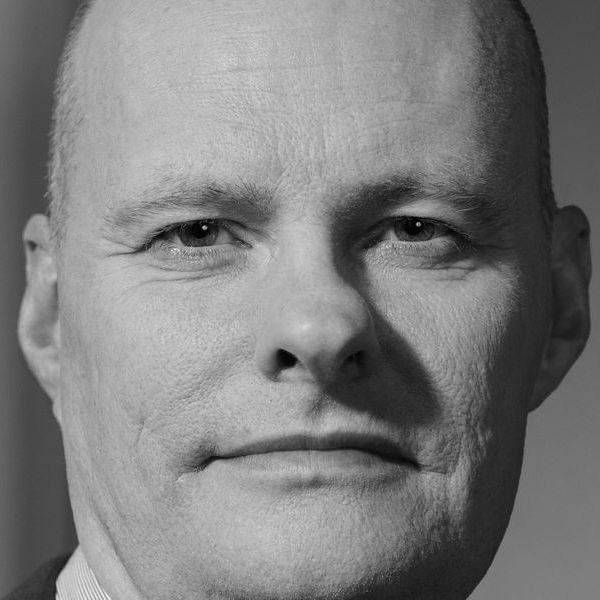
Todd Ahlsten
Barron’s: How is the market treating you, Todd?
Todd Ahlsten: It was a great first half. We continue to like all the stocks we discussed at the January Roundtable: Deere [DE], Salesforce [CRM], Applied Materials [AMAT], Ball [BALL], Sherwin-Williams [SHW], and Sysco [SYY]. In January, we had a 4300 year-end price target for the S&P 500. The market was trading for around 17 times earnings. We saw a 60%-plus chance of a soft economic landing and thought inflation would come down.
Now that the S&P 500 has surpassed your target, do you plan to raise it—or sell?
We’ve adjusted some stock-price targets upward. There are still great opportunities in individual stocks. Overall, the market could have a flatter second half. Could the S&P 500 end the year around 4400? It’s possible. Interest rates have gone up, and it seems they will be higher for longer. The impact of higher rates occurs with a lag.
There is a decent chance the economy will have a shallow recession in the fourth quarter, or maybe a somewhat harder landing than we expected earlier this year. There are a number of reasons for that. The Fed is still pulling liquidity from the financial system. Also, rates have moved higher on the front end of the yield curve. And regional banks could face more challenges. As for offsets, the government is still spending a lot of money, and the consumer is relatively strong. We still think the Fed could cut interest rates in 2024, potentially by 200 basis points or more. Long term, we are bullish. There is great innovation in this country.
What are you buying now?
I have three recommendations, all companies with durable franchises and sufficient cash flow to weather economic headwinds. They are innovating, and have good valuation support.
Oracle [ORCL] had a good first half, but a rerating upward is beginning. The stock is trading for $118, or 21 times earnings, and our three-year price target is $153, implying a multiple of about 22 times free cash flow per share. Some people think of Oracle as a legacy database business.
We see a trifecta of growth drivers. First is the steady transition of customers from on-premises software licenses to cloud-delivered software as a service, or SaaS. Second, Oracle Cloud Infrastructure, or OCI, is doing well. Third, Oracle still has a stable cash-generating database business. All three drivers can accelerate top-line growth frommid-single digits to high-single or low-double digits in the next three years. Plus, margins could expand from, say, 42% to 45% in that time.
We love narratives at Parnassus. The narrative here is that Oracle is where Microsoft was in the mid-2010s. The view then was that Microsoft Office was old, the legacy Windows business wasn’t growing, and the company didn’t have many growth drivers.
Wrong!
Exactly. Customers transitioned from on-premises to SaaS Office 365. The nascent Azure cloud business grew like a weed, and the Windows business—a cash cow—continued to grow. At Oracle, the good times are just beginning. Management has been investing in the business, paying dividends, and buying back stock.
Is there room in the market for more big cloud competitors?
Yes. Oracle has designed its Gen 2 public cloud in a unique way. It runs AI workloads efficiently. It can be deployed on a smaller scale and is more modularthan competitors.That allows Oracle to deploy capital more efficiently. The company was a bit late to the game, so it learned from some of the mistakes made by first movers.
Oracle is a good way to invest in AI but still have durable cash flow. It is relatively recession-resistant.
What is your next pick?
Adobe [ADBE] had a good first half, but the party is just beginning. The stock trades for $489 a share. Our three-year price target is $800 a share, or 28 times fiscal 2027 estimated earnings. Our ’26 revenue target is about $29.8 billion, $3 billion above consensus estimates.
Adobe offers one of the best opportunities to own an AI-driven monetization story at an attractive valuation. The monetization of Adobe Firefly generative AI across the company’s products, coupled with a secular recovery in demand for the company’s Digital Experienceproducts, could drive revenue acceleration on the order of $1 billion a year within three years. Adobe has a massive installed base of users; it is estimated that over 700 million people use the Adobe suite of products worldwide. Its moat is expanding.
Growth in Adobe’s Digital Media business has slowed to 12% in the past year. It can reaccelerate to a mid-to-high-teens rate as the company begins to price its AI products and feature set. Adobe trades at the same valuation as Microsoft, but can grow faster. Microsoft has to plow about 13% of annual revenue back into the business, whereas Adobe spends 2% to 3% of sales on capex.
Why is your revenue target so far above the consensus?
Consensus numbers don’t fully reflect that there has been a recession in IT spending. Adobe’s top line reflects that, but we see a cyclical recovery in its Digital Experience business into 2024 and beyond. Also, the consensus view on the Digital Media business doesn’t fully reflect the rolling out of the company’s generative AI products across a massive swath of the installed base. Each monetization layer—new products, higher price, and better free-to-paid conversions—could generate an added $1 billion in revenue. We see revenue growing in the midteens annually, and earnings and cash flow growing at a high-teens rate.
My third idea will let you sleep well: CME Group [CME]. It’s the largest futures-exchange company. People trade interest-rate futures, equities, metals, all sorts of things on its exchanges. CME trades for 21 times earnings, its lowest price/earnings multiple in a decade. A year ago, the multiple was 26 times. Eighty percent of its revenue is tied to transactions. CME makes a lot of money when volatility is high, and there is going to be a lot of volatility ahead, especially in interest rates. Trading in interest-rate futures contributed roughly 35% of revenue in the first quarter.
What is the stock price, and your target price?
CME is trading for $179. Our three-year target is $230 a share. The company pays a quarterly dividend and an annual variable dividend. Last year, CME paid out $8.50 in total dividends, for a nearly 5% yield. CME has a 14% annual internal rate of return, and we expect it to earn about $10 a share in three years.
CME is getting 5% price growth because the exchange business is a duopoly. I recommended Intercontinental Exchange [ICE] a year ago, and its multiple expanded from 17 to 20. CME’s multiple has fallen from 26, which makes the stock relatively more attractive, although we still like ICE. CME is growing internationally; around 60% of its sales team is international. The company also is investing in new futures contracts. It has little net debt and generates tons of cash.
Hopefully, all these stocks will work in the year’s second half, but they could also work over a much longer period. I’m a fan of innovation tethered to reality, and appealing valuations.
Likewise, and thank you, Todd.

Rupal J Bhansali
Barron’s: Rupal, you’ve been bearish on the economy and the markets. Are you still?
Rupal J. Bhansali: It is a myth to think the Fed is done. It has a lot of wood left to chop, not only in bringing down inflation but inflation expectations, and reducing its balance sheet without inducing a hard landing or causing a major dislocation in markets. We have already witnessed some of the fallout from rapid interest-rate increases in the U.S. regional-banking sector, with shareholders of some supposedly strong banking companies, such as SVB Financial, wiped out. Don’t forget that the banks that failed were stock market darlings sporting high growth and high returns on equity, until they didn’t. Investors failed to appreciate the risks taken to generate those growth rates and returns. Assessing risks is key to making money and avoiding losses, but investors invariably focus on what can go right and fail to consider what can go wrong.
Investors lost 24% in the first half of 2023 in funds tracking the KBW Nasdaq Regional Banking index, and the next shoe to drop is the broader equity market, where risk appears mispriced. The U.S. 10-year Treasury yield is approaching 4%, and equity risk premiums should be at least 300 basis points above that to compensate for higher risk. This implies a 7% earnings yield on the S&P 500, or a price/earnings multiple of 14.28 times.
Why hasn’t the stock market rolled over yet?
The U.S. consumer has been incredibly strong, on the back of another fiscal stimulus package that we got in the form of the Inflation Reduction Act. As that stimulus wears off and consumer confidence starts to decline, and as Covid-era savings run down, that’s when we will see a recession. It has been delayed, not denied. I expect to see a recession in 2024, but can’t rule out its arrival toward the end of 2023. The stock market has held up because there is no sign of a recession yet.
A recession typically causes corporate earnings to decline by double digits. So if S&P 500 earnings were to fall from consensus expectations of, say, $220 to $200, then applying a P/E of 14.28 gets us to an index level of 2856. Investors can’t conceive of such low multiples and index levels because we haven’t had such high interest rates in more than a decade, but the math is straightforward. I remain bearish on U.S. markets, especially growth stocks, where all that glitters isn’t gold. The 29% increase year to date in the Russell 1000 Growth index seems overdone.
Given that backdrop, where are you shopping now?
Value offers opportunity, but mostly in international and emerging markets. Brazil is especially attractive as real rates are positive, meaning interest rates exceed inflation, so there is scope to lower rates by several hundred basis points.
I would own Itaú Unibanco Holding [ITUB], a dominant and diversified Brazilian banking franchise transforming itself under a new, young CEO appointed in February 2021 to implement what is called iVarejo 2030—a digital and cultural change initiative to lower costs, accelerate product rollouts, and improve customer experience. Despite Itaú’s proven track record in risk management through political and economic cycles, the stock trades at a reasonable eight times 2023 expected earnings and has a 5% dividend yield.
I am also looking for stocks that are both recession resilient and offer secular growth. Michelin [ML. France], the French tire company, comes to mind. The global preference for SUVs, which require larger rim-size tires, and the accelerating transition to electric vehicles are beneficial to Michelin in terms of the product-mix shift, as these tire segments offer higher profit margins.
Michelin is also a vicarious play on the global commodity boom, as it sells higher-margin tires to that end market and demand has been robust. Despite the solid outlook, the stock trades at a lowly nine times this year’s expected earnings and offers a 4.6% dividend yield.
Any updates on your January stock picks?
I continue to like all the names I recommended at the start of the year, including Telefónica Brasil [VIV] and TIM [TIMB]. But my thesis on Admiral Group [AMIGY] might take longer to work out, as auto claims remain high and the earnings recovery gets pushed out into 2024.
GSK [GSK] also remains attractive. It sells for an unwarranted discount due to the overhang of class-action lawsuits on its antacid drug, Zantac. We estimate the potential liability to be far lower than what the stock has priced in, and as this view plays out over the next few quarters as trial-settlement data emerge, we expect the stock to rerate.
Thanks for the update, Rupal.

Mario Gabelli
Barron’s: How does the world look to you, Mario?
Mario Gabelli: The International Monetary Fund projects that the global economy will reach $110 trillion next year. The U.S. is 25% of that. China is about 20%, and Europe is 17%. Japan’s percentage is 4.1%. In the U.S., the consumer accounts for 70% of the economy. The American consumer is doing OK. Consumers had more than $17 trillion of debt as of the end of March.
There is pent-up demand on the consumer side of the economy, including huge pent-up demand for automobiles. On the industrial side, production is rising, but inventories are still being worked down. There is also pent-up demand for housing. The Inflation Reduction Act, the Infrastructure Investment and Jobs Act, the CHIPS Act, and other legislation all provide support for the industrial sector. I expect the economy to muddle along.
Federal Reserve Chairman Jerome Powell continues to have four Rs on his agenda. He has to raise rates, which we expect to happen again at the Fed’s July meeting. He has to reduce aggregate demand, which is tough while fiscal policy is stoking it. He is running off the holdings on the Fed’s balance sheet, at the rate of $95 billion a month. And then he has to use rhetoric. He keeps saying longer, longer, longer, meaning interest rates will stay higher for longer.
Yet, investors refuse to believe him.
Yeah, well, they will. I anticipated the stock market would be stronger in the fourth quarter than in the first half of the year, but it was stronger in the second quarter. People got excited about certain technologies. The S&P 500 could fall back to 4000 in the second half of the year. That means a 10% drop, which is nothing. We have to keep an eye out for any challenges in private credit and shadow banking, and miscalculations that drive companies into bankruptcy.
Federal Trade Commission Chair Lina Khan is doing everything possible to put a chill on deals. But they are still getting announced. Financial restructuring is alive and well. In fact, there is a bidding war for one of my companies, Circor International [CIR]. The stock has nearly doubled in 30 days. That keeps appetites whetted.
I expect the Chinese economy to surprise on the upside, which will help the global economy. Everyone is aware of the debt problems in China. Chinese leader Xi Jinping has a lot of concerns: the war in Ukraine, common prosperity, currency issues, children. He’s going to be a busy guy. But the Chinese economy is likely to get some extra juice.
Let’s talk stocks. What do you like these days?
What month is it? We’re in the baseball season.
No, not Liberty Braves Group [BATRA] again!
On July 18, Liberty Media will complete the split-off of the Atlanta Braves. Liberty Braves Group will change from a tracking stock to a C corporation, and I believe it is being prepared for a sale. Liberty Braveshas62 million shares outstanding and the stock is trading for $40. The market cap is $2.4 billion. Every day, someone is trying to buy a sports franchise. There is a lot of money chasing teams. People talk about crypto’s supply being limited. They should consider the limited supply of professional sports teams.
The Atlanta Braves are No. 1 in their division. A recent minority-stake sale valued the Phillies at $2.8 billion. The Angels reportedly received bids of $3 billion earlier this year. At that valuation, taking into account the Liberty Braves’ ownership of the Battery real estate development surrounding its ballpark, you get $50 a share for the stock.
So, it is finally batter up for Liberty Braves. What else intrigues you?
Agriculture. I like Deere and its precision-agriculture innovations, but my current pick is CNH Industrial [CNHI], formerly Case New Holland. The stock is trading around $14, and there are 1.3 billion shares outstanding. Exor [EXO.Netherlands], the Agnelli family holding company, still owns 27% of the shares and 42% of the vote. Farmers’ cash receipts will be down to $520 million from $559 million, but on balance, U.S. farmers are doing well, which is good news for agricultural-equipment companies like CNHI. The company could earn $1.80 a share next year, and trade for $20 a share.
Moving on to aerospace, there is tremendous demand for equipment. That was highlighted at the Paris Air Show, and is evident from the demand for travel. We calculate that the current commercial aircraft fleet is around 22,230 planes. These are Boeing [BA] and Airbus products; I’m not including Chinese aircraft. About 16,000 to 17,000 planes will be retired in 20 years. We see a need to build somewhere around 40,000 new planes over the next 20 years, with production ramping up over the next two years. That is a significant tailwind for commercial aviation suppliers, including two I have recommended before: Textron [TXT] and Crane [CR].
Give us an update.
Textron trades for about $68 a share. There are 202 million shares outstanding, and the company has about $1.75 billion of net debt. Next year it could earn close to $6 a share if it doesn’t do any financial engineering [spinoffs or deals]. The company makes, among others, the Citation Latitude and Longitude, two business jets, and owns Bell, which makes commercial and military aircraft. Bell was awarded the contract for the replacement of the Black Hawk helicopter. It’s a good company, with good management and a decent balance sheet.
Crane is trading for $88 and has 56.7 million shares outstanding. The company has nominal debt, and could earn $4.25 a share next year. Earnings are growing nicely. Crane spun off Crane NXT [CXT], its payment and merchandising technologies business, on April 3. That stock is trading in the mid-$50s. I recommended Crane in January at $104 a share. Today the combined companies are worth almost 40% more.I continue to recommend Crane, which is well managed.
Sticking with As, I’ll talk about autos. I’m recommending Genuine Parts [GPC]. The stock is trading for $165. There are 140 million shares, and the company has about $2.7 billion of net debt. It pays a $3.80 dividend, for a current return of 2.3%. Genuine Parts could earn close to $10 a share next year on $24 billion of revenue. It is trading for 16 times estimated earnings and is well managed. The company is in the automotive replacement market and industrial distribution, selling replacement parts across multiple end markets, including automation, conveyance, and fluid power.
What else do you like?
Here’s a new name: Mueller Industries [MLI], based outside Memphis. The stock is trading around $85, and there are 56 million shares outstanding. The company will have close to $1 billion of cash at year end. I estimate it will earn around $9 a share this year. Mueller makes copper tubes and fittings for copper pipes. I started following this company years ago. Seven to 10 million U.S. homes have lead in their pipes. The government is providing money to replace service lines, which go from the main water line to the house. These lines will use either copper or PVC. The stock trades for only nine times earnings, and rising interest rates are a benefit, given all that cash.
Next, Tegna [TGNA] owns television stations and provides programming. It had a deal to be taken over for $24 a share, but couldn’t get Federal Communications Commission approval in time. The stock now trades for $16, giving us an opportunity. There are about 200 million shares. Tegna has been buying back stock. It has about $2.7 billion of net debt, which will be coming down. I like the management and the cash flow, and at some point, it might get a takeover offer that regulators approve. In the meantime, political candidates will spend a lot on advertising next year. Traditional broadcasters like Tegna will benefit. We expect the stock to gain 50%, or trade up to its previous takeout price.
One stock I recommended for last year’s midyear Roundtable, Sinclair [SBGI], has been hobbled, but not because of broadcasting. The company’s unconsolidated Diamond Sports Group subsidiary filed for bankruptcy protection in March, which is an overhang on the stock. I’m not recommending it again, just explaining what happened.
Any update on Paramount Global [PARA], which you recommended in January? It has had a tough year.
The company cut the dividend; I give Shari Redstone, who controls the company, thanks for the right decision. The stock trades for $19 and the company has a market capitalization of $11 billion. It has $13.7 billion of net debt, but that will fall with the sale of Simon & Schuster and BET. Paramount’s stock is extraordinarily cheap, and the company has extensive content at a time when companies like Apple want to go deeper into streaming. I suspect Paramount might want to own television stations and might spin off its owned-and-operated TV stations. It will keep the CBS network. The company understands financial engineering, and the CEO, Bob Bakish, is doing a good job. We mostly buy the voting stock; the nonvoting stock trades around $16 and could triple in the next four years,but you have to ignore the near-term potholes.
At Warner Bros. Discovery, CEO David Zaslav has inherited an interesting challenge.The stock trades at $13 and it has a $32 billion equity market cap. Assuming debt of $46 billion, the company has an enterprise value of $78 billion. We expect things to improve by next winter and look really sunny in 2025.
We’ll grab our shades. Thanks, Mario.

Meryl Witmer
Barron’s: How does this market look to you, Meryl?
Meryl Witmer: I don’t look at the macro backdrop much, but I do look at equity valuations relative to interest rates. The market has moved up a lot since the start of the year, as have rates, and it is tougher to find good valuations. There are fewer corporate spinoffs. It is a difficult time for special-situation investing. There just aren’t a lot of bargains around.
So where does that leave you?
I’ll mention two stocks. Onex [ONEX.Canada] is a money-management firm that trades on the Toronto Stock Exchange. It has about 81 million shares outstanding. The stock trades for 73.20 Canadian dollars [$55.53] a share, and the company has $51 billion in assets under management. About half of assets are in private equity, and half in credit. Fundraising in the private-equity world is difficult now, and Onex is no exception. It raised about $500 million for its newest fund, and then paused fundraising.
What we find interesting is that Onex has significant investments in and alongside its own funds, totaling $7.8 billion. About $220 million of that is accrued incentive fees. The per-share value of Onex’s investments was C$130 as of March 31. The stock is trading at a 44% discount to that. There is no debt on the balance sheet.
The C$130 gives no value to future appreciation or depreciation in the underlying funds, or to the investment management company. The company makes no money unless it has investment gains, given compensation expense. Perhaps, with some restructuring, that could change, given the slower fundraising. Buying the stock is a good way to invest in the funds at a discount. We hope to make money as spreads tighten between the net asset value per share and the share price, and through portfolio appreciation.
What is your second pick?
I recommended Sylvamo [SLVM] last year, and the stock did well. But it has been volatile, and after a recent pullback to $40 or so, it looks undervalued. The company makes uncoated freesheet paper, used mainly in copy paper and envelopes. It has some of the best and lowest-cost assets in the world, and keeps them in good condition. The mills are in the U.S., Brazil, and Europe.
Sylvamo has guided Wall Street to expect $720 million to $770 million in Ebitda this year. It lowered its numbers earlier in the year because some imports flooded the market, but that situation has normalized. Running the midpoint of Ebitda guidance through the income statement gets me to estimated earnings of $9 a share, which means Sylvamo is selling for 4.4 times earnings. The balance sheet is relatively unlevered. It is possible that this is a sustainable run rate for earnings, but I like to stress-test it by taking Ebitda estimates down to $600 million. Doing so still yields $6 of earnings, or a multiple of 6.7 times.
Do you see a catalyst to lift the stock?
Yes. Atlas Holdings, a private-equity firm with other paper-mill holdings, has two representatives on the Sylvamo board. They really understand the industry and how to manage these companies. They are good capital allocators and will make sure Sylvamo’s value is realized.
How much could Sylvamo be worth?
The stock should probably trade for $55 to maybe $65 a share next year. I would like the company to pay down more debt. The dividend yield is about 2%, and could be doubled. I think the Atlas people would agree with me that the best use of free cash flow is to pay it out to shareholders.
Thanks, Meryl.