Blöjtillverkarna söker nya marknader när färre föds
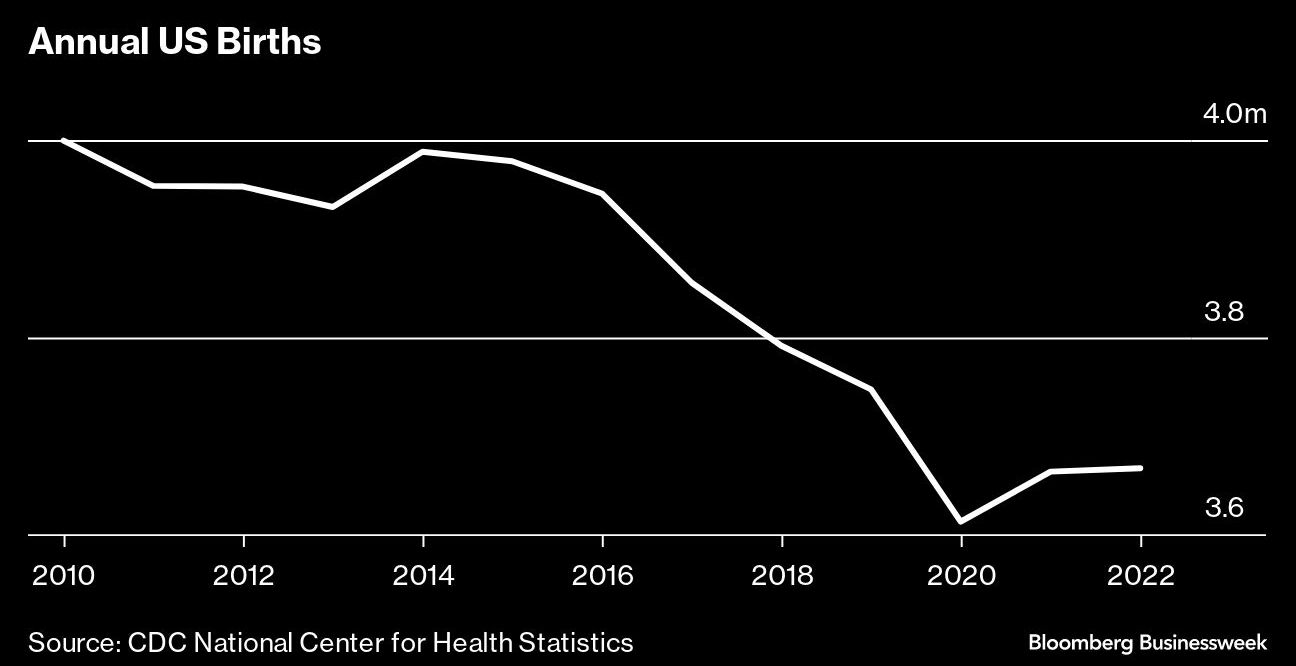
Länge betraktades engångsblöjorna som en pålitlig inkomstkälla, nästan som en livränta. Men sjunkande födelsetal och ökande priser har vänt upp och ner på situationen, skriver Bloomberg Business.
För att hålla uppe försäljningen letar tillverkare som Procter & Gamble och Kimberly-Clark efter nästa kandidat att bli en stapelvara hos barnfamiljer, som exempelvis våtservetter för alla möjliga ändamål. De utvecklar också blöjor att bära högre upp i åldrarna. Samtidigt har de senaste årens prisuppgångar gjort att allt fler föräldrar letar alternativ till engångsblöjor och börjar potträna sina barn tidigare.
 Bloomberg
Lagging Fertility Rate Means Diapers Aren’t Just for Babies Anymore
P&G and Kimberly-Clark are trying to lure shoppers with premium features, while expanding products for older children and adults.
Disposable diapers came to be in the US around the same time that large numbers of women joined the workforce during World War II and no longer had time to wash the cloth versions. These tiny work savers soon became a staple and for decades were a reliable source of growth for some of the biggest consumer products companies. No longer. The US birthrate has stagnated in recent years, damping the prospects of a business that takes in $5.9 billion a year and had long been considered almost an annuity.
America’s nascent baby bust is a never-seen-before problem for the diaper duopoly of Procter & Gamble Co., which makes Pampers and Luvs, and Huggies maker Kimberly-Clark Corp. To make matters worse, outsize inflation for baby-care items since the pandemic—data from consumer researcher Circana say the retail price of a pack of diapers rose 35% from 2019 to 2023—is forcing some parents to cut back diaper purchases. They’re managing this by switching to reusable options, potty training earlier and even changing kids’ diapers less. These changes are prompting companies to try all sorts of tactics to boost sales, including developing diapers for older kids and persuading parents to keep their children in overnight pants for longer.
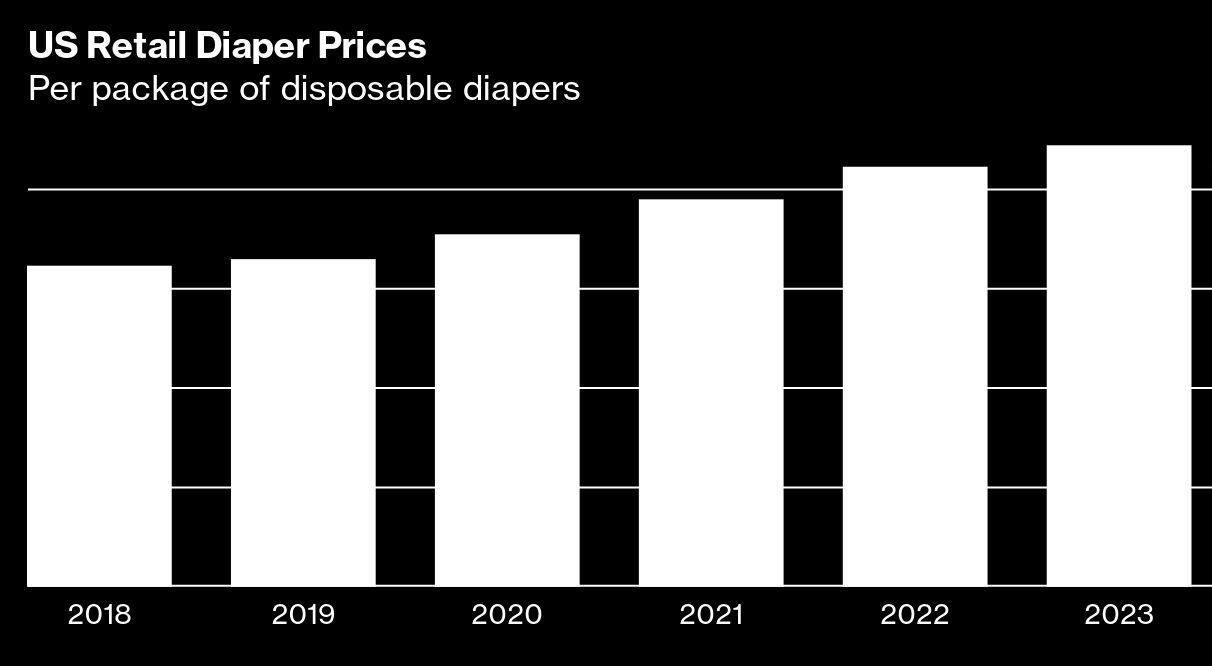
“I don’t think we’ve ever seen a situation where birthrates are declining and we’ve seen this same level of inflation,” says Nik Modi, an analyst with RBC Capital Markets. Price increases have been “so significant that we’re kind of in uncharted territory.”
To understand why child-focused businesses have good reason to worry, one need only look at America’s declining fertility rate, which is the number of births in a year per 1,000 women age 15-44. It last peaked in the 1950s, during the Baby Boom, at about 120. By 2020 it had fallen to less than 60.
For years, consumer businesses could still count on Americans of color or immigrant moms to account for a disproportionate amount of demand. But recently those groups have seen their fertility rates plummet, too. In 1990 foreign-born Hispanic women, for example, had a fertility rate of almost 150—about double the national rate then. By 2019 their fertility rate had fallen to roughly 85, according to a US Census Bureau analysis.
It’s not only America’s declining birthrate that’s giving makers of diapers and other children’s products pause. Women in the US are also having babies later. Of course, society considers one facet of that trend as particularly beneficial: The fertility rate for teen girls (age 15-19) plunged 73% from 1990 to 2019. But the fertility rate of American women age 20-24 fell 43% during the same period, while those age 40-44 saw their rate soar by 132%.
That shift toward later childbearing could be problematic for companies that traditionally counted on parents to generate multiple rounds of demand for products like diapers, infant formula, toys and sneakers as they had additional children, which many families today are choosing to forgo.
“I wouldn’t count on the birthrates suddenly changing direction,” says Pricie Hanna, managing partner at Price Hanna Consultants, which advises businesses about hygiene and nonwoven products. “It’s really a cultural fact.”
”What used to be a land grab now becomes a share war.”
This cultural shift has implications far beyond diapers, says Gary Stibel, chief executive officer of New England Consulting Group. The recent years of declining US fertility portend increased competition for makers of all sorts of child-centered goods, he says.
“When Americans are having more children, there’s plenty there for everybody,” Stibel says, referring to dollars spent by parents on kid goods. “When the market starts to decline, it becomes a market share war, and the only way to benefit is to take share from someone else. The implications are huge. What used to be a land grab now becomes a share war.”
Other categories will be affected by the demographic shift, Stibel predicts. “The most obvious is infant formula, but right around the corner are children’s clothing, infant clothing,” he says. “If there’s less children, there is less need for child care.”
Diaper retail unit sales dropped 1% last year, marking the fourth straight year of declines amid inflated price tags, according to Circana.
“The industry has clearly a situation with the declining birthrate that has caught the attention of everyone,” says Jim Robinson, principal of Absorbent Hygiene Insights and consultant to the diaper industry. “It will impact future growth.”
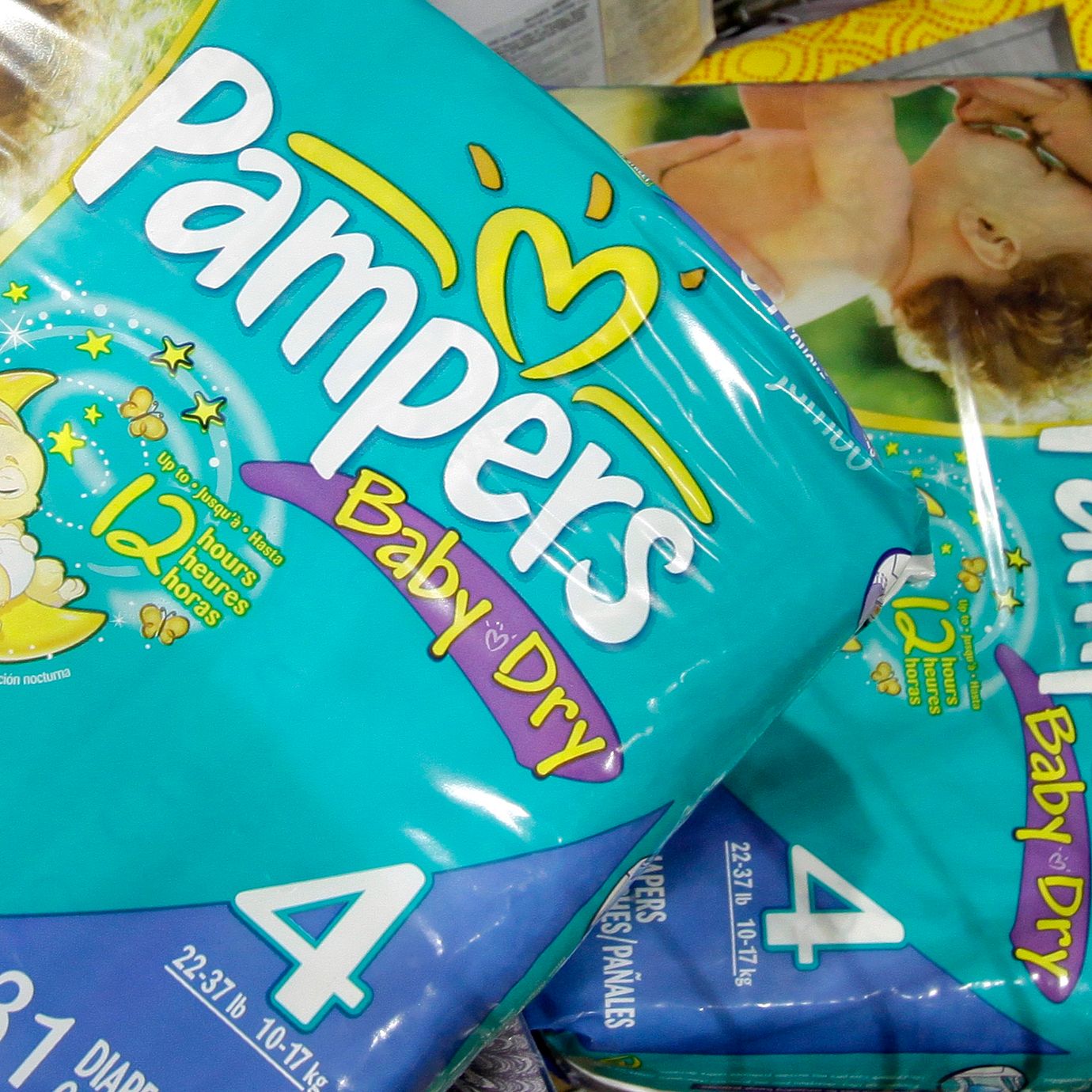
That’s a troubling prospect for P&G and Kimberly-Clark, which together claim more than half of the US diaper market. P&G’s yearly sales for Pampers alone are more than $7 billion globally, almost 9% of company sales. But the volume of baby-care products sold declined in the fourth quarter amid higher prices. The category is also large for Kimberly-Clark, which gets more than a third of its revenue, or about $7 billion, from baby- and child-care items.
P&G is adding new diaper features that it says even penny-pinching parents might value. The company says it’s been able to expand North America sales of its extra-soft Pampers Swaddlers line from $700 million five years ago to more than $1 billion now, in part thanks to creating diapers with innovations such as an umbilical cord notch to protect a newborn’s belly button and what it’s calling a blowout barrier—an inverted pocket on the diaper waistband designed to prevent messy poop nightmares—which was introduced last year.
“The diaper makers have been finding ways of extending the lifetime of their customer—overnight pants for toddlers, overnight pants for even older kids”
The consumer products giant is also producing diapers for larger kids. In the past year, Pampers introduced a size 8, for children weighing 46 pounds or more. “The diaper makers have been finding ways of extending the lifetime of their customer—overnight pants for toddlers, overnight pants for even older kids,” Hanna says. “So that’s helped a bit.”
Adult diapers are also a brighter spot for the industry as the boomer population ages. Incontinence items for grown-ups are set to remain among the fastest-growing personal-hygiene categories in coming years, according to Bloomberg Intelligence analyst Diana Gomes.
But even though adult incontinence retail sales volumes have grown for the past three years, they’re still less than half the size of the baby diaper market, Circana data show. So companies have focused heavily on new products for kids.
P&G, for instance, is trying to sell more training pants with bed-wetting underwear for youngsters as old as age 12, says P&G Chief Financial Officer Andre Schulten. “When you think about bed-wetters—that’s young children who have trouble staying dry at night—we’re addressing a consumer need that has not yet been met,” he says.
Schulten says getting caregivers to use more wipes is another way for the company to boost its baby business. P&G, which now sells multi-use wipes for not only bottoms but dirty faces and kitchen counters, is trying to build a “regimen” with parents, he says. “With every diaper change is not only the diaper, but is [also] the wipes.”
Meanwhile, rival Kimberly-Clark is betting that its new moisturizing baby wipes and its multiple lines of fragrance-free diapers will win over parents who worry about protecting their tot’s sensitive skin.
“The diaper of the future is relentlessly focused on better and better meeting consumer needs,” says Matt Barresi, general manager of Kimberly-Clark’s diaper business. Shoppers are increasingly demanding fragrance-free products, he says: “We’re really seeing consumers resonate with that.” And the company says its new calming and nourishing wipes—which promise to clean, hydrate and soothe delicate baby skin—are meeting internal expectations, thanks to repeat purchases by parents despite their higher cost.
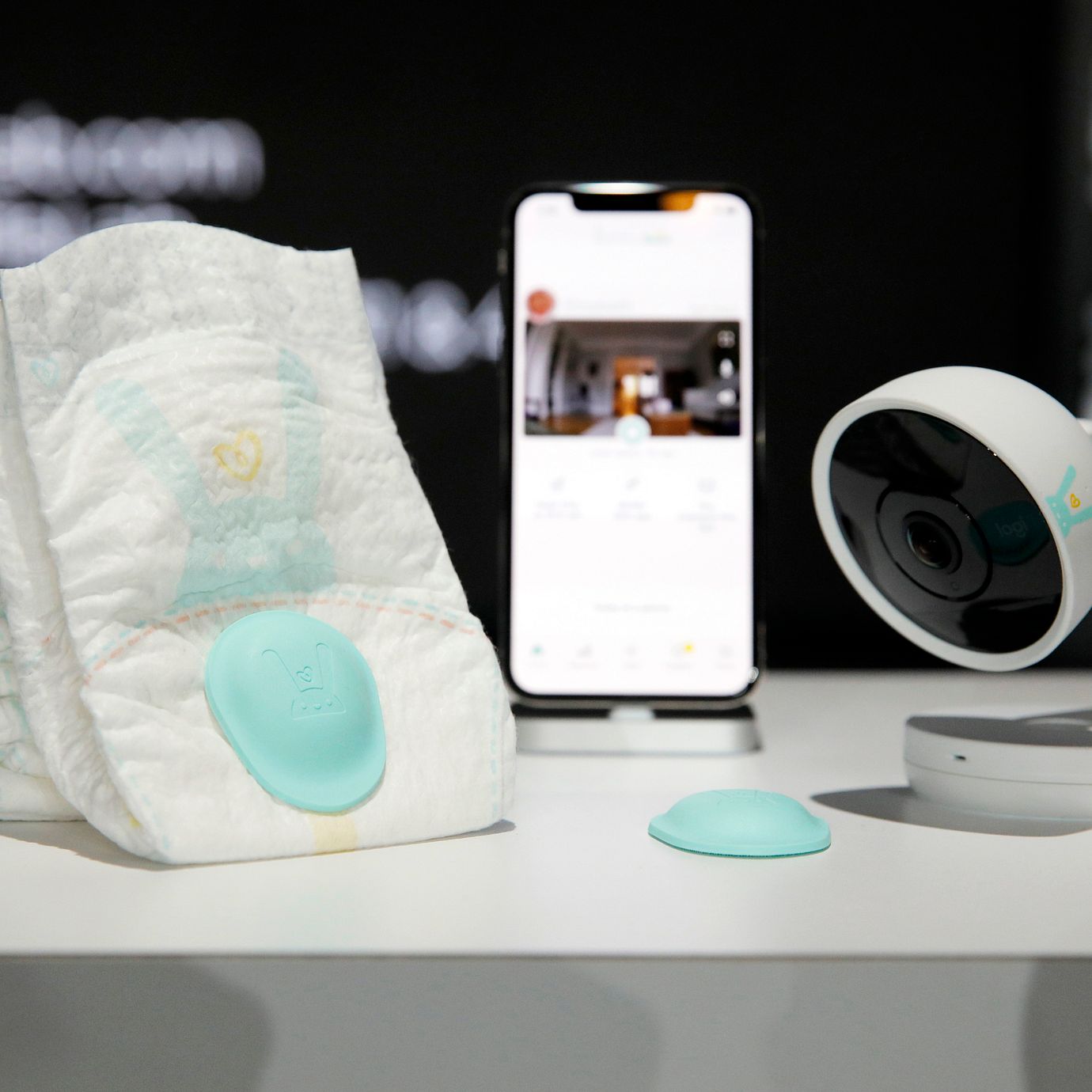
Still, new products with advanced features don’t always succeed. P&G’s Pampers Lumi system, introduced four years ago, included a video camera plus a sensor that attached to diapers to notify caregivers via a mobile app when a diaper was dirty. The $349 Connected Care System didn’t catch on and was discontinued.
The big price hikes for diapers, as well as other food and household product items, over the past couple of years occurred largely because shoppers were stocking up during Covid-19 lockdowns, just when there were shortages of raw materials and workers to keep up with the surge in demand. Besides offsetting the supply chain cost and wage increases, manufacturers have tried to recover and maintain profitability they lost during the pandemic.
“Companies were feeling pressure from all angles,” says Edward Jones analyst Brittany Quatrochi. “It wasn’t just a lack of labor, it was higher commodities costs, it was higher gas costs. Sometimes they had to pay up for those materials before anyone else could buy them. A lot of those prices have been pretty sticky, and that’s when you’ve seen the prices being pushed on to the consumer.”
Although manufacturers are promoting expensive, feature-laden diapers to keep up profits, affordability is a growing problem across America. Almost half, or 47%, of US households with young kids said they don’t have enough money for the diapers needed to keep their children clean, dry and healthy, according to a study by the National Diaper Bank Network, comprising local banks and sponsors such as Huggies that help needy families obtain diapers. As recently as 2017, the need was much less, at about one-third of families.
“Inflation is making it very, very difficult for families to meet their basic needs,” says Joanne Samuel Goldblum, NDBN’s CEO. People may use the same diaper for too long or “use things that aren’t meant to be diapers as diapers—T-shirts or other absorbent materials,” she says.
“We’ve heard that people are trying to potty-train, that they’re waiting longer to change the diaper”
In Chicago, families that can’t afford necessities often add paper towels to diapers to stretch them longer, says Rikki Ray, founder of the Diaper Bank of Chicago, which in 2023 received more than double the requests for diapers than it had in the prior year. “We’ve heard that people are trying to potty-train, that they’re waiting longer to change the diaper,” she adds.
Parents definitely feel the financial pinch. Richard Dixson, a 62-year-old in Kansas City, Missouri, who, with his wife, is raising four of their grandchildren, says brands like Pampers and Huggies are out of reach. A package of midtier training pants for his twin 5-year-old grandsons costs him about $30. A few years back, it used to be more like $24, he says.
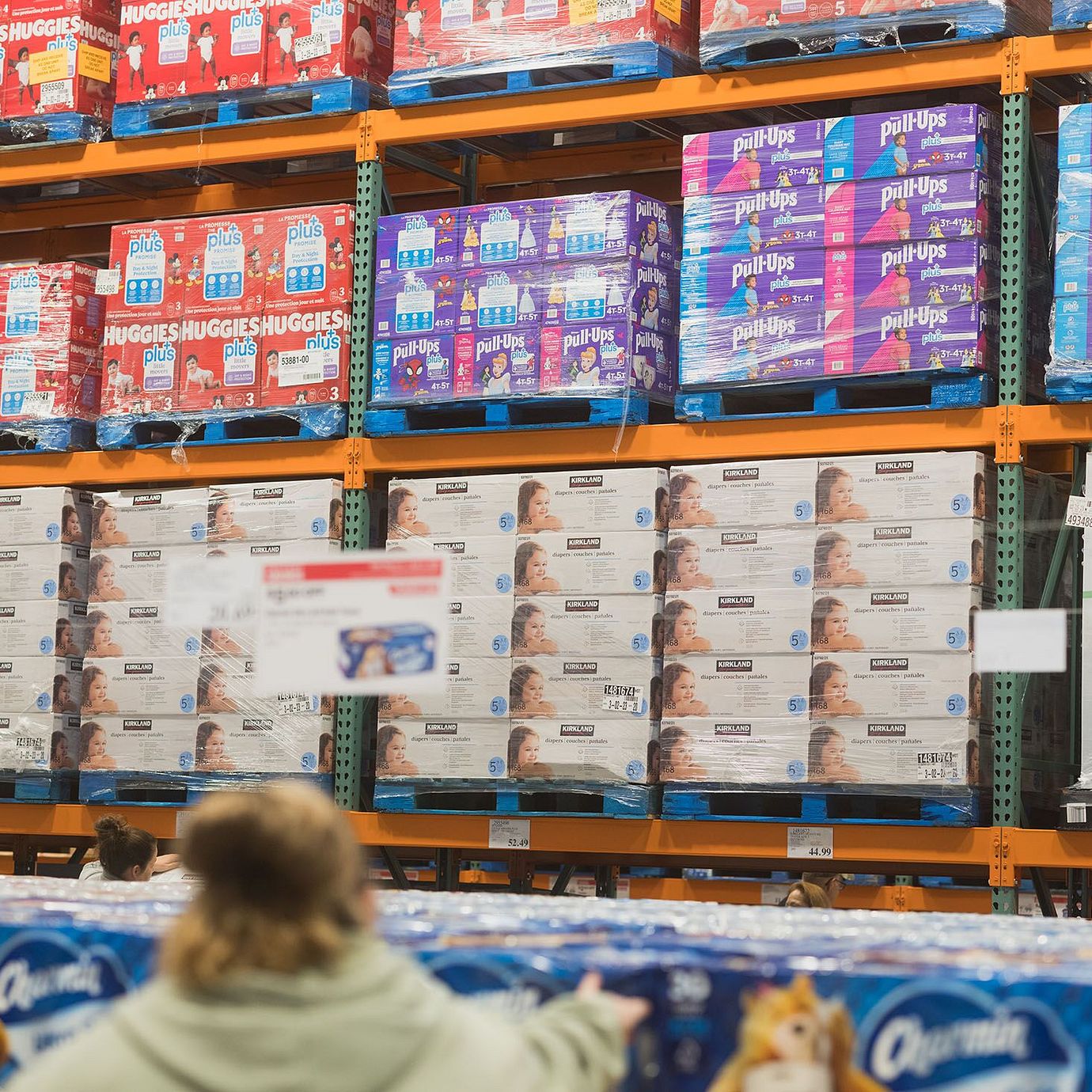
That sticker shock likely won’t fade anytime soon. Inflation in other parts of the economy is starting to moderate, but diaper makers haven’t gotten much relief. Kimberly-Clark said last year that resin prices, which influence the cost of polypropylene materials used for several parts of diapers, were moving up. And consultant Hanna says that fluff pulp prices are set to increase as one of the largest producers, International Paper Co., permanently stops production at two of its pulp machines in Florida and North Carolina. “We have particular materials important to these products that are still troublesome,” she says.
In the longer term, however, material costs may be the least of the challenges for diaper makers and other US businesses as they are forced to adapt to a changing demographic outlook that could slowly sap demand for their products. “This has a huge ripple effect,” says New England Consulting Group’s Stibel. “It’s a domino effect over multiple categories and over time.”
—With Alex Tanzi
For more articles like this please visit us at bloomberg.com
For more columns from Bloomberg Opinion, visit http://www.bloomberg.com/opinion