Dansken försökte utmana Tesla – därför gick han bet
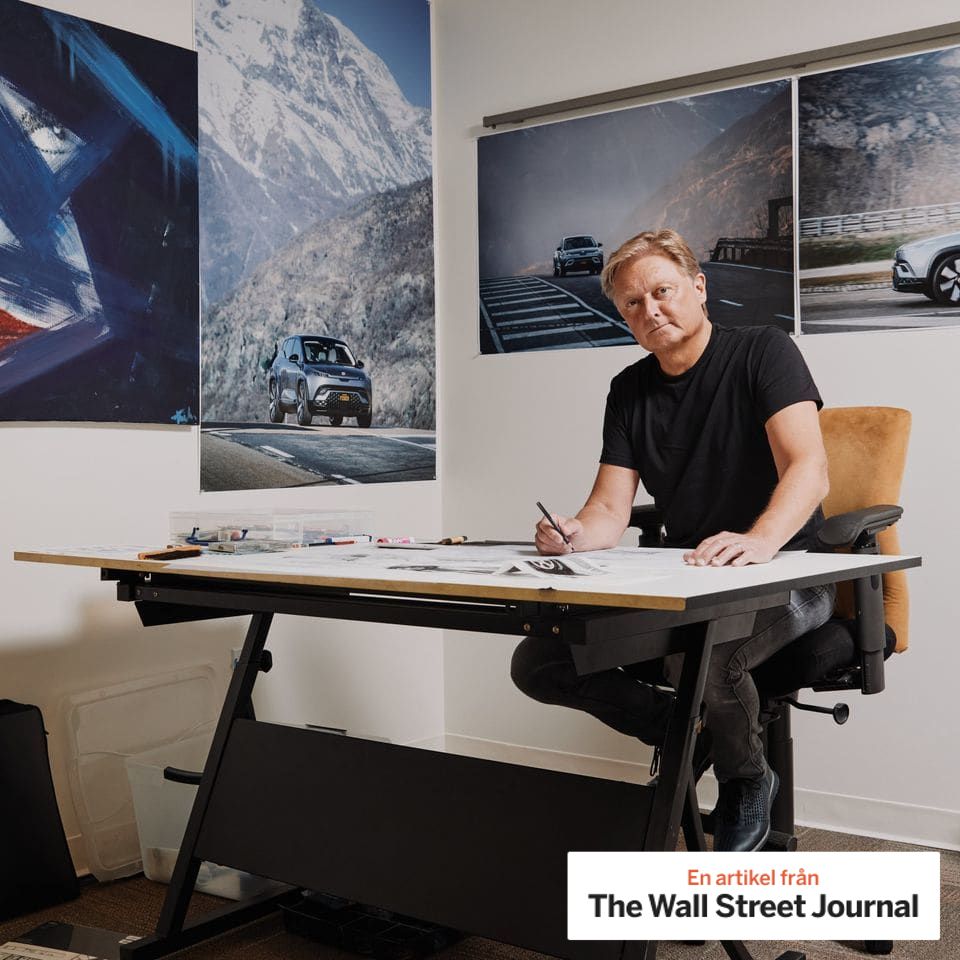
Den danska bildesignern Henrik Fisker har sett sitt företags börsvärde gå upp i rök och elbilsbolaget hotas nu av konkurs. Vad hände egentligen med den USA-baserade startupen Fisker som ville utmana Tesla och fordonsindustrin?
Bolagets fall belyser riskerna för nystartade bilföretag som försöker bryta sig in i en kapitalkrävande bransch med låga marginaler, skriver Wall Street Journal. Detta samtidigt som kundernas intresse för att köpa eldrivna fordon har svalnat.
 The Wall Street Journal
A Famed Car Designer’s Doomed Attempt to Challenge Tesla
Henrik Fisker’s electric-vehicle startup burned through cash and struggled to make and sell an auto.
Chuck Heinle, a small-business owner in Maryland, was thrilled when electric-vehicle startup Fisker reached out to rent one of his warehouses outside Baltimore. He ended up signing a lengthy lease with the company early last year to use the space as a vehicle-delivery center.
“As soon as they contacted me to lease the building, I invested quite a bit of money” in Fisker stock, Heinle said. “I believed in them. I was thinking they were the next Tesla.”
Instead, Heinle became a casualty of Fisker’s implosion —his warehouse empty, his rent unpaid and his shares sold for pennies on the dollar.
The California-based startup is winding down its operations, having burned through nearly all its cash and defaulting on a debt agreement that leaves it on the hook to repay around $180 million. Fisker faces an ever tighter timeline to negotiate a rescue package, with a key agreement protecting it from creditors due to expire on May 17. The company told employees that June 28 would be their last day at work if a deal isn’t found. On Monday, it announced it had raised a few more million dollars, in a convertible debt deal that matures on June 24.
Fisker’s collapse would add to the pileup of troubled and failed automotive startups that rode the wave of investor zeal for EVs during the pandemic. These young companies raised billions of dollars with bold promises to upend the more than century-old car business. Investors also were game to bet on finding the next Tesla, the EV maker with an eye-popping share price.
Fisker’s downfall underlines the stakes for cash-burning automotive upstarts, which are trying to break into a capital-intensive, low-margin industry dominated by a handful of deep-pocketed players. These young car companies have innovative ideas but struggled with the fundamentals of making and selling vehicles at a profit. Meanwhile, Americans’ interest in buying battery-powered vehicles has cooled.
Many of the EV makers took advantage of the SPAC boom, which gave little-known startups such as Fisker—with no revenue and barely prepared to sell vehicles—a shortcut to the public markets.
Electric pickup maker Lordstown Motors and delivery-van maker Arrival, startups that went public through SPAC mergers, have filed for bankruptcy. Others, including EV startups Faraday Future and Canoo , have slashed their ambitious growth plans to conserve cash.
Henrik Fisker , the Danish chief executive and founder, had made a name for himself designing cars such as the BMW Z8, which was featured in a “Bond” film in 1999. His first startup—Fisker Automotive— went bust more than a decade ago.
This time, he vowed to do things differently. He adjusted his pitch to investors, touting a plan for a “digital car company” that would focus on in-car software and selling vehicles online. He co-founded the startup with his wife, Geeta Gupta-Fisker, a former investment adviser, who became its chief financial officer and COO.
“The logistics and the details are critical—and the idea is almost secondary”
Ultimately, Fisker’s rise and unraveling was swift, with the company landing in financial distress less than a year after its first model, the Ocean SUV, went on sale.
The in-car software was glitchy, the sales organization was disorganized and an understaffed and inexperienced accounting department led to missed deadlines for filing financial results with regulators.
As of May 1, Fisker has sold 6,500 vehicles. Factory production has stopped, and the company is selling off its remaining vehicles to dealers and auction houses.
Investors say the company designed a good-looking vehicle and had an innovative idea but stumbled on the execution.
“The logistics and the details are critical—and the idea is almost secondary,” said Andrew Segal, an early Fisker investor who still owns company shares.
Fisker shares, worth $28.50 at their peak, now trade over the counter at about 4 cents each.
Henrik Fisker and Geeta Gupta-Fisker declined requests for comment.
A company spokesman said Fisker created a competitive electric vehicle that was simultaneously launched in the U.S. and Europe and has the longest battery range in its price category. He said sales and paperwork issues during a new model launch are common and that Fisker has worked diligently to resolve them.
SPAC funds
Fisker spent around 15 years working for BMW and Aston Martin , designing some of those brands’ most iconic vehicles in the early 2000s. After his first namesake car company failed—it sold a $100,000 plug-in hybrid called the Karma, but went bankrupt in 2013 after multiple recalls and a key battery supplier failed—the designer started the current Fisker in 2016.
It struggled in its early years with a limited budget. To drum up interest, the company showed off a concept vehicle, a curvaceous four-door sports car, in a 2017 marketing video. It was filmed slowly rolling down a desert road in front of a field of wind turbines.
Yet the vehicle had no motor or battery, and to move it, people hid inside and pushed it with their feet through a hole in the floor. Employees dubbed it the “Flintstones car.”
The concept was dropped, and Fisker instead focused on the Ocean SUV.
In early 2020, the company was operating with a small staff but hadn’t yet done substantial development work on a vehicle. The company was at risk of running out of cash, before Gupta-Fisker cut a deal with a SPAC owned by private-equity giant Apollo Global Management to take it public.
In its pitch to investors, the company forecast $3.3 billion in revenue by 2023.
Within a few months of listing on the New York Stock Exchange in October 2020, the company’s market value had roughly tripled, hitting a high of nearly $8 billion. It had created a two-tier share structure that put nearly all the voting power in the hands of Fisker and Gupta-Fisker—a change from Fisker’s first namesake company.
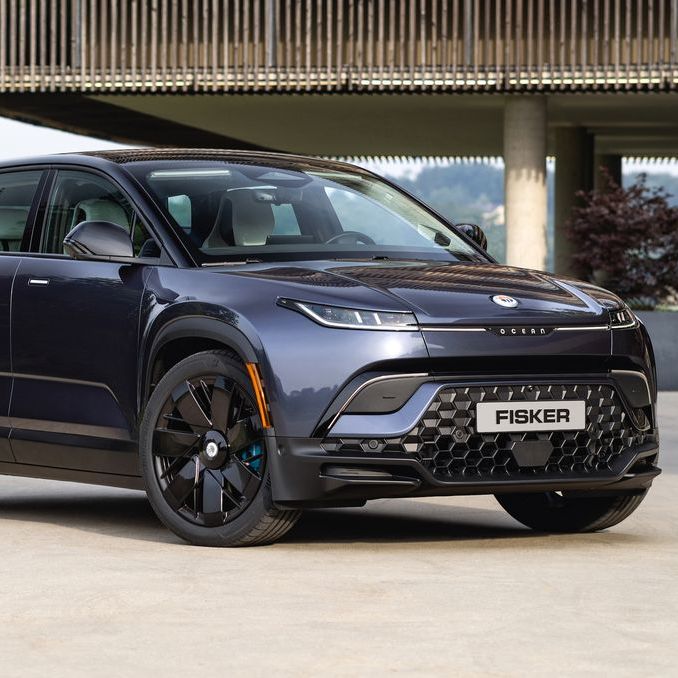
With about $1 billion in startup funds following its public debut, Fisker and Gupta-Fisker sought to keep the automaker on a tight budget, adopting a so-called asset-light model that outsourced much of the hardware and vehicle manufacturing to outside contractors. The startup wanted to concentrate on the more profitable in-car technology.
The company estimated it would save at least $1 billion in launch costs by not having to operate a factory. It also skipped the traditional dealer network in favor of a direct-to-consumer sales model.
Fisker signed a deal with auto manufacturer Magna Steyr to build its first vehicle, the Ocean, in Austria at a plant that produces vehicles for Mercedes-Benz, BMW and Jaguar. Designed to compete with Tesla’s Model Y SUV, the bestselling EV in the world, Fisker hoped that teaming up with an experienced automaker would ensure it could quickly build and sell mass-market vehicles.
Six months after the company went public, the Fiskers took out a loan against their shares and bought a $21.8 million home in the Hollywood Hills with panoramic views of the Los Angeles skyline. The Fiskers sold around $20 million in shares in three transactions that same year, according to SEC filings.
“You could argue I could have bought a smaller house, but I thought at the end of the day, ‘it is my decision and I don’t feel guilty about it,’” Henrik Fisker said in a past interview. The house is currently listed for sale at $35 million.
“I believed in them. I was thinking they were the next Tesla”
There was early enthusiasm for the Ocean SUV, which ranged from $38,000 to around $70,000 at launch. It could travel up to 360 miles on a single battery charge, and had unique features, such as what the company called a “taco tray,” and also “California mode”—the ability to open all the windows to simulate being in a convertible.
The company spent $5 million to establish a flagship store at the ritzy Los Angeles mall, the Grove, according to current and former employees. Rent ran nearly $10,000 a day, which the company characterized as a competitive rate. But the property, with construction behind schedule, sat unopened for around a year.
At the same time, though, the company failed to invest in building sales, accounting and other back-office staff, or to nail the software that was one of the vehicle’s key selling points.
By February 2023, the regulatory approvals needed to sell Fisker’s vehicles in various countries were taking longer than expected. Henrik Fisker had told investors the approvals process would be done by then, but it looked like it would take at least another month.
Development of the vehicle’s driver-assist software was behind schedule, meaning Fisker would have to launch the Ocean without features common in other cars, such as adaptive cruise control. It intended to add these features in a later software update. Customers complained that the features it did have, such as blind-spot warning or automatic braking systems, didn’t work properly.
The vehicle was panned by reviewers. Tech reviewer Marques Brownlee posted a review of the Ocean on YouTube with the title: “This is the Worst Car I’ve Ever Reviewed.” Consumer Reports said the Ocean was like trying pizza at a new restaurant that had “undercooked dough and no sauce because the tomatoes are still growing.”
Other reviewers praised the vehicle’s design and driving performance but also noted missing software features.
When the Oceans finally began coming off the assembly line, the company encountered shipping delays transporting them from Europe to the U.S., and at one point, flew roughly two dozen vehicles over by plane.
Once shipments started to arrive, the processing locations lacked fast-chargers to speedily top up the batteries, and Fisker also had to update the software on each vehicle before handing them over to buyers.
By September, the EV maker’s contract manufacturer was spitting out thousands of Fisker Ocean SUVs in Austria, but it took over a month before they got to customers—locking up half a billion dollars in inventory.
Traditional automakers control their factories, and then quickly offload product to dealers who then manage the sale to buyers. Fisker, in contrast, didn’t have control of production, and once it received the vehicles was left with the burden of carrying unsold product on its balance sheet.
In some cases, Fisker had started to take payment from customers while the vehicles were still at sea, according to the current and former employees. That angered customers, some of whom waited so long to get their car, they were making monthly payments on vehicles that had yet to arrive, they added. The company soon halted the practice.
Accounting holes
Fisker failed to file its quarterly financial report with the Securities and Exchange Commission in November 2023, after losing two chief accounting officers in less than a month.
Fisker’s accounting team quickly became overwhelmed as soon as the company started selling vehicles, because the team was understaffed and lacked experienced personnel. When Fisker filed its financial report, the company said it hadn’t designed a system to ensure that information was shared with the accounting department in a timely fashion.
Sales were also slow to materialize, in part because prospective buyers were canceling orders.
In a push to jump-start interest, Fisker in January tapped recruiters from its human resources department—employees who normally found job candidates—and dispatched them to restaurant parking lots and malls to offer test drives.
Fisker also did a U-turn on its direct-sales model, saying it was proving to be too time-consuming and expensive. Instead, the company would sell through traditional dealerships. The company said it signed up four retailers in February and had interest from dozens of others.
But by the end of 2023, Fisker had managed to deliver only about 4,900 of the more than 10,000 Oceans made by Magna Steyr to customers.
Fisker and Magna Steyr were also in a dispute over unpaid production invoices totaling about $8 million, according to a copy of a letter viewed by The Wall Street Journal.
Magna Steyr and Fisker declined to comment about the issue.
“This is the Worst Car I’ve Ever Reviewed”
In March, Fisker missed a deadline to file its annual financial report with regulators, after auditors identified new “material weaknesses” related to its revenue and balance sheet calculations. The company also warned it risked running out of cash by the end of the year.
At the time, the company said it was looking for a financial savior and said it was in talks with a “large automaker” for a potential investment. But in late March, the company said the talks had failed.
Fisker’s shares plummeted to around 9 cents after the news, leading to the delisting of the stock from the NYSE. The removal triggered a default on a convertible debt agreement with an investor, meaning that it owes the lender around $180 million—more than it currently has in the bank.
At its Manhattan Beach headquarters, employees were told the company was moving to a new office and some of them had their desks and other office furniture removed during the workday. They resurfaced in less fancy La Palma on the outskirts of Anaheim.
In a last-ditch effort to boost sales, Fisker slashed the price of the Ocean by as much as $24,000 on some versions, but by mid-April its cash reserves had dwindled to $50 million, according to the company.
Two contractors, an engineering firm that was hired to work on a new pickup truck and a textiles supplier, that month sued Fisker alleging it hadn’t paid invoices, totaling $7 million and $1 million, respectively.
Fisker said the lawsuit by the engineering firm was without merit, but declined to comment on the other supplier matter.