Därför bränns självkörande bilar i Los Angeles protester
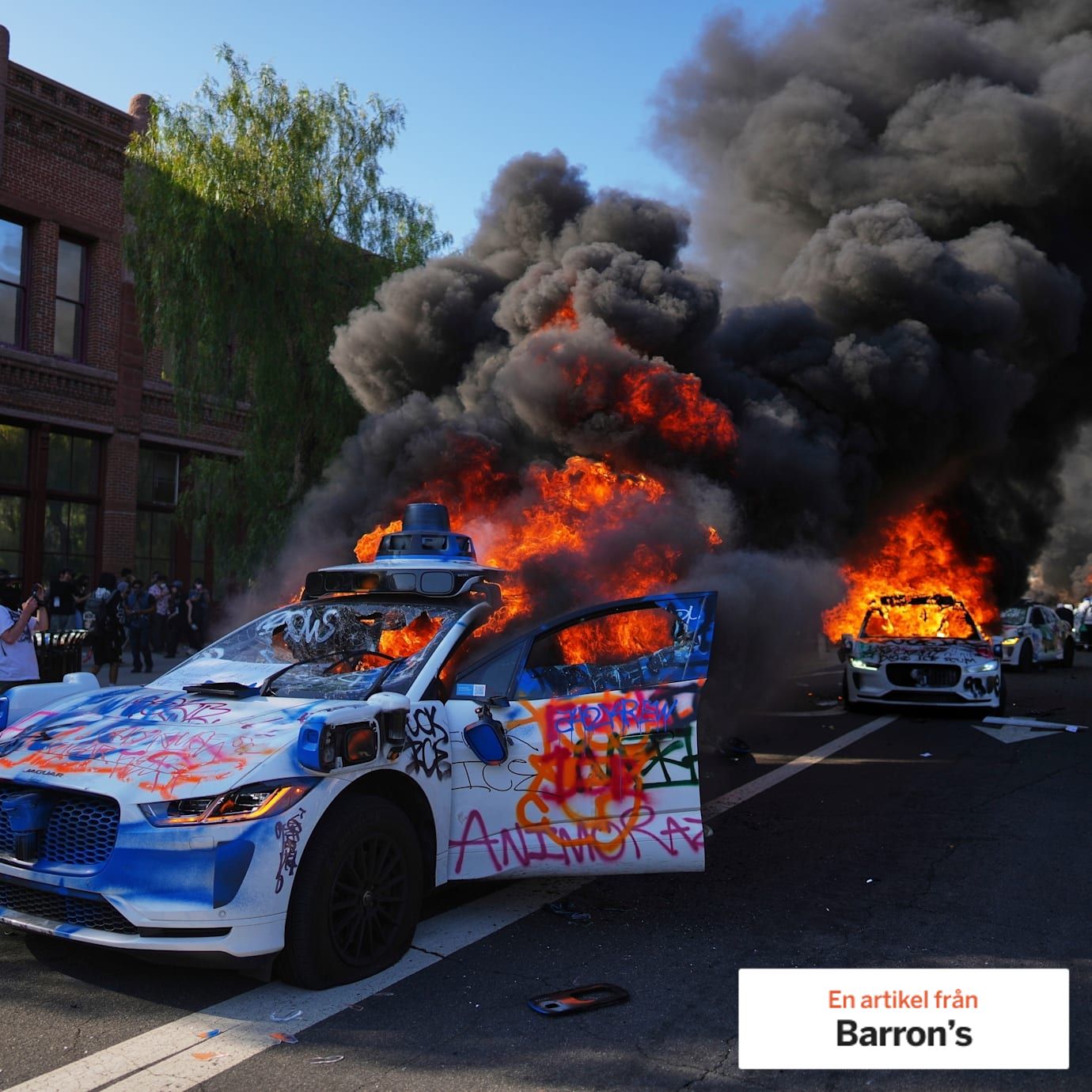
Självkörande Waymo-bilar har satts i brand under de utbredda protesterna i Los Angeles. Missnöjet riktas inte mot tekniken i sig, utan mot bilarnas ständigt rullande kameror.
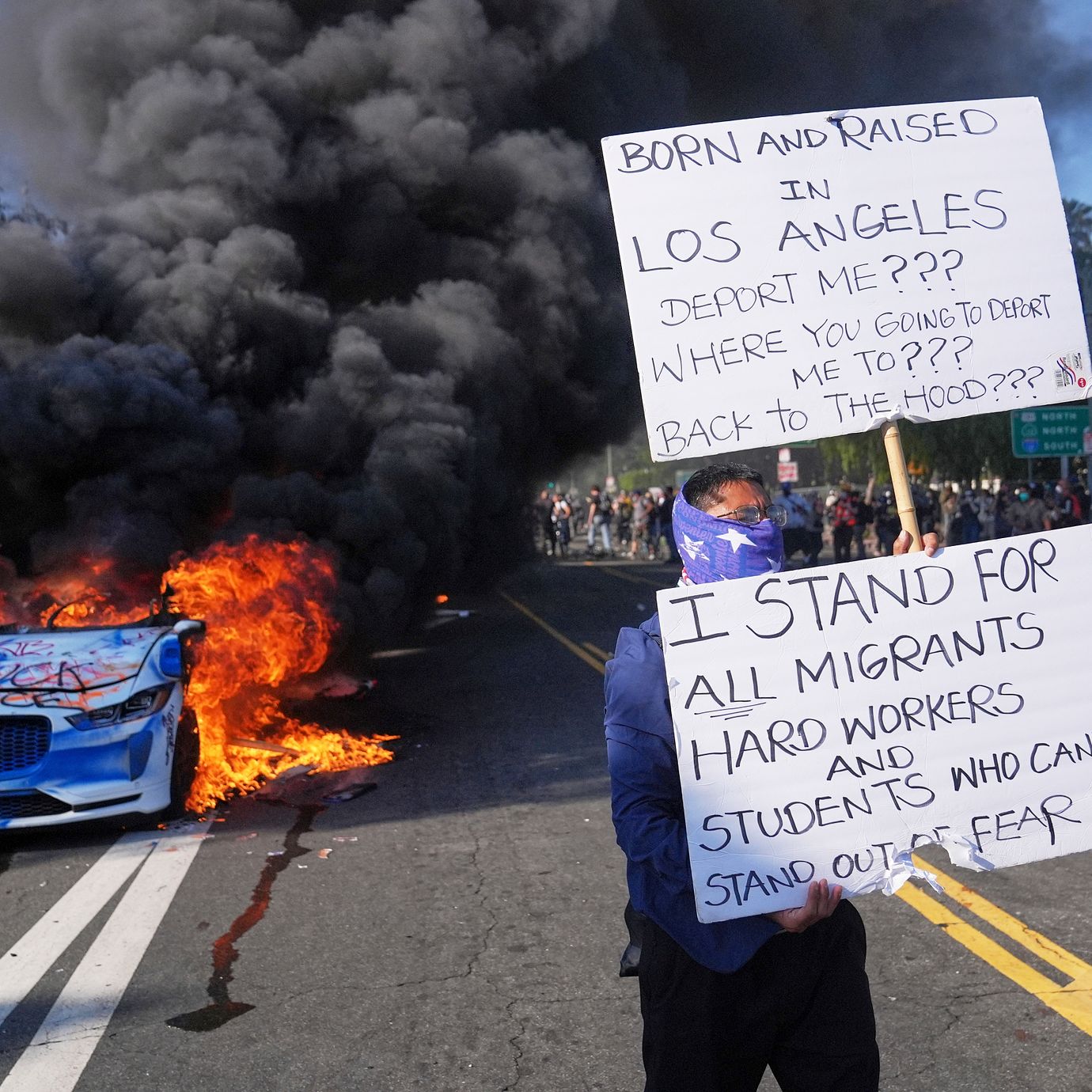
Demonstranter fruktar att det insamlade materialet kan användas i polisens övervakning och insatser. Särskilt i samband med de omstridda immigrationsåtgärder som utlöst protestvågen.
”Företag bakom robottaxitjänster kan tvingas hantera integritetsproblem de inte hade räknat med”, skriver Barron’s.
 Barron's
Why Protestors Are Burning Waymo Self-Driving Cars in Los Angeles.
Driverless cars are in focus for protestors in Los Angeles not because of potential job losses for taxi drivers, but because of their cameras.
The protests, which began over the weekend in an apparent response to immigration enforcement actions, have resulted in arrests and property damage. The Trump administration called in the National Guard against the wishes of California Gov. Gavin Newsom.
Caught in the crossfire were some Waymo self-driving cars. Several were even burned or otherwise damaged.
“We are in touch with law enforcement,” said Waymo in an emailed statement. Five of Waymo’s vehicles were vandalized over the weekend, but the company doesn’t believe protestors intentionally targeted them.
Waymo has stopped service to downtown L.A. Other areas in the region can still call for a Waymo self-driving taxi.
Data generated by self-driving cars may well become a bigger issue because the industry is in its infancy
Attempts to destroy the cars may appear to echo those of the Luddites, 19th-century textile workers who attacked new machinery designed to increase efficiency and reduce costs by replacing workers. And the tension between jobs destroyed and displaced and created by new technology will create friction for self-driving cars and trucks in the future. There are millions of ride-hailing drivers in the U.S. and more than 3 million truck drivers, according to the Census Bureau.
Job insecurity, however, doesn’t appear to be the issue in Los Angeles. The problem is that the cars’ cameras are constantly recording, creating a trove of information police can use.
Burning a Waymo is a far more expensive version of smashing the phone of a bystander videoing something someone else wishes to keep private. The Los Angeles Police Department didn’t immediately respond to a request for comment about their Waymo policies.
Whether that is the entire story of the damage done in this series of riots is hard to say, but it is likely a large part of what is going on.
Data generated by self-driving cars may well become a bigger issue because the industry is in its infancy. Waymo has a fleet of more than 1,500 autonomous vehicles in a handful of U.S. cities, completing more than 250,000 paid self-driving cab rides per week. While that is impressive, Uber completes hundreds of times that number.
Tesla is about to launch its self-driving taxi service in Austin, Texas, this month. The company intends to scale up its robo-taxi business by using vehicles owned by regular Americans in an Airbnb -type network.
Goldman Sachs analyst Mark Delaney projects that the North American self-driving ride-hailing market will grow from annual revenue of less than $500 million in 2025 to about $7 billion by the end of the decade. Self-driving cars will still only represent about 7% of the ride-hailing market by then, he wrote in a recent research report. It will take time for fleets to build, the technology to scale up, and regulations to catch up.
Robo-taxi operators might have to deal with privacy issues they didn’t see coming
Exactly how the technology will function on a large scale is also difficult to predict. Robo-taxi operators might have to deal with privacy issues they didn’t see coming.
Shares of Alphabet, Waymo’s parent company, appeared unaffected by the weekend’s developments. They added 1.7% on Monday, closing at $177.63, while the S&P 500 gained 0.1% and the Dow Jones Industrial Average finished flat.
Tesla shares rose 4.6%, closing at $308.58 and shaking off a downgrade from Baird analyst Ben Kallo. He cut his rating to Hold from Buy on Monday. A comment by President Donald Trump wishing CEO Elon Musk well helped boost shares. The two publicly feuded this past week.