Den ensamma konsumenten är en ny kraft i ekonomin
Antalet soloresor har ökat med hela 80 procent jämfört med förra våren, enligt Airbnb. Det är bara ett exempel på en tydlig trend: den ensamma konsumenten gör sig allt mer påmind.
Pandemin kastar fortfarande en lång skugga, skriver The Economist. För även om människor börjar röra sig utanför hemmet igen, gör de det i allt högre grad på egen hand.
I USA uppger mer än en fjärdedel av befolkningen att de åt samtliga måltider ensamma föregående dag, en markant ökning jämfört med tiden strax före pandemin.
 The Economist
The rise of the loner consumer
Solo spenders are a new economic force.
In the grim pandemic years, people got used to staying inside. Outlays on services, including everything from restaurant meals and foreign travel to elective medical care, collapsed. Demand for goods jumped, with a rush for computers and exercise bikes. Such patterns proved remarkably resilient even as life got back to normal. In 2023 we called people spending in this manner “hermit consumers”.
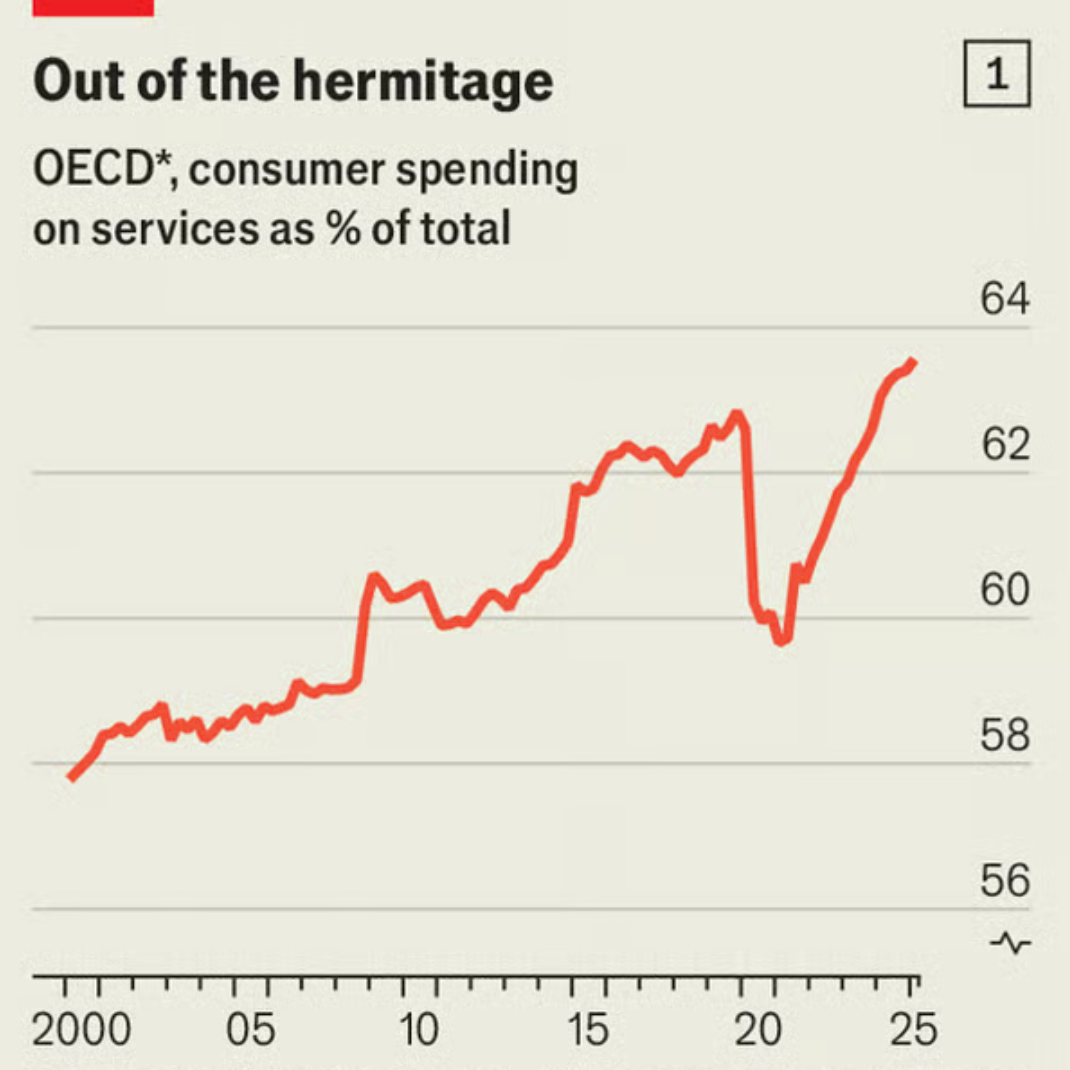
The hermit economy is now decisively a thing of the past. Across the rich world, the out-and-about economy is roaring back. Indeed, the share of consumer spending devoted to services has at last caught up with its pre-pandemic trend (see chart 1). However, there is a twist. The hermit economy has been replaced with a consumer market that still deviates from the pre-pandemic norm in important, though less obvious, ways.
America exemplifies the resurgence of the out-and-about economy. Since 2023 spending on health care has grown by 10% in real terms, while outlays on public transport are up by 21%. By contrast, consumers are no longer splurging on power tools and garden implements. Americans are also determined to have a good time. We estimate that, at the country’s largest airlines, revenues from premium products, such as business-class travel, are growing by 7% a year, compared with a rise of 1% across the board. Similarly, even as revenues decline at budget hotels, sales at luxury alternatives are up by 8% year on year.
The hermit economy is gone. In its place stands the loner economy
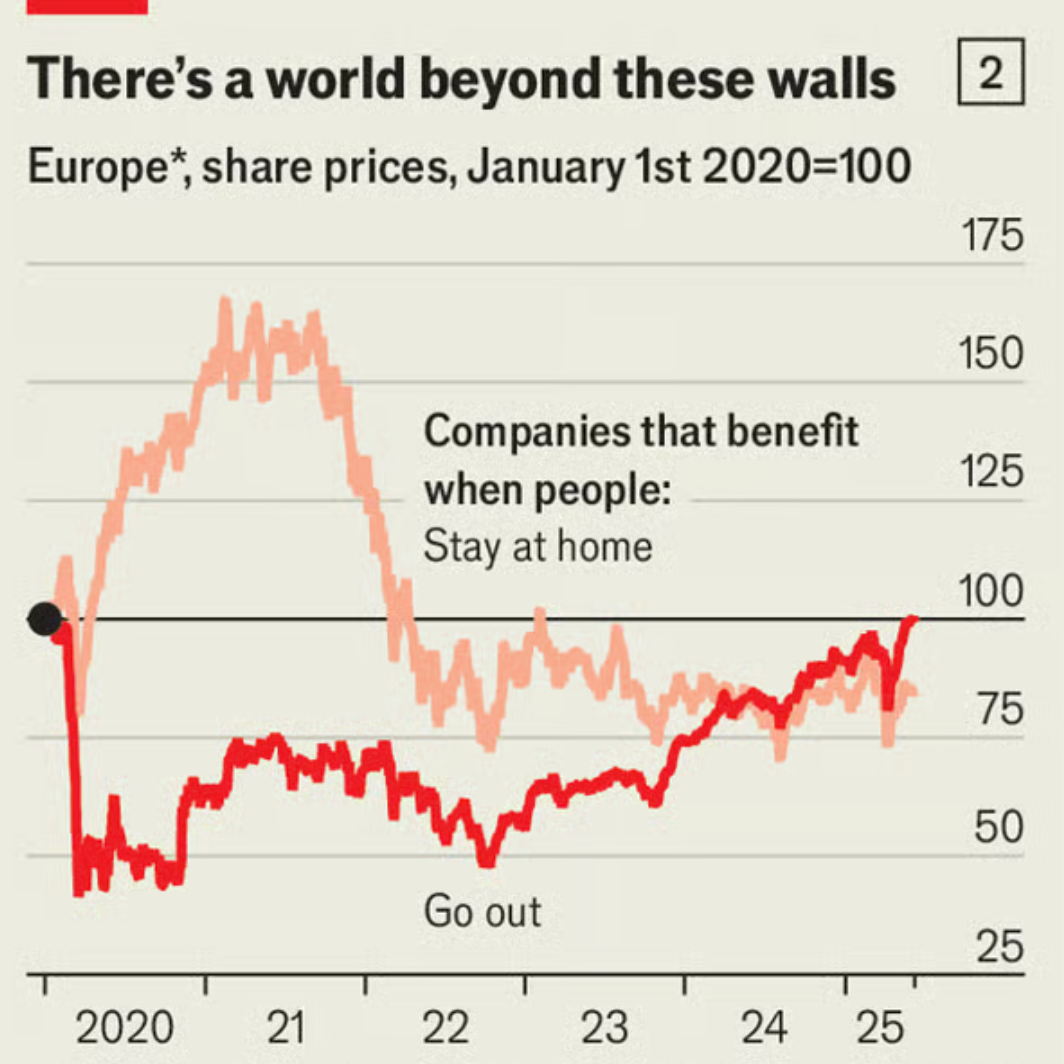
These trends are clear across the Atlantic, too. Goldman Sachs, a bank, tracks the share prices of European companies that benefit when people stay at home (such as those in e-commerce and gaming) and firms that thrive when people bother to get dressed (such as gyms and restaurants). Over the past couple of years, investors have looked more favourably upon companies involved in the out-and-about economy (see chart 2). According to OpenTable, a booking website, in Germany the number of seated restaurant diners in early June was 10% higher than a year ago.
In a sense, then, covid-19 is truly in the rear-view mirror. Yet the pandemic continues to cast a long shadow. For although people are getting out of the house, they are increasingly doing so alone.
Airbnb reports that searches for solo trips have grown by 80% this spring compared with last year. According to official British data, travellers are more often using cars or taxis, which offer privacy, than public transport, which does not. People are also less likely to share meals than before. More than a quarter of Americans report eating all their meals alone the previous day, a sharp rise from just before the pandemic. The hermit economy is gone. In its place stands the loner economy.
© 2025 The Economist Newspaper Limited. All rights reserved.