”Den gröna given är död” – har politiker gett upp idén om hållbart flygande?
För att nå FN:s klimatmål behöver transportindustrin förändras i grunden. Men flygbolagens försök att fasa ut fossila bränslen bedöms vara ”kritiskt otillräckliga” av forskare. År 2040 spås flygindustrin i stället vara sektorn med högst utsläpp. Samtidigt finns det en utbredd uppfattning bland allmänheten att det är förorenarna som ska betala – och inte vanligt folk.
– Den gröna given är död, konstaterade Ryanairs vd Michael O’Leary nyligen.
Vad har hänt med politikers och passagerares visioner om grönt resande? Den frågan reder Financial Times ut.
 Financial Times
How politicians and passengers gave up on greener air travel
A renewed push for economic growth has added to technological challenges and problems with carbon offset schemes
The tower at Gatwick airport is a hive of activity. At peak times, controllers at the UK’s second-largest airport handle a take-off or landing almost every minute.
By 2030, they could be even busier: plans to build a second runway have recently been approved by the UK government, potentially raising its capacity to 80mn passengers a year.
Three other London airports are also expanding, even before Heathrow’s planned and controversial third runway, while Paris Charles de Gaulle and Barcelona’s El Prat airports have this year restarted development plans that involve expansion.
Passenger numbers in the EU are set to double by the middle of the century, according to Brussels-based environmental group Transport & Environment, and rise even faster in other regions of the world as emerging middle classes embrace air travel.
Next month, governments will gather in Brazil for the latest UN climate meeting, where one of the issues on the agenda will be how to raise climate finance from polluting industries including aviation.
The challenge is immense. Hydrogen-powered planes are decades away from commercial viability, sustainable aviation fuel (SAF) is in its infancy, and efforts to dissuade people from air travel have been all but abandoned amid an absence of alternatives and a need to generate economic growth.
“The green agenda is dead,” said Michael O’Leary, chief executive of Ryanair, at a recent media event. “The idea that the French and the Dutch and the Germans were lecturing us for the last 20 years that we should all cycle or go by train or go by motorway, those days are over.”
The return of President Donald Trump in the US has cast a shadow over the long-standing ambition of the EU to tax the CO₂ associated with long-haul flights.
In CO₂ terms, the airline industry is small fry, accounting for less than 3 per cent of energy-related global emissions every year, according to the IEA. But scientists say that its impact on global warming is higher, because of the heat-trapping effects of contrails — the clouds that planes can leave in their wake at high altitude. According to the Intergovernmental Panel on Climate Change, the world’s leading climate science body, contrails account for more than half of the warming effects of aviation.
The green agenda is dead
The Climate Action Tracker monitoring project, which ranks countries and some industries on their collective efforts to decarbonise, has rated efforts by airlines as “critically insufficient”, behind even shipping, another transport industry that is short of green alternatives for its fuel.
The UK’s Climate Change Committee, which advises government, now expects aviation to be the country’s highest emitting sector by 2040, based on its recommended pathway to net zero. That is because aviation emissions are hard to cut without reducing passenger numbers, whereas greenhouse gas output in other areas is predicted to fall dramatically.
Airlines say they are already working to reduce emissions. “There is economic and social value in aviation. The problem is carbon, not flying,” says Luis Gallego, chief executive of British Airways and Iberia owner IAG. “The challenge for the aviation industry is to grow whilst also reducing carbon emissions.”
But Tim Johnson, of the Aviation Environment Federation, says it is “incredibly frustrating” that solutions have not been introduced at the pace required to keep up with traffic growth.
“All the goals and targets we have are for 2050,” he adds. “So it allows us to indulge in thinking about what the possibilities are rather than commercial reality.”

Airlines, airports and campaigners disagree profoundly on whether the best way to decarbonise aviation is through cleaner fuels, some form of carbon offsetting mechanism or reversing the growth in passenger numbers.
But they agree on the need for a radical reinvention of government policy on aviation. While tailpipe emissions from cars and trucks can be eliminated by batteries or reduced by hybrid propulsion, the physics of flight make replacing energy-dense jet fuel difficult.
The main solution proposed by airlines is SAF. In Europe this must be added to jet fuel to make up at least 2 per cent of the final mix, a level that will rise to 22 per cent in the UK and 70 per cent in the EU and Switzerland by 2040.
Gallego believes SAF will be “a big part” of the solution. “It’s a small part of our fuel today, 1.9 per cent for our airlines, but we will increase this to 10 per cent by 2030.”
Purchases of SAF can also be put towards the carbon trading scheme for airlines, known as the Carbon Offsetting and Reduction Scheme for International Aviation (Corsia). It aims to keep net emissions at 85 per cent of a 2019 pre-pandemic peak, to achieve what the industry hopes could be “carbon-neutral growth”.
There is economic and social value in aviation. The problem is carbon, not flying
SAF emits the same amount of CO₂ as kerosene at the point of combustion but is produced from used cooking oil or other fats, organic waste or crops, rather than a fossil fuel feedstock. SAF from these raw materials costs between twice and eight times as much as conventional jet fuel, and there is not enough used oil in the world to allow for the sharp increase in SAF usage that regulators’ targets imply.
“If you look at the planned capacity, we are going to fall short of what we need, at least in the first few years to 2030,” says Daisy Robinson, a renewable fuels analyst at energy research firm BloombergNEF. “SAF needs policy in order to get the market off the ground, to drive demand.”
Additionally, much of the current SAF feedstock comes from China and those volumes are likely to fall if, as expected, Beijing sets its own SAF requirements in next year’s new five-year plan.
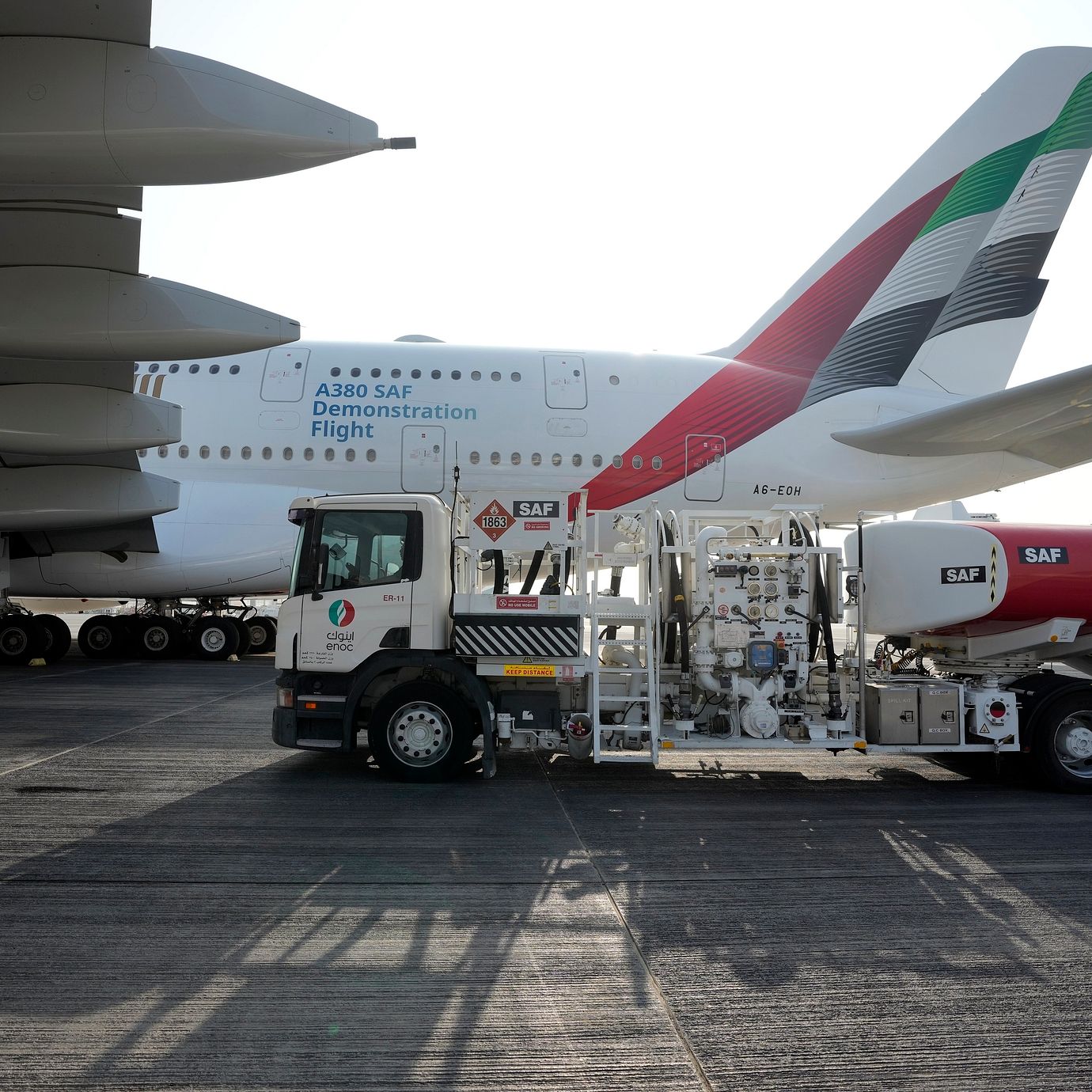
Production of the two main alternative methods for producing SAF — from household or agricultural waste, or capturing carbon from the atmosphere — is very small, though some industry analysts believe that scale will come in time with greater investment.
“SAF is absolutely critical to the industry achieving its net zero CO₂ emissions by 2050,” said Willie Walsh, who heads airline group data, at a recent briefing. But, production “is not where we need it to be”.
Walsh, a former boss of airlines group IAG, is concerned that mandates requiring fuel producers to provide SAF are raising costs for airlines, without leading to the required increase in production.
But any gains from using cleaner fuel would in any case be offset by increasing air travel, with the sector burning as least as much kerosene by 2049 as it does now, according to analysis by T&E.
“There is a very big push by the aviation industry to allow for uncurbed growth, which is where the big problem comes in,” says Diane Vitry, its head of aviation.
SAF is absolutely critical to the industry achieving its net zero CO₂ emissions by 2050. But production is not where we need it to be
Heidi Alexander, the UK transport secretary who has just approved Gatwick’s new runway, recognises the tension. “People in this country do want to fly, but if we’re going to have more people flying, we need to make those flights greener,” she tells the FT.
Most politicians take the view that more air travel results in more economic growth, bringing in tourism, creating jobs, and — hopefully — helping them get re-elected. London’s mayor, Sir Sadiq Khan, opposes Heathrow’s planned third runway but has welcomed expansion at other London airports. “I see the benefits of aviation to our city and our country in terms of jobs created, in terms of the economy, in terms of those of us that use planes to go on holiday and go on visits,” he says.
“At the same time, we’ve got to make sure we address the obligations we have to tackle the climate emergency.”
Corsia’s credibility as an alternative to a carbon tax is under pressure for other reasons, too. While airlines say they can cancel out their emissions by buying credits representing one tonne of CO₂ reduced or avoided, these credits are in short supply. But they are still much cheaper than paying EU carbon taxes would be, in part because of market uncertainty about the accounting that underpins this type of credit.
The only project currently underpinning Corsia is one that seeks to avoid deforestation in Guyana, a South American country that has become a petrostate following a big oil discovery off its coastline.
A May report by a UN expert body criticised Guyana for inconsistencies and gaps in its estimates of how much CO₂ is stored in the trees of its forests. It also questioned whether Guyana had been “conservative” in estimating how much deforestation would be avoided thanks to the money generated by each carbon credit.
Guyana’s government said in a statement that the adjustment it permitted was aligned with UN rules and justified by economic circumstances. The EU has said it will review Corsia’s effectiveness next year.
Jet fuel is not taxed in many countries, in effect subsidising aviation relative to other forms of transport. “An airline flying from London to the Maldives pays less in fuel tax than parents driving their children to school,” says Laurence Tubiana, a special envoy to Europe for the upcoming COP30 climate summit.
An airline flying from London to the Maldives pays less in fuel tax than parents driving their children to school
Tubiana also co-chairs the global solidarity levies task force, set up by France, Kenya and others at COP28 in Dubai to examine how to generate cash to help developing countries adapt to rising sea levels and extreme weather events. Aviation is one of its six areas of enquiry.
The EU attempted to tax international flights to and from the bloc over a decade ago, but had to backtrack after a US airline trade body sued to block its proposals and John Thune, now the Senate majority leader, introduced legislation that prevented US airlines from complying with the tax. Elsewhere, Beijing put Airbus orders on hold and Russia and India also threatened to retaliate.
Trump’s administration is expected to make any reopening of the idea by the EU too painful to even consider. Washington has already pulled out of UN-brokered talks over a levy on marine transport emissions and threatened retaliation against states that sign up to it.
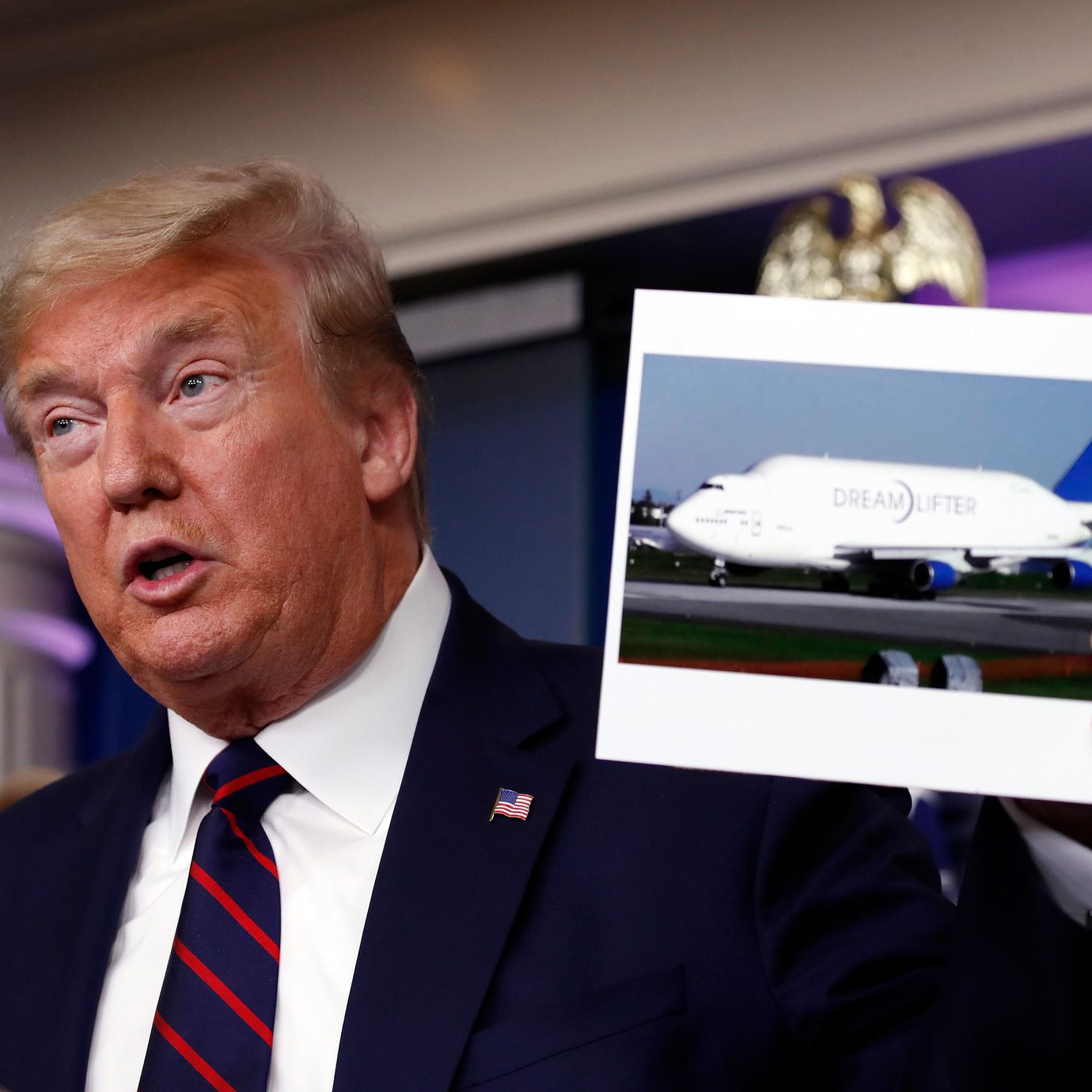
US opposition matters because some of the most polluting routes in the world, including the many London to New York services, are not covered by the EU, Switzerland or the UK’s carbon taxation schemes for flying.
Campaigners looking beyond Trump’s presidency propose beefing up the EU tax on local flights to fully price in the planet-warming effects of the clouds that form behind airliners at altitude, non CO₂ emissions and pollution from private jets, as well as taxing flights to and from the bloc. This would raise up to €1.2tn by 2040, according to independent consultancy Carbone 4, making it much more onerous for airlines than a carbon trading market.
The EU could spend some of the money on plans for a rail, road and port system that provides its citizens with cheaper alternatives to short-haul flying. The European Commission estimates that completing its plans to connect major population and economic hubs by 2030 will cost €515bn.
There is a strong sense that people recognise that polluters should pay... that ordinary people shouldn’t be penalised
In the face of the stalemate on global aviation taxation and doubts about SAF and carbon offsetting schemes, governments, researchers and campaigners are seeking less difficult ways to reduce or mitigate the impact of aviation.
Some scientists say tweaking flight paths could significantly cut contrails, which form in cold and humid conditions at high altitude thanks to an accumulation of water vapour around soot particles when jet fuel is burned.
Google is using AI to map these clouds and predict how they could be minimised by making small changes to flight paths. A recent experiment involving 70 American Airlines flights found that the per-tonne cost of emissions reductions was lower than it would have been using SAF.
Politically, support is also growing for measures that make frequent flyers and private jet users, rather than airlines, pay for aviation emissions. A 2020 study by academics Stefan Gössling and Andreas Humpe estimated that just 1 per cent of the world’s population was responsible for more than half of aviation’s CO₂ emissions.
Levies on such travellers can be imposed by national governments without the need for global agreement. “There is a strong sense that people recognise that polluters should pay . . . that ordinary people shouldn’t be penalised,” says Nigel Topping, chair of the UK’s independent Climate Change Committee, which convened a citizens’ panel last year on public attitudes to climate policy.
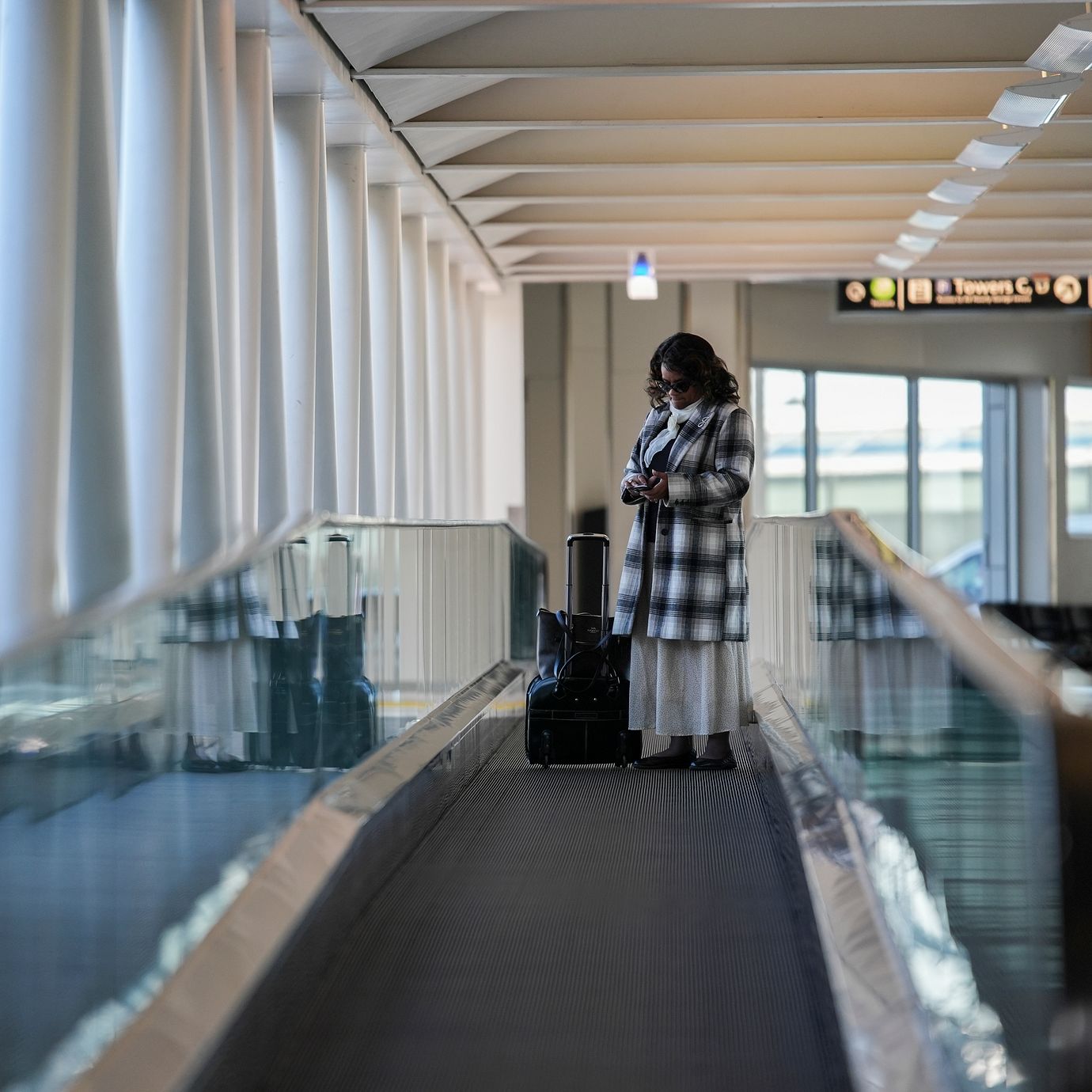
“Somebody who takes their family on holiday once every three years by plane should still be able to do that . . . but people who fly a lot should pay more.”
So far, a handful of countries, including France and Spain, have committed to levies on premium aviation — defined as business and first-class airline travel, plus private jets — in order to raise revenue for climate and development.
The campaigning network Stay Grounded argues that any frequent flyer levy should tackle all the warming impacts of aviation, not just CO₂ emissions.
“Aviation is one of the pinnacles of climate injustice,” says Hannah Lawrence at Stay Grounded, arguing that encouraging behavioural change among passengers must go “hand in hand” with decisive government action.
“The ‘no fly’ movement does need to be supported by regulatory change and policy decisions that support people [who choose] not to fly . . . We haven’t seen those yet.”
©The Financial Times Limited 2025. All Rights Reserved. FT and Financial Times are trademarks of the Financial Times Ltd. Not to be redistributed, copied or modified in any way.