Flykt från ”Silicon Valhalla” – varför sticker svenska bolag?

Enhörningsfabriken i Stockholm har skapat sig ett rykte internationellt. Men många av de mest lovande bolagen försvinner utomlands, genom uppköp eller notering på andra börser, skriver Bloomberg.
Politiker och investmentbanker försöker stoppa flykten – hittills utan framgång. Regeringens nya AI-strategi avfärdas som en verkningslös papperstiger. Åtminstone om man frågar entreprenörerna bakom den nya vågen av svenska techbolag, däribland Lovables Anton Osika och Sana Labs Joel Hellermark.
 Bloomberg
Sweden’s ‘Silicon Valhalla’ Battles US Pull on Rising Startups
Sweden churns out more billion-dollar startups per capita than anywhere in Europe, but a lot of its rising stars are heading to the US, and calls are growing for deeper capital markets to help stop them.
In recent years, Daniel Ek of Spotify Technology SA and Klarna Group Plc’s Sebastian Siemiatkowski have publicly positioned a US listing as the natural next step in their companies’ expansion. That framing continues to influence a new wave of Swedish founders, many of whom see tapping US capital markets as a milestone on the path to global scale.

The Swedish government was early to offer support to digital services, in part by liberalizing its tax regime and investing in fiber-optic internet. By the mid 2000s, it was one of the world’s most digitally connected countries, and since then has produced 50 unicorns valued at $1 billion. Its booming tech scene is dubbed ‘Silicon Valhalla.’
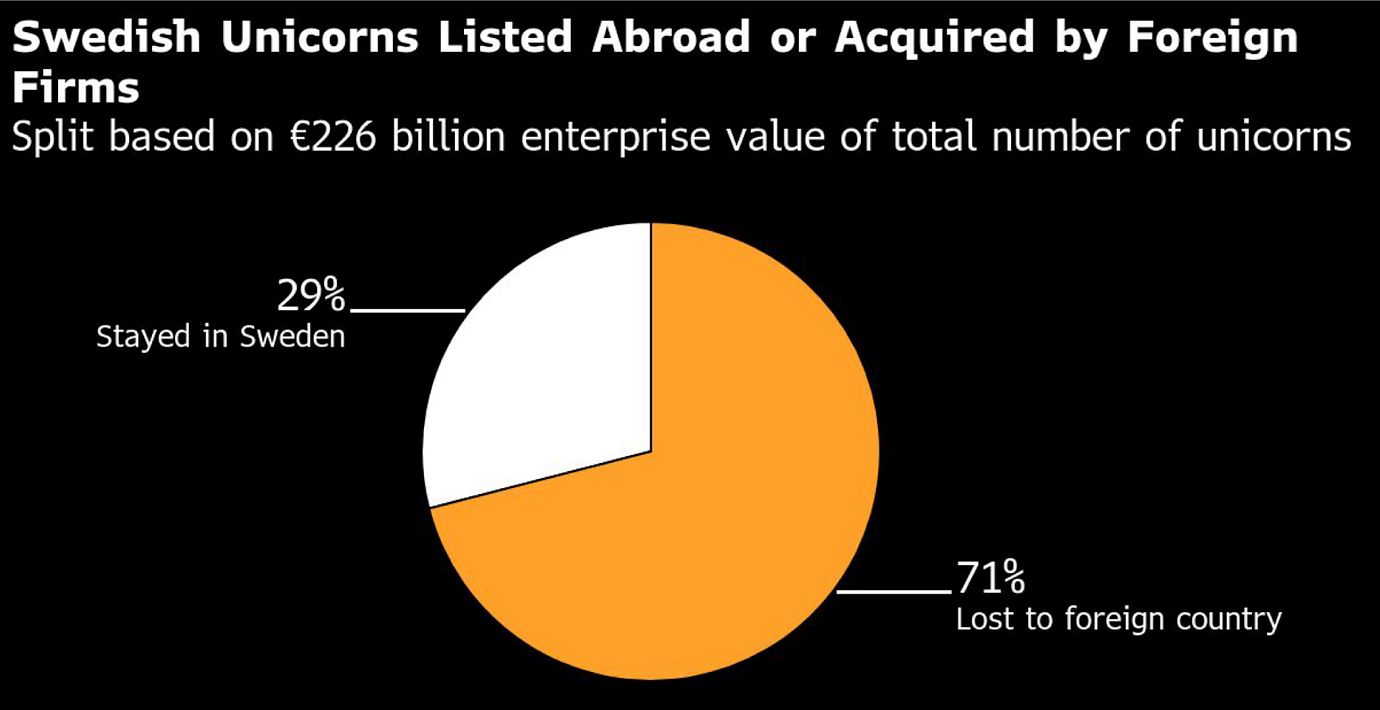
Yet more than 70% of those unicorns have left the Nordic nation so far, through foreign acquisitions or seeking higher valuations in listings elsewhere, according to a 2025 report by consultancy firm McKinsey & Co.
European Union Commission President Ursula von der Leyen and former Italian Prime Minister Mario Draghi are among politicians calling for more harmonized legal systems and capital markets in Europe to counter the appeal of the US.
But progress has proved elusive. Europe’s fragmented market structure — involving multiple exchanges, clearing systems, currencies and regulatory regimes — can add complexity to the listing process. Swedish drink company Oatly Group AB and driverless truck firm Einride AB, for example, found the US framework a more attractive alternative when planning to go public.
”When we started Legora in Sweden in 2023, we did not think of Sweden as our market”
Markets have already waited more than a decade for the EU to make progress on a unified system of savings and investments. Its failure to match the US’s ability to create companies with a public valuation exceeding $10 billion will have serious implications for the continent’s future prosperity, Per Franzen, chief executive of Swedish private equity group EQT AB, said back in October.
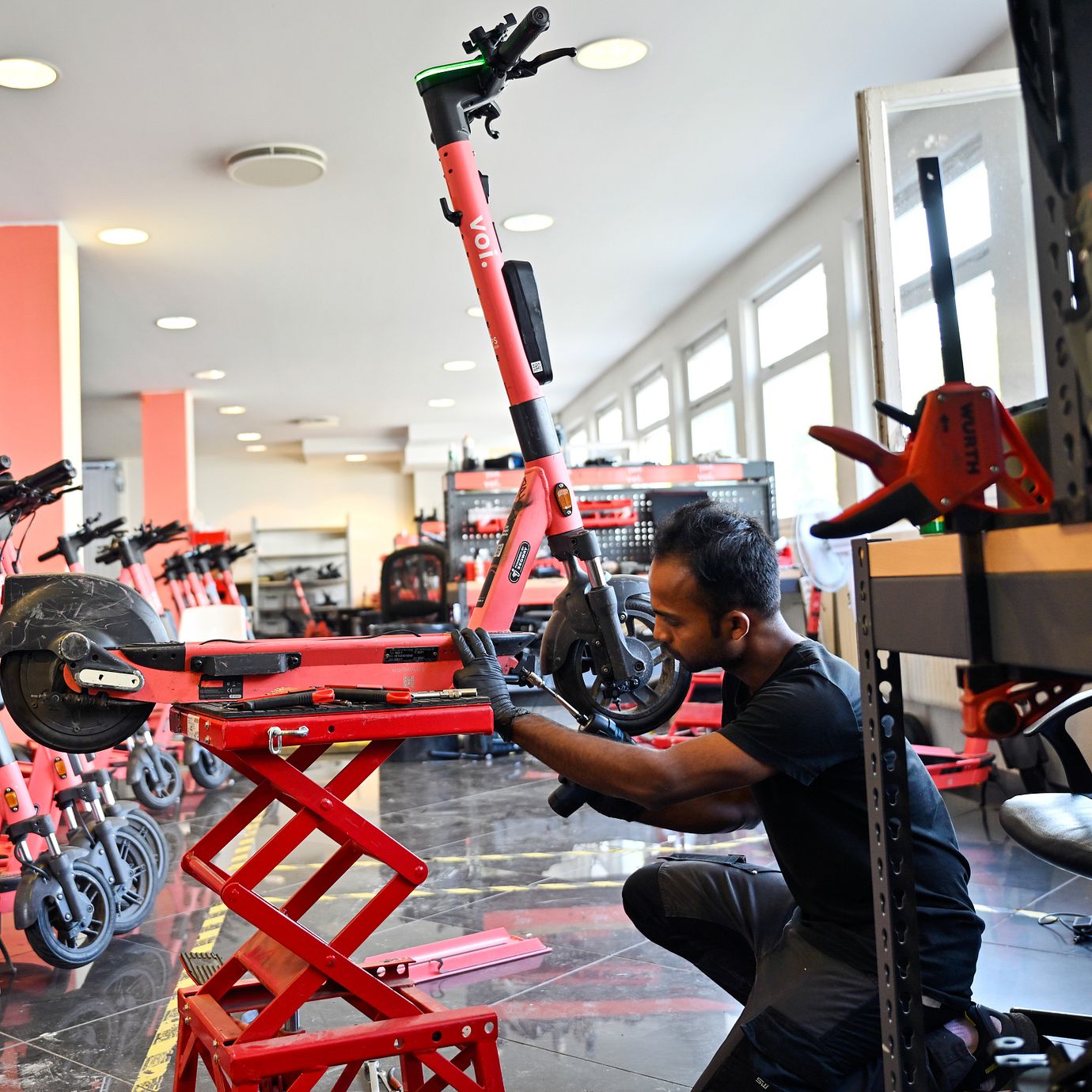
Among those leading the effort to keep talent at home is Isabel Keulen, the chief executive officer of a startup hub at the Stockholm School of Economics. Recently ranked number seven out of 180 incubators in Europe, SSE Business Lab has helped spawn companies including Klarna, electric scooter firm Voi Technology AB and AI legal services provider Legora AB.
“When we started Legora in Sweden in 2023, we did not think of Sweden as our market, we thought about the world as our market,” said Legora Chief Executive Officer Max Junestrand in an interview.
Many startup founders decide “to list in Delaware because they feel like it signals ambition,” Keulen told Bloomberg TV at her Stockholm office. “They know that their chances of securing more capital might be higher if they move across the pond.”
She added, “So, we need to facilitate that type of ecosystem where we also solve the capital bit and the exit opportunities for these companies.”
A case in point is Swedish artificial intelligence startup Sana Labs AB, which last fall agreed to be bought by US company Workday Inc. for about $1.1 billion. Earlier, in 2025 before the deal was struck, Chief Executive Officer and founder Joel Hellermark told Bloomberg that across the board the US was a better environment for tech companies.
Anton Osika is one CEO bucking the trend, having recently announced he is keeping the headquarters of his vibe-coding business Lovable Labs Inc. in Stockholm.
”We can be the absolutely biggest talent magnet where everyone in Stockholm wants to work”
“We can be the absolutely biggest talent magnet where everyone in Stockholm wants to work,” Osika said in an interview with Bloomberg TV. “It’s a very strategic decision.”
The benefit of being in Sweden “is building globally from day one,” he said, reflecting on the need for companies with big ambitions to think beyond the Nordic country’s relatively small domestic market of just 10.5 million people.
Lovable, which raised $330 million in fresh funding at a $6.6 billion valuation toward the end of last year, has no immediate plans to seek an initial public offering. Osika said that local capital markets have so far not proved constraining.

With so much money involved, advisory banks in the Nordic region are beefing up teams to find and retain the next Klarna or Spotify.
Earlier this month, Danske Bank A/S said it was committing 3 billion kronor ($329 million) to Nordic startups, adding specialist hires and expanding its hybrid financing capabilities.
In February, US investment bank JPMorgan Chase & Co. helped organize a Stockholm event centered on AI and how it is transforming day-to-day work across industries. The CEOs from Lovable and Legora were among the keynote speakers.
“Sweden excels at bridging the gap between innovation and capital,” said Kim Larsson Nyheim, a vice president on JPMorgan’s Innovation Economy team. “Local pension funds and family offices are notably engaged in tech investing, and the route from startup to IPO is well established.”

To help foster innovation, the Swedish government recently launched an AI Strategy with an annual budget of $46 million, though Lovable’s Osika and Sana’s Hellermark say that pledge doesn’t go far enough.
They wrote in an opinion piece published in Sifted, a media outlet focused on tech, alongside Voi’s Fredrik Hjelm and Kry’s Johannes Schildt, that “across Europe, governments keep publishing ambitious AI strategies that read well and change nothing.”
Sweden’s complicated governance model — the country has 340 government agencies — is a bottleneck slowing down progress and challenges related to visas, housing and childcare hampering the ability to attract foreign talent, they said, adding that other European countries have their own versions of the same problem.
“Strategies that don’t change reality for the people they’re meant to serve are just documents,” they said. “Every month of delay is a founder who chooses San Francisco instead.”
For more articles like this please visit us at bloomberg.com