”Fomo” bakom Fidelitys satsning på krypto
Efter tusentals miljarder dollar i förluster, konkurser, bedrägerier och krav på ny lagstiftning ser krypto allt mer ut som en pestsmittad tillgång. Ändå väljer den erkända investmentfirman Fidelity att satsa stort på bland annat bitcoin. Fidelity vill ta krypto till sina 40 miljoner investerare och har startat en väntelista för kunder som vill handla bitcoin och ether utan att betala courtage.
Investmentfirman tycks övertygad om att krypto har en framtid. Men bakom beslutet att ge sig in i smeten ligger också en rejäl dos ”fomo” skapad av historiska misstag, skriver Barron’s.
 Barron's
What’s Behind Fidelity’s Bitcoin Plans? It May Be Fear of Missing Out.
After trillions of dollars in losses, and waves of corporate bankruptcies and fraud, crypto is looking like an increasingly toxic asset class. Fidelity Investments is betting that it has a future and wants to be in the thick of it.
Over the past year, Fidelity steadily expanded its crypto products. The privately held mutual fund and brokerage giant launched a service to offer Bitcoin in 401(k) plans that it administers. It upgraded its platform for institutional clients, adding real-time settlement and Ethereum trading. As of late October, Fidelity said it planned to have 500 people working in its Digital Assets business by the end of March 2023. Its website lists 28 open positions with “digital assets” in the job description.
The team-building may help Fidelity achieve another goal: bringing crypto to its 40 million individual investors. The company in November opened a wait list for customers to trade Bitcoin and Ether commission-free, starting “with as little as $1.”
Fidelity’s timing, of course, couldn’t be worse. Crypto has spent the past year going from a technology of the future to a bubble of epic proportions. More than $2 trillion in token market value has been lost as prices crashed. Bankruptcies of crypto companies have spread far and wide. Just days after Fidelity opened its wait list for trading, FTX went down as perhaps the biggest corporate fraud since Enron. FTX’s founder, Sam Bankman-Fried, faces decades in prison if convicted of the criminal charges arrayed against him. He says he didn’t knowingly commit any crimes.
“ETFs were one train they missed. Perhaps they said they don’t want to miss this one”
The industry is trying to fend off the perception that it has proved to be good for one thing only: scams. Lawmakers are calling for stiff consumer protections. The Securities and Exchange Commission is vowing to bring more actions against crypto firms caught violating financial industry rules.
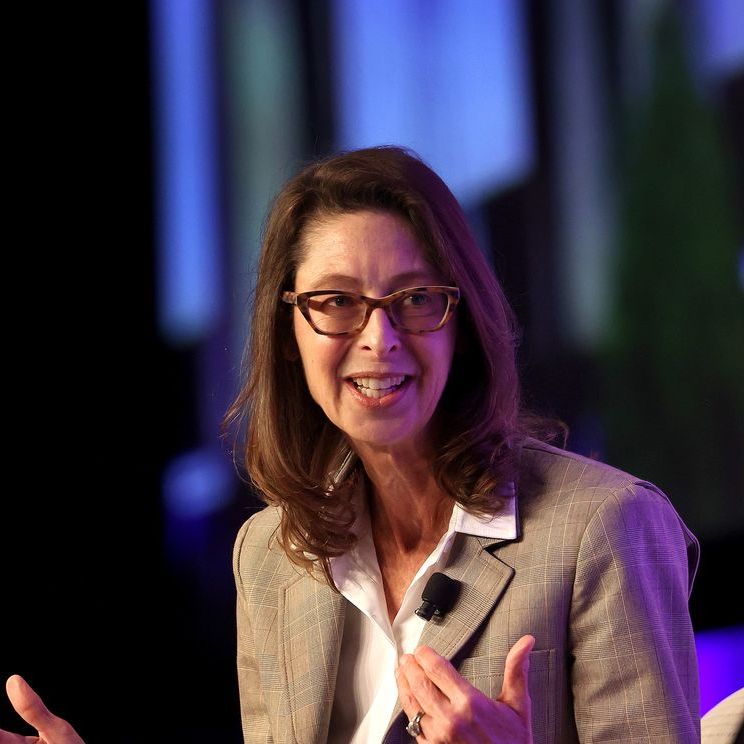
Why, then, is Fidelity wading into this mess? It certainly doesn’t need a boost from crypto. The company reported revenue of $24 billion in 2021 with operating income of $8.1 billion. It oversaw $9.6 trillion in assets, including $3.6 trillion under management, as of Sept. 30. No other firm runs a bigger retirement business, administering 40.7 million savings accounts such as 401(k)s. And there is no bigger player in actively managed funds—Fidelity’s core business since it was founded by CEO Abby Johnson’s grandfather in 1946.
Fidelity declined interview requests. “A meaningful portion of Fidelity customers are already interested in and own crypto,” a spokeswoman said in a statement, adding that Fidelity is providing them with tools to “support their choice.”
What’s clear is that Fidelity has both the financial incentives and means to give crypto a shot. It also seems to be building the business to hedge against missing a financial trend—a longstanding fear for a firm that came late to major innovations like exchange-traded funds. “ETFs were one train they missed. Perhaps they said they don’t want to miss this one,” says Jeff DeMaso, a financial advisor near Boston and a longtime Fidelity observer.
For a company of Fidelity’s size, crypto isn’t likely to add much revenue. But Fidelity tends to press into new areas gradually and persistently. And it could benefit from the washout in the industry—it’s one of the few reputable firms that investors might trust to hold and trade crypto.
Competitors include companies like Coinbase Global (ticker: COIN) and Robinhood Markets (HOOD). Those firms primarily focus on retail traders, though Coinbase is courting the institutional market. Fidelity’s reputation for institutional safety could help it win some market share, DeMaso says, noting that the company’s “name and reputation may ease concerns for investors and advisors.”
Commission-free trading would undercut Coinbase’s upfront fees, putting Fidelity in the same competitive landscape as trading apps like PayPal Holdings’ (PYPL) Venmo and Block’s (SQ) Cash App.
“Regarding Coinbase, I think Fidelity definitely brings more competition in an already bad environment,” says Mizuho Securities analyst Dan Dolev. “For Robinhood, crypto is only one part of the business, plus the users are different—younger, etc.—so there’s no material impact.”
“The question is: Will some of the tar and feathers of crypto stick to Fidelity’s reputation? Time will tell if it will work”
Fidelity is also trying to drum up business in crypto ETFs. Like other fund sponsors, Fidelity has tried to persuade the SEC to approve a spot-market-based Bitcoin ETF. The SEC rejected Fidelity’s application in 2022 and has shown no sign that it will approve one. It has launched a few crypto-related ETFs, including Fidelity Crypto Industry & Digital Payments (FDIG), though they have failed to catch on; the ETF has just $18 million in assets. By comparison, ProShares Bitcoin Strategy (BITO), an ETF owning Bitcoin futures contracts, holds $578 million in assets.
While Fidelity isn’t taking much financial risk with these initiatives, it is running regulatory risks. The Department of Labor has cautioned 401(k) sponsors against offering crypto. A DOL official expressed “grave concerns” about Fidelity’s plan, according to The Wall Street Journal.
Other brokerages remain on the sidelines. Charles Schwab (SCHW), while offering a crypto-themed ETF and Bitcoin futures trading, hasn’t announced plans for direct trading of digital assets. Interactive Brokers Group (IBKR) offers crypto trading through financial-technology firm Paxos, but it’s not a priority for the brokerage firm, says Steve Sanders, an executive vice president of marketing there.
For now, Fidelity’s biggest gamble may be putting its reputation on the line while it tries to build a crypto business. “The question is: Will some of the tar and feathers of crypto stick to Fidelity’s reputation?” says Jim Lowell, the retired editor of the Fidelity Investor newsletter. “Time will tell if it will work.”