Japan slår på världens största kärnkraftverk igen – 15 år efter Fukushima

Femton år efter katastrofen i Fukushima är kärnkraften tillbaka i centrum i Japan. Omstarten av Kashiwazaki-Kariwa, världens största kärnkraftverk, är en symboltung revansch, skriver The Economist.
Men återkomsten löser inte landets energikris. Förnybart bromsar in, kärnkraftsflottan åldras och Japan är fortsatt tungt beroende av importerad gas och kol.
– Den största lärdomen från Fukushima är att det inte finns något som heter absolut säkerhet, säger energibolaget Tepcos talesperson Takata Masakatsu.
 The Economist
Fifteen years after Fukushima, Japan faces an energy dilemma
Restarting the world’s largest nuclear plant will not resolve its problems.
Electrical wires stretch above the pine trees around the Kashiwazaki-Kariwa (KK) nuclear power plant, along Japan’s northern coast. The plant is the world’s largest nuclear power station, with seven reactors which, at full capacity, could provide energy for millions of homes: useful as war in the Middle East sends imported gas prices soaring. As with all Japan’s nuclear fleet, KK shut following the Fukushima nuclear accident. But exactly 15 years later it is bubbling back to life. After winning long-sought approval from regulators and local authorities, the plant’s operator, the Tokyo Electric Power Corporation (Tepco), restarted the first of the reactors last month.
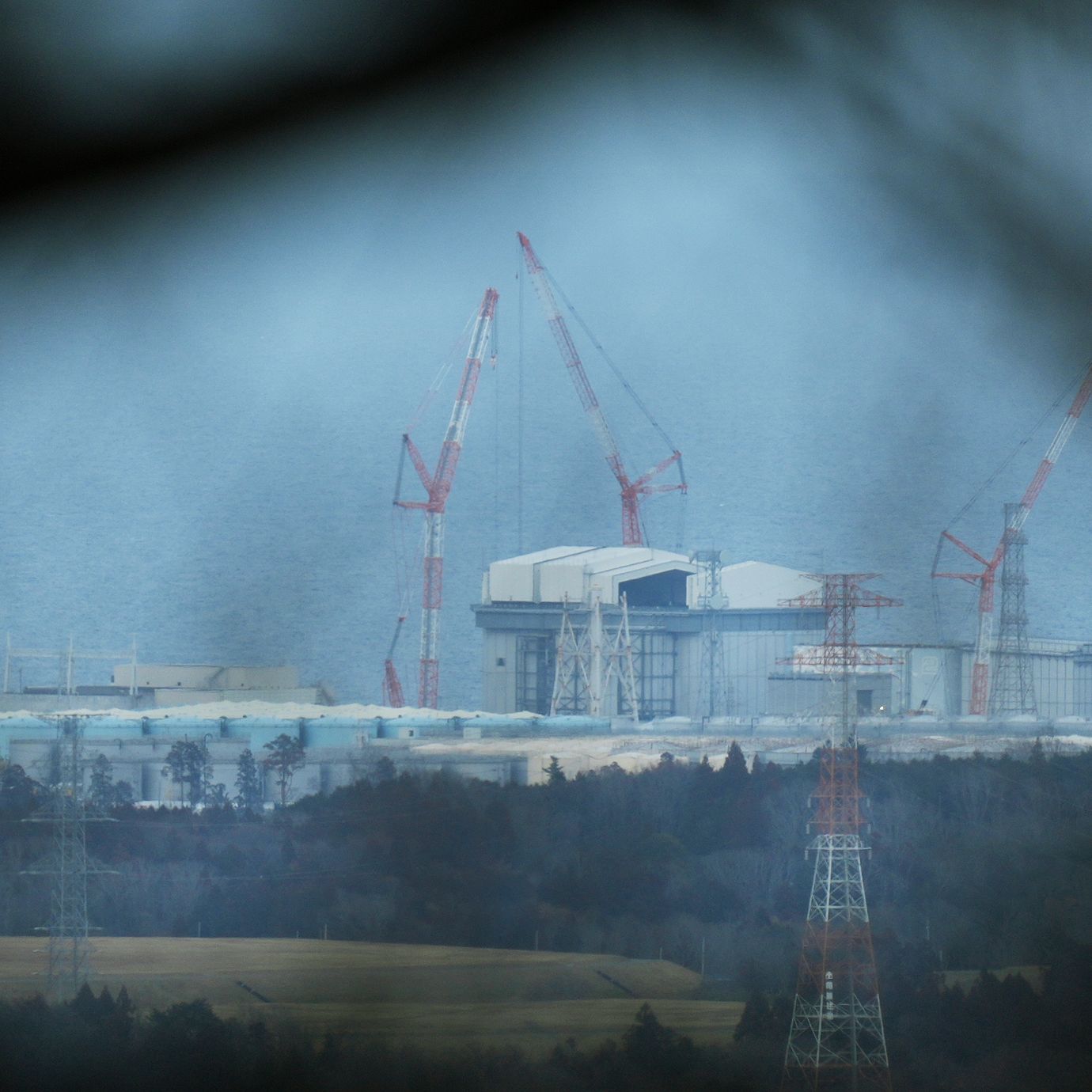
The powering up of KK is symbolically charged. Tepco ran the ill-fated Fukushima reactors; KK is its first nuclear plant to restart since then. For nuclear boosters, it shows that atomic energy still has a future in Japan. For critics, it marks the unwelcome revival of a technology too risky for an earthquake-prone archipelago. Mostly, it reflects the impasse Japan’s energy policy has come to: a stalled renewable buildout, an ageing nuclear fleet and enduring dependence on imported fossil fuels.
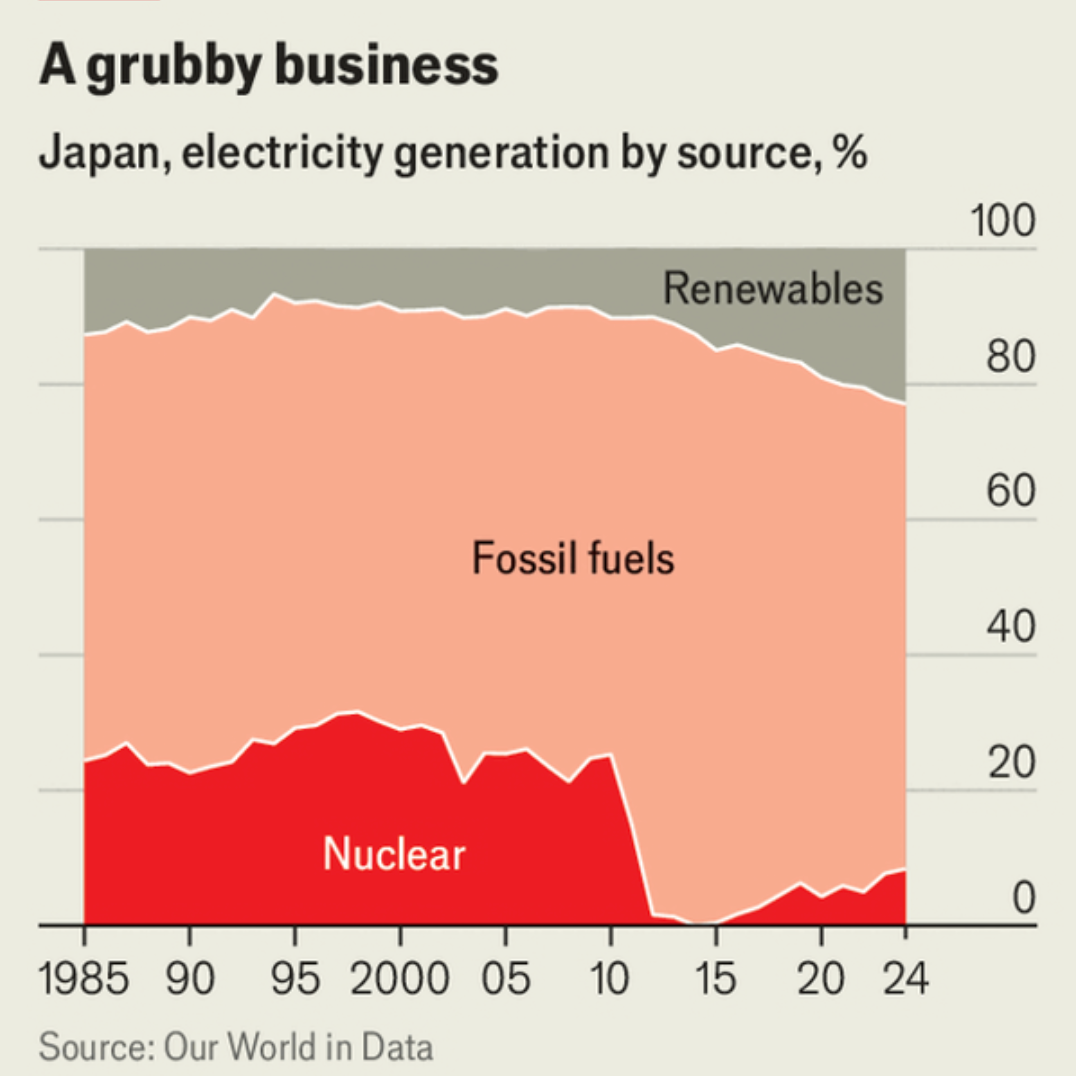
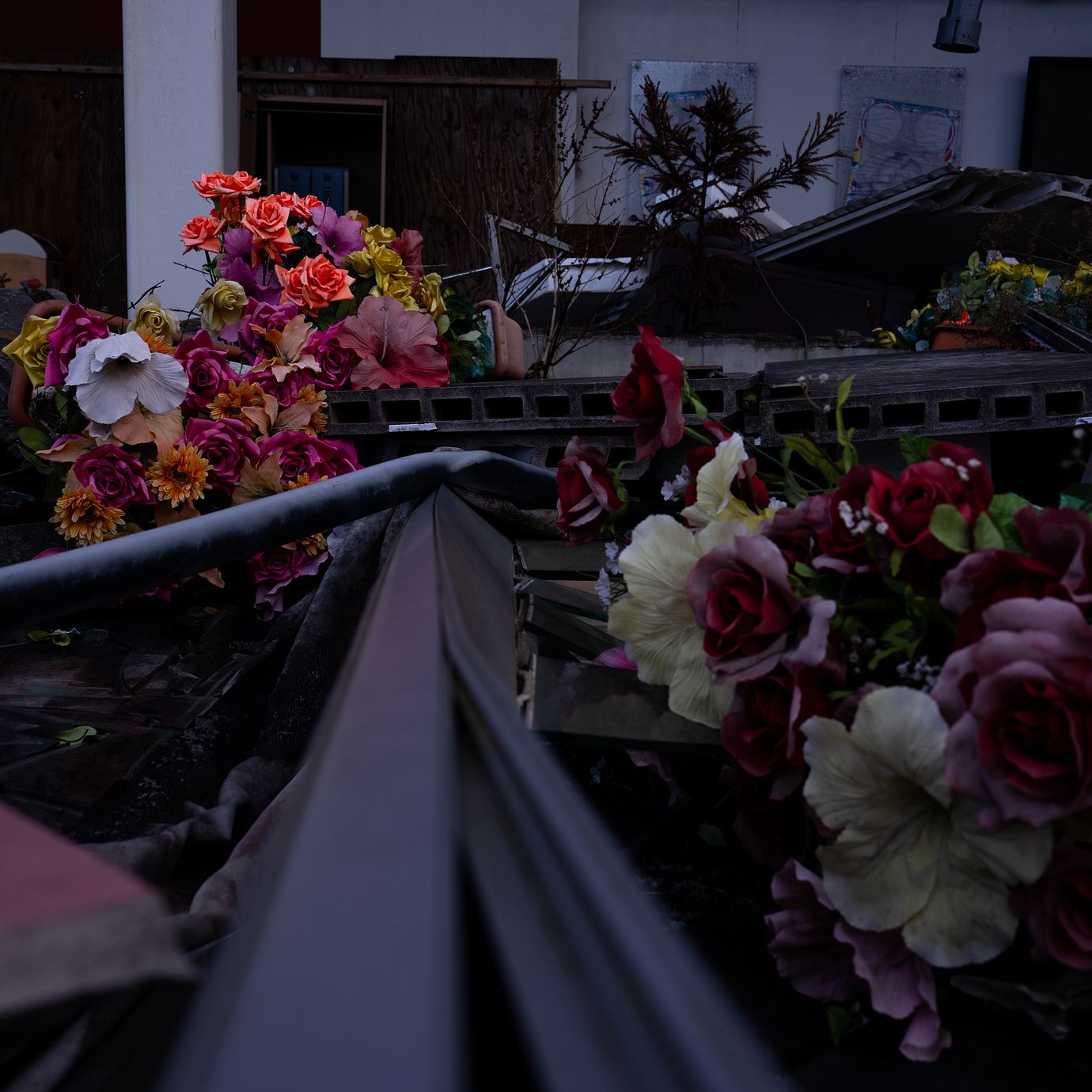
Japan is a resource-poor country. Nuclear power once seemed to offer a solution. By 2010 it had 54 operational reactors, providing some 25% of its electricity; the government aimed to expand that to around 50% by 2030. Then on March 11th 2011 the Great East Japan Earthquake struck, sending tsunami waters that flooded the Fukushima Daiichi nuclear plant. The disaster changed the politics of power.
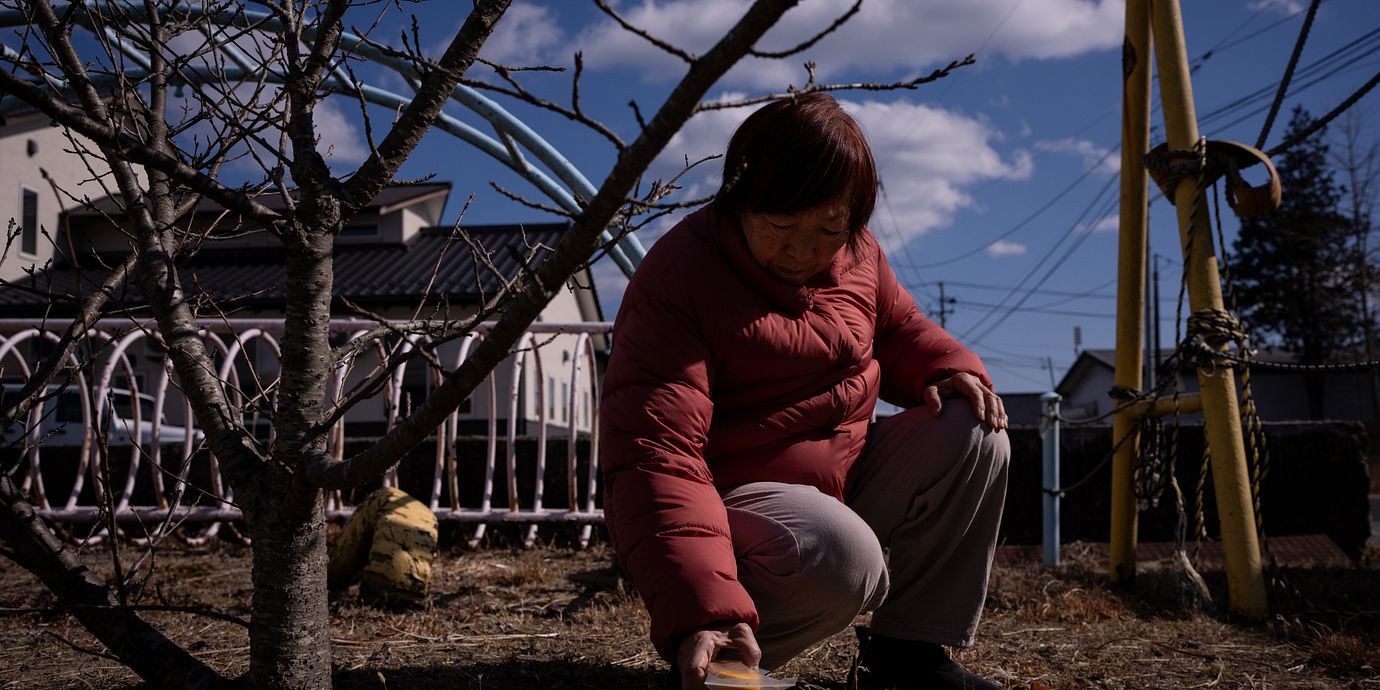
In the wake of Fukushima, a different energy strategy coalesced. All nuclear reactors were shut for inspections; a new body, the Nuclear Regulation Authority (NRA), started to enforce tougher oversight. Although reactors were gradually allowed to restart after passing new safety tests, their use was minimised. Energy efficiency drove electricity consumption down. Generous feed-in tariffs sparked a solar-power boom. Gaps were filled by LNG and coal (see chart). Japan imports virtually all its oil, gas and coal; in the OECD, a mostly rich-country club, only Luxembourg relies more on imported energy.
In recent years Japan has changed course again. Small shifts have added up to “nearly 180 degrees change in the policy”, says Terazawa Tatsuya of the Institute of Energy Economics, a think-tank in Tokyo. The government now offers less support for renewables, while pushing harder for a nuclear revival. Russia’s invasion of Ukraine reinforced concerns about energy security. Japan has pledged to reach carbon neutrality by 2050. Electricity demand, meanwhile, is expected to rise in the coming decade with data-centre construction.
The result is a strategy riddled with contradictions. Renewables offer a stark example. Japan’s latest energy plan, released last year, foresees renewables accounting for between 40% and 50% of electricity generation by 2040, up from around 25% last year. Mountainous land and a deep continental shelf complicate installing solar panels and wind turbines. But independent studies suggest Japan could be more ambitious: researchers from the Lawrence Berkeley National Laboratory in California estimate that renewables could reliably generate 70% of electricity by 2035.
The key barriers are political. Building codes and environmental assessments have stifled wind power, says Ohbayashi Mika of the Renewable Energy Institute, a Japanese think-tank: for example, wind turbines have been required to meet the same earthquake standards as tall blocks of flats. Land-use regulation limits the use of abandoned farmland for solar power. Weak transmission lines make it hard to get renewable energy to where it is used.
Instead of accelerating, the expansion of renewables is slowing. In 2024 new wind and solar construction fell to the feeblest pace for 17 years. Last summer Mitsubishi, a conglomerate, pulled out of three big offshore wind projects because of rising construction costs. The government is scaling back subsidies and imposing new regulations, especially for large-scale solar. Takaichi Sanae, Japan’s hawkish new prime minister, opposes “further covering our beautiful land with foreign-made [ie, Chinese] solar panels”.
Bringing it back
Ms Takaichi hopes that nuclear power will save Japan once again. Public attitudes have shifted as the memory of Fukushima recedes. “Students today don’t even know what ‘meltdown’ means,” laments Ueno Kunio, an anti-nuclear activist from Niigata, near KK. Power companies have invested in safety measures: Tepco has built a 15m-high sea wall around KK. “The greatest lesson from Fukushima is that there is no such thing as absolute safety,” says Takata Masakatsu, a tepco spokesman.
For local leaders, whose approval is necessary to restart reactors, other concerns have come to the foreground. “I don’t believe nuclear power is the only solution for ever, but for the time being it is the better option,” says Kashiwazaki’s mayor, Sakurai Masahiro. In addition to the benefits for the local economy, Mr Sakurai, a keen mountaineer, sees climate change as a big reason to support KK’s restart. Hokkaido, Japan’s northernmost island, positions itself as a hub for semiconductors and data centres. Its governor recently approved a nuclear restart from 2027.
Yet lingering mistrust will make reviving nuclear power difficult. The latest energy plan envisages nuclear providing 20% of the electricity mix in 2040, up from under 10% last year. Japan has 15 operational reactors; another three have received safety clearances, but remain idle, while 18 others are still awaiting regulatory approval. (The rest of Japan’s fleet has been decommissioned.) To reach 20%, nearly all 21 eligible reactors must come online.
Beyond that, the maths becomes considerably harder. Most of Japan’s reactors were built in the 1970s-1990s. The government has extended the legal lifetime of reactors from 40 to 60 years, and allowed stoppages to be excluded from the total. Even so, most reactors will have to be phased out in the 2040s-2050s. As building new plants takes decades, replacements should start soon. Ms Takaichi hopes to stimulate the process by offering state-backed financing. But new reactors face even higher local political hurdles. Only one potential new plant has reached the stage of preliminary geological surveys.
New technologies will be needed to resolve the impossible arithmetic. Ms Takaichi is keen on nuclear fusion and perovskite, a lightweight and flexible type of solar cell that Japanese companies are developing. Japan has high hopes for hydrogen. New geothermal technology could help tap volcanic power without upsetting the hot-spring lobby. But if the hoped-for technologies fail to materialise, Japan could end up relying on energy that is neither green, secure nor all that cheap. As Kikkawa Takeo, a longtime government adviser on energy policy, puts it, “They will have to keep filling the gap with fossil fuels.”
© 2026 The Economist Newspaper Limited. All rights reserved.