GM:s Mary Barra i stor intervju: ”Måste visa hur vår framtid ser ut”

Mary Barra har suttit bakom ratten på General Motors sedan 2013 och tvingats navigera allt från pandemi till elbilsrace i kamp med Tesla och ett antal kinesiska rivaler.
I en intervju med Barron’s berättar hon om hur det går, vad som har krånglat och vad framtiden bär med sig.
– Vi måste visa hur vår framtid ser ut och det håller vi på att göra, säger hon.
 Barron's
Mary Barra on EVs, Cruise, China, and More
General Motors’ CEO has overseen rapid change at the auto maker. What she got right, and what she hopes to do better.
Mary Barra was named CEO of General Motors in 2013, just four years after the company emerged from bankruptcy protection, and three years after it returned to the public market. A GM lifer with a 40-year tenure, and the only woman to run a major auto company, she has presided over a particularly tumultuous period for the 115-year-old auto maker, including the sale of its European operations in 2017; the Covid pandemic, which brought supply-chain snarls; and the rise of electric vehicles—a business in which Tesla and Chinese companies have a commanding lead.
Last year was a good one for GM: Sales rose 10%. In reporting the news, the company also issued operating-profit guidance for 2024 that far exceeded expectations. GM has trimmed costs and beefed up its buyback program.
Still, investors are skeptical of Barra’s agenda: The stock is up about 3% in the past five years, compared with an 80% gain in the S&P 500 index. GM trades at a mid-single digit multiple of earnings, making it one of the cheapest large stocks in the market.
Barra recently talked with Barron’s at the GM Global Technical Center in Warren, Mich., about the company’s plans for electric and autonomous vehicles, opportunities in China, and much more. An edited version of the conversation follows.
3%
How much GMs stock has risen the past five years
Barron’s : In 2013, shortly before you became CEO, you said one of your goals for GM was “no more crappy cars.” Mission accomplished?
Mary Barra: Before I was named CEO, I was running global product development. There was a period when we didn’t have the best vehicles on the road, but I knew we had a team capable of producing them. I told the chief engineers, if something is standing in the way of you making a great vehicle, you should be in my office jumping up and down. Now we have our best portfolio of electric vehicles and internal-combustion-engine vehicles ever.
So, no more crappy cars! But so much else has changed in the past decade.
In 2015, we started saying we were going to see more changes in the next five years than in the previous 50. And, boy, was that true. More than five years later, change is coming at an even more rapid pace.
We said there were going to be four areas that would drive the way people move and how mobility would be shaped. One was propulsion systems, including EVs. The second was connectivity, with the vehicle becoming a platform. The third was autonomy, and the fourth was vehicle sharing. Three of the four have played out.
Car sharing, not so much.
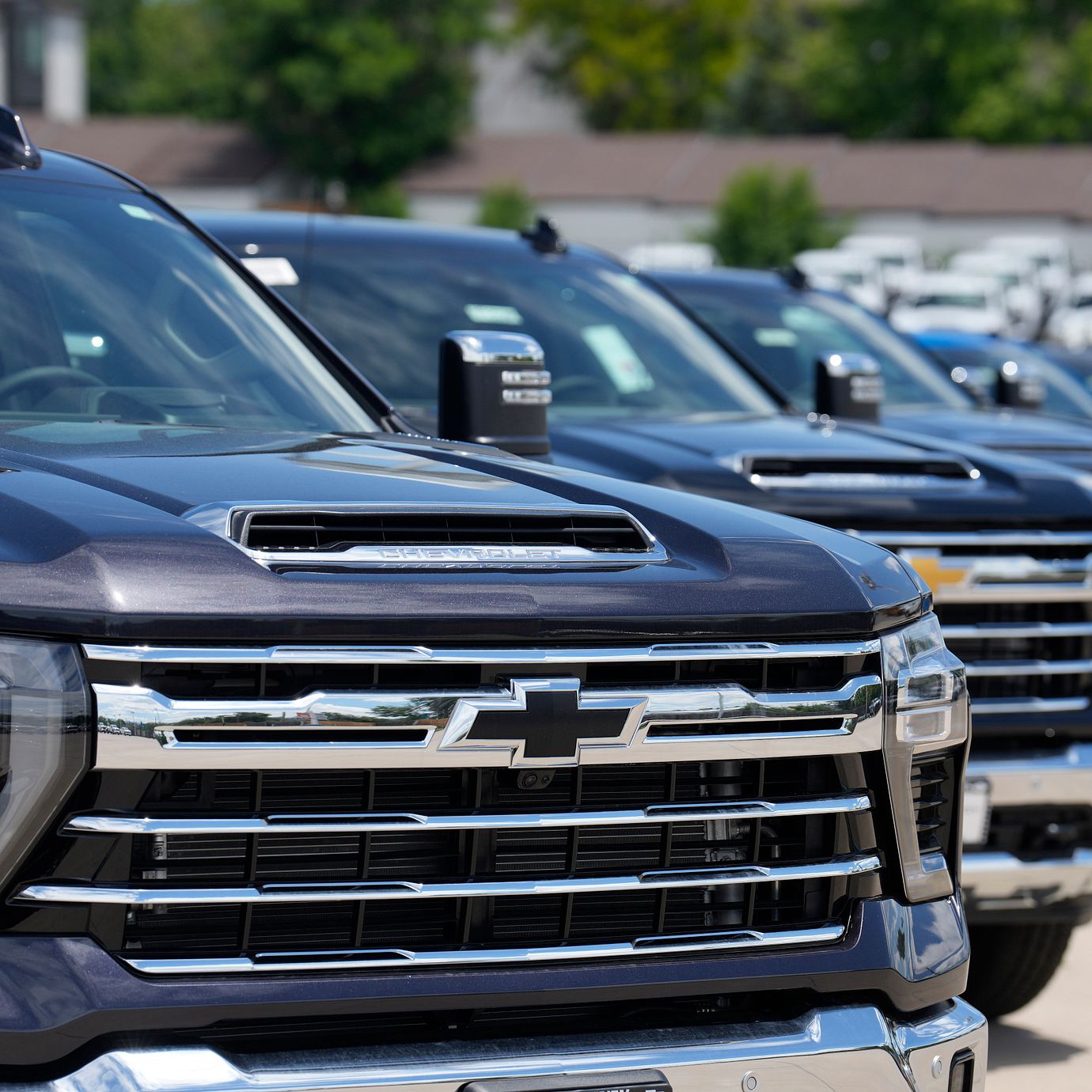
For most people, a car is either the most important or second-most important purchase they make in their life. People see their cars as an extension of themselves. No one washes a rental car. People don’t take very good care of vehicles that aren’t theirs.
Also, we found that when we tried a subscription model called Book by Cadillac, people were surprised by the price. They didn’t really know how much they actually pay in total cost of ownership, including insurance and maintenance. Covid reinforced that people wanted their own vehicles. So, that theme didn’t play out, but the other three have progressed substantially.
Let’s start with electric vehicles. Full disclosure: I drive a 2018 Chevy Bolt. But other consumers are cooling on EVs. Sales growth is slowing. You have said that EVs were 7% of the market in 2023, and should be 10% in 2024. Bulls hoped the EV segment would grow faster. Are you worried?
Early adoption of EVs was driven by people who wanted new technology, or were trying to do the right thing from a climate perspective. About 18 months ago, I was at a conference in Los Angeles with 1,000 people in the room, and I asked, how many of you own an EV? Almost everyone’s hand shot up.
Then I asked, how many of you own only an EV? Just one hand remained raised. For many early adopters, this was their second or third car. More EVs became available in recent years, but many vehicles didn’t meet customer needs. The customer wants 300 miles of range [between charges].
”Then I asked, how many of you own only an EV? Just one hand remained raised”
Is range anxiety the barrier to greater adoption?
There are three barriers. One is range, and a lot of previous EVs didn’t have enough. Also, they were expensive: The second barrier is cost. Most vehicles sold in the most popular segments of the auto market are in the $40,000 range. There are few EVs at that price. Third, to drive volume, you need to reach buyers who own only one vehicle—or two EVs. By 2035, we won’t be selling any gas-powered cars at all.
How is GM doing on those issues?
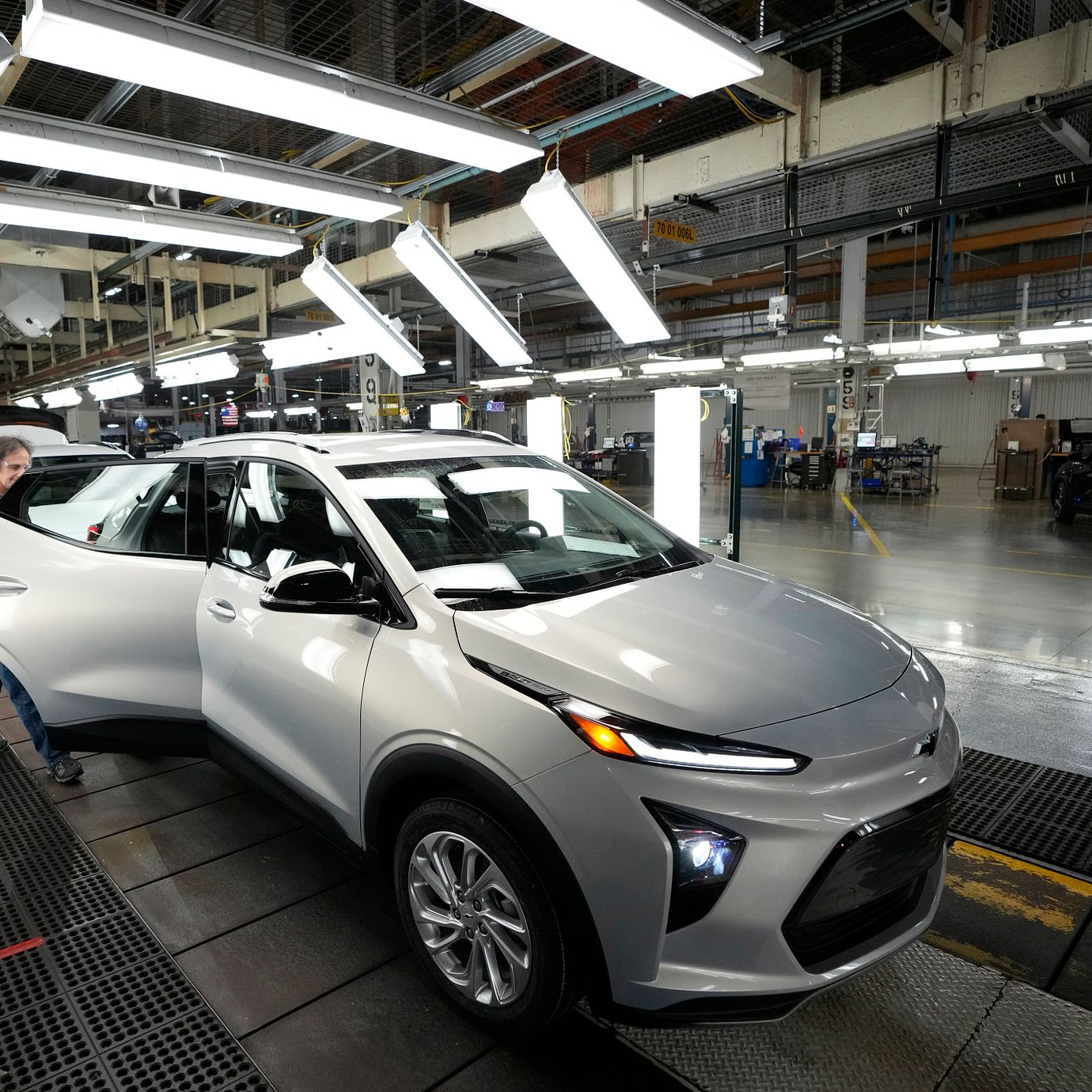
We started investing in our Ultium battery platform in 2018 and had a slow start. We had challenges last year with module production, but that’s behind us. By midyear, I won’t have to be counting modules every week like I do now. We’ll have a wide range of EVs, including luxury vehicles such as Cadillac EVs, and affordable vehicles from Chevy, and the Equinox and Blazer EVs. And, in a little more than a year, we’ll have a new Ultium-based Bolt, which will be even more affordable. We’ll have the Hummer EV, and the Silverado EV.
How much range will they have?
North of 300 miles between charges. For EV trucks, you won’t have to give up on towing or payload. We’ll have the right range, at a wide array of prices, and charging is going to get better every quarter. It was well over two years ago that Congress passed the bipartisan infrastructure bill. The first charging station funded by the bill came on-line in December.
You also reached a deal with Tesla to make their Superchargers accessible to GM EVs.
That doubled the number of accessible chargers for our cars overnight. You’re going to see range become less of an issue. There will be more-affordable EVs. This will be a slower-growth year, but we never thought this business would be linear.
”There will be more-affordable EVs”
Last year, GM decided to kill the Bolt. (Boo!) But you reversed course. (Yay!) What was behind this flip-flop?
We could have done a better job. At the time, we were working with Honda on a new, low-cost EV. We were moving our EVs to the Ultium battery platform. We were trying to be capital-efficient. But the Bolt has great brand recognition and high customer ratings. We finally decided to do the work to move the Bolt to Ultium. Also, I was getting letters from people who were mad at me for killing the Bolt.
The Honda venture was killed off last October. When will the new Bolt arrive?
In 2025. Likely, it will be model-year 2026.
On GM’s latest earnings call, you said the company was thinking about relaunching hybrids as an interim step to getting to an all-EV passenger fleet. Why that change in strategy?
We are going to sell hybrids in North America again, but haven’t announced the timing or products. In 2018, we had several hybrids, and sales were dropping. You need two propulsion systems, which increases costs. We wanted to move to EVs as fast as possible.
We have deployed hybrids in China; the regulatory environment there required it. We thought hybrids could play a role in making sure we meet regulations here, too. But we remain committed to getting all light-duty vehicles to zero emissions by 2035. That’s why we invested in Ultium and have been proponents of charging infrastructure. On hybrids, more to come.
In autonomy, you have developed Super Cruise, the driver-assistance platform in some GM cars, which allows hands-free driving on certain highways. There is also Cruise, your robotaxi arm. More to come here, as well?
We launched Super Cruise in 2017. If I had a do-over, I would have rolled it out more quickly. But it was new technology, and we held it up to make sure it was right. We just doubled the number of miles covered by hands-free driving to 750,000. I use it. I love it.
What slowed us down was the chip shortage. If we waited to equip vehicles with Super Cruise, we weren’t going to be able to ship them. So, we’re not as far along as we wanted. But we still have a robust plan to put it in many models. We’ve taken tremendous costs out of Super Cruise while making it better, adding automatic lane changes, adjustments for towing, and more miles.
Super Cruise is targeted at Level 2 and Level 3 driver assistance, which allows hands-free driving, but it still requires drivers to pay attention. The big leap is to Level 4, where the car takes over. Do you expect GM to sell Level 4 cars to consumers anytime soon?
It depends how you define “soon,” but I believe we will have personal autonomous vehicles. The technology has taken longer than expected, but we have already validated that our Cruise robotaxi vehicle is safer than a human driver. I believe we’ll have personal AVs by the latter part of this decade.
Will I be able to read Barron’s while the vehicle “drives”?
You’ll be able to watch a movie, or doze off. Or read Barron’s . Imagine you are in your daily commute: Wouldn’t it be great to get your morning emails and texts done before you get to the office? I still believe that people are going to want to drive, because driving is fun. But there are times when it isn’t fun. If the vehicle can get you where you’re going and you can be doing something else, it just makes you more productive.
You had to pull Cruise cars from the road after an unfortunate accident. Will consumers trust robotaxis?
The people who were regularly using Cruise loved it. Ratings were very high. As you go to a new community—and this is a big lesson learned—you have to build the right relationships with local, state and federal regulators. And you also have to build a good relationship with first responders. They need to understand the technology. Over 40,000 people lose their lives in vehicle accidents every year in the U.S., and over 90% of accidents are caused by human error. Autonomous vehicles don’t drive impaired. They follow all the traffic laws.
Yet, for 2024, GM slashed spending on Cruise by $1 billion. What is the game plan? Are you phasing it out?
No. We’re continuing to invest in the tech team. Not long before the incident in October [a Cruise car struck a pedestrian in San Francisco], Cruise was talking about being in 20 cities. There was a lot of money being spent, infrastructure was being built, and people were hired to do the operational piece. The rollout will now be slower. We didn’t touch the core technical talent. We remain committed to Level 4. We’re busy working to relaunch Cruise.
How does GM expect the digital delivery of content and services to vehicles to play out?
We recognized a few years ago that the vehicle was becoming a platform for services. We rolled out the Vehicle Intelligent Platform, or VIP, in 2019, and have continued to enhance it. We brought in Mike Abbott [a former Apple executive and venture capitalist] as executive vice president for software, and he brought in a team of experienced software people.
GM plans to stop supporting Apple CarPlay and Android Auto. Apple says 80% of people wouldn’t buy a car that won’t work with CarPlay. Why do you disagree?
We got feedback from customers that it is too clunky to go back and forth between different environments, and frankly, I experienced it. I drive a Hummer, which has Google Automotive services embedded in the infotainment system. It wasn’t a seamless interaction with phone-based platforms. We needed the experience to be better. We’ll still allow Apple and Android to connect, but not take over the screen.
How do you view the opportunity for GM in China?
The auto industry there has changed in the past five or 10 years, with 100 new entrants. Less than a handful are profitable. There have been price wars. We looked at the trends to determine where we still have an advantage. We have strong brands in China in Cadillac and Buick, and are launching Ultium-based products that we think are right for the market. There is a place for us to play, and I see tremendous growth opportunities for us in China. We continue to evaluate the landscape and geopolitical relationship, but right now, we feel we can have a successful business there.
GM had double-digit revenue growth in 2022 and 2023. Can the company keep growing?
We think so. We continue to sell our strong ICE [internal combustion engine] portfolio, and feel EVs are a growth opportunity. We are underrepresented from a market-share perspective on the coasts, where EV adoption is the highest.
”We have to prove what our future will be, and that is what we have set out to do”
Earnings per share have increased more than 150% during your tenure, but top-line growth has been more modest. What lies ahead?
In my first few years in this role, we were getting out of markets where we had no path to profitability. We even made the decision to sell our European business. Revenue was stable or had a dip here and there, but if you look at our core business, you’d see steady improvement.
GM shares trade for less than five times 2024 estimated earnings. Is the story underappreciated by investors?
A lot of companies have high price/earnings multiples based on what they are saying the future will be. We have to prove what our future will be, and that is what we have set out to do.
Thank you, Mary.