”Gotland blir skådeplats i början av krig” – USA står fast i Nordeuropa
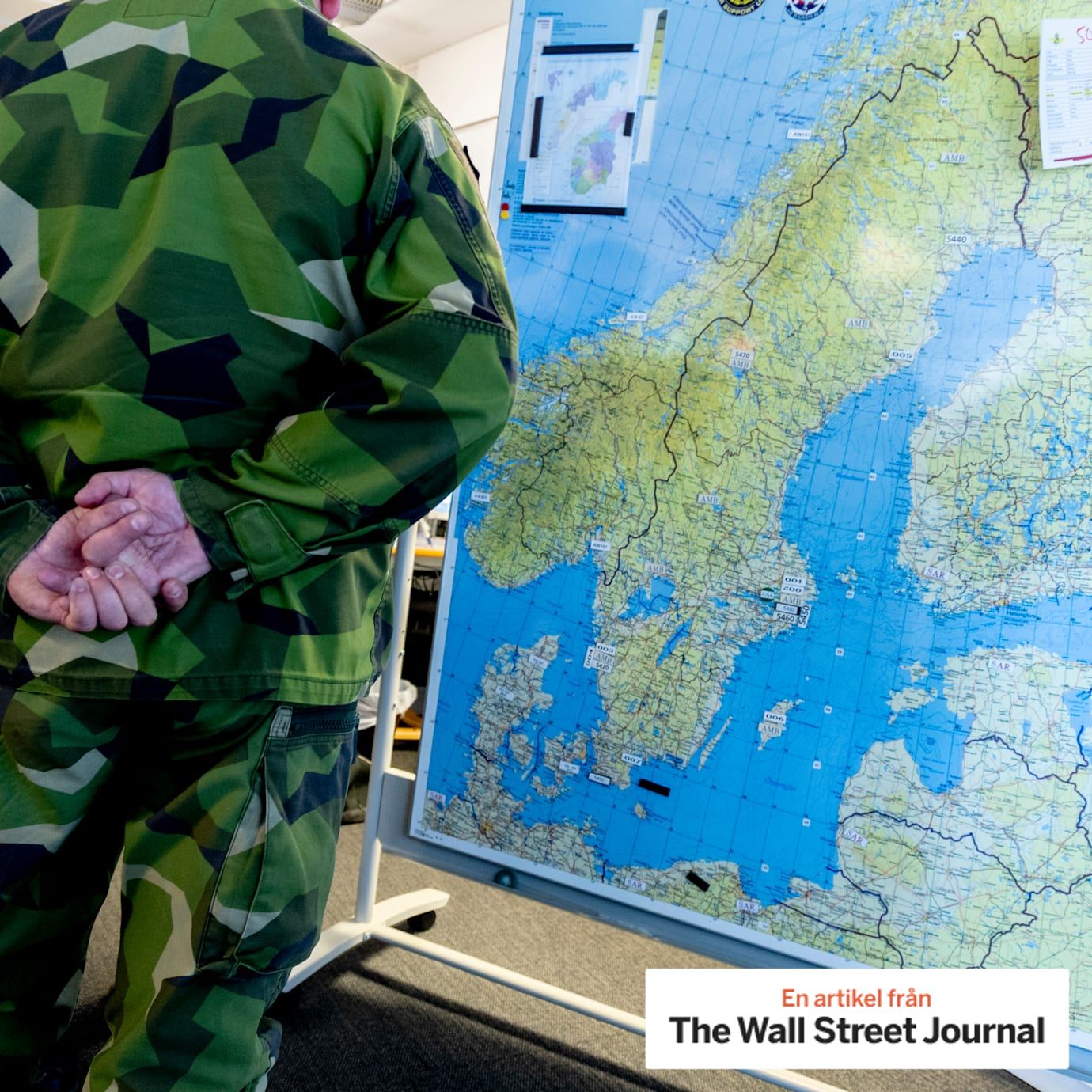
Rysslands strategiska positioner i Östersjön är svaga och om det blir krig skulle Ryssland försöka ockupera viktiga hamnar i området. Det säger militärexperten Stefan Lundqvist till Wall Street Journal.
– Faktumet att Gotland har en strategisk nyckelposition gör det högst sannolikt att det blir en krigsskådeplats i inledningsskedet av en konflikt.
Trots att det råder politisk kris kring Nato på grund av Trumps vacklande stöd för alliansen står den amerikanska krigsmakten fast vid sina åtaganden i Nordeuropa.
– Mina order har inte ändrats, säger den biträdande Europachefen, brigadgeneral Andrew Saslav.
 The Wall Street Journal
The U.S. Reinforces Europe’s Northern Front, Fearing War With Russia
In quest to make NATO more lethal, the Pentagon turns to the high north and the Baltics.
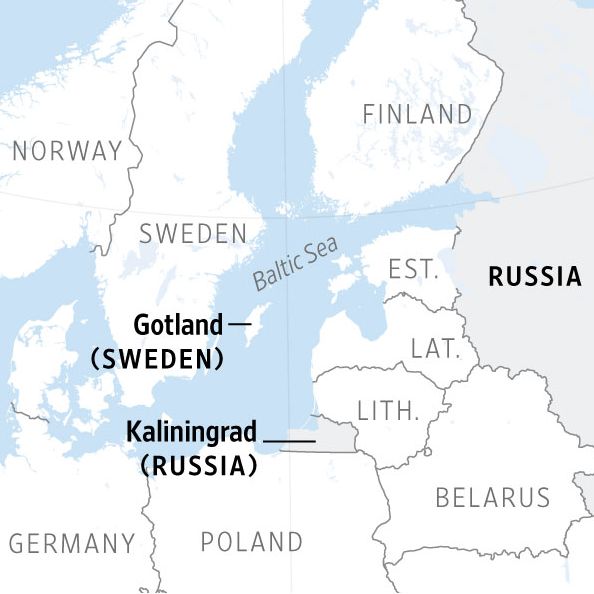
GOTLAND, Sweden—At the crack of dawn, a dozen U.S. Marines recently took position in a field on this sleepy Swedish island about 200 miles from the Russian city of Kaliningrad and fired their mobile rocket system.
The dummy munitions splashed into the Baltic Sea, yet they sent a message to Russia: Even as President Trump has thrown NATO into a historic crisis by questioning its efficacy, in Northern Europe, the U.S. military is doubling down.
The Trump administration wants the North Atlantic Treaty Organization to get more “lethal.” A testing ground is Europe’s north, where NATO faces Russia on two sides.
Some European officials worry that America’s commitment to the trans-Atlantic alliance is waning, given Trump’s criticism of it and his stated desire to reduce military engagement abroad, but U.S. military commanders say their posture remains firm.
“From a U.S. Army perspective, my orders haven’t changed,” said Brig. Gen. Andrew Saslav, deputy chief of staff for operations for U.S. Army Europe and Africa. While the question of future U.S. engagement is “on my mind,” he said, “I have been doing this too long to get hyperfocused on political winds and messaging that isn’t orders.”
The high north and the Baltics have been thrust into the center of U.S. war planning, as their access to shipping routes, territory and energy reserves will be crucial to the West in a new era of geopolitical conflict. The region is hawkish on Russia and is driving European efforts to rearm and boost defense budgets, including support for Ukraine’s armed forces.
During a three-week exercise, U.S. and U.K. forces joined Nordic and Baltic troops to practice potential war scenarios including live-fire drills, blood resupplies by drone and airborne jumps above the Arctic circle in Norway.
The goal was twofold: deter Russian aggression and more firmly integrate allies in this strategic corner of Europe, including new NATO members Finland and Sweden.
“Now that Finland and Sweden have become members of NATO, we have a continuous piece of NATO territory north of the Arctic Circle,” said Kristian Atland, senior research fellow with the Norwegian Defence Research Establishment, which advises Norway’s armed forces. “The Nordic NATO enlargement has also made it easier for NATO to transfer reinforcements to the Baltic states in the event of a military crisis or conflict in that region.”
Since the Russian invasion of Ukraine, Nordic countries have ramped up military spending. Finland shares an 800-mile border with Russia. Norway’s border with Russia is close to the Kola Peninsula, home to Moscow’s main submarine force, the Northern Fleet. Estonia, Latvia and Lithuania have long warned of Russia’s militaristic ambitions and provide sophisticated intelligence about their larger neighbor.
“It’s not about creating a club inside the club, it’s about making NATO stronger”
Still, officials here say deepening relations between the region and Washington shouldn’t deflect from NATO cohesion.
“It’s not about creating a club inside the club, it’s about making NATO stronger,” said Carl-Johan Edström, Swedish chief of defense staff. “But parallel to that, you can do some bilateral or multilateral cooperation or operations. That is only strengthening the collective defense.”
Gotland is among the most strategic locations in Northern Europe, allowing the deployment of sensors and long-range weapons systems to dominate air and sea operations in the Baltic region. Former Swedish defense chief Micael Bydén last year said that Russian President Vladimir Putin had “both eyes” on Gotland.
“As Russia’s maritime strategic locations in the Baltic Sea are very weak, any conflict will include Russia immediately seeking to occupy key port areas in the Baltics, Finland and Poland,” said Stefan Lundqvist, Sweden chair to the Ted Stevens Center for Arctic Security Studies in Alaska. “The key military strategic location of Gotland will most likely be the scene of hostile action in the opening stage of conflict,” he said.
After being demilitarized for years, Gotland is at the heart of Swedish rearmament. In war, the island can serve as a hub for NATO logistics and control of sea line communications, and to help build up offensive capabilities for deep strikes on enemy soil.
The projected wartime strength on the island is about 4,500 troops, and hundreds of conscripts arrive each year. They are an awkward fit among the residents, many of whom relocated here in recent years, attracted by Gotland’s natural serenity and medieval cobblestoned streets, not expecting shooting ranges in their backyard.
To simulate the defense of Gotland, a U.K. pathfinder platoon last week carried out reconnaissance. Days later, 110 U.K. paratroopers dropped 1,000 feet from two A400M transport aircraft onto an open field before trekking through the night through woods to secure an aircraft-landing zone.
Meanwhile, around midnight, a unit of U.S. Marines arrived nearby with a mobile rocket system, which can be deployed quickly in the event of war. Hours earlier, the Marines had been in Norway. After launching the dummy munitions—poles made of concrete—the Marines flew the system to Finland for a similar demonstration.
”Our challenge right now is, how do we keep the alliance tied together with this rapid change?”
The M142 High Mobility Artillery Rocket System, or Himars, has altered the course of the war in Ukraine since the U.S. provided it in mid-2022. The system fires Guided Multiple Launch Rocket System rockets, or GMLRS, with a range of about 45 miles, and longer-range Army Tactical Missile System known as ATACMS, which can shoot up to 186 miles.
Ukraine has used the system to hit Russian logistics, tanks, bridges, infantry groups and ammunition depots. Now, the Trump administration’s suspension of weapons deliveries to Ukraine threatens to undermine the gains.
One of the main tasks facing NATO members is to ensure that their respective military systems function smoothly together. The American-led rocket launch on Gotland relied on complex, multinational communication involving sensors, command-and-control and airfields in several countries. In Lithuania, NATO forces simulated evacuations and treatment of casualties through three types of medical and evacuation systems, each of which belonged to different nations.
The pace of technological invention, dominated by private companies rather than governments, has complicated such coordination.
“Our challenge right now is, how do we keep the alliance tied together with this rapid change?” Saslav said.