Högt uppsatt chef på Porsche gripen av tysk polis
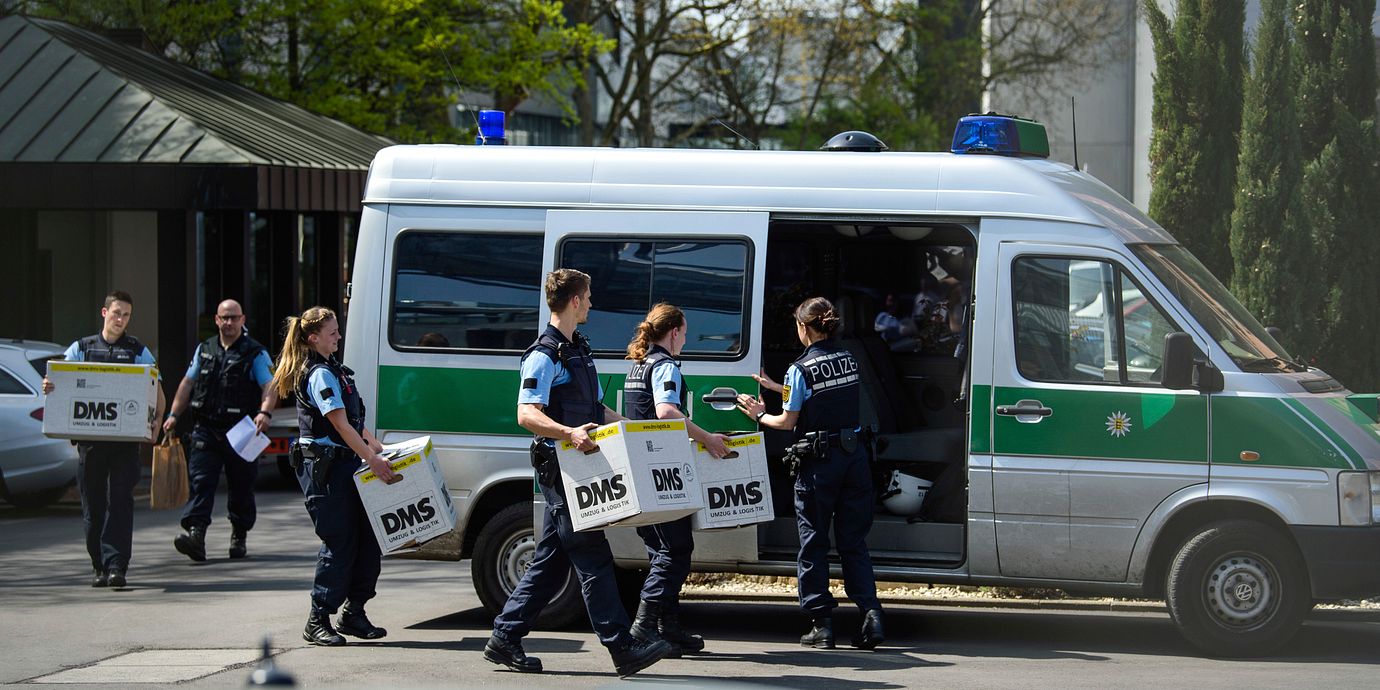
En av sportbilstillverkaren Porsches divisionschefer har gripits av tysk polis. Enligt en källa nära utredningen hålls chefen häktad på grund av flyktrisk, skriver TT.
Tidigare i veckan genomförde tysk polis razzior mot Porsche-adresser efter att misstankar riktats mot flera anställda om utsläppsfusk. Gripandet av den högt uppsatta chefen är kopplat till samma utredning, enligt nyhetsbyrån.
Läs mer
bakgrund
Utsläppsskandalen
Wikipedia (en)
The Volkswagen emissions scandal (also called "emissionsgate" or "dieselgate") began in September 2015, when the United States Environmental Protection Agency (EPA) issued a notice of violation of the Clean Air Act to German automaker Volkswagen Group. The agency had found that Volkswagen had intentionally programmed turbocharged direct injection (TDI) diesel engines to activate their emissions controls only during laboratory emissions testing which caused the vehicles' NOx output to meet US standards during regulatory testing, but emit up to 40 times more NOx in real-world driving. Volkswagen deployed this programming software in about eleven million cars worldwide, and 500,000 in the United States, in model years 2009 through 2015.
In 2014, the California Air Resources Board (CARB) had commissioned a study on emissions discrepancies between European and US models of vehicles from the International Council on Clean Transportation (ICCT), summing up the data from three different sources on 15 vehicles. Among them was a group of five scientists at West Virginia University, who detected additional emissions during live road tests on two out of three diesel cars. ICCT also purchased data from two other sources. The new road testing data and the purchased data were generated using Portable Emissions Measurement Systems (PEMS) developed by multiple individuals in the mid-late 1990s and published in May 2014.
Regulators in multiple countries began to investigate Volkswagen, and its stock price fell in value by a third in the days immediately after the news. Volkswagen Group CEO Martin Winterkorn resigned, and the head of brand development Heinz-Jakob Neusser, Audi research and development head Ulrich Hackenberg, and Porsche research and development head Wolfgang Hatz were suspended. Volkswagen announced plans to spend US$7.3 billion (later raised to €16.2 billion, US$18.32 billion) on rectifying the emissions issues, and planned to refit the affected vehicles as part of a recall campaign.
The scandal raised awareness over the higher levels of pollution emitted by all diesel-powered vehicles from a wide range of car makers, which under real-world driving conditions exceeded legal emission limits. A study conducted by ICCT and ADAC showed the biggest deviations from Volvo, Renault, Jeep, Hyundai, Citroën and Fiat, resulting in investigations opening into other diesel emissions scandals.
A discussion was sparked on the topic of software-controlled machinery being generally prone to cheating, and a way out would be to open source the software for public scrutiny.
In January 2017, Volkswagen pleaded guilty to criminal charges and signed an agreed Statement of Facts, which drew on the results of an investigation VW had itself commissioned from US lawyers Jones Day. The statement set out how engineers had developed the defeat devices, because diesel models could not pass US emissions tests without them, and deliberately sought to conceal their use. In April 2017, a US federal judge ordered Volkswagen "to pay a $2.8 billion criminal fine for rigging diesel-powered vehicles to cheat on government emissions tests." The "unprecedented" plea deal formalized the punishment which VW had agreed to.
Omni är politiskt obundna och oberoende. Vi strävar efter att ge fler perspektiv på nyheterna. Har du frågor eller synpunkter kring vår rapportering? Kontakta redaktionen