Kinesisk batterijätte laddar för global dominans efter IPO

Världens största batteritillverkare för elbilar, kinesiska CATL, växlar upp sin globala expansion efter veckans rekordstora börsnotering i Hongkong.
Pengarna som tas in kommer främst att gå till nya fabriker i Ungern och Spanien. Företaget, som bland annat levererar batterier till BMW och Toyota, satsar även stort på energilagring för AI-datacenter.
Med ny teknik som ger 52 mils körsträcka på fem minuters laddning höjer CATL ribban rejält. Expansionen sker samtidigt som efterfrågan på elbilar mattas av i väst, skriver The Economist.
 The Economist
China’s battery giant eyes world domination
CATL’s blockbuster listing will power its expansion.
Set amid a backdrop of lush rolling hills and marshy lakes, Ningde is an unassuming company town on the south-eastern coast of China, lined with low-rise buildings and apartment blocks. One structure stands out: a gleaming rectangular tower with a gently curving glass facade, which bears an uncanny resemblance to a giant lithium-ion battery pack.
This is the headquarters of the world’s largest battery-maker, CATL, whose products power a third of the world’s electric vehicles (EVs), and a similar share of energy-storage systems for grids. The meteoric rise of the company, founded in 2011, has lifted the economic output of Ningde, the hometown of its boss, Robin Zeng, above that of Estonia or Uganda.
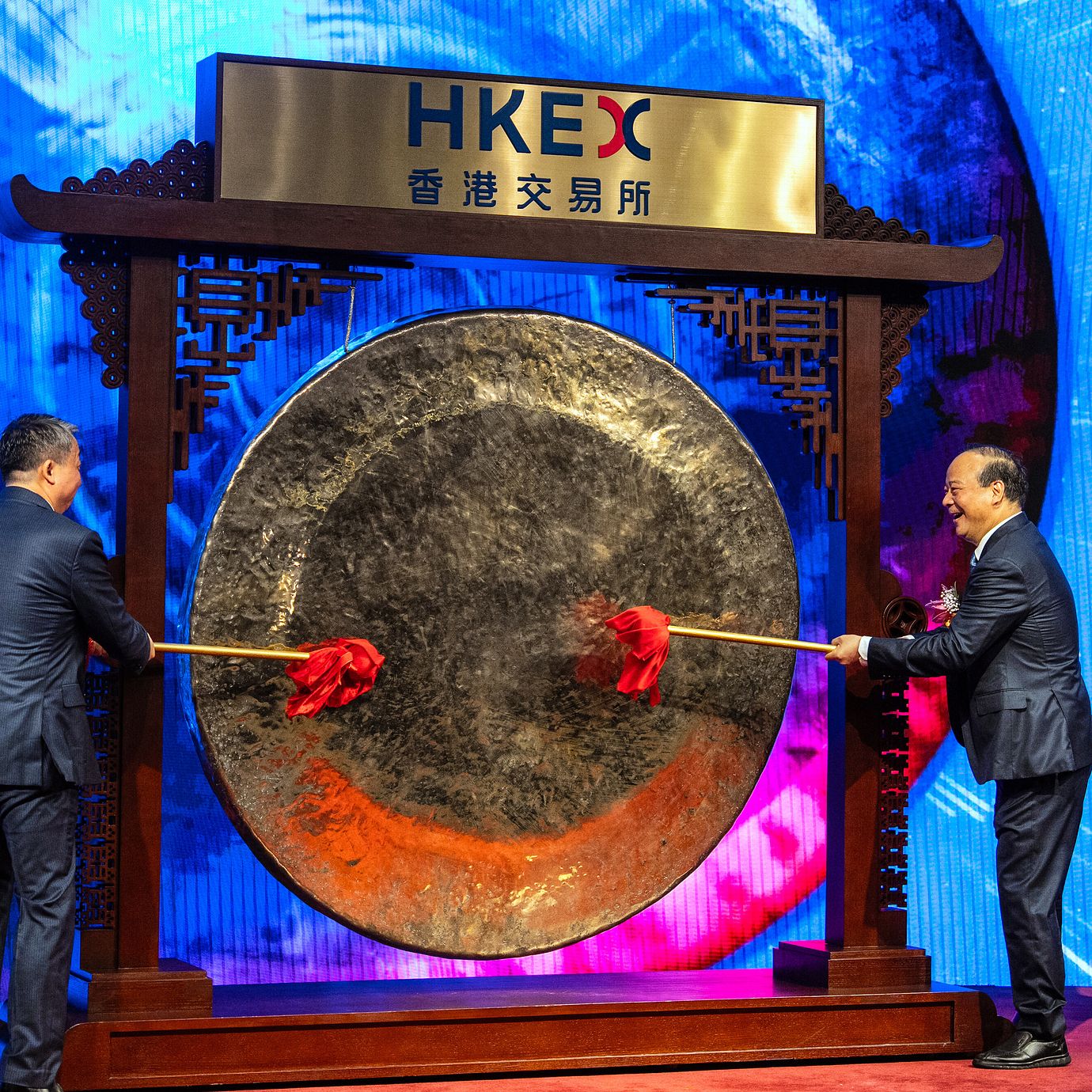
On May 20th CATL raised almost $5bn in a secondary listing in Hong Kong, making it the largest share offering so far this year. Investors raced to get their hands on the stock, sending its price up by 16%. The sum is a small fraction of the $160bn market capitalisation of the firm, which first listed its shares in Shenzhen in 2018. But the Hong Kong offering is a clear statement of intent: not satisfied with dominance at home, China’s battery behemoth plans to spread across the globe.
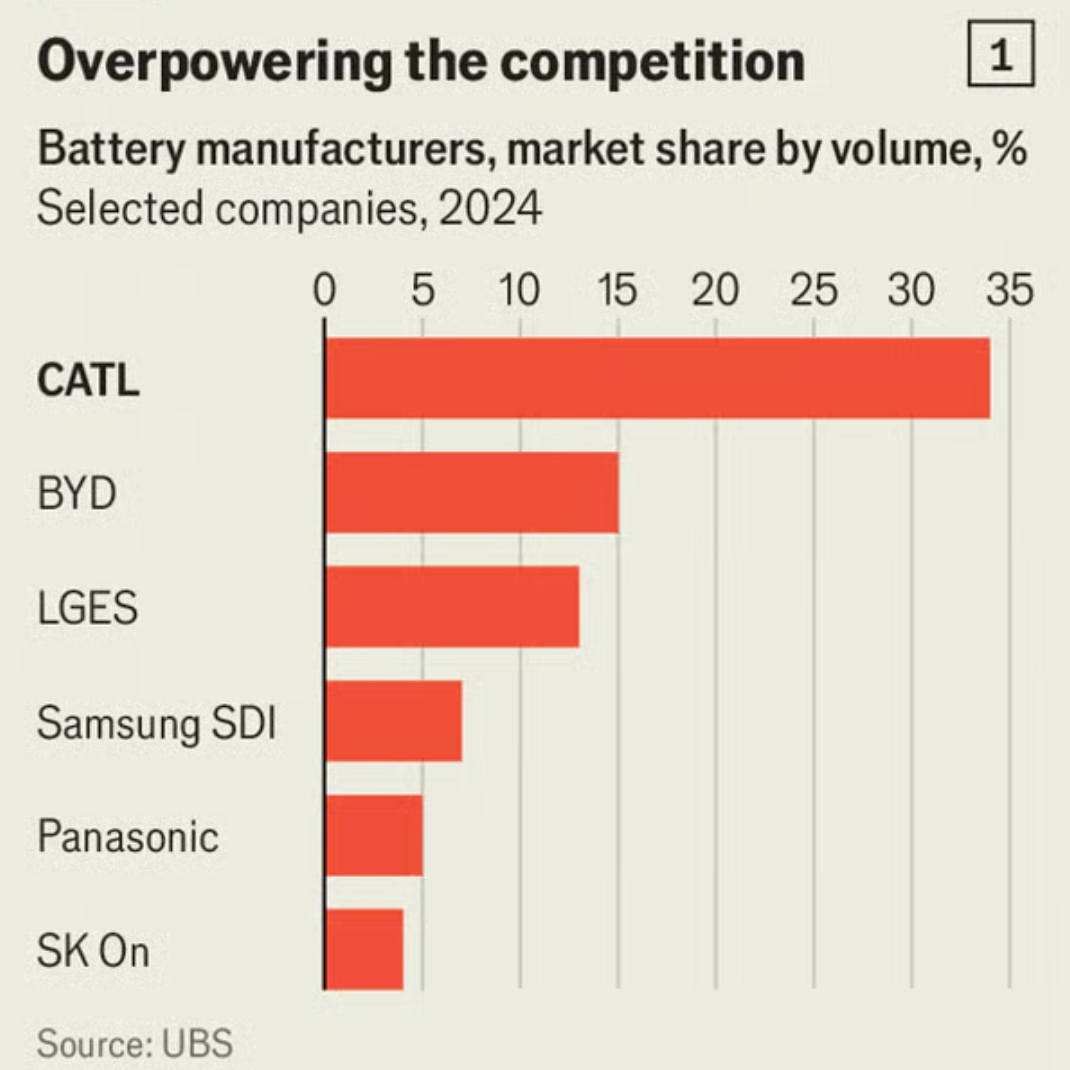
CATL is already by far the largest firm in its industry. Its production volume is more than double that of BYD, its closest competitor, which has the advantage of being the world’s biggest maker of EVs (see chart 1). CATL’s 11 manufacturing sites across China cover nearly 20m square metres between them. The company, which employs over 100,000 people, also owns lithium mines and an offshore wind farm.
Its scale and vertical integration have driven down costs and lowered prices. Although revenue fell by 10% last year, to 362bn yuan ($50bn), net profit rose by 16%, to 52bn yuan, delivering a healthy margin of 14%. Rivals have struggled to keep up. LG Energy Solution of South Korea, CATL’s biggest competitor outside China, made a net loss last year.
Now the battery giant is looking to strengthen its position abroad. Exclude China, and LG Energy Solution was narrowly ahead last year on sales volumes, according to UBS, a bank. But CATL is fast catching up: last year it generated 30% of its revenue abroad, up from less than 4% in 2018. Its carmaking customers include BMW, Mercedes and Toyota. The company also powers grid-storage systems in Nevada and Texas, and recently announced the world’s biggest energy-storage project in the United Arab Emirates.
In order to be closer to its customers, CATL is expanding its manufacturing footprint. At present, its production capacity is almost entirely in China, which makes around 85% of the world’s batteries. In 2023 CATL opened its first overseas factory, in Germany. About 90% of the proceeds from its Hong Kong listing will be used to fund the construction of its next, in Hungary, which is due to start production this year. In December CATL also announced a joint venture with Stellantis, another carmaker, to build a battery factory in Spain, which aims to start production by the end of next year. (Exor, the largest shareholder in Stellantis, owns a stake in The Economist’s parent company.)
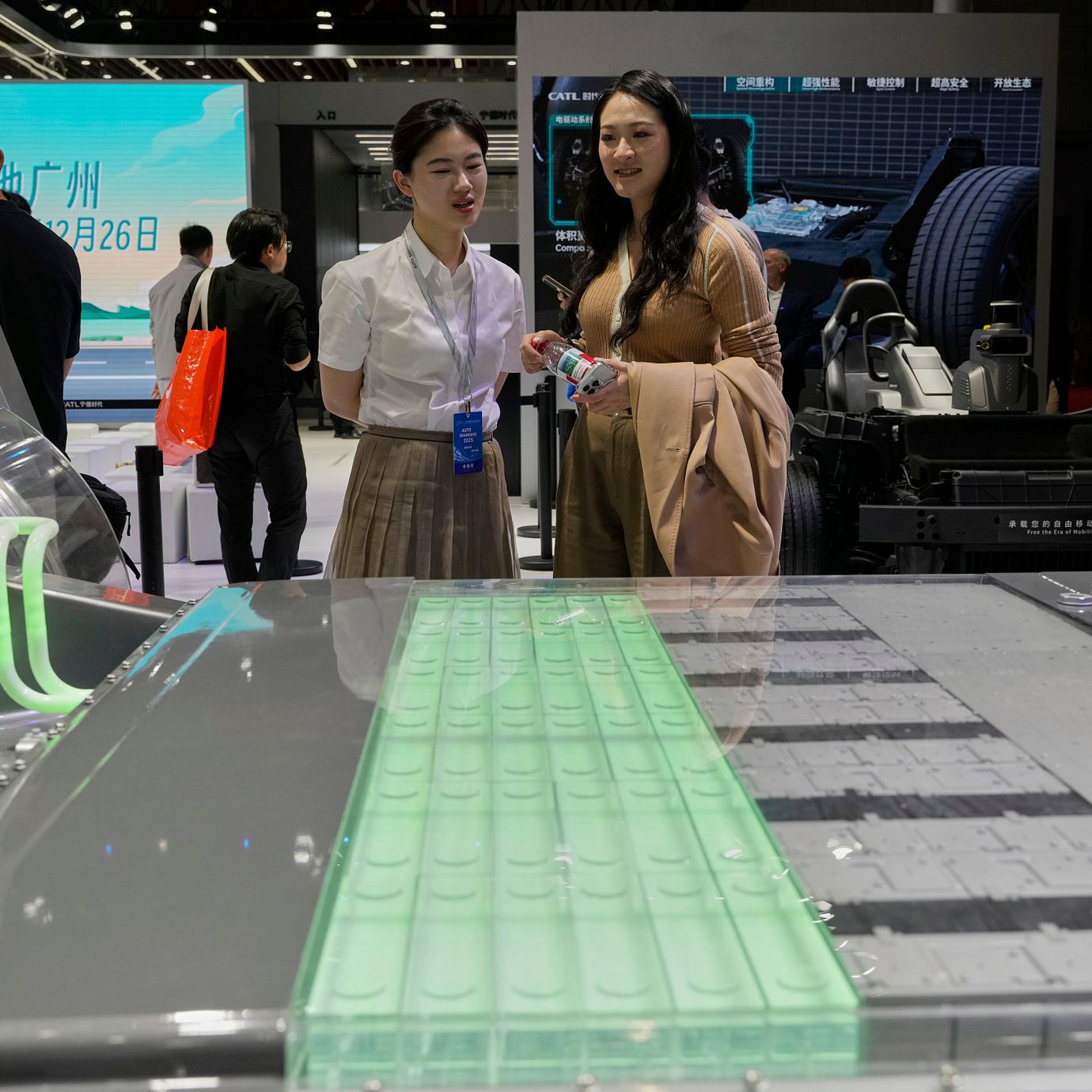
At the same time, CATL is continuing to push the boundaries of battery technology. It spent $2.6bn on research and development last year, more than triple the amount invested by LG Energy Solution. In April it unveiled a battery that can provide 520km (323 miles) of driving with five minutes of charging, stealing the thunder of BYD, which a month before announced it had developed one that can do 400km on the same charge time.
“The PhDs”, as CATL’s renowned research unit is referred to internally, work across the business. Some focus on fundamental battery chemistry. Others concentrate on improving the manufacturing process, much of which is performed by robots. Others still collaborate with suppliers and customers to develop new products. The company has more than 40,000 granted or pending patents.
What could short-circuit CATL’s global ambitions? One risk is China-bashing politicians in America, who have been less welcoming than their counterparts in Europe. The country accounted for less than 6% of CATL’s sales last year, and represents an important growth opportunity. In January the company was placed on a blacklist by America’s defence department over alleged ties to China’s military, which CATL has described as “a mistake”. Although the designation has had few immediate consequences for the company, it may make it harder to lure American customers. Last year CATL batteries used by Duke Energy, an American utility, to help power a military base in North Carolina were decommissioned under pressure from lawmakers. In April American politicians asked banks including JPMorgan Chase and Bank of America to halt their work on CATL’s Hong Kong listing. (They ignored the request.)
”We want to electrify whatever can be electrified”
A second risk is decelerating demand for EVs in the West. Their sales continue to power ahead in China, but are slowing in America and have stalled in Europe, owing to weakening consumer sentiment and a reduction in subsidies.
Nevertheless, CATL has plenty of room for further expansion. It is licensing its technology to others, including Ford in America. Faced with uncertainty in the EV market, it is also expanding its higher-margin energy-storage business. This accounted for 16% of revenue last year, up from less than 1% in 2018. Sales volumes have risen in tandem with global renewable-energy capacity. This month the company announced a giant battery system designed to support power-hungry artificial-intelligence data centres; it stacks vertically, to minimise the space required. The firm is also branching into batteries for trucks and ships: “We want to electrify whatever can be electrified,” says an executive. China’s battery giant shows no sign of losing power.
© 2025 The Economist Newspaper Limited. All rights reserved.