Lista: Förvaltarlöner stiger – 233 miljoner dollar till toppchefer förra året
Blackrocks vd Larry Fink behåller sin position som den högst betalda toppchefen inom kapitalförvaltning. Det visar en ny rankning som Financial Times har gjort med 31 företag i Europa och USA.
Totalt ökade lönerna och bonusarna med 12 procent till 233 miljoner dollar förra året.
– Sammantaget har ersättningar till vd:ar granskats mer under de senaste fem åren, delvis på grund av reglering, men också till följd av allmänhetens ökade medvetenhet om chefslöner, säger Tim Wright, grundare av Wright Reward, till tidningen.
Larry Fink retains position as highest-paid CEO in asset management
Combined pay and bonuses among industry’s leaders rises to $233m last year.
Chris Flood, 15 August 2020
The chiefs of 31 US and European asset management businesses took home combined pay and bonuses that rose 12 per cent to $233m last year, a bumper increase that masks widely divergent rewards for the industry’s top leaders.
Large pay growth for chief executives across the corporate landscape over the past decade - at a time when earnings for ordinary workers have stagnated - has led to public anger and growing calls for restraint.
Pay rises for asset management chief executives have attracted particular attention because of the weak performance of many actively managed funds and disappointing returns from supposedly sophisticated multi-asset strategies.
Asset managers also face accusations that lavish awards to their chiefs blunt their ability to challenge exorbitant executive pay deals in the companies in which they invest.
This has raised questions about the effectiveness of asset managers as corporate stewards and led to heightened scrutiny of their voting records on pay.
FTfm has expanded its analysis of the annual reports and regulatory filings of listed asset managers, banks and insurers to shine a light on the salaries of investment chief executives.
Fourteen of the incumbent CEOs that had been in their post for more than a year received an increase in their total pay while 11 chief executives saw total remuneration fall, often as a result of changes in performance-based stock awards.
This analysis, however, has limited scope, because many big asset managers, including Vanguard, Fidelity, Capital Group and Wellington, provide no insight into senior staff pay.
Secrecy on executive pay by some of the industry’s heavyweights undermines claims they are strengthening their focus on environmental, social and governance issues in response to pressure from investors for a more sustainable form of capitalism.
Tim Wright, founder of Wright Reward, an asset management reward consultancy, says the publicly available data on asset management CEO pay is a small subset of the entire industry and must be interpreted with care.
“Overall there has been much more scrutiny of awards to CEOs by remuneration committees over the past five years, due in part to regulation and also as a result of the increased public awareness about executive pay. Many asset managers grew their revenues and profits in 2019 yet remuneration committees typically agreed relatively prudent awards for CEOs,” he says.
Annual remuneration and performance bonuses
The pay awards reported here are public data based on the Securities and Exchange Commission’s disclosure guidelines. The US regulator specifies that annual remuneration disclosures should include all cash earnings and equity-based incentive payments made in a particular year, even if some of these awards are based on performance in another period. This can lead to differences with the “headline” pay figures reported by companies.
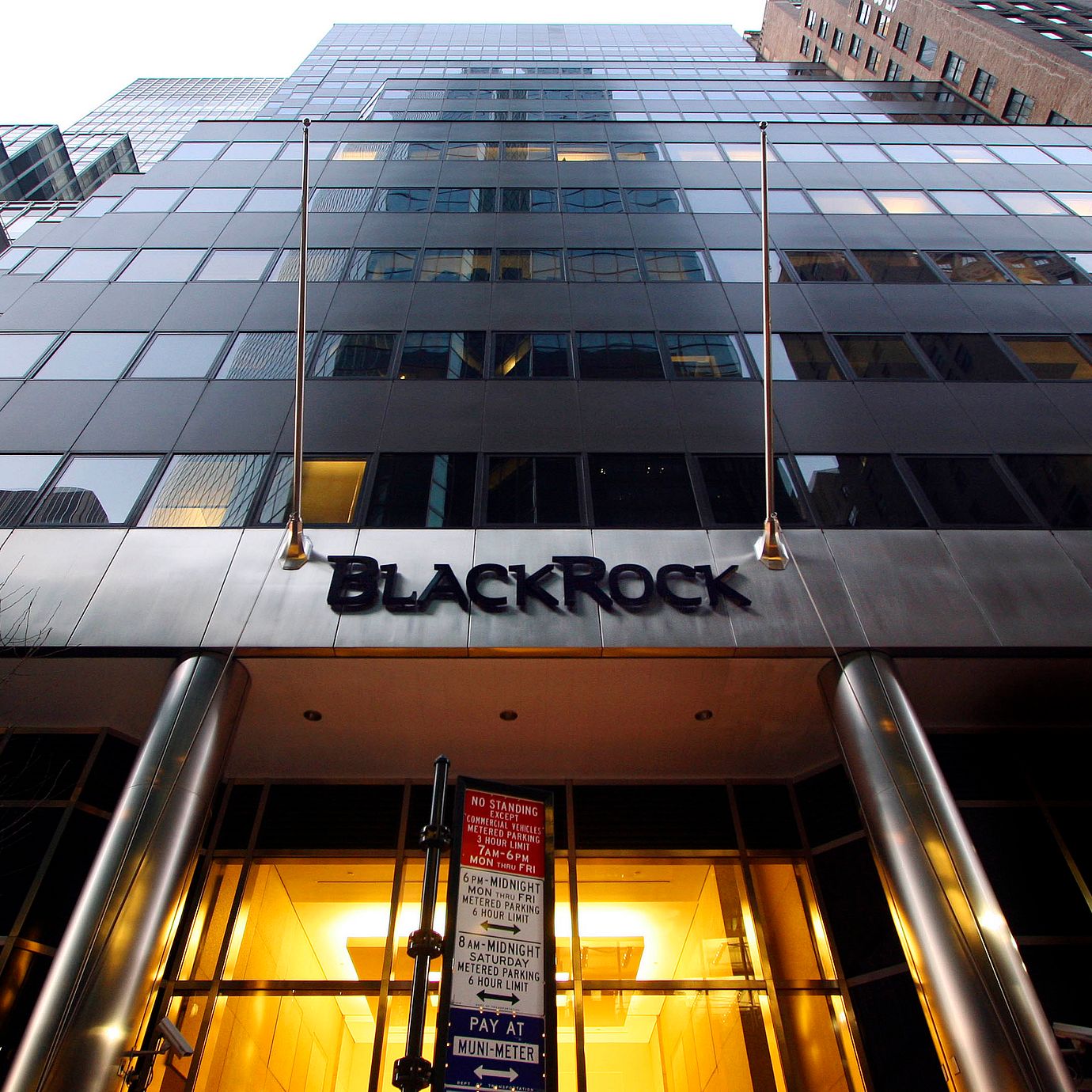
BlackRock awarded a 5 per cent pay rise last year to Larry Fink, taking total remuneration for the head of the world’s largest asset manager to $25.3m, ahead of all industry rivals. This modest increase came after a year when BlackRock attracted investor inflows of $429bn, a record for new annual business across the fund industry.
Under the SEC’s disclosure guidelines, which exclude some performance-based stock awards made in January 2020, Mr Fink’s pay fell to $24.3m, down 8.3 per cent on 2018, but he retains his position as the asset management industry’s best paid CEO.
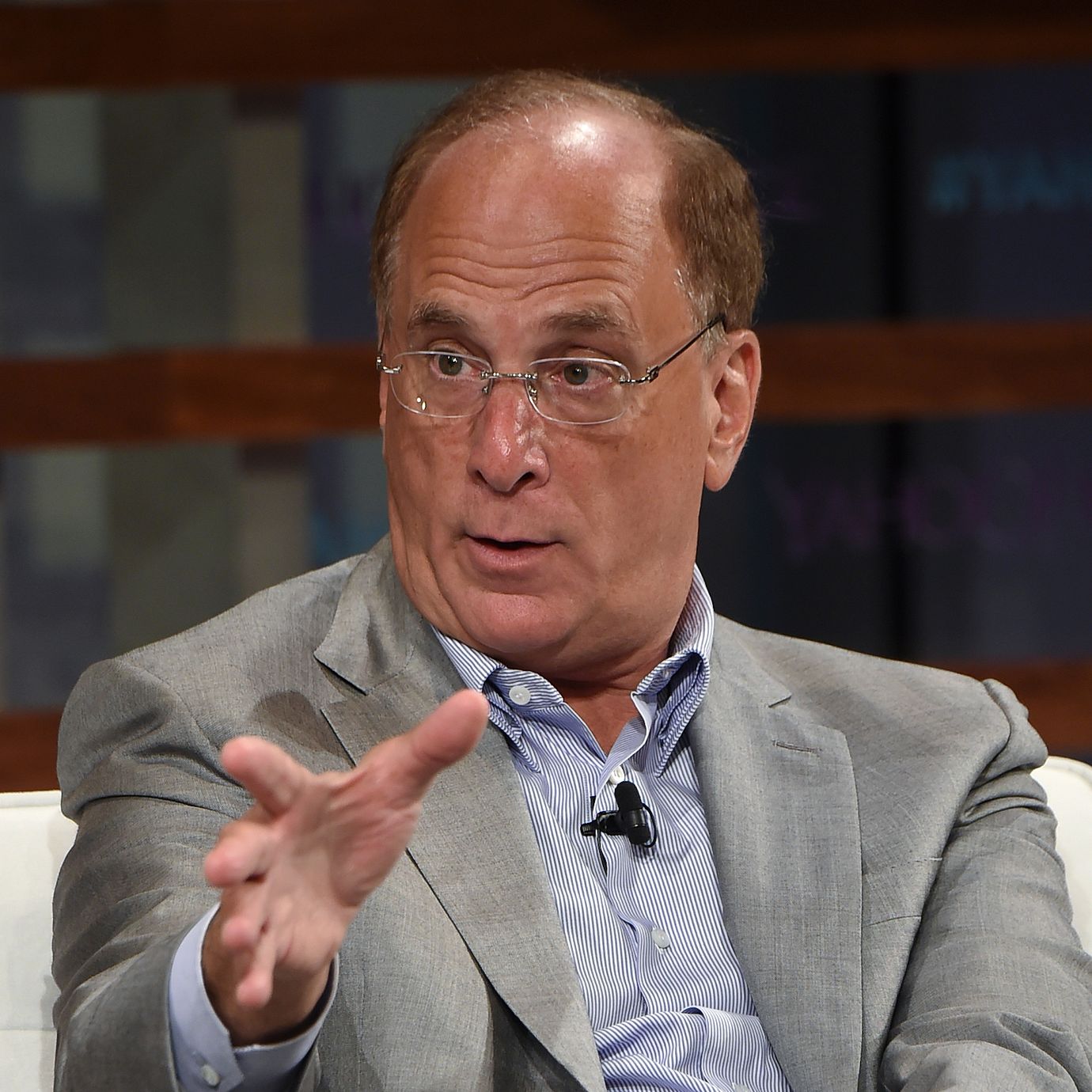
Mr Fink is also entitled to about $50.8m in stock awards that have not yet vested.
Stock awards can increase significantly in value from when they are granted to when they are vested, or cashed in. As a result, some analysts argue that it is more accurate to report pay data that include the contribution made by vested stock awards instead of the fair value estimates used when they are granted.
Using this measure, Mr Fink’s realised remuneration (basic salary, cash bonus, other payments and vested shares) reached $31m, down from $51.3m in 2018.
Critics argue that the current arrangements for determining chief executive remuneration are fundamentally flawed and not appropriately balanced with the interests of shareholders, employees and other stakeholders.
Compensation committees that oversee pay awards to CEOs and other senior staff are labelled as independent but their members are paid generously by the same companies. Compensation committees tend to be advised by specialist consultants that analyse remuneration packages at nearby competitors. But the consultants are also paid by the companies and there is little incentive for them to bite the hand that feeds.
Total pay for Marty Flanagan at Invesco fell 10.9 per cent to $11.5m after the Atlanta-based group reported net outflows of $27.2bn in 2019 and a 36 per cent tumble in net income.
Joe Sullivan’s total pay fell 13 per cent to $8.7m in his last full year as CEO at Legg Mason, which was recently acquired for $4.5bn by Franklin Templeton. Total pay for Greg Johnson, who was Franklin’s CEO since 2004, rose 10.6 per cent to $10.4m. He was succeeded in February by Jennifer Johnson, the fourth member of the Johnson clan to lead Franklin Templeton since it was founded in 1947.
Philip Sanders, chief executive at Waddell & Reed, saw a substantial fall in his total pay in 2019 due mainly to delays in the awards of performance-based payments until this year.
Other US asset management chief executives that saw declines in total remuneration included Mitchell Harris at BNY Mellon and Guang Yang, who stepped down in April as chief of Brightshere. Suren Rana was promoted from chief financial officer to CEO.
Affiliated Managers Group promoted Jay Horgen to CEO in May 2019 to replace Nate Dalton who stood down after just a year following hefty outflows and a sharp fall in AMG’s share price. AMG agreed an entirely new compensation contract with Mr Horgen which has different performance targets than those of his predecessor.
As a result, the value of Mr Horgen’s pay jumped to $24.2m from $5.8m in 2018 when he was chief financial officer.

AMG said Mr Horgen’s equity stake in the business was significantly lower than CEOs at peer asset management companies so a one-time grant was made to him and other senior leaders. This award is performance based and will have no value if targets are not met.
“A new CEO can provide an opportunity for the remuneration committee to scale back on executive pay awards but sometimes it also allows one-off awards to be made to ensure that the incoming CEO or senior team has real skin in the game,” says Mr Wright.
A number of other US CEOs saw eye-catching increases including Jonathan Steinberg at WisdomTree, where performance based awards boosted his total remuneration from $2m in 2018 to $6.1m. New York-based WisdomTree gathered positive inflows of $596m in 2019 after $4.4bn of outflows the previous year.
Vijay Advani stepped down in January after less than three years as CEO of Nuveen but collected total remuneration of $7.2m, a 12.5 per cent rise.
Mario Gabelli, the majority owner of Gamco, should be viewed separately as founder and CEO of the New York-listed value focused investment manager. He has an unusual employment contract that saw his pay, which is entirely performance based, rise from $1.8m to $5.4m last year.
Movers & shakers
CEO arrivals and departures have also featured in Europe this year.
Keith Skeoch collected total pay of $1.9m in 2019, a 35.7 per cent rise after he became sole chief executive of UK-based Standard Life Aberdeen in March 2019 after Martin Gilbert stepped down as co-chief. Standard Life Aberdeen announced in June that Mr Skeoch was leaving and would be replaced by Stephen Bird, a former Citigroup banker, in an abrupt shake-up of the top ranks.
Michelle Scrimgeour, previously the head of Columbia Threadneedle’s European business, took over as head of Legal & General Investment Management from Mark Zinkula in July last year. Ms Scrimgeour earned $3.1m for her initial six months, while performance share awards boosted Mr Zinkula’s total pay to $3.1m before his departure at the end of August.
Andrew Formica succeeded Maarten Slendebroek as CEO at Jupiter in March, while Peter Sanderson replaced GAM’s interim CEO David Jacob in September.
Hendrik du Toit’s total pay as head of Investec’s asset management business dropped 36 per cent to $1.8m in the year ended March. The Investec unit listed as Ninety One in London and Johannesburg in March after completing a demerger from the parent South African banking group.
“Most asset management companies have functioned well so far during lockdown and markets have rebounded strongly from their lows”
Yves Perrier, veteran CEO at Amundi, said in April that he would donate half of his €2m bonus for 2019 to support a coronavirus relief fund set up by Crédit Agricole, the French bank. Mr Perrier’s pay was unchanged in dollar terms at $3.2m last year.
Mr Wright says conversations about CEO pay at remuneration committees later this year will be “very interesting” as the impact of coronavirus on economic growth and unemployment becomes clearer.
“Most asset management companies have functioned well so far during lockdown and markets have rebounded strongly from their lows. If this continues, it will be challenging for remuneration committees to decide how to take account of coronavirus in their deliberations over 2020 awards to fund company CEOs at a time when many other sectors have been hit very hard,” he says.
Data for European CEOs were converted to US dollars using period average exchange rates for the relevant company reporting years. As a result, the growth rates shown for European CEOs differ slightly from the local currency data disclosed in company annual reports.
The best paid chief executives
2019 total pay ($m) • 2018 total pay ($m) • % change in pay • CEO pay as a ratio of revenues (basis points)
BlackRock, Larry Fink: 24.3 / 26.5 / -8.3 / 16.7
AMG, Jay Horgen: 24.2 / 5.8 / 317.2 / 108.0
T Rowe Price, William Stromberg: 14.6 / 13.1 / 11.5 / 26.0
Eaton Vance, Thomas Faust: 13.4 / 12.4 / 8.1 / 79.6
Invesco, Marty Flanagan: 11.5 / 12.9 / -10.9 / 26.0
Franklin Templeton, Greg Johnson: 10.4 / 9.4 / 10.6 / 18.0
Janus Henderson, Dick Weil: 10.1 / 9.1/ 11.0 / 46.1
AllianceBernstein, Seth Bernstein: 9.4 / 8.8 / 6.8 / 26.7
Lazard, Ashish Bhutani: 9.1 / 10.1 / -9.9 / n.a.
Legg Mason, Joseph Sullivan: 8.7/ 10 / -13.0 / 29.8
Schroders, Peter Harrison: 8.3 / 9 / -7.8 / 25.6
Columbia Threadneedle, Ted Truscott: 7.7 / 7.5 / 2.7 / 26.4
BNY Mellon, IMMitchell Harris: 7.4 / 8.9 / -16.9 / n.a.
DWS, Asoka Wöhrmann: 7.4 / 1.2 / 516.7 / 27.6
Nuveen, Vijay Advani: 7.2 / 6.4 / 12.5 / n.a.
MetLife, Steve Goulart: 7.16.76.0 / n.a.
Principal Global, Tim Dunbar: 6.22.6138.5 / n.a.
WisdomTree, Jonathan Steinberg: 6.1 / 2205.0227.6
Federated Hermes, Christopher Donahue: 5.7 / 5.4 / 5.6 / 43.0
Gamco, Mario Gabelli: 5.4 / 1.8 / 200.0 / 173.1
Ashmore, Mark Coombs: 4.7 / 1.9 / 147.4 / 114.6
Amundi, Yves Perrier: 3.2 / 3.2 / 0.0 / 10.5
LGIM, Mark Zinkula: 3.1 / 3.3 / -6.1 / 26.7
LGIM, Michelle Scrimgeour: 3.1 / n.a. / n.a. / 25.8
Man Group, Luke Ellis: 2.8 / 2.8 / 0.0 / 25.2
SEI, Alfred West: 2.2 / 2.1 / 4.8 / 13.3
Waddell & Reed, Philip Sanders: 1.9 / 4.5 / -57.8 / 42.7
Standard Life Aberdeen, Keith Skeoch: 1.9 / 1.4/ 35.7 / 9.0
Investec, Hendrik du Toit: 1.8 / 2.8 / -35.7 / n.a.
Jupiter, Andrew Formica/Maarten Slendebroek: 1.7 / 2.7 / -37.0 / 34.9
BrightSphere, Guang Yang: 1.3 / 11.7 / -88.9 / 15.9
Gam, Peter Sanderson/David Jacob: 1.1 / 2.4 / -54.2 / 32.8