Marknadsdrottningar visar att Afrikas handel underskattats
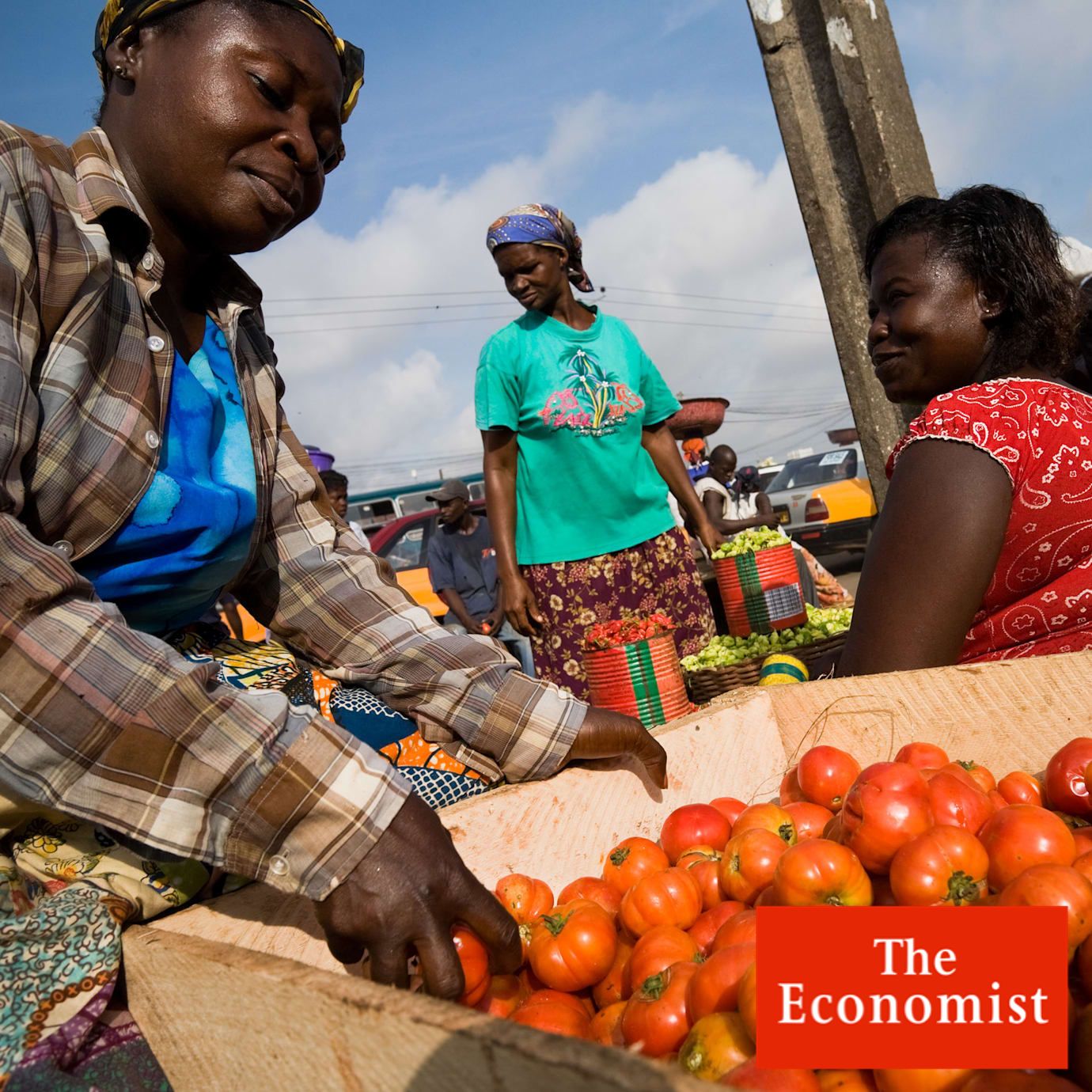
Västra Afrikas matmarknader drivs i stor utsträckning av kvinnliga handlare som korsar landsgränser och organiserar storskalig, informell handel. Enligt OECD omsätter livsmedelshandeln inom regionen över 10 miljarder dollar årligen – upp till sex gånger mer än vad officiell statistik visar.
Många av dessa affärer sker utanför tullkontrollerna, ofta med hjälp av hyrda lastbilar. Så kallade marknadsdrottningar, som de kallas i Ghana, spelar en central roll i nätverken, skriver The Economist.
 The Economist
African trade has been vastly underestimated
The continent’s food markets are more dynamic than commonly thought.
You would not expect a small market on the edge of the Sahel to sell much seafood. But Paga, a town in northern Ghana near the border with Burkina Faso, has plenty. Adjoa al-Hassan sources the dried fish piled high in front of her from all over west Africa. When supply from Takoradi, a Ghanaian port city, runs dry she and her fellow “market queens”, as the women who dominate informal trade are known, hire a lorry and head north to Ouagadougou, the capital of neighbouring Burkina Faso. The fish they buy may have come from Togo, Benin or even coastal Nigeria. For local traders, the queens are surprisingly international.
That African countries trade too little with each other is a well-worn gripe among the continent’s policymakers. Officially, just 15% of the continent’s trade is internal. The need to overcome this distorting legacy of colonialism, which linked African exporters to markets overseas while isolating them from their neighbours, lies at the heart of the African Continental Free Trade Area (AfCFTA), an ambitious pact that came into effect five years ago this month. To ensure the continent has enough food in the coming decades, the African Union wants food production to increase by half and intra-African trade in agricultural produce to triple in value within the next ten years.
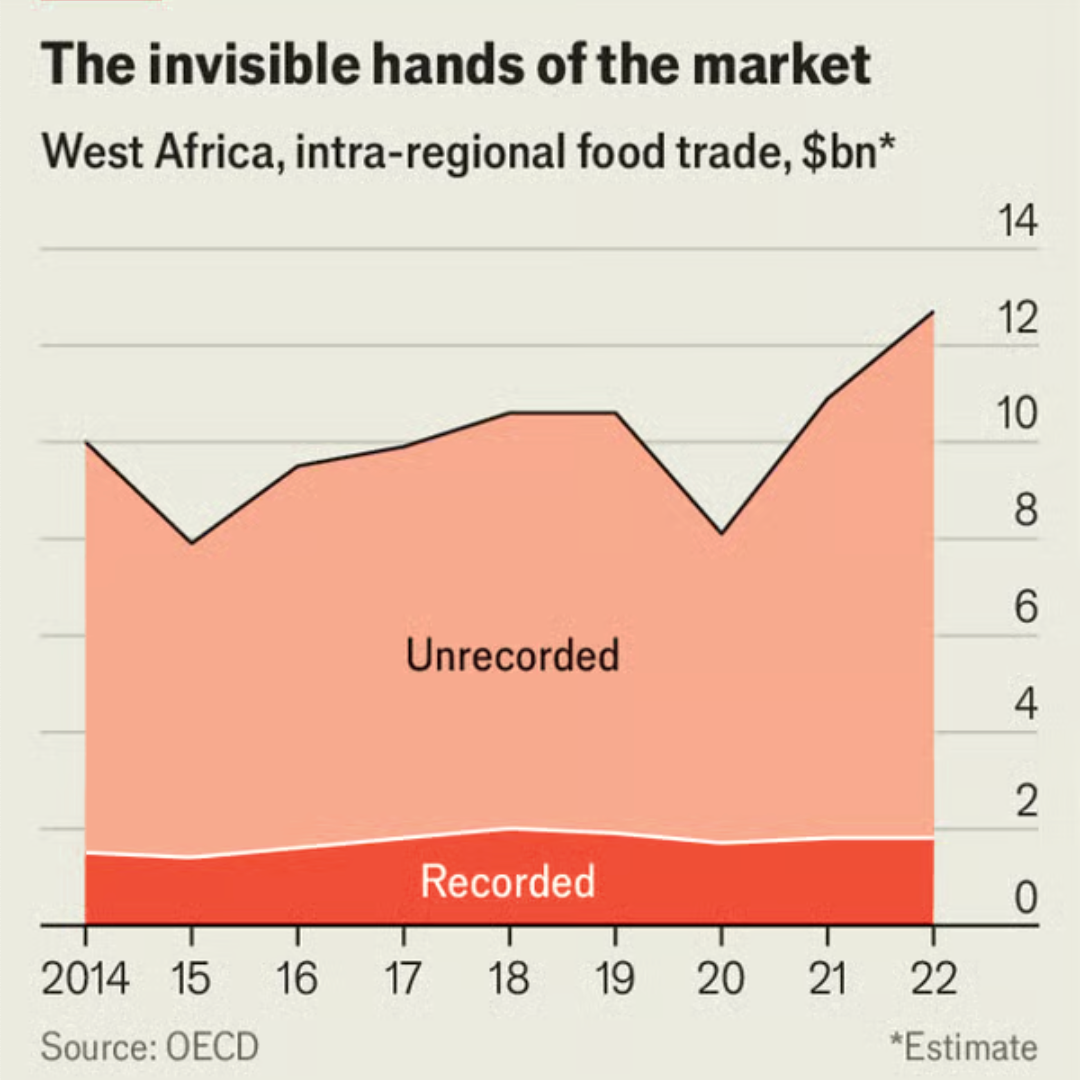
It is a worthy goal, but it is also built partly on a myth. Data collected in recent years have helped demonstrate that official estimates omit a large volume of the continent’s internal trade, particularly in food. According to new research by the OECD, a club mostly of rich countries, some $10bn-worth of food is in fact traded each year within west Africa alone. That is as much as six times higher than official tallies. At a time of rising protectionism in some parts of Africa, such findings hold lessons for leaders whose pursuit of agricultural self-sufficiency risks setting back this progress.
Much of the continent’s food trade goes unrecorded. When goods travel by road, as they generally do, attempts to count them tend to be a “disaster”, says Antoine Bouët of CEPII, a French think-tank. Livestock, for instance, are often traded by herders who—to the chagrin of customs officers—rarely pass official border crossings. When estimates of these unrecorded flows are combined with official data, the intra-regional portion of west Africa’s raw-food exports, excluding cashews and cocoa, jumps from one-third to three-fifths, according to the OECD. This share is comparable to that of the European Union.
The conventional wisdom that merchants such as Ghana’s market queens are mostly small-time traders is similarly misleading
It is not just food. A CEPII study in Benin in 2018, which found that official statistics had underestimated the value of its overall trade with neighbouring Nigeria by 50% for imports and by 85% for exports, noted that the goods exchanged included industrial products and textiles. The conventional wisdom that merchants such as Ghana’s market queens are mostly small-time traders is similarly misleading. The OECD finds that nearly 90% of unrecorded food trade in west Africa consists of large-scale transactions involving heavy lorries. Even women selling tomatoes in Paga sometimes hire fleets of lorries to shift their produce over long distances. Nearly half of Ghana’s trade in Africa is with countries with which it does not share a border.
In theory more integrated markets should boost food security. Much of the food flowing between countries in west Africa is highly nutritious. Brahima Cisse, a trade expert at the Economic Community of West African States (ECOWAS), the region’s main bloc, notes that whereas Sahelian countries have extra livestock to sell, their coastal neighbours have surpluses in roots like cassava and yam. By simply supporting regional trade, governments could do a lot to mitigate shortages and price shocks.
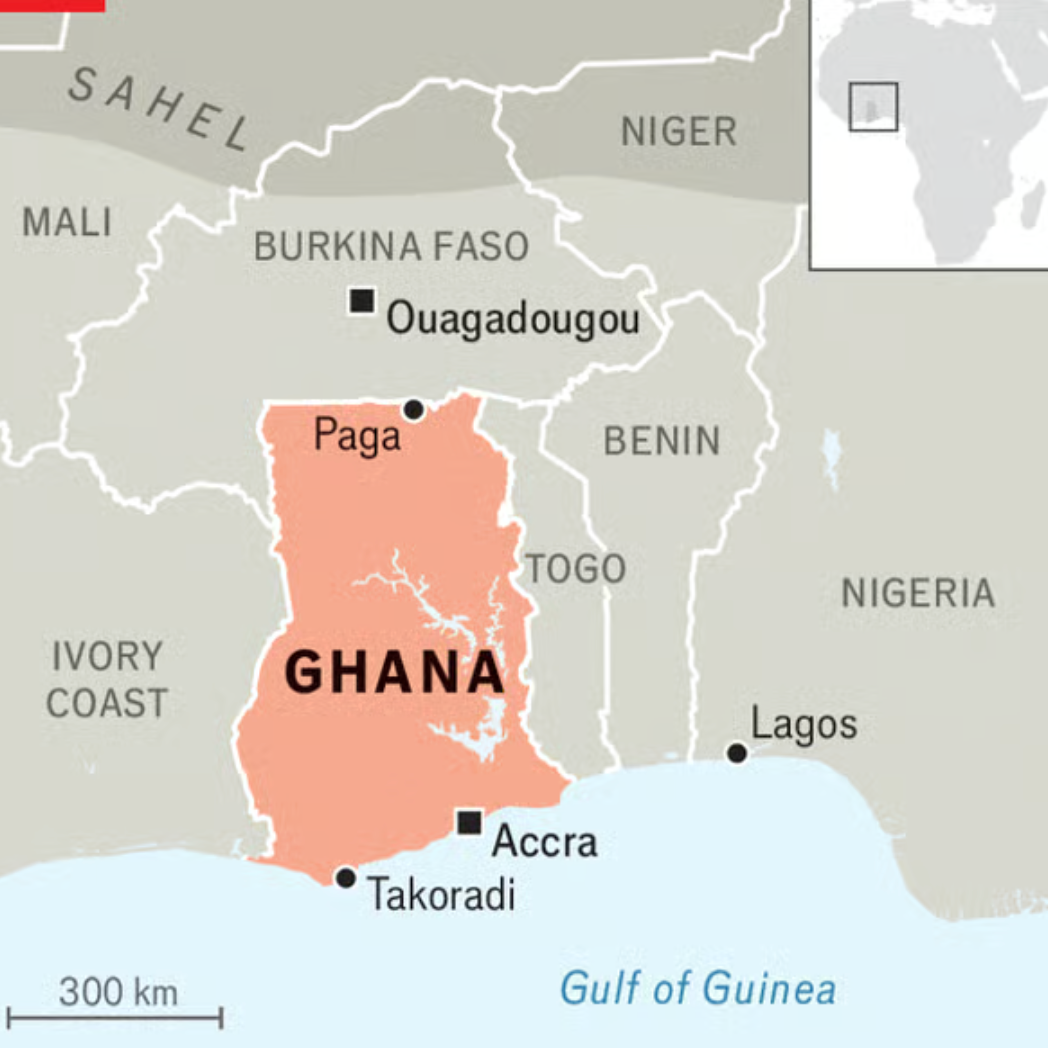
Unfortunately, too many African governments are turning to protectionism in a bid to boost what they call national “food sovereignty”. Burkina Faso, Mali and Niger, which quit ECOWAS last year, are the worst offenders. In Ouagadougou traders complain that the government forces them to source food like fish locally before they are allowed to import. Mr Cisse notes that Burkina Faso’s recent restrictions on shea-nut exports, designed to develop its domestic nut-processing industry, have closed factories in Ghana and Ivory Coast. Benin imposed a host of export restrictions and taxes on crops including rice in 2022. Zambia blocked exports of corn between 2024 and 2025.
Despite their pledges, many governments are not rushing to implement the AfCTA. “State elites often really benefit from the imperfections of regional integration,” argues Olivier Walther, an expert in west African trade at the University of Florida, for instance by exploiting the opportunities for arbitrage that come with high tariffs and inefficient custom procedures. Some simply fear their industries being overwhelmed by cheap imports from big economies such as South Africa or Morocco. African trade is not as paltry as often made out. But there could be so much more of it.
© 2026 The Economist Newspaper Limited. All rights reserved.